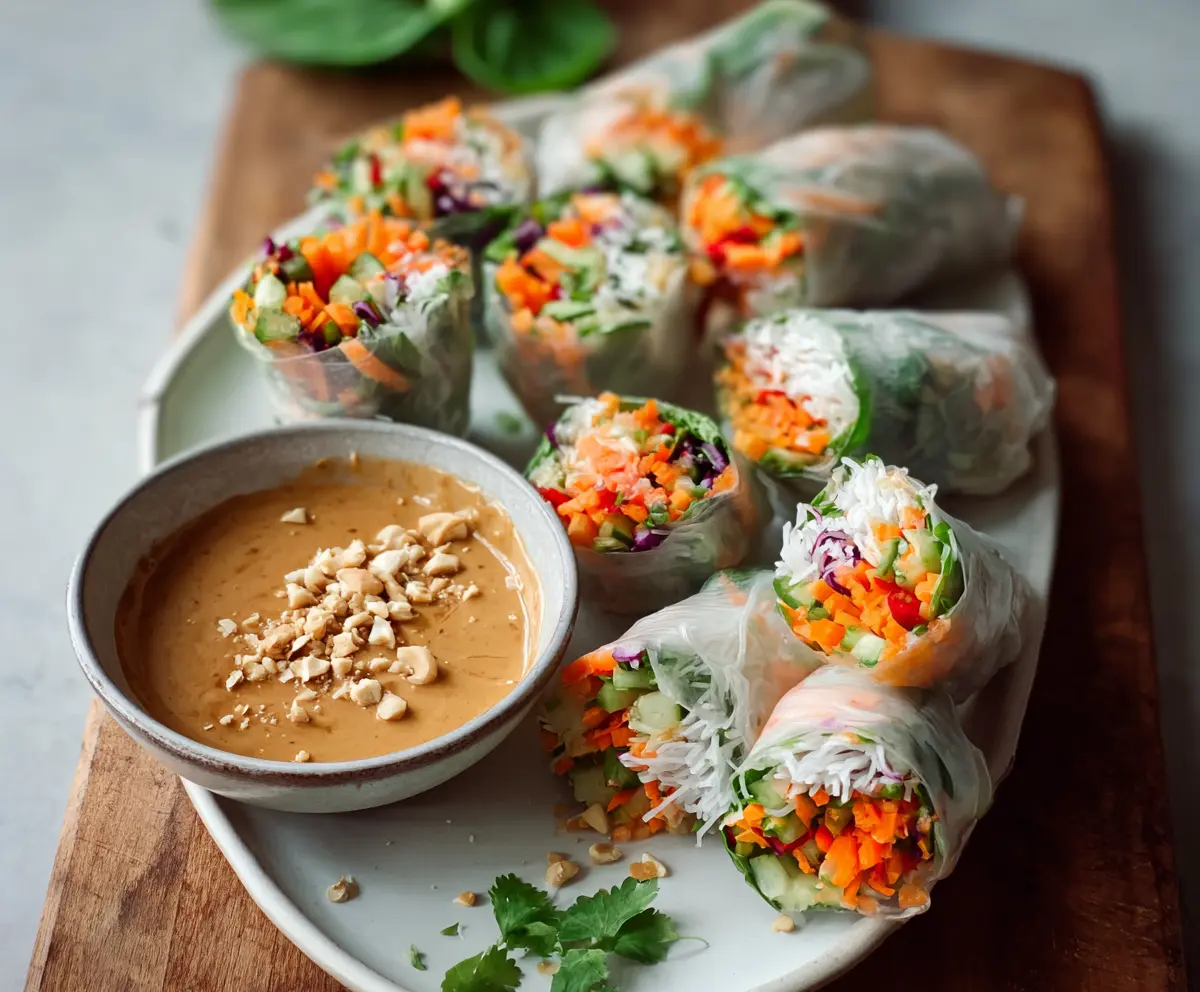
Fresh spring rolls are a fun and tasty treat! Wrapped in delicate rice paper, they’re filled with crisp veggies and herbs, making each bite refreshing.
The best part? They pair perfectly with creamy peanut sauce, which adds a delicious kick. I love making these rolls with my family—it’s always a mini assembly party!
Key Ingredients & Substitutions
Rice Paper Wrappers: These are essential for making the spring rolls. If you can’t find them, look for other types of spring roll or wonton wrappers, but cooking time may vary. Just ensure they’re pliable enough to wrap around your ingredients.
Rice Vermicelli Noodles: You can substitute with other noodles like soba or glass noodles if needed. They add nice texture; just cook according to package instructions. If gluten is a concern, check for gluten-free varieties.
Fresh Herbs: Cilantro, mint, and basil bring flavor and freshness. If you’re not a fan, swap them for basil or parsley. Each will change the flavor but will still taste great!
Peanut Butter: For a nut-free option, use sunflower seed butter or tahini. Both keep a creamy texture and add richness. Opt for smooth peanut butter for a smoother sauce.
Honey or Maple Syrup: If you want to make these vegan, just stick with maple syrup or agave nectar instead of honey. Both work perfectly to sweeten the sauce without losing flavor.
How Do You Soften Rice Paper Wrappers Without Ruining Them?
Soften rice paper wrappers carefully; the right technique keeps them intact. Here’s how:
- Use warm (not boiling) water, as it helps the wrappers become soft without tearing.
- Dip one wrapper for about 10-15 seconds, checking to see if it’s pliable — like wet tissue paper.
- Gently shake off excess water before placing it on a clean, damp surface like a towel or cutting board.
Don’t rush this step! If it feels too stiff, dip it back in the water for a second or two. If it tears, don’t worry; just start with a new wrapper — it happens to everyone!
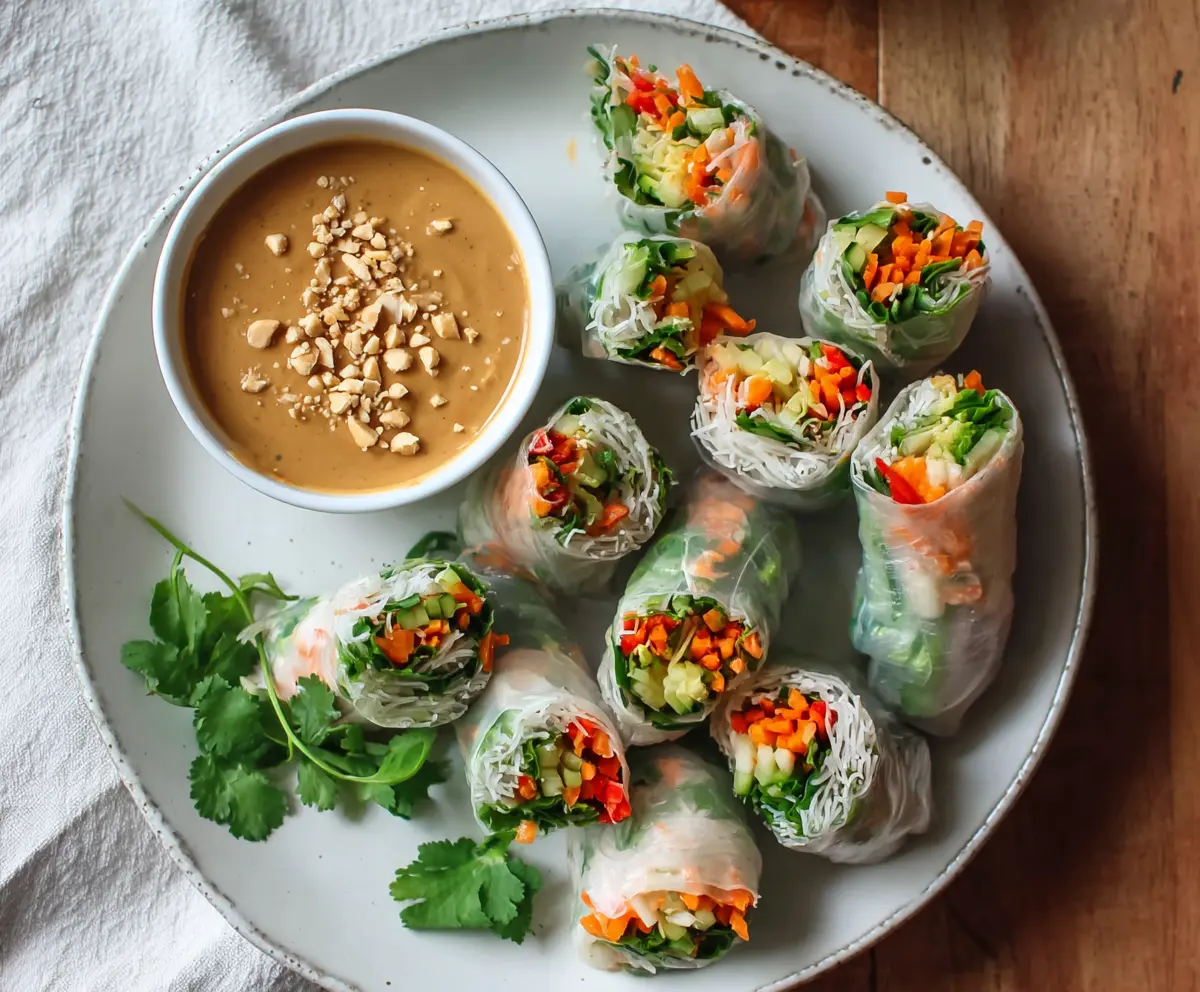
How to Make Fresh Spring Rolls With Peanut Sauce
Ingredients You’ll Need:
For the Fresh Spring Rolls:
- 8 rice paper wrappers
- 1 cup cooked rice vermicelli noodles
- 1 cup shredded carrots
- 1 cup thinly sliced cucumber
- 1/2 cup shredded purple cabbage
- 1/2 cup fresh cilantro leaves
- 1/2 cup fresh mint leaves
- 1/2 cup fresh basil leaves
- Optional: thinly sliced bell peppers or other fresh vegetables
For the Peanut Sauce:
- 1/2 cup creamy peanut butter
- 2 tablespoons soy sauce
- 1 tablespoon rice vinegar
- 1 tablespoon lime juice
- 1-2 teaspoons honey or maple syrup (adjust to taste)
- 1 teaspoon grated fresh ginger
- 1 clove garlic, minced
- 2-4 tablespoons warm water (to thin the sauce)
- Optional: 1 teaspoon sriracha or chili paste for heat
- Crushed peanuts for garnish
How Much Time Will You Need?
This fresh spring roll recipe takes about 20 minutes to prepare the ingredients and assemble the rolls. If you’d like to chill them for a bit before serving, add another 10 minutes. In total, you’ll need about 30 minutes!
Step-by-Step Instructions:
1. Prepare the Ingredients:
Start by cooking the rice vermicelli noodles according to the package instructions. Once they’re done, drain them and rinse under cold water to stop the cooking process. Next, prepare your vegetables: shred the carrots, slice the cucumber, and shred the purple cabbage. Don’t forget to separate the fresh herbs into small bunches.
2. Soften the Rice Paper Wrappers:
Grab a large shallow dish or pie plate and fill it with warm water. This water should be warm but not boiling, as too hot water can tear the wrappers. Dip one rice paper wrapper into the water for about 10-15 seconds until it becomes soft and flexible. Carefully lift it out and lay it flat on a clean, damp kitchen towel or cutting board.
3. Assemble the Spring Rolls:
On the lower third of the softened wrapper, place a small handful of rice noodles. Then, add a few pieces of shredded carrots, slices of cucumber, purple cabbage, and a few leaves of your fresh herbs. Remember, don’t overfill, or it will be tough to roll!
4. Roll the Spring Roll:
Start folding the sides of the wrapper over the filling, then tightly roll it from the bottom upwards. Roll it up gently but firmly to secure the filling inside. Place the completed spring roll on a plate or tray and repeat this process with the remaining wrappers and fillings.
5. Make the Peanut Sauce:
In a small bowl, whisk together together the peanut butter, soy sauce, rice vinegar, lime juice, honey or maple syrup, grated ginger, and minced garlic. Mix well until everything is smooth. If the sauce is too thick, add warm water a tablespoon at a time until it reaches your desired consistency. If you like a bit of spice, stir in some sriracha or chili paste.
6. Serve:
Arrange your fresh spring rolls on a platter and serve alongside the creamy peanut sauce in a small bowl. Don’t forget to sprinkle some crushed peanuts on top of the sauce for a crunchy garnish. Enjoy your fresh, crunchy spring rolls as a delightful appetizer or snack!
Can I Use Other Vegetables in the Spring Rolls?
Absolutely! Feel free to add thinly sliced bell peppers, avocado, or even cooked shrimp or tofu for extra protein. Just make sure to cut them into small, manageable pieces so they fit easily in the rolls.
How Do I Store Leftover Spring Rolls?
If you have leftovers, store the spring rolls in an airtight container in the refrigerator. They will keep well for up to 2 days. To avoid the rice paper sticking together, place a damp paper towel between each roll.
Can I Make the Peanut Sauce Ahead of Time?
Yes, you can prepare the peanut sauce in advance! Just store it in an airtight container in the fridge for up to a week. If it thickens, simply stir in a little warm water to reach your desired consistency before serving.
What If I Don’t Have Rice Vinegar?
If you’re out of rice vinegar, you can substitute it with apple cider vinegar or white wine vinegar. Both will add a nice tang; just use a little less than the recipe calls for to avoid overpowering flavors.