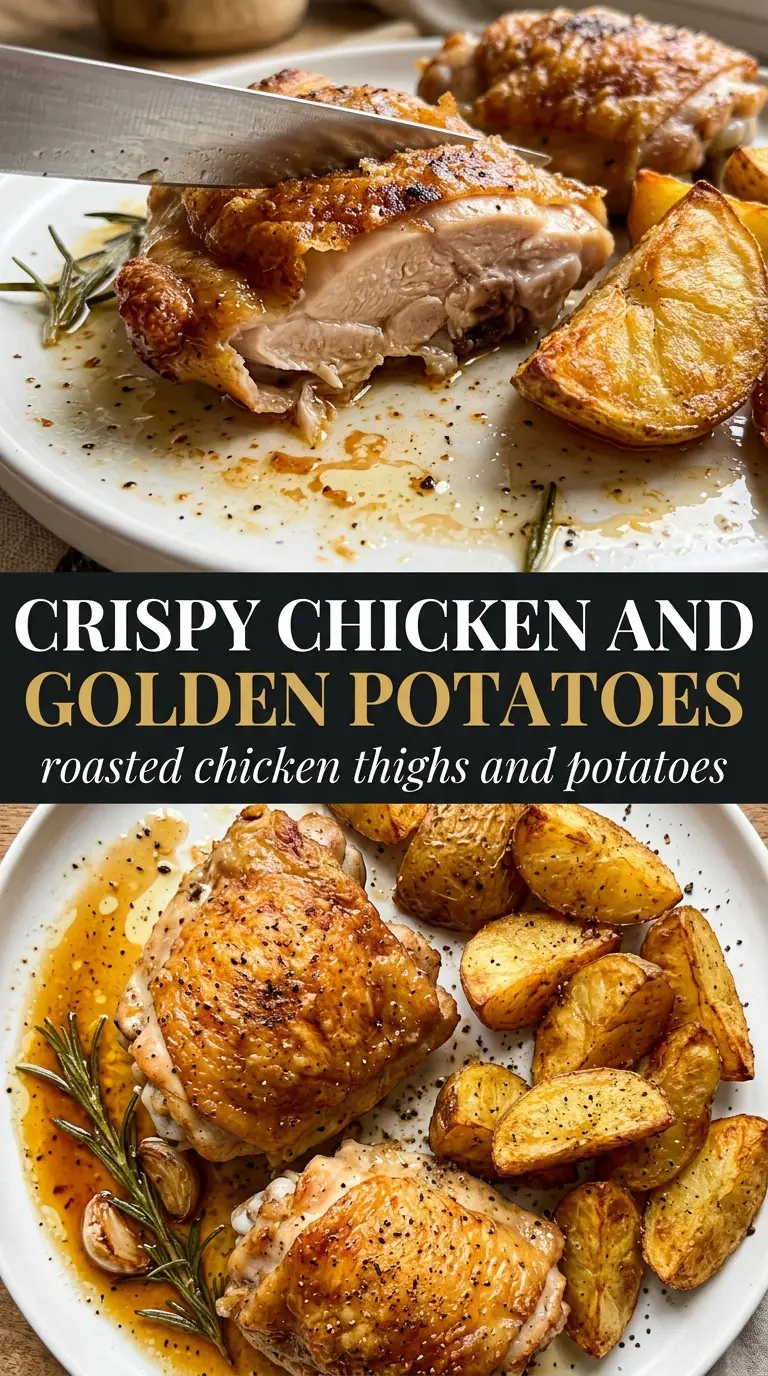
Crispy-skinned chicken thighs and golden potatoes make one of those dinners that disappears fast and never feels fussy. The chicken comes out deeply browned on top while the potatoes catch the drippings underneath, so every bite has that salty, herby roast-dinner flavor without needing a second pan.
The trick here is giving the potatoes a head start. They need that first 15 minutes in the oven to soften and start caramelizing before the chicken goes in, or they’ll still be pale while the thighs are done. I also like rubbing the herb oil directly onto the chicken skin instead of tossing everything together at once, because that keeps the skin exposed so it can crisp instead of steaming.
Below, I’ve included the small details that matter most: how to keep the potatoes from turning soft, what to look for when the chicken is actually done, and a few easy swaps if you want to change up the seasoning without changing the method.
The potatoes got those crispy edges underneath the chicken and the skin stayed crackly all the way to the table. I used the lemon at the end like you said, and it brightened everything up.
Save these roasted chicken thighs and potatoes for a no-fuss one-pan dinner with crispy skin, caramelized potatoes, and plenty of garlic-herb flavor.
The Step That Keeps the Potatoes Crispy Under the Chicken
A lot of one-pan chicken dinners go soft because everything starts at the same time. Potatoes need more time than bone-in thighs, and if they go into the oven raw under the chicken, they steam before they ever brown. Giving them a head start in a hot oven changes the whole pan.
The other thing that matters is space. If the potatoes are crowded together, they hold onto moisture and stay pale. Spread them out in a single layer, and don’t bury the chicken pieces too deeply into the pile. You want the skin exposed to direct heat while the potatoes still catch enough drippings to get rich and crisp around the edges.
- Bone-in, skin-on chicken thighs — These stay juicy while the skin has a chance to crisp. Boneless thighs work in a pinch, but they cook faster and won’t give you the same roasted finish.
- Baby potatoes — Their smaller size helps them cook through in the same window as the chicken. Halving them gives more surface area for browning, which is where the best flavor lives.
- Olive oil and herbs — The oil carries the garlic, rosemary, thyme, and paprika onto both the chicken and potatoes. Smoked paprika adds a little warmth and color, while the fresh herbs taste cleaner than dried ones here.
- Lemon wedges and parsley — They don’t just garnish the plate. The lemon cuts through the richness of the chicken skin and wakes up the roasted garlic at the end.
What Each Ingredient Is Actually Doing in This Recipe
- Primary ingredient (the star) — Quality matters most. Choose the best you can find.
- Cooking medium (oil, butter, or broth) — This carries flavors and prevents dryness.
- Seasonings (salt, pepper, spices, herbs) — Layer flavors so nothing overpowers. Build depth gradually.
- Aromatics (garlic, onion, herbs) — Cook with fat to bloom flavors. Become the foundation.
- Supporting ingredients — Complement the main ingredient without overpowering it.
- Sauce or liquid (if applicable) — Brings flavors together. Balance richness with acid.
- Acid (lemon, vinegar, wine, or other) — Brightens and prevents flat-tasting results.
- Final finish (garnish, glaze, or sauce) — Prevents one-dimensional taste and adds visual appeal.
How to Build the Pan So the Chicken Roasts, Not Steams
Mix the Herb Oil First
Whisk the olive oil, garlic, rosemary, thyme, smoked paprika, garlic powder, salt, and pepper together before anything touches the pan. That gives the garlic and herbs a chance to coat evenly instead of clumping in one spot. If the garlic sits in dry herbs, it tends to burn in patches rather than mellow and roast.
Give the Potatoes Their Head Start
Toss the halved potatoes with about half of the herb oil and spread them on a large baking sheet. Roast them for 15 minutes before adding the chicken. This is the difference between potatoes that are tender and browned and potatoes that are still waiting for their turn when the chicken is already done.
Set the Chicken Skin-Side Up
Rub the remaining herb oil over the chicken thighs, then lay them skin-side up over the partially roasted potatoes. Leave the skin exposed. If you flip the thighs or cover them with potatoes, the skin won’t crisp properly because it never gets that direct blast of oven heat.
Roast Until the Skin Is Deeply Golden
Keep the pan in the oven for 35 to 40 minutes more, until the skin is deeply golden and the potatoes have browned at the edges. The safest doneness check is an instant-read thermometer in the thickest part of the thigh, away from the bone, which should read 165F. If the skin is pale but the chicken is done, move the pan higher in the oven for the last few minutes instead of cooking it longer and drying out the meat.
What to Change When You Want a Different Version of the Same Dinner
Dairy-Free and Naturally Gluten-Free
This recipe already lands in both camps as written. The flavor comes from olive oil, herbs, garlic, and the chicken drippings, so there’s no need for butter or flour to get a good roast. That’s part of why the pan turns out so clean and crisp.
Swap the Herbs for What’s in the Fridge
Rosemary and thyme give the most classic roast-chicken flavor, but oregano or Italian seasoning can stand in if that’s what you have. Use a light hand with dried herbs because they’re more concentrated than fresh ones, and too much can make the pan taste dusty instead of savory.
Use Yukon Golds Instead of Baby Potatoes
Cut Yukon Gold potatoes into 1-inch chunks and roast them the same way. They’ll turn a little creamier inside than baby potatoes, which is great if you like a softer center, but they need that full 15-minute head start or the edges won’t brown in time.
Add Onions or Carrots for a Bigger Pan
Thick onion wedges or carrot chunks fit in well if you want more vegetables. Start them with the potatoes if they’re cut small, or give larger pieces a few extra minutes before the chicken goes in so they have time to caramelize instead of staying hard in the center.
Storage and Reheating
- Refrigerator: Store leftovers in an airtight container for up to 4 days. The skin softens in the fridge, but the flavor stays strong.
- Freezer: The chicken freezes well for up to 2 months, though the potatoes get a little mealy after thawing. Freeze in a single layer first if you can, then transfer to a container so the pieces don’t stick together.
- Reheating: Reheat on a sheet pan at 375F until hot, about 15 to 20 minutes. The oven brings the chicken back to life much better than the microwave, which makes the skin rubbery and the potatoes soggy.
Questions I Get Asked About This Recipe
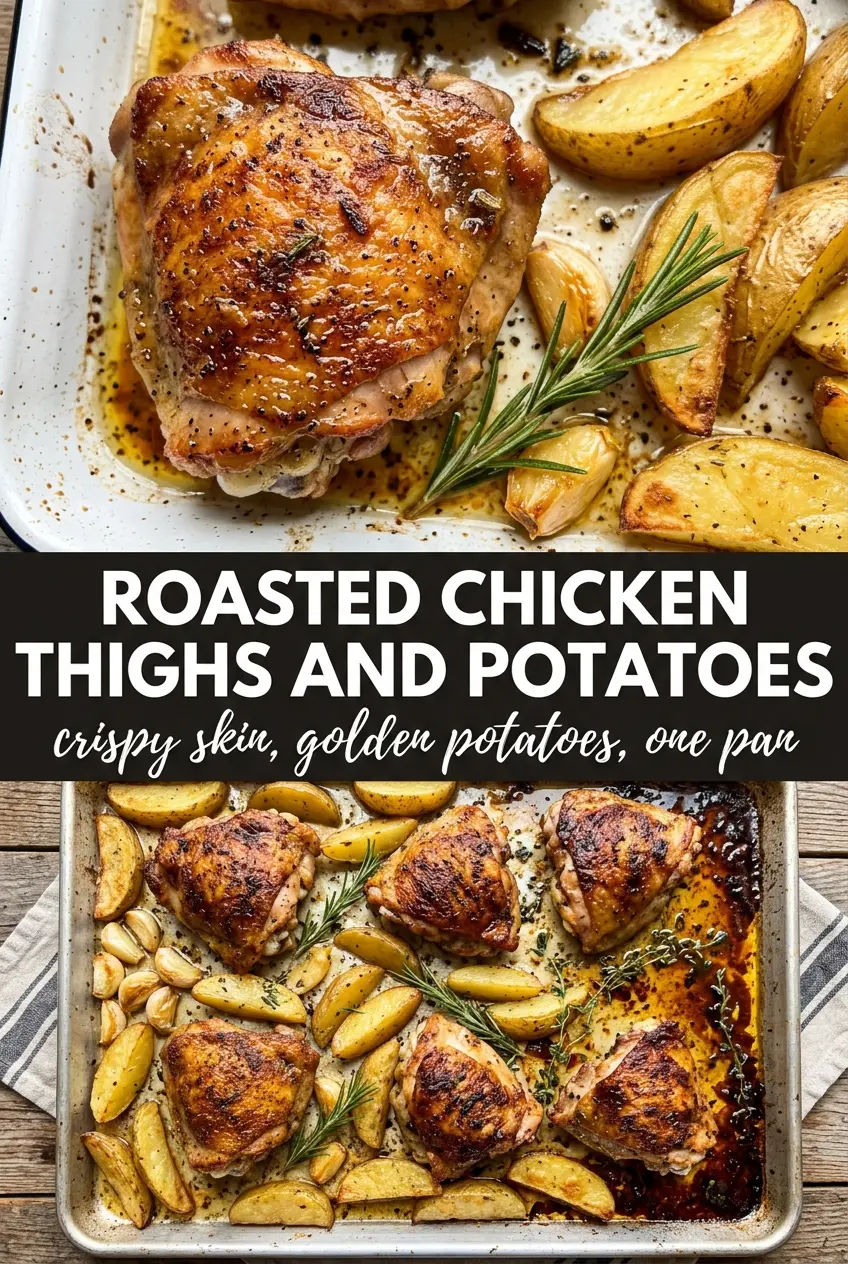
Roasted Chicken Thighs And Potatoes
Ingredients
Equipment
Method
- Preheat oven to 425°F and whisk olive oil, garlic, rosemary, thyme, smoked paprika, garlic powder, salt, and black pepper until evenly combined.
- Toss halved baby potatoes with half the herb oil, then spread them on a large baking sheet in a single layer.
- Roast the potatoes for 15 minutes, until they start to turn golden at the edges.
- Rub the chicken thighs with the remaining herb oil, then place them skin-side up over the partially roasted potatoes on the same baking sheet.
- Roast for 35-40 minutes at 425°F, until the chicken skin is deeply golden and the potatoes are crispy.
- Rest for 5 minutes, then serve with lemon wedges and fresh parsley.