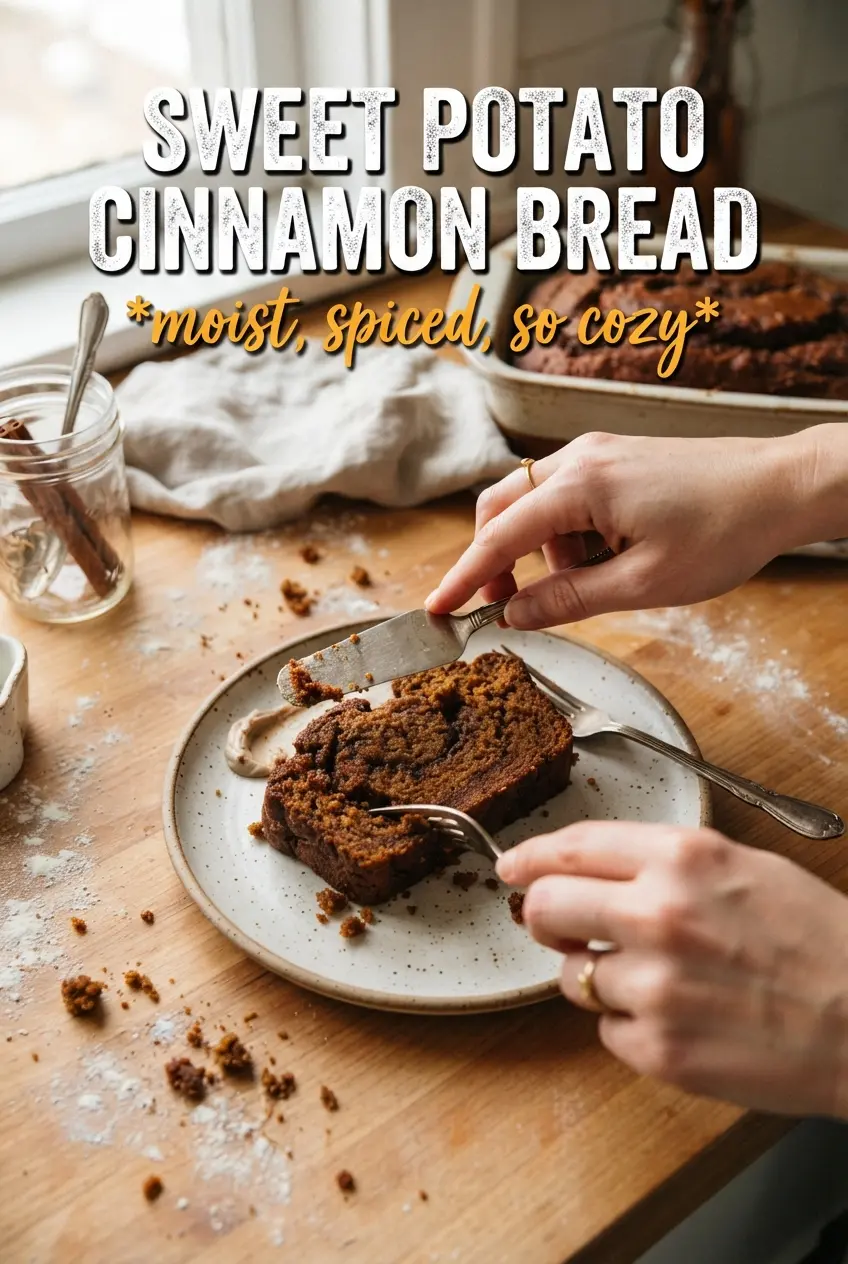
Sweet potato cinnamon bread bakes up with a soft, moist crumb, a warm spice finish, and that kind of cinnamon swirl that makes each slice look like it came from a bakery case. The sweet potato keeps the loaf tender for days, while the cinnamon sugar top turns into a thin, crackly crust that gives way to a rich, fragrant center.
What makes this version work is the balance. The sweet potato puree brings moisture without making the loaf heavy, and the sour cream adds just enough tang to keep the crumb from tasting flat. The cinnamon swirl is built with brown sugar and a little melted butter, so it melts into the middle instead of disappearing into the batter.
Below, I’ve included the small details that matter most: how to keep the loaf from turning dense, what the swirl is actually doing, and the substitutions that still give you a good slice when your pantry is missing one piece.
The loaf stayed moist for three days and the cinnamon swirl didn’t sink to the bottom. I baked it for 63 minutes and the top came out with that crisp sugar crust I was hoping for.
Love the cinnamon swirl and tender crumb in this sweet potato cinnamon bread? Save it to Pinterest for the mornings when you want a loaf with a crackly sugar top and a moist, spiced center.
The Loaf That Stays Tender Instead of Turning Heavy
Sweet potato quick breads can go wrong in one of two ways: they bake up gummy in the center, or they dry out before you’ve even had the second slice. The fix here is using just enough sweet potato puree to add moisture without overwhelming the batter, then stopping the mixing the moment the flour disappears. Once the dry ingredients go in, the batter should look a little rough. That’s what you want.
The other thing that keeps this loaf from sinking is the balance of fat and acid. Oil stays soft at room temperature, which keeps the crumb tender, and sour cream gives the loaf enough structure to hold the swirl instead of collapsing around it. If your batter feels overly loose, the puree was probably wetter than expected. A thicker batter is easier to layer and swirls more cleanly.
What the Sweet Potato, Sour Cream, and Cinnamon Swirl Are Each Doing

- Sweet potato puree — This gives the loaf its moisture, color, and a mild sweetness that makes the cinnamon taste rounder. Roast the sweet potatoes first if you can; canned puree works in a pinch, but homemade puree has a drier texture and a cleaner flavor. If your puree looks watery, blot it with a paper towel before mixing.
- Sour cream — This is what keeps the crumb plush instead of cakey. Full-fat sour cream works best, but plain full-fat Greek yogurt can stand in if that’s what you have. Use it cold from the fridge and stir it in with the wet ingredients so it disperses evenly.
- Brown sugar in the swirl — Brown sugar melts into a ribbon that stays soft after baking, which is why the center tastes richer than the rest of the loaf. White sugar won’t give you the same caramel-like note or texture. The melted butter helps the swirl cling instead of drying out into a sandy streak.
- Cinnamon sugar on top — This is what gives the crust that light crackle when the loaf cools. It’s a small step, but it changes the whole first bite. Don’t skip it unless you want a softer top.
Building the Batter and Keeping the Swirl in Place
Mix the wet ingredients until smooth
Whisk the sweet potato puree, sugars, oil, eggs, sour cream, and vanilla until the mixture looks glossy and even. You’re not whipping air into it; you’re building a base that spreads cleanly through the flour. If the sweet potato has any lumps, mash them out before you add the dry ingredients. Lumps here show up later as streaks in the loaf.
Fold the flour in without overworking it
Once the flour, baking powder, baking soda, cinnamon, nutmeg, and salt are added, stir only until the flour disappears. A few streaks are better than beating the batter into toughness. Overmixed quick bread bakes up tight and dry, and the swirl won’t look as defined. Use a spatula, not a whisk, so you stop at the right moment.
Layer the swirl so it stays visible
Pour in half the batter, spoon over the cinnamon mixture, then cover it with the remaining batter. Drag a knife through the loaf once or twice in a loose figure-eight pattern. Too much swirling blends the filling into the batter and muddies the center, while too little leaves a straight line instead of a ribbon. You want distinct streaks, not a full marbling job.
Bake until the center is set
The loaf is done when the top is deeply golden and a toothpick comes out clean or with only a few moist crumbs. If the top is browning too quickly before the center is set, tent it loosely with foil for the last 10 to 15 minutes. Don’t pull it early because the middle looks puffed; quick bread needs time for the crumb to finish setting or it will sink as it cools.
Three Ways to Adjust This Loaf Without Losing the Texture
Make it dairy-free
Use a thick dairy-free yogurt in place of the sour cream. The loaf will still stay moist, but the tang will be a little softer and the crumb may be slightly less rich. Pick an unsweetened version so the sugar balance doesn’t tilt too far.
Swap in mashed roasted pumpkin
Pumpkin puree works in the same amount, but the flavor is milder and the bread will taste a little more like a classic spice loaf than a sweet potato bread. If the pumpkin seems looser than your sweet potato puree, reduce the sour cream by a tablespoon or two so the batter doesn’t get too slack.
Turn it into muffins
Portion the batter into lined muffin cups and bake until the centers spring back and a tester comes out clean, usually around 18 to 22 minutes. You’ll lose the dramatic swirl effect, but you gain faster baking and crisp edges. This is the move when you want grab-and-go breakfasts.
Storage and Reheating
- Refrigerator: Store tightly wrapped at room temperature for 2 days or in the refrigerator for up to 5 days. The crumb stays moist, and the cinnamon topping softens a bit after the first day.
- Freezer: This loaf freezes well. Wrap individual slices or the whole cooled loaf in plastic wrap, then foil, and freeze for up to 3 months.
- Reheating: Warm slices in the microwave for 15 to 20 seconds or in a low oven until just heated through. If you overheat it, the bread turns dry at the edges before the center is warm.
Questions I Get Asked About This Recipe
Sweet Potato Cinnamon Bread
Ingredients
Equipment
Method
- Preheat oven to 350F and grease a 9x5 loaf pan so the bread releases cleanly.
- Whisk all-purpose flour, baking powder, baking soda, cinnamon, nutmeg, and salt in a bowl until evenly combined.
- Whisk sweet potato puree, granulated sugar, brown sugar, vegetable oil, eggs, sour cream, and vanilla until smooth.
- Fold the dry mixture into the wet mixture until just combined, stopping as soon as no dry streaks remain.
- Pour half the batter into the loaf pan and drizzle the cinnamon swirl mixture over the surface.
- Add the remaining batter and swirl through the center with a knife to create a marbled pattern.
- Sprinkle cinnamon sugar over the top for a lightly crisp, fragrant crust.
- Bake for 60-65 minutes at 350F until a toothpick inserted in the center comes out clean.


