Layered, cheesy, and spoonable right from the slow cooker, crockpot ravioli lasagna hits the same comforting notes as baked lasagna without the fuss of boiling noodles or assembling a pan of perfect pasta sheets. The ravioli does double duty here: it becomes the pasta layer and brings a little built-in cheese or filling to every bite, so the finished dish lands somewhere between lasagna and stuffed pasta bake in the best possible way.
What makes this version work is the balance of moisture and structure. The marinara and drained tomatoes keep the layers saucy, but the beef gets browned first so the finished dish tastes rich instead of watery. A thin base of sauce protects the ravioli from sticking, and the ricotta is dotted through the layers instead of stirred in, which keeps the texture distinct when you scoop it out.
Below you’ll find the layering order that keeps the ravioli intact, the small timing details that prevent a mushy middle, and a few swaps that make this just as useful on a weeknight as it is for feeding a crowd.
The ravioli held its shape and the cheese melted into perfect layers instead of turning soupy. I cooked it on low for 4 hours and it sliced up beautifully after a short rest.
Love the cheesy layers and saucy ravioli in this crockpot ravioli lasagna? Save it to Pinterest for an easy no-boil dinner night.
The Detail That Keeps Crockpot Ravioli Lasagna from Turning Mushy
The biggest mistake with slow cooker lasagna-style dishes is treating the crockpot like a baking dish. It isn’t. It holds onto steam, so every layer needs a little more structure than you’d use in the oven. That’s why the meat gets browned first and the diced tomatoes are drained before they go in; extra liquid has nowhere to go, and uncooked sauce is how you end up with a loose, soupy center.
The other thing that matters here is the ravioli itself. Frozen ravioli works beautifully because it stays intact through the long cook and gives off just enough starch to help the sauce cling. Fresh ravioli cooks faster and can soften sooner, so it’s fine, but it needs the lower end of the timing range. If your slow cooker runs hot, check early. The cheese should be melted, the ravioli tender, and the edges just starting to pull away from the sides.
What Each Layer Is Doing in the Slow Cooker

- Ground beef or Italian sausage — Browning it first adds the savory base that makes this taste like lasagna instead of plain tomato pasta. Drain it well so the sauce stays rich instead of greasy. Italian sausage gives you a little more spice and fennel; ground beef keeps the flavor milder.
- Marinara sauce — This does the heavy lifting for both flavor and moisture. Use a sauce you’d actually eat on its own, because it’s doing a lot here. A thicker jarred marinara holds up better than a thin one.
- Drained diced tomatoes — These add body and a little texture without flooding the crockpot. Draining them matters; undrained tomatoes can make the final dish too loose. If you want a smoother lasagna, you can skip them, but the finished dish will taste less layered.
- Frozen cheese ravioli — This is the shortcut that makes the whole recipe work. Frozen ravioli keeps its shape better than fresh in a long slow-cooker cook, and the filling gives each bite more richness. Fresh ravioli can be used, but shorten the cooking time and check it early.
- Ricotta, mozzarella, and Parmesan — Ricotta gives you that creamy lasagna center, mozzarella melts into the stretchy top, and Parmesan sharpens the whole dish. Don’t swap in pre-shredded cheese if you can help it; freshly shredded melts more cleanly and gives you better coverage.
Building the Layers So the Ravioli Stays Intact
Start with a thin sauce base
Spoon a thin layer of meat sauce over the bottom of the slow cooker before you add anything else. That first layer keeps the ravioli from sticking and gives the bottom some moisture right away. If you skip it, the pasta on the bottom can grab onto the insert and tear when you serve it. You only need enough to coat the surface.
Layer the ravioli in a single, even layer
Arrange the ravioli so they sit close together without being smashed. Overlapping is fine in spots, but don’t pile them into a thick stack or the center will lag behind the edges. A single layer cooks more evenly and keeps the texture closer to baked lasagna instead of a soft pasta casserole.
Dollop, don’t spread, the ricotta
Drop small spoonfuls of ricotta over the ravioli, then follow with mozzarella and Parmesan. Leaving the ricotta in little pockets gives you those creamy bites that taste like lasagna filling instead of a uniform, blended sauce. If you try to smear it across the layer, it tends to disappear into the heat and lose its texture.
Let it rest before serving
Once the ravioli is tender and the cheese is melted, turn the slow cooker off and let the lasagna sit for 10 minutes. That pause helps the layers settle so you can lift out a neat portion instead of a lava-hot puddle. If you cut in immediately, the sauce runs and the structure falls apart fast.
How to Adapt Crockpot Ravioli Lasagna for Different Kitchens
Swap the meat for Italian sausage
Italian sausage gives the sauce more fennel, spice, and richness, so the dish tastes a little more like a baked lasagna from a restaurant. Use mild sausage for a gentler result or hot sausage if you want more heat. Brown and drain it the same way you would the beef so the sauce doesn’t turn greasy.
Make it meatless without losing heft
Use a thick vegetable marinara and add a layer of sautéed mushrooms, spinach, or zucchini in place of the meat. You’ll lose some of the savory depth from browned beef, so add an extra pinch of salt and a little more Parmesan at the end. The texture stays satisfying as long as the vegetables are cooked down first.
Use fresh ravioli for a softer finish
Fresh ravioli cooks faster and gives the dish a more delicate texture, but it also breaks down sooner, especially in a hot slow cooker. Cut the cook time back and start checking at the earlier end of the range. The finished lasagna will be silkier and a little less structured than the frozen version.
Storage and Reheating
- Refrigerator: Store leftovers in an airtight container for up to 4 days. The ravioli softens a bit as it sits, but the flavor gets even better overnight.
- Freezer: It freezes well in individual portions. Cool it completely first, then freeze in sealed containers for up to 2 months. The texture will be softer after thawing, but still good for a quick dinner.
- Reheating: Reheat gently in the microwave with a splash of sauce or water to loosen it. If you use high heat, the cheese can get rubbery before the center is hot. For the best texture, warm it covered in a 325°F oven until heated through.
Questions I Get Asked About This Recipe
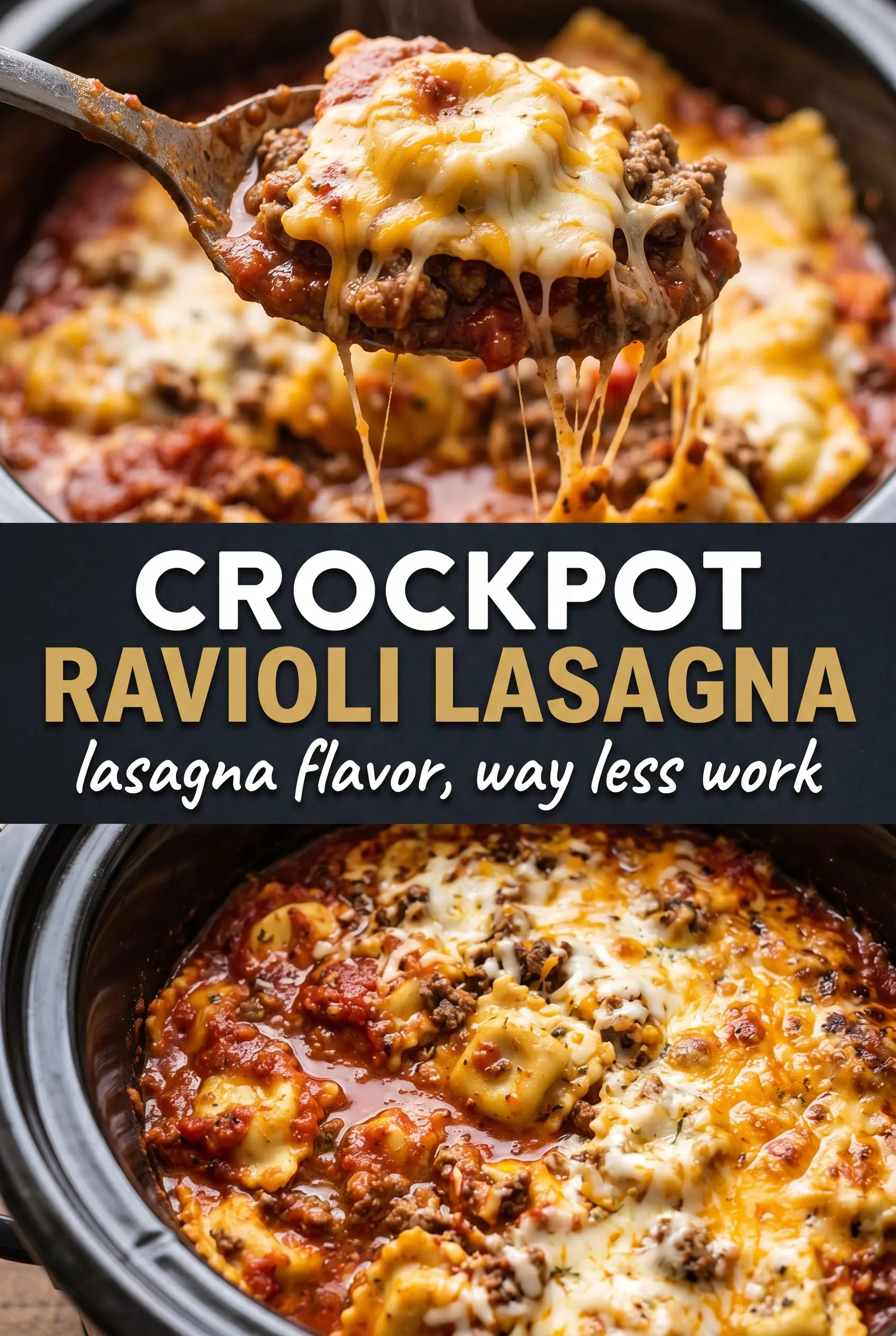
Crockpot Ravioli Lasagna
Ingredients
Equipment
Method
- Brown the ground beef or Italian sausage in a cast iron skillet over medium-high heat, then drain and set aside.
- Mix the browned meat with marinara sauce, diced tomatoes, Italian seasoning, garlic powder, onion powder, salt, and black pepper until evenly combined.
- Spread a thin layer of the meat sauce in the bottom of the slow cooker.
- Add a single layer of cheese ravioli on top of the sauce.
- Dollop ricotta cheese over the ravioli, then sprinkle mozzarella and Parmesan over the ricotta.
- Repeat layers of meat sauce, cheese ravioli, ricotta, and mozzarella/Parmesan until everything is used.
- Finish with a generous layer of cheese on top.
- Cook on low for 4–5 hours or high for 2–2.5 hours until the ravioli are cooked through and the cheese is melted and bubbling.
- Let the lasagna rest for 10 minutes before serving to help the layers set.
- Garnish with fresh basil right before serving.