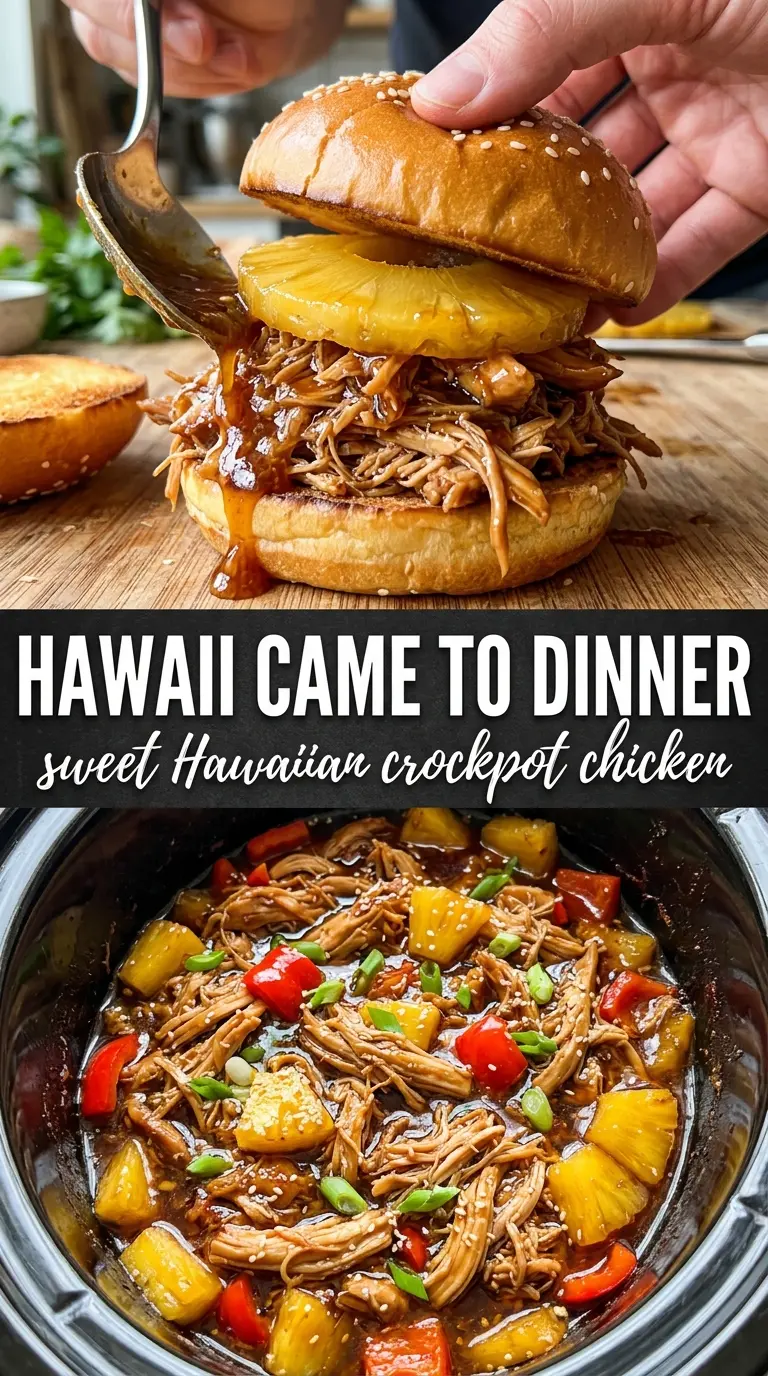
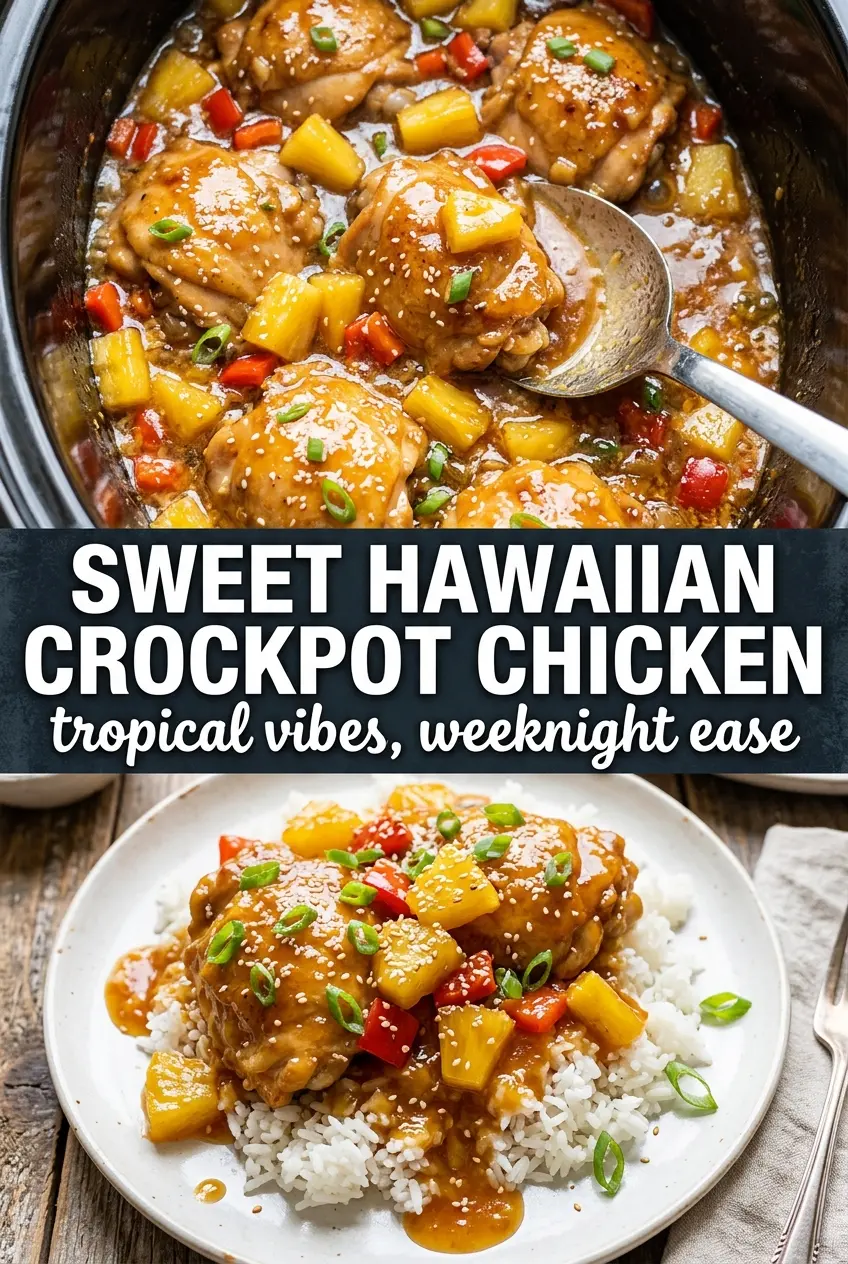
Sweet Hawaiian crockpot chicken lands in that sweet spot between takeout comfort and low-effort weeknight dinner. The chicken turns tender enough to shred with a spoon, the pineapple melts into the sauce, and the whole thing finishes glossy and sticky over rice. It tastes bigger than the ingredient list looks, which is usually a good sign in a slow cooker meal.
What makes this version work is the balance. Pineapple juice brings sweetness and acidity, soy sauce keeps it from tasting flat, and a little vinegar sharpens the edges so the sauce doesn’t read like dessert. The cornstarch goes in at the end, after the chicken has cooked through, so the sauce thickens cleanly instead of turning muddy or thin.
Below you’ll find the trick to getting the sauce to cling instead of pooling at the bottom of the bowl, plus a few smart swaps if you need to work around what’s in the pantry.
The sauce thickened up perfectly after I shredded the chicken, and the pineapple kept every bite juicy without making it bland. My husband had seconds and asked if I could put it in the regular dinner rotation.
Sweet Hawaiian crockpot chicken turns out sticky, tender, and full of pineapple-soy sauce flavor, so it's worth pinning for busy nights.
The Secret to Keeping the Sauce Glossy, Not Watery
Slow cooker chicken often goes wrong in the same way: too much liquid, too little reduction, and a sauce that tastes fine but never quite clings to the meat. This recipe avoids that by using pineapple juice as part of the braising liquid, then finishing with a cornstarch slurry after the chicken has already turned tender. That last step matters because slow cookers trap moisture instead of evaporating it. If you thicken too early, the sauce can loosen back up or turn pasty by the time dinner is ready.
Boneless skinless thighs are the right cut here because they stay juicy through a long cook and shred into silky pieces without drying out. Chicken breast can work, but it needs less time and gives you less forgiveness if the slow cooker runs hot. The pineapple chunks also matter more than they look like they should; they hold their shape and give you little bursts of fruit against the savory sauce instead of disappearing completely.
- Chicken thighs — These stay tender through the full cook and reheat better than breast meat. If you use breasts, pull them as soon as they hit shreddable tenderness so they don’t turn stringy.
- Pineapple juice — This is doing more than sweetening the sauce. It brings acidity and fruit flavor that keeps the dish balanced, so canned juice works better here than diluted fresh juice.
- Soy sauce — Use regular soy sauce for the best balance. Low-sodium works if that’s what you keep on hand, but the sauce will taste lighter and you may want a pinch more salt at the end.
- Brown sugar — This gives the sauce its caramel edge and helps it glaze instead of tasting thin. Dark brown sugar makes the flavor a little deeper, but light brown sugar is fine.
- Cornstarch slurry — Don’t dump cornstarch straight into the slow cooker. Cold water first, then stir it in near the end so the sauce thickens smoothly instead of clumping.
What Each Ingredient Is Actually Doing in This Recipe
- Primary ingredient (the star) — Quality matters most. Choose the best you can find.
- Cooking medium (oil, butter, or broth) — This carries flavors and prevents dryness.
- Seasonings (salt, pepper, spices, herbs) — Layer flavors so nothing overpowers. Build depth gradually.
- Aromatics (garlic, onion, herbs) — Cook with fat to bloom flavors. Become the foundation.
- Supporting ingredients — Complement the main ingredient without overpowering it.
- Sauce or liquid (if applicable) — Brings flavors together. Balance richness with acid.
- Acid (lemon, vinegar, wine, or other) — Brightens and prevents flat-tasting results.
- Final finish (garnish, glaze, or sauce) — Prevents one-dimensional taste and adds visual appeal.
How to Build the Flavor Before the Sauce Ever Thickens
Layer the Chicken and Sauce
Put the chicken in the slow cooker first, then pour the whisked sauce over the top so every piece gets coated as it cooks. The pineapple chunks go on top or around the chicken and will soften into the sauce without breaking apart completely. If the chicken is stacked too tightly, give it a quick rearrange so the liquid can move between the pieces. That helps the thighs cook evenly instead of leaving a few dry spots in the center.
Cook Until the Meat Shreds Easily
Low for 4 to 5 hours gives the best texture, but high for 2 to 3 hours works when you need dinner sooner. The chicken is ready when a fork slides in without resistance and the meat pulls apart in large pieces. If it still feels firm in the middle, give it more time; shredding too early leaves you with chunks that look cooked but don’t soak up the sauce the same way.
Thicken the Sauce After the Chicken Comes Out
Remove the chicken before adding the cornstarch slurry, then whisk the slurry into the hot sauce and cook on high until it turns glossy and slightly thickened. You want it to coat a spoon, not turn into pudding. If the sauce looks thin after 15 minutes, leave the lid off for a few more minutes so a little steam can escape. Once the chicken goes back in, the sauce will cling to the shredded pieces instead of sliding off.
Make It Gluten-Free
Swap in tamari or a certified gluten-free soy sauce. The flavor stays close to the original, but the sauce may taste a touch rounder and less salty depending on the brand, so taste it before serving.
Use Chicken Breasts Instead
Chicken breasts work if that’s what you have, but check them early because they dry out faster than thighs. Start testing at the low end of the cook time and shred them as soon as they pull apart easily.
Make It Less Sweet
Cut the brown sugar back to 2 tablespoons if you want the sauce to lean more savory than sticky-sweet. You’ll still get pineapple flavor and a good glaze, just with a sharper soy-ginger finish.
Turn Up the Heat
Add a little more red pepper flakes or a splash of sriracha to the sauce before cooking. The sweetness of the pineapple softens the heat, so this is a good place to build a mild kick without making the dish taste sharp.
Storage and Reheating
- Refrigerator: Store leftovers in an airtight container for up to 4 days. The sauce will thicken a little more as it chills.
- Freezer: It freezes well for up to 2 months. Cool it completely first, then freeze the chicken and sauce together in a sealed container or freezer bag.
- Reheating: Warm gently on the stove or in the microwave with a splash of water if needed. Reheat just until hot, because aggressive heat can dry out the chicken and make the sauce separate.
Answers to the Questions Worth Asking
Sweet Hawaiian Crockpot Chicken
Ingredients
Equipment
Method
- Place the boneless skinless chicken thighs in the slow cooker.
- Whisk together the pineapple juice (from can), soy sauce, brown sugar, garlic, apple cider vinegar, ginger, and red pepper flakes until the sugar dissolves.
- Pour the sauce over the chicken and scatter the pineapple chunks on top.
- Cook on low for 4–5 hours or high for 2–3 hours until the chicken is very tender, with the sauce visibly simmering around the edges.
- Remove the chicken and shred into large pieces, keeping the strands thick so they stay juicy.
- Whisk the cornstarch and cold water together, then stir into the slow cooker and cook on high for 15 minutes until the sauce thickens and coats a spoon.
- Return the shredded chicken to the sauce and stir to coat, then serve over white rice.
- Finish with green onions and sesame seeds for garnish so the top looks fresh and lightly toasted.