Slow cooker Korean beef turns out tender enough to pull apart with a fork, with a glossy soy-based sauce that clings to every piece instead of pooling at the bottom of the bowl. The beef gets deeply savory while the brown sugar and sesame oil round everything out, and the final drizzle of thickened sauce over rice is what makes the whole dish feel complete.
What makes this version work is the balance of a long, gentle cook with a quick finish at the end. Chuck roast has enough fat and connective tissue to soften beautifully in the slow cooker, while the cornstarch slurry goes in after the beef is shredded so the sauce can thicken without turning pasty or grainy. That last step matters more than people think — if you thicken too early, the sauce can tighten up before the beef is ready.
You’ll find the exact timing that gives you shreddable beef, the small prep details that keep the sauce smooth, and a few easy ways to adjust the heat or make the dish work with what you already have on hand.
The beef came out tender enough to shred with two forks, and the sauce thickened into that glossy coating that sticks to the rice instead of running off. My husband kept going back for more and asked me to make it again the next week.
Save this slow cooker Korean beef for nights when you want tender shredded beef, sticky soy sauce, and rice bowl comfort with almost no hands-on time.
The Part That Keeps the Sauce Glossy Instead of Watery
The biggest mistake with slow cooker beef is trying to thicken the sauce before the meat is done. As the beef cooks, it gives off juices, and those juices change the sauce balance enough that an early cornstarch slurry can leave you with something too loose or oddly starchy. Waiting until after shredding solves that problem because you can judge the sauce by its final volume, not by guesswork halfway through cooking.
Chuck roast is the right cut here because it has enough connective tissue to turn silky over a long cook. Flank steak can work if that’s what you have, but it won’t shred as luxuriously and it can dry out sooner, so check it a little earlier and stop cooking as soon as it’s tender. If the beef is still chewy after the full time, it needs more time, not more heat.
What Each Ingredient Is Doing in the Pot
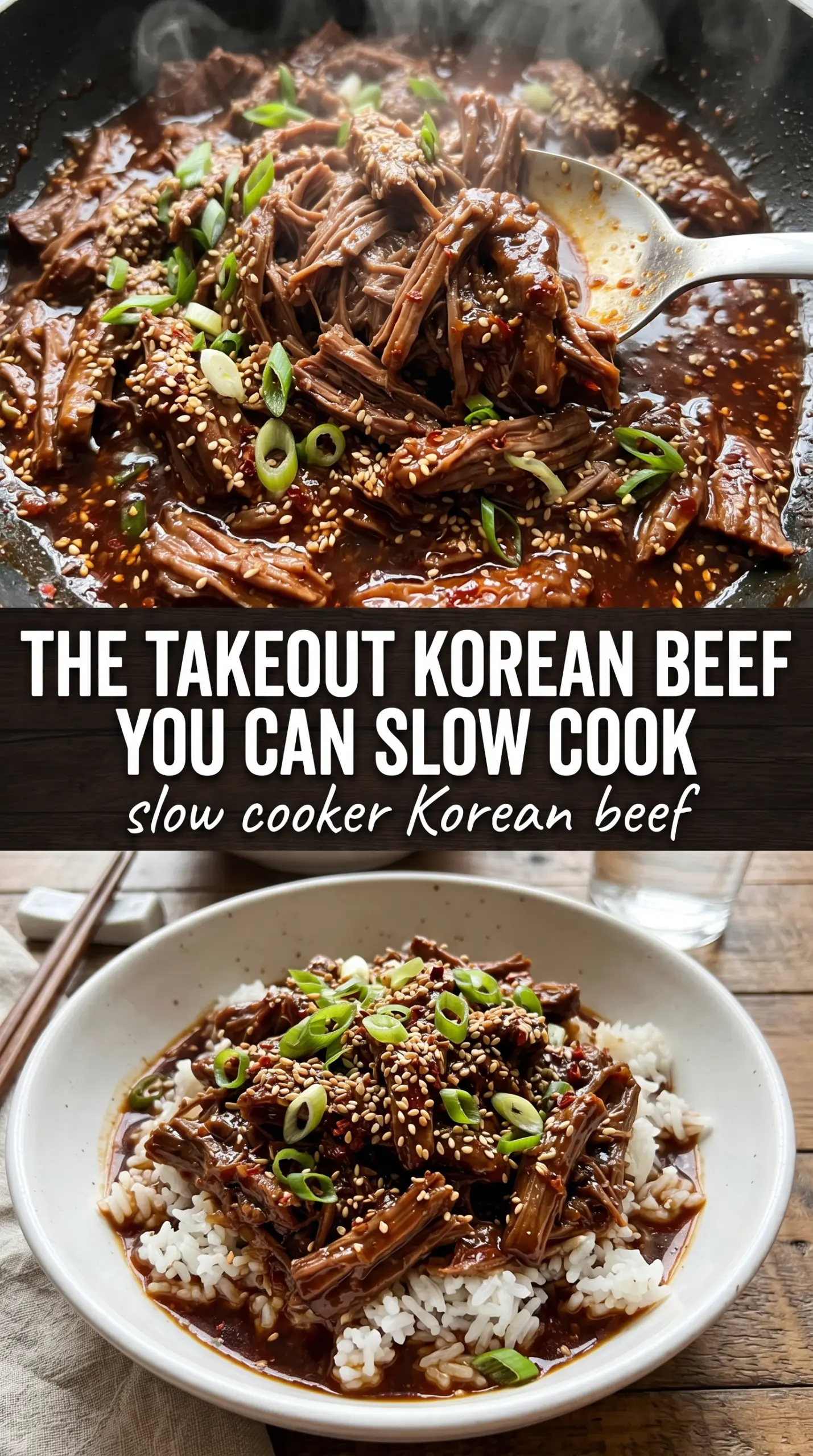
- Beef chuck roast — This is the cut that breaks down into tender shreds without turning stringy. If you swap in flank steak, cut it against the grain and watch the clock closely, because it moves from tender to dry faster than chuck.
- Soy sauce — This gives the dish its salty backbone and the deep savory note that makes the sauce taste finished. Low-sodium soy sauce works if that’s what you keep, but the sauce will taste a touch lighter and you may want to reduce the extra salt elsewhere since this recipe doesn’t need it.
- Brown sugar — This softens the soy sauce and helps the final glaze cling to the beef. Light brown sugar is fine; dark brown sugar adds a little more molasses depth and makes the sauce taste richer.
- Sesame oil — Use the real thing here. It’s the ingredient that gives the dish its toasted, nutty finish, and there isn’t a substitute that comes close. A little goes a long way, so measure it.
- Garlic and ginger — Fresh is worth it. They cut through the richness and keep the sauce from tasting one-note after hours in the slow cooker. Jarred ginger or garlic will work in a pinch, but the flavor comes out flatter.
- Red pepper flakes — These add a gentle heat that sits behind the sweetness. If you want a milder bowl, cut them back to 1/2 teaspoon; if you want more kick, add a pinch of gochugaru or finish with sriracha at the table.
- Cornstarch slurry — This is what turns the cooking liquid into that glossy sauce that coats the beef. Mix it with cold water first so it disperses cleanly; if you dump cornstarch straight into hot liquid, it clumps.
How to Get Shreddable Beef and a Sauce That Clings
Building the Sauce First
Whisk the soy sauce, brown sugar, sesame oil, garlic, ginger, red pepper flakes, and black pepper together before it goes over the beef. That keeps the sugar from settling in one spot and gives you a more even braise from the start. Pour it over the meat and don’t stir much after that; the slow cooker does the work, and over-handling the beef before it cooks can make the pieces break apart unevenly.
Letting the Slow Cooker Do Its Job
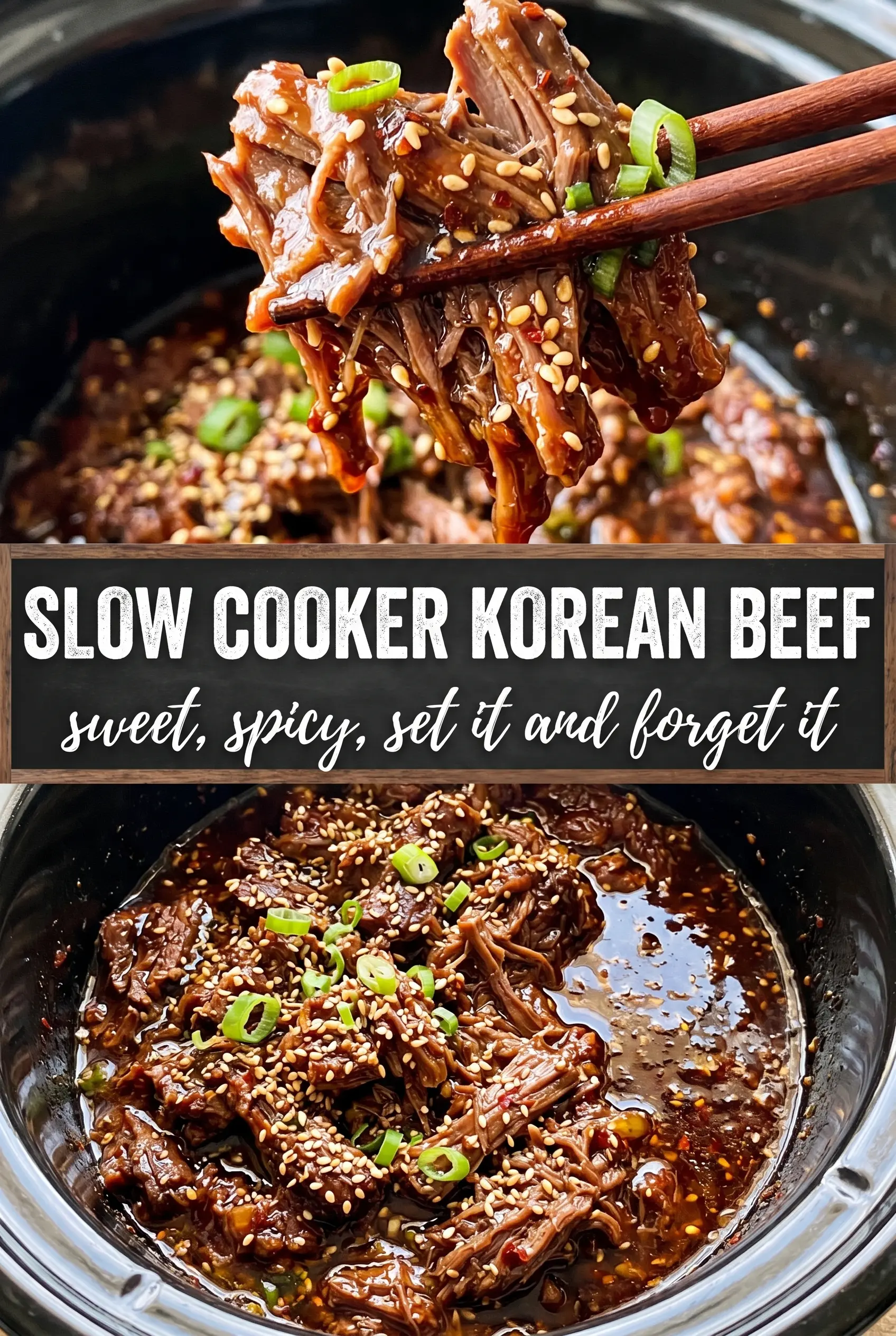
Cook on low for 6 to 7 hours if you want the most reliable texture. High heat will get it done faster, but it leaves less room between tender and overcooked, especially if your slow cooker runs hot. The beef is ready when a fork slides in easily and the pieces pull apart without resistance; if it still feels tight in the center, give it more time.
Thickening After the Beef Is Shredded
Lift the beef out first, shred it, and leave the liquid behind. Stir the cornstarch slurry into the sauce and cook it on high for about 15 minutes until it turns glossy and lightly thick enough to coat a spoon. If the sauce looks thin at first, don’t panic — it needs those last few minutes to go from cloudy to shiny, and that change is what tells you it’s ready.
Bringing It All Together
Return the shredded beef to the pot and toss it through the thickened sauce until every piece is coated. Let it sit for a minute or two so the beef can soak up the glaze again before serving. Spoon it over hot white rice and finish with green onions, sesame seeds, and a little sriracha if you want a sharper bite against the sweetness.
Ways to Bend This Recipe Without Breaking It
Gluten-Free Version
Use a certified gluten-free soy sauce or tamari. The flavor stays close to the original, but tamari usually tastes a little rounder and less sharp. Everything else in the recipe already works as written, so this is an easy swap.
Less Sweet, More Savory
Cut the brown sugar back to 1/4 cup if you want a sauce that leans more savory than sticky-sweet. You’ll lose a little gloss and some of the takeout-style balance, but the beef flavor comes through more clearly.
Vegetable Add-Ins
Stir in thin-sliced carrots, bell peppers, or snap peas during the last 30 minutes of cooking if you want more color and something crisp-tender in the bowl. Add them too early and they’ll go soft and lose their shape.
Storage and Reheating
- Refrigerator: Store in an airtight container for up to 4 days. The sauce will thicken as it chills, which is exactly what you want.
- Freezer: Freezes well for up to 3 months. Cool it completely first, then freeze the beef with plenty of sauce so it doesn’t dry out when thawed.
- Reheating: Reheat gently on the stove or in the microwave with a splash of water if needed. The common mistake is blasting it on high heat, which tightens the beef and makes the sauce separate.
Questions I Get Asked About This Recipe
Slow Cooker Korean Beef
Ingredients
Equipment
Method
- Place the beef chuck roast in the slow cooker in an even layer.
- Whisk together soy sauce, brown sugar, sesame oil, garlic, fresh ginger, red pepper flakes, and black pepper until smooth.
- Pour the sauce over the beef so the pieces are well coated.
- Cook on low for 6–7 hours (or high for 3–4 hours) until the beef is very tender and shreds easily, with the sauce looking glossy and reduced around the edges.
- Remove the beef and shred with two forks until it pulls into strands.
- Whisk cornstarch and cold water together, stir into the sauce, and cook on high for 15 minutes until thickened and coats the back of a spoon.
- Return the shredded beef to the sauce and toss to coat until everything looks evenly glazed.
- Serve the Korean beef over cooked white rice.
- Garnish with sliced green onions and sesame seeds, and finish with a drizzle of sriracha if using.