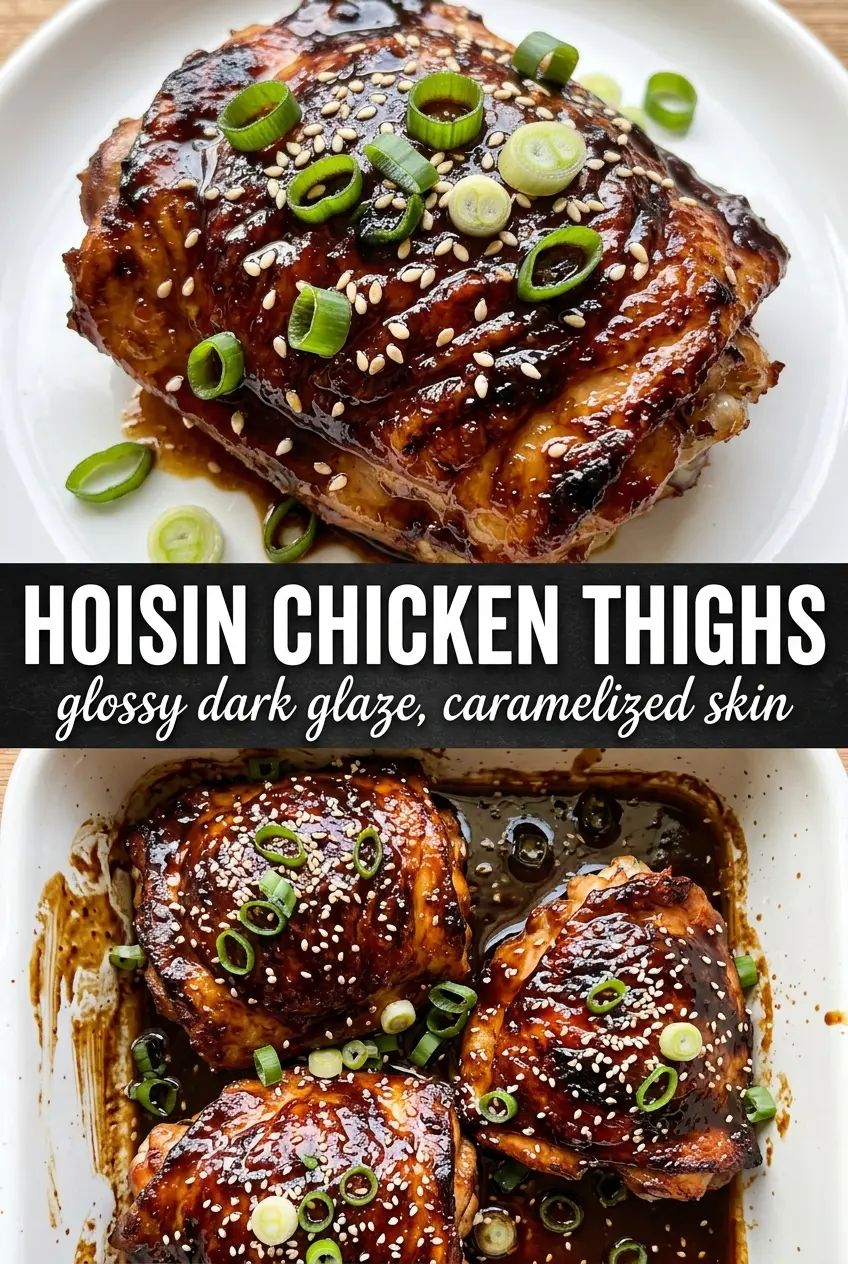
Hoisin chicken thighs come out with sticky, burnished edges and juicy meat that pulls cleanly from the bone. The glaze turns glossy in the oven, then darkens into that deep mahogany finish you only get when the sauce has enough sugar to caramelize but enough vinegar and soy to stay balanced. It’s the kind of dinner that looks like you worked a lot harder than you did.
The trick is keeping the sauce bold and concentrated from the start. Hoisin brings sweetness and body, soy sauce sharpens it, rice vinegar keeps it from feeling heavy, and a little sesame oil gives the whole pan a toasty finish. A short marinade seasons the chicken all the way through without making the skin soggy, and the final broil is what gives you those lacquered spots that cling to the meat instead of sliding off.
Below, I’ll walk through the part that matters most: how to get the glaze thick and glossy without burning it, plus the small adjustments that help if you want to make this with boneless thighs or prep it ahead.
The glaze thickened up in the oven exactly like you said, and the chicken came out sticky on the outside but still juicy under the skin. I’ve made hoisin chicken before, but this was the first time it didn’t end up watery at the bottom of the pan.
Like this hoisin chicken thighs recipe? Save it for the nights when you want a sticky, caramelized glaze with almost no cleanup.
The Part Most Hoisin Chicken Gets Wrong
The biggest mistake with hoisin chicken thighs is treating the glaze like a finishing sauce instead of a marinade that needs to cook down. If the sauce is too thin or too sweet, it slides off the chicken and pools in the pan before it has a chance to caramelize. That’s why this version keeps the ingredient list tight and leans on a short marinating time rather than a long soak.
Chicken thighs are the right cut here because they stay tender under high heat and forgive a little extra browning. Bone-in, skin-on thighs give you more flavor and a better texture than boneless pieces, especially once the skin starts rendering and the glaze gets a chance to cling. The oven does most of the work, but the last few minutes are where the whole dish changes from glossy to sticky.
- Hoisin sauce — This is the base of the glaze, and there isn’t a real substitute that brings the same thick, sweet-savory body. It needs help from the vinegar and soy so it doesn’t taste one-note.
- Rice vinegar — This keeps the glaze from turning cloying. If you swap in lemon juice, the flavor gets brighter and less rounded, so use a little less and taste the glaze before it goes on the chicken.
- Sesame oil — A small amount goes a long way. Use toasted sesame oil for flavor; plain sesame oil won’t give you the same nutty finish.
- Bone-in chicken thighs — These hold up best to the high oven temperature and stay juicy while the skin crisps. Boneless thighs will work, but they cook faster and won’t give you quite the same deep caramelization.
- Five spice powder — Optional, but worth using if you want that faint warming depth that makes the glaze taste fuller. Too much will take over, so keep it subtle.
What Each Ingredient Is Actually Doing in This Recipe

- Primary ingredient (the star) — Quality matters most. Choose the best you can find.
- Cooking medium (oil, butter, or broth) — This carries flavors and prevents dryness.
- Seasonings (salt, pepper, spices, herbs) — Layer flavors so nothing overpowers. Build depth gradually.
- Aromatics (garlic, onion, herbs) — Cook with fat to bloom flavors. Become the foundation.
- Supporting ingredients — Complement the main ingredient without overpowering it.
- Sauce or liquid (if applicable) — Brings flavors together. Balance richness with acid.
- Acid (lemon, vinegar, wine, or other) — Brightens and prevents flat-tasting results.
- Final finish (garnish, glaze, or sauce) — Prevents one-dimensional taste and adds visual appeal.
How to Get the Glaze Sticky Instead of Burnt
Mixing the Marinade
Whisk the hoisin, soy sauce, rice vinegar, honey, sesame oil, garlic, ginger, and five spice until the marinade looks smooth and dark. You want the honey fully dispersed so it doesn’t burn in streaks. If the garlic is left in big chunks, it can scorch on the surface, so mince it fine. The marinade should taste bold and slightly sharp before it ever touches the chicken.
Marinating Without Soaking the Skin
Toss the chicken in the marinade and let it sit for 30 minutes, not hours. That short rest gives the meat flavor without flooding the skin with excess liquid, which would fight the browning. If you marinate it too long, the glaze can turn muddy instead of concentrated. Pull the chicken from the marinade with the skin facing up so the surface starts dry in the pan.
Baking Until the Edges Start to Darken
Set the chicken skin-side up in a hot 425°F oven and bake until the skin starts to tighten and the sauce around the edges thickens. At this stage, the pan should smell deeply savory and a little sweet, not burnt. If the oven runs hot, check early; the sugars in hoisin can go from caramelized to bitter fast. You’re looking for a glaze that looks glossy and tacky, not wet.
Basting and Broiling for the Finish
Spoon on a little more glaze before the final bake so the top layer has fresh sugar to brown. Then broil for just 2 to 3 minutes, watching closely the entire time. This is where the chicken gets those dark lacquered spots, but it only takes seconds to cross from caramelized to charred. Let it rest before serving so the juices settle and the glaze stays on the chicken instead of running off the plate.
Ways to Adjust the Pan Without Losing the Point
Make it gluten-free
Use a gluten-free tamari instead of standard soy sauce. The glaze will stay just as glossy and balanced, and you won’t lose the salty backbone that keeps the hoisin from tasting too sweet.
Use boneless thighs for a faster dinner
Boneless thighs shave off some cook time and are easier to portion, but they won’t hold quite as much glaze on the skin because there’s no skin layer to lacquer. Start checking them earlier, since they can dry out if you leave them in for the full bone-in timing.
Add heat without changing the sauce
A pinch of red pepper flakes or a drizzle of chili crisp at the table gives you a sharper finish without upsetting the sweet-salty balance in the glaze. Stir heat into the marinade only if you want the spice baked in; otherwise, keep it as a finishing move.
Storage and Reheating
- Refrigerator: Store leftovers in an airtight container for up to 4 days. The glaze will thicken as it chills, and the skin won’t stay crisp.
- Freezer: Freeze cooked thighs for up to 2 months. Wrap them well and thaw in the refrigerator so the sauce doesn’t separate from the meat.
- Reheating: Reheat in a 350°F oven, covered loosely with foil, until hot through. The common mistake is microwaving them hard, which turns the glaze sticky in the wrong way and makes the chicken rubbery.
Questions I Get Asked About This Recipe
Hoisin Chicken Thighs
Ingredients
Equipment
Method
- Whisk hoisin sauce, soy sauce, rice vinegar, honey, sesame oil, minced garlic, grated ginger, and five spice powder (if using) until smooth.
- Let the glaze sit while you prepare the chicken so the flavors meld slightly.
- Marinate the bone-in chicken thighs in the hoisin mixture for 30 minutes in the refrigerator.
- Transfer the marinated chicken to a sheet pan, arranging the thighs skin-side up.
- Preheat oven to 425°F, then bake skin-side up for 25 minutes until the chicken is cooking through and the glaze starts to set.
- Baste the chicken with more hoisin glaze, then bake for 10 minutes until caramelized and burnished mahogany at the edges.
- Broil for 2–3 minutes to push the glaze into deeper caramelization with a slightly darker color on top.
- Rest briefly, then garnish with sesame seeds and sliced green onions before serving.