Chicken adobo earns its place on the table because the sauce turns glossy, salty-tangy, and just a little sticky while the chicken goes soft enough to pull apart with a spoon. The garlic mellows into the vinegar, the bay leaves perfume the pan, and the soy sauce gives the braise that deep color and backbone that makes each bite taste finished, not just cooked.
The part that matters most is the balance of heat and time. The chicken gets a quick brown for flavor, then the braising liquid does the rest of the work at a gentle simmer so the vinegar can soften instead of turning sharp. The sauce also needs to reduce uncovered at the end, because that last stretch is what turns a thin braise into the kind of spoon-coating sauce you want over rice.
Below, I’ve included the detail that changes the whole dish if you’ve had adobo turn out too salty, too sour, or too thin before. I’ve also added the swaps that still keep the dish recognizable when you need to work with what’s in the pantry.
The sauce reduced into a beautiful glaze and the chicken was fall-apart tender without getting dry. I served it over jasmine rice and my husband went back for seconds before I even sat down.
Save this chicken adobo for the nights when you want that tangy soy-garlic sauce spooned over hot rice.
The Vinegar Has to Simmer, Not Rush
Chicken adobo can go sideways fast if the vinegar hits high heat too aggressively. When that happens, the sharp edge stays loud and the sauce tastes harsh instead of rounded. The fix is simple: let the marinade come up to a boil, then drop the heat and braise gently so the vinegar cooks into the soy sauce instead of sitting on top of it.
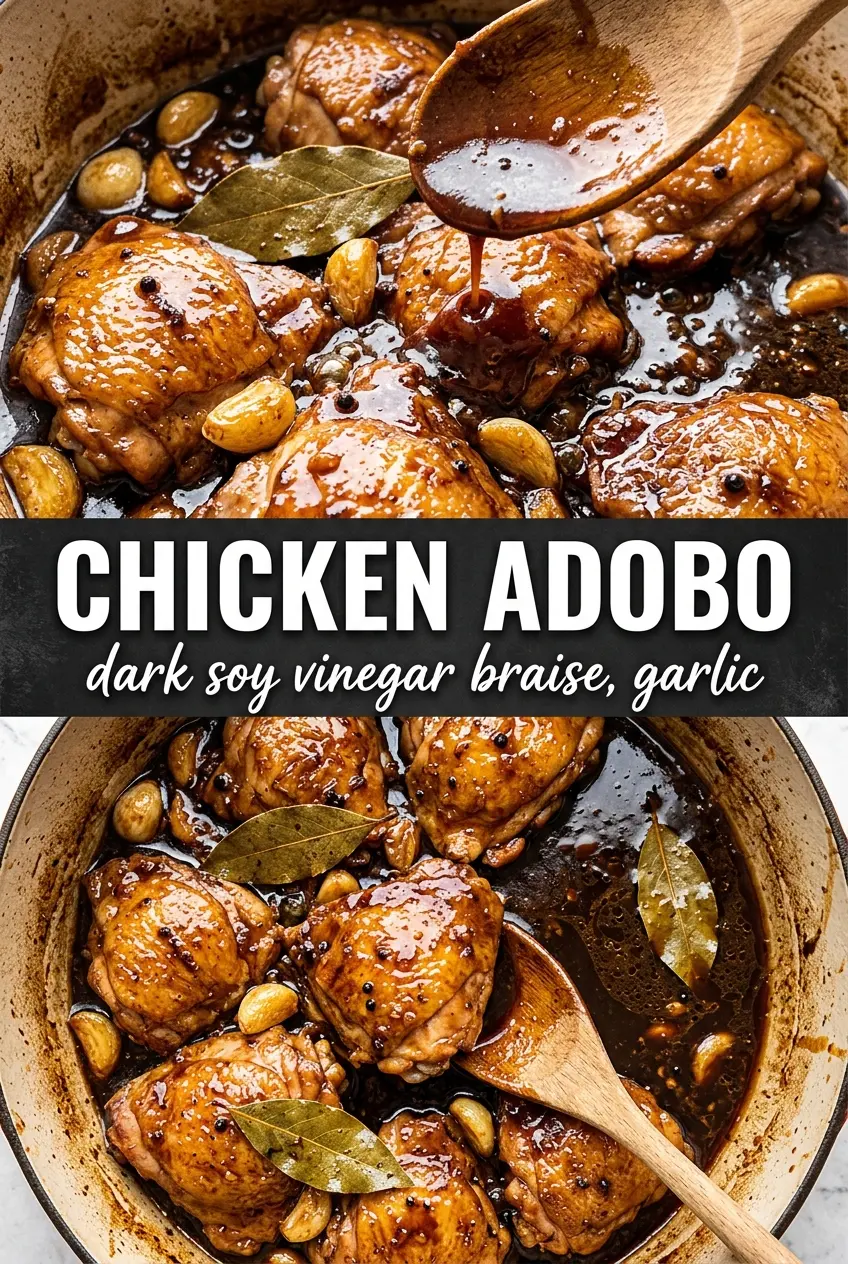
The other mistake is stopping too soon. Adobo tastes good when the chicken is tender, but it tastes finished when the sauce has reduced enough to cling to the meat and leave a shiny trail on the spoon. That last uncovered simmer is where the flavor deepens and the color gets that classic dark, braised look.
What Each Ingredient Is Actually Doing in Chicken Adobo
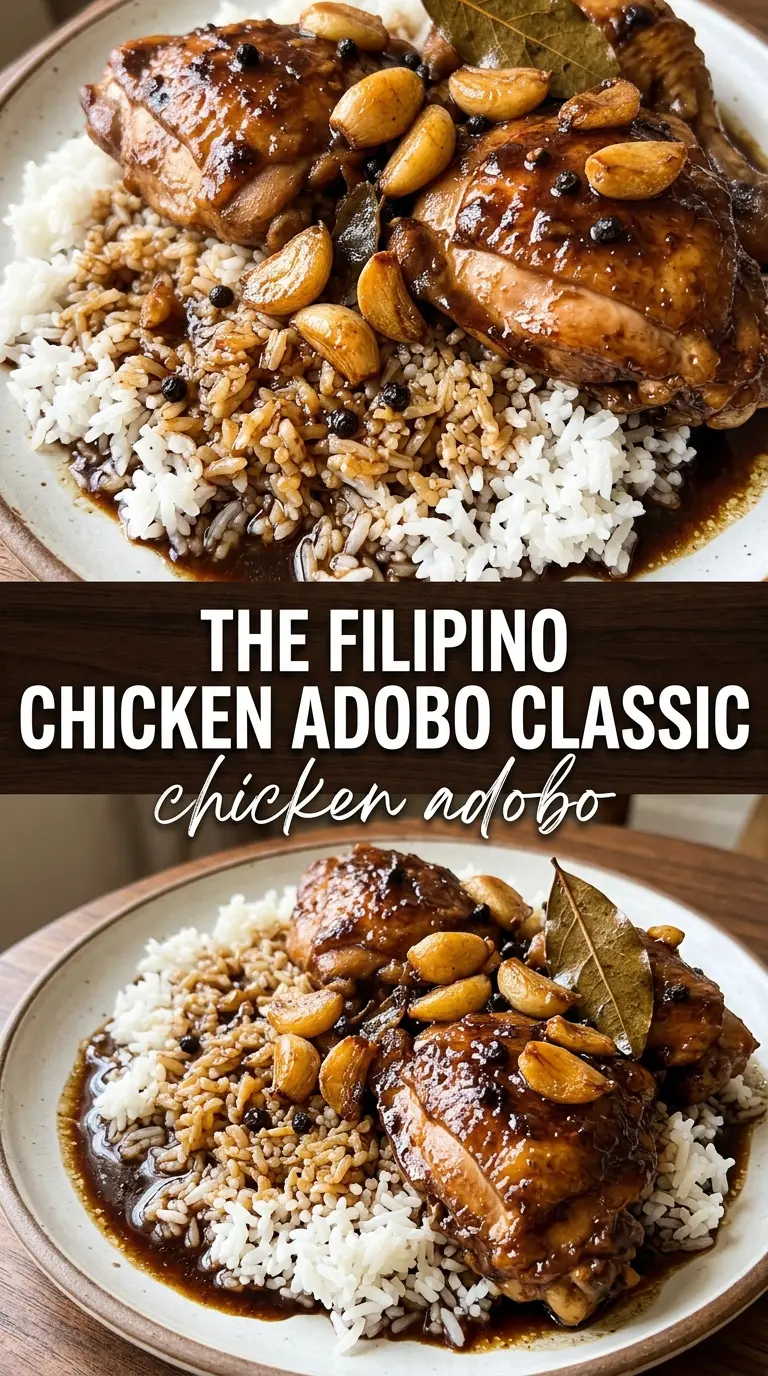
- Bone-in chicken thighs — These stay juicy through the braise and give the sauce more body than boneless pieces. Thighs are the right cut here because they can handle the longer simmer without drying out.
- Soy sauce — This is the salt and depth in one ingredient. Use a standard all-purpose soy sauce; a low-sodium version works too if that’s what you keep, but the sauce may need a longer reduction to taste balanced.
- White or cane vinegar — This is the signature adobo tang. Don’t swap in a flavored vinegar unless you want the dish to taste different; the clean acid lets the garlic and soy stay in front.
- Garlic — Smash the cloves so they release into the braising liquid. Minced garlic can get too aggressive and disappear into the sauce, while smashed cloves soften and turn sweet.
- Bay leaves and peppercorns — These build the background flavor that makes adobo taste like adobo. Fresh bay leaves aren’t necessary, but old stale ones won’t give much back, so use bay leaves that still smell fragrant.
- Brown sugar — Optional, but useful if your vinegar is especially sharp or you want a slightly darker glaze. Keep it to a small amount; adobo should stay savory first.
Building the Braise and Reducing It to a Glaze
Marinating for a Head Start
Combine the chicken, soy sauce, vinegar, smashed garlic, bay leaves, and peppercorns and let it sit for 30 minutes. That short marinate seasons the meat without turning it mushy, and it gives the garlic time to start working into the liquid. Don’t worry if the chicken doesn’t look heavily changed after resting; the real transformation happens in the pan.
Browning the Chicken Skin
Heat the oil in a large pan and brown the chicken skin-side down first until it turns deep golden. You’re not cooking it through here; you’re building flavor and giving the skin a little structure so it doesn’t go soft immediately in the braise. If the pan is crowded, the chicken will steam instead of brown, so work in batches if needed.
Braising Until Tender
Pour the marinade back over the chicken and bring it to a boil, then lower the heat and cover the pan. You want a steady, lazy simmer, not a hard boil, because aggressive heat tightens the meat and can push the sauce bitter. After about 25 minutes, the chicken should feel tender when pierced, and the liquid should smell rich rather than sharp.
Reducing the Sauce
Uncover the pan, add the brown sugar if you’re using it, and raise the heat just enough to keep the sauce bubbling. Cook until the liquid has reduced and turned glossy, with the chicken lacquered and the pan sauce thick enough to cling to a spoon. If the sauce still looks thin, keep going; adobo needs that last reduction to taste complete.
How to Adapt Chicken Adobo Without Losing the Soul of It
Use Chicken Drumsticks Instead of Thighs
Drumsticks work well here and stay juicy, but they can take a few minutes longer to become tender. Keep the sauce at a gentle simmer and check for doneness near the bone before you start reducing the liquid.
Make It Gluten-Free
Use a gluten-free soy sauce or tamari and keep everything else the same. The flavor stays close to the original, and the braising method doesn’t change at all.
Skip the Sugar for a Sharper Adobo
Leave out the brown sugar if you want the vinegar to stay brighter and the sauce less glossy. This version tastes more assertive, so it’s best if you like your adobo punchy instead of slightly rounded.
Storage and Reheating
- Refrigerator: Store for up to 4 days. The flavor gets even deeper after a night in the fridge, and the sauce may thicken as it chills.
- Freezer: Freezes well for up to 2 months. Cool it completely first, then pack the chicken and sauce together so the meat doesn’t dry out.
- Reheating: Warm gently on the stove over low heat with a splash of water if the sauce has tightened too much. High heat can make the chicken tough and can push the sauce toward salty as it reduces again.
Answers to the Questions Worth Asking
Chicken Adobo
Ingredients
Equipment
Method
- Combine soy sauce, white or cane vinegar, smashed garlic, bay leaves, and whole black peppercorns with the bone-in chicken thighs in a wide bowl, then marinate for 30 minutes. Keep it at a safe temperature (refrigerate if not browning right away) so the flavors soak in.
- Heat vegetable oil in a large pan over medium-high heat, then remove chicken from the marinade and brown skin-side down for 4-5 minutes until golden. Leave the browned fond behind for deeper flavor.
- Pour the marinade back over the chicken and bring it to a boil. Scrape any browned bits into the liquid.
- Reduce heat to medium-low, cover, and braise for 25 minutes. The sauce should gently simmer and the chicken should become tender.
- Uncover and, if using, stir in brown sugar, then increase heat to medium. Let it bubble actively so the sauce thickens.
- Cook uncovered for 10-15 minutes, stirring occasionally, until the sauce reduces and glazes the chicken. Serve over steamed rice with green onions.