Harvest bowls work because every bite hits a different note: warm roasted sweet potatoes, crisp chickpeas, fresh shredded Brussels sprouts, juicy pomegranate seeds, and a tangy-sweet fig balsamic drizzle that pulls everything together. It eats like a real meal, not a side salad dressed up as dinner, and the mix of textures keeps it interesting from the first forkful to the last.
The key is treating each part on its own. Roasting the sweet potatoes and chickpeas separately keeps the potatoes tender instead of crowded and the chickpeas crisp instead of steaming. The vinaigrette matters too: fig jam gives the dressing body and mellow sweetness, while Dijon helps it emulsify so it clings to the grains and greens instead of sliding to the bottom of the bowl.
Below, I’ve included the small details that make these bowls work reliably, plus a few swaps if you need to use what’s already in your kitchen.
The chickpeas got crisp in the oven and the fig dressing was the perfect balance of sweet and tangy. I made extra for lunch the next day and the bowls held up beautifully.
Save these harvest bowls with fig balsamic vinaigrette for a colorful dinner that balances roasted, crisp, and fresh in every bite.
The Trick to Keeping Every Bowl Layer Distinct
The difference between a grain bowl that feels fresh and one that turns soggy is all in the order and temperature of the components. Hot roasted vegetables tossed directly onto delicate greens can wilt the whole bowl, while underseasoned grains leave everything tasting flat. This version avoids both problems by building on a sturdy base and letting each ingredient keep its own texture.
Roasting the sweet potatoes and chickpeas separately matters because they brown at different rates and release moisture differently. If they share a pan, the potatoes soften before they caramelize and the chickpeas stay pale. The Brussels sprouts stay raw here on purpose; shaved thin, they bring crunch and a clean green edge that balances the sweeter parts of the bowl.
- Farro or quinoa — Farro gives you a nutty chew that holds up well under the vinaigrette. Quinoa keeps the bowl gluten-free and lighter, but it needs to be fully fluffed and cooled a bit before assembling so it doesn’t clump.
- Sweet potatoes — Cube them evenly so they roast at the same pace. Bigger chunks take longer to brown and can feel soft in the center before the edges color.
- Chickpeas — Dry them well before roasting. Any extra moisture on the skins keeps them from crisping, and that’s the difference between a crunchy topper and a soft one.
- Shaved Brussels sprouts — Use them raw for the best contrast. If they sit too long with the dressing, they soften just enough to lose that fresh crunch, so keep them untossed until serving.
What the Fig Balsamic Is Doing for This Bowl
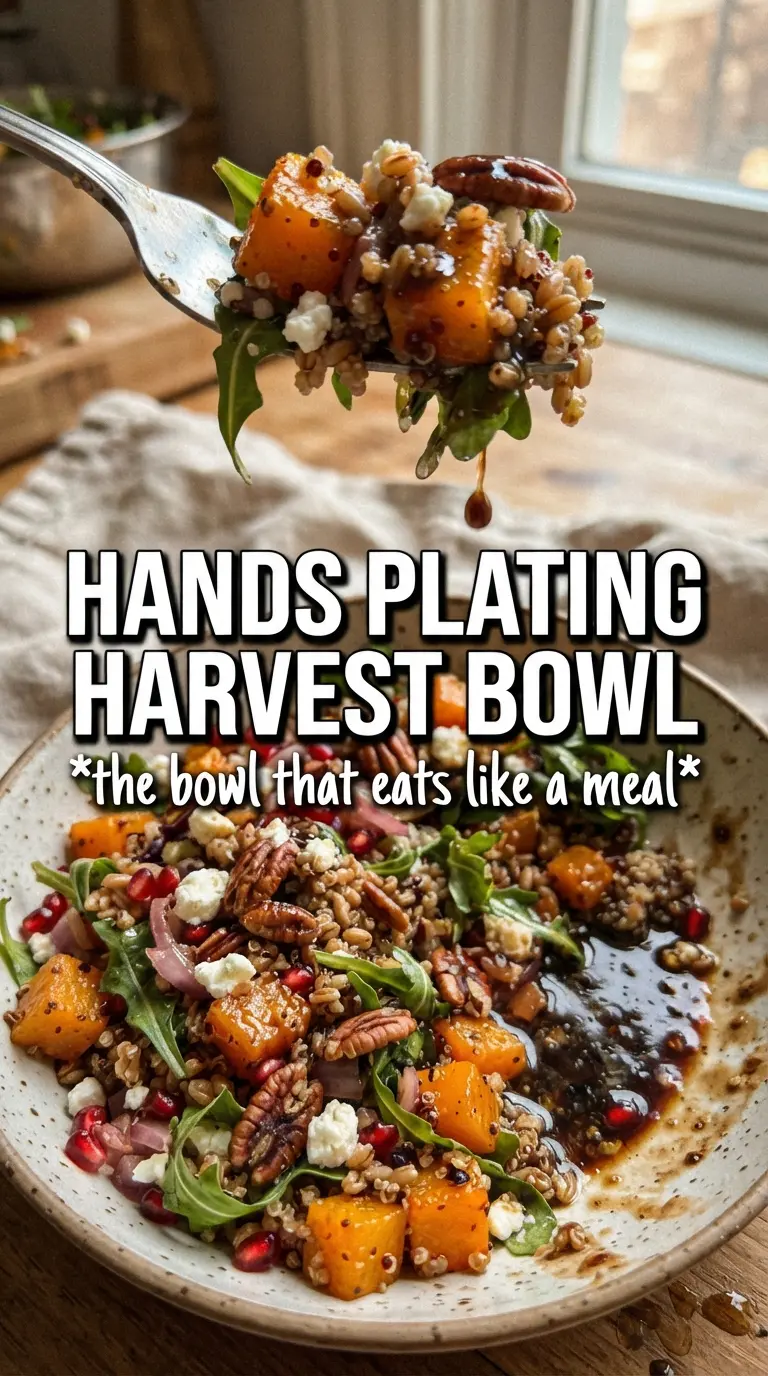
The vinaigrette is the part that turns a pile of good ingredients into a finished dish. Fig jam brings sweetness and a little body, balsamic vinegar brings sharpness, and Dijon helps the dressing cling instead of separating into oil and vinegar on the plate. Garlic adds a subtle bite that keeps the dressing from tasting flat or dessert-like.
Good fig jam matters more than a fancy oil here. The jam gives the dressing that thick, glossy texture that coats the grains and vegetables, while the olive oil just smooths it out. If your dressing tastes too sharp, add a touch more fig jam. If it tastes too sweet, a small splash more balsamic will bring it back into balance.
- Fig jam — This is the signature flavor. Choose a jam that tastes fruity, not cloying, because the sweetness concentrates once it’s whisked with balsamic.
- Balsamic vinegar — Use a decent balsamic with some natural sweetness. Very harsh vinegar can overpower the bowl, especially if your chickpeas are seasoned simply.
- Dijon mustard — This is the emulsifier. Without it, the dressing can split and slide off the vegetables instead of coating them.
- Olive oil — Use a good everyday oil here, not your most expensive bottle. It softens the acidity and gives the vinaigrette a smooth finish.
The Roasting and Assembly That Give These Bowls Their Texture
Roasting the Sweet Potatoes First
Spread the sweet potato cubes on a hot sheet pan and give them space. Crowding traps steam, and steam is the enemy of caramelization. You want edges that are browned and a center that yields easily when pierced with a fork, not soft cubes sitting in their own moisture.
Turning Chickpeas Crisp
Roast the chickpeas until the skins look dry and the outsides feel firm when nudged with a spoon. They should sound a little rattly on the pan, not spongy. If they go in damp, they’ll soften instead of crisping, so pat them dry before they ever hit the oven.
Whisking the Dressing Until It Clings
Whisk the fig jam, balsamic, olive oil, Dijon, and garlic until the mixture looks smooth and glossy. It should thicken slightly and hold together for a second when you lift the whisk. If it looks broken, keep whisking; Dijon usually pulls it back together before you reach for anything else.
Building the Bowls
Start with the grain base, then layer on the warm roasted vegetables, raw Brussels sprouts, pomegranate seeds, pecans, and goat cheese. Drizzle the vinaigrette over the top at the end so it lands on everything instead of disappearing into the bottom of the bowl. The goal is a forkful that changes texture every few bites, not a mixed-up salad with no structure.
Make It Dairy-Free Without Losing the Creamy Finish
Skip the goat cheese and add sliced avocado or a spoonful of hummus to bring back that rich, soft element. You’ll lose the tangy edge of the cheese, but the bowl stays satisfying and still has enough contrast from the vinaigrette and pomegranate seeds.
Swap the Grain for a Gluten-Free Base
Use quinoa instead of farro if you need the bowls to be gluten-free. Quinoa gives you a lighter texture and a slightly cleaner taste, while farro adds more chew and nuttiness, so choose based on whether you want the bowl to feel heartier or fresher.
Change the Crunch Element for a Less Sweet Bowl
Replace the candied pecans with toasted walnuts or pepitas if you want less sweetness. You’ll still get crunch, but the bowl will lean more savory and let the fig balsamic stand out even more.
Storage and Reheating
- Refrigerator: Store the components separately for up to 4 days. The sprouts stay crisp longer, and the chickpeas keep more of their texture.
- Freezer: The roasted sweet potatoes and chickpeas can be frozen, but the fresh sprouts, pomegranate seeds, and goat cheese should be added later. Freeze the grains and roasted components in airtight containers for up to 2 months.
- Reheating: Warm the grain, sweet potatoes, and chickpeas in the oven or a skillet until heated through. Don’t microwave the chickpeas if you want them to stay crisp; they’ll soften fast.
Questions I Get Asked About This Recipe
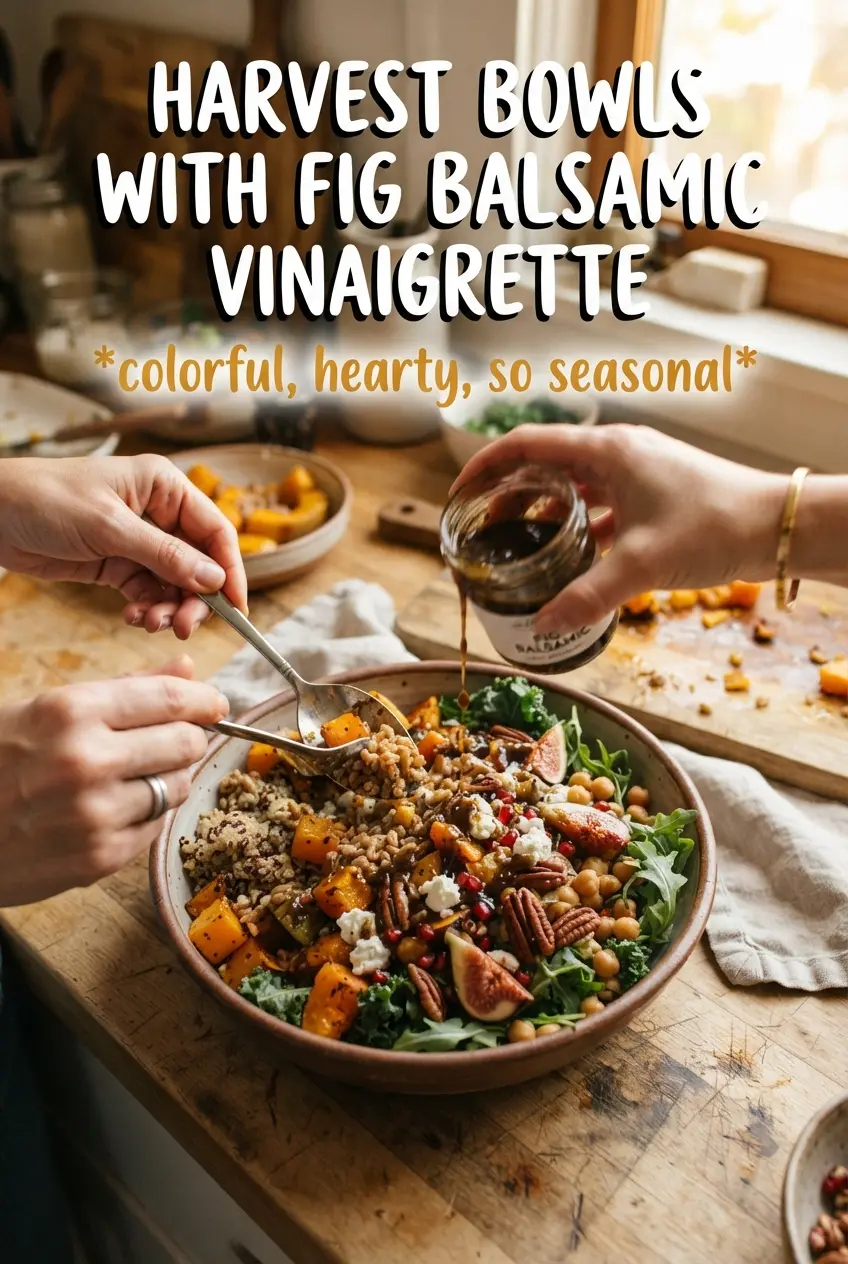
Harvest Bowls With Fig Balsamic Vinaigrette
Ingredients
Equipment
Method
- Heat oven to 425F and spread cubed sweet potatoes on a sheet pan in an even layer. Roast for 25 minutes, stirring once, until tender and browned at the edges.
- Spread drained chickpeas on a sheet pan in an even layer and return to the 425F oven. Roast for 20-25 minutes until crispy, then cool briefly on the pan.
- In a bowl, whisk together fig jam, balsamic vinegar, olive oil, Dijon mustard, minced garlic, and salt and pepper until smooth.
- Add cooked farro or quinoa to 4 bowls as the base, then top each with roasted sweet potatoes and crispy chickpeas.
- Scatter shaved Brussels sprouts, pomegranate seeds, and candied pecans over the bowls for color and crunch.
- Crumble goat cheese over each bowl and drizzle generously with fig balsamic vinaigrette right before serving.


