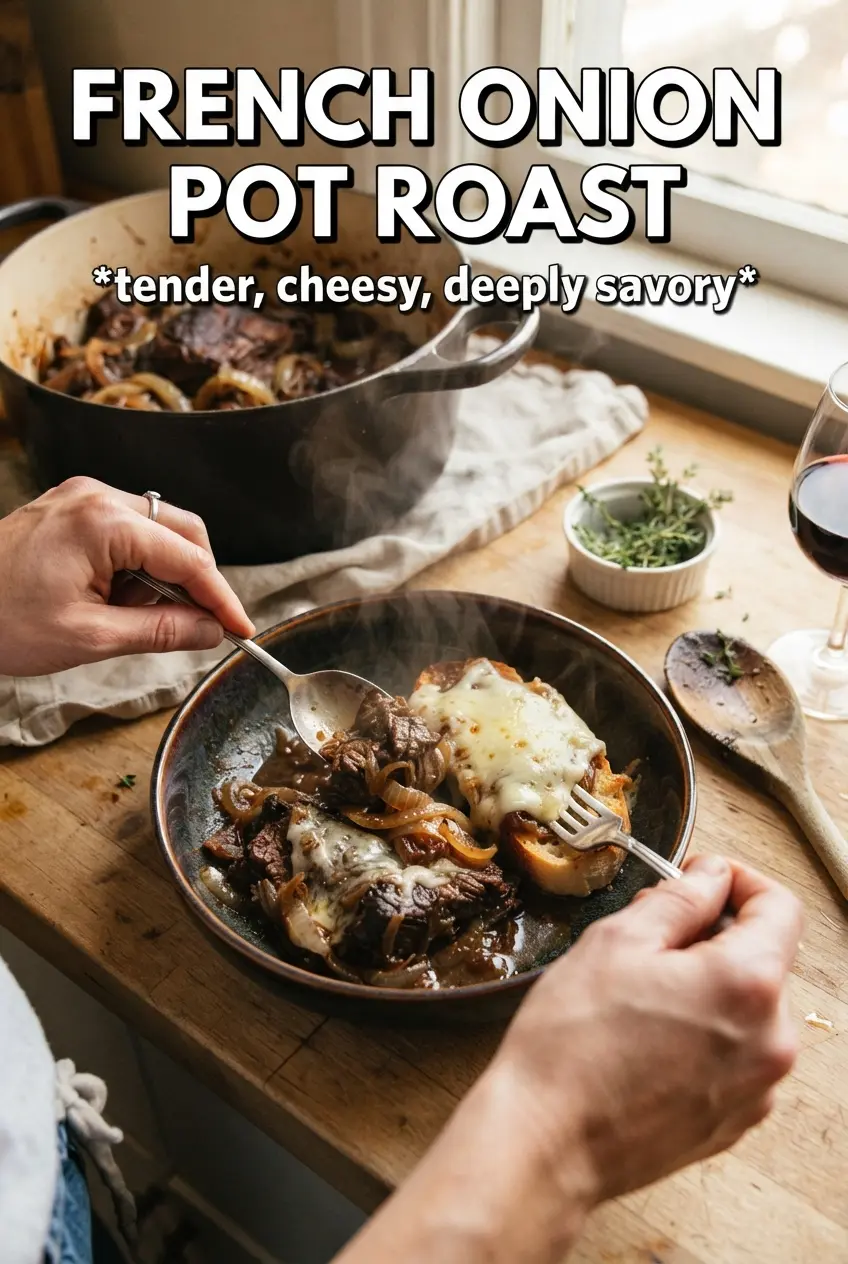
French onion pot roast turns a tough chuck roast into spoon-tender beef surrounded by deeply caramelized onions and a savory broth that tastes like it simmered all day. The whole dish lands somewhere between a classic braise and a bowl of French onion soup, which is exactly why it keeps getting made again. You get rich beef, sweet onions, and a blanket of melted Gruyere in every bite.
The part that makes this version work is patience with the onions and restraint with the heat. The roast needs a hard sear first, but the onions need time over medium-low heat to turn brown and jammy without scorching. Once the liquid goes in, the browned bits from the pan and the wine or broth build a base that tastes deep instead of flat.
Below, I’ll walk through the spots where this dish can go sideways and how to keep the broth rich, the beef tender, and the cheese topping bubbly instead of greasy.
The onions turned silky and sweet, and the roast shredded right into the broth after just over 3 hours. I topped it with toasted baguette and Gruyere like the recipe said, and the cheese browned beautifully under the broiler.
Love the rich onion broth and melty Gruyere finish? Save this French Onion Pot Roast for the night you want a braised beef dinner that tastes like French onion soup in a Dutch oven.
The Reason the Onions Need Their Own Time Before the Braise
French onion pot roast lives or dies on the onions. If they go into the pot pale and half-cooked, the broth tastes thin and the final dish misses the deep sweetness that makes the whole thing feel special. Thirty to thirty-five minutes of slow cooking in butter is not busywork here. That time turns sharp onion slices into something soft, brown, and almost silky.
The other mistake is rushing the sear and then crowding the pot with onions before the beef is out. The roast needs a deep brown crust for flavor, and the onions need enough contact with the hot pan to pick up those browned bits later when you deglaze. If the pan looks dry before the onions are done, a splash of broth or wine keeps the fond from scorching and pulls it right back into the sauce.
What Each Ingredient Is Actually Doing in This Braise

- Chuck roast — This cut is built for long braising. It has enough connective tissue to turn tender instead of dry, and that slow breakdown is what gives the broth body. A leaner roast won’t give you the same fall-apart texture.
- Onions — These are the backbone of the dish. Yellow onions are the best choice because they caramelize well and turn sweet without going mushy. Slice them evenly so they cook at the same pace.
- Dry white wine or beef broth — Wine adds acidity and a little brightness, which keeps the braise from tasting heavy. If you skip it, use broth, but know the sauce will be a little rounder and less sharp. Either way, the liquid is there to lift the browned bits from the pan.
- Gruyere — This cheese matters for both flavor and melt. It brings that nutty, onion-soup finish and browns beautifully under the broiler. Swiss cheese can work in a pinch, but the flavor is milder and less distinctive.
- Baguette — Toasted slices keep their shape under the cheese. If you use soft bread, it will collapse into the broth before the topping can brown.
Building the Braise So the Beef Turns Tender, Not Stringy
Get a Real Sear on the Roast
Season the chuck roast generously, then sear it in hot olive oil until it picks up a deep brown crust on all sides. That crust is not just for looks; it gives the braise a stronger, beefier base. If the meat sticks at first, leave it alone for another minute or two, then turn it when it releases cleanly.
Cook the Onions Until They Collapse and Brown
Add the butter and sliced onions to the pot and keep the heat at medium-low. Stir them often enough to prevent scorching, but not so often that they steam and stay pale. You’re looking for soft strands with a deep golden-brown color and a sweet smell that’s almost jammy. If they start to catch on the bottom, lower the heat and add a spoonful of broth to loosen them.
Deglaze Before the Liquid Goes In
Once the garlic is fragrant, pour in the wine or broth and scrape the bottom of the pot. Those browned bits dissolve into the liquid and give the braise its depth. Add the beef broth, Worcestershire, thyme, and bay leaves, then return the roast to the pot so it braises in a full-flavored liquid instead of plain stock.
Finish with Bread and Cheese Under the Broiler
After the roast is fork-tender, shred it in the broth and ladle it into bowls. Top each serving with toasted baguette and a pile of Gruyere, then broil just until the cheese melts and freckles with brown spots. Watch this part closely; a minute too long can turn the cheese oily and the bread too dark.
Ways to Adjust the Pot Roast Without Losing What Makes It Good
Make it dairy-free
Skip the butter and use olive oil to cook the onions. Leave off the Gruyere topping or use a dairy-free melting cheese if you have one you trust. The braise itself still works because the flavor comes from the onions, wine, broth, and seared beef.
Use beer instead of white wine
A dry lager or amber beer can replace the wine and gives the broth a deeper, maltier edge. Keep the amount the same and deglaze the pot while the onions are still hot so the liquid lifts every browned bit. The result is a little less bright and a little more robust.
Turn it into an open-faced sandwich dinner
Instead of serving the roast in bowls, pile the shredded beef and onions onto toasted baguette slices and top with Gruyere before broiling. The bread gets more structure and the whole dish eats more like a French onion melt. This works best if you thicken the broth slightly by simmering it uncovered for a few minutes before serving.
Storage and Reheating
- Refrigerator: Store the beef and broth for up to 4 days. The onions will soften more as they sit, and the flavor gets even deeper.
- Freezer: The braised beef and onions freeze well for up to 3 months. Freeze without the baguette and cheese topping, then add those fresh when serving.
- Reheating: Warm it gently on the stove over low heat or in a covered oven-safe dish at 325F. Reheat until the broth is hot and the beef is just heated through; boiling it hard can dry out the meat and make the onions stringy.
Answers to the Questions Worth Asking
French Onion Pot Roast
Ingredients
Equipment
Method
- Preheat oven to 325°F, then heat olive oil in a Dutch oven over high heat until shimmering. Pat chuck roast dry, sear until deeply browned on all sides, and remove to a plate.
- Reduce heat to medium-low and add butter to the Dutch oven, then add sliced onions in an even layer. Cook 30 to 35 minutes, stirring often, until deeply caramelized and jammy.
- Add minced garlic and cook for 30 to 60 seconds until fragrant. Pour in wine to deglaze, scraping up browned bits from the bottom of the pot.
- Stir in beef broth, Worcestershire sauce, fresh thyme, and bay leaves, then bring the mixture to a gentle simmer. Season lightly with salt and pepper as needed.
- Return the chuck roast to the pot, cover with the lid, and braise for 3 to 3-1/2 hours at 325°F. Cook until the roast is fall-apart tender when pressed.
- Carefully remove bay leaves and shred the beef in the broth, stirring to combine. Taste and adjust seasoning with salt and pepper.
- Ladle the pot roast and broth into bowls, then place toasted baguette on top. Sprinkle with shredded Gruyere until evenly covered.
- Broil for 3 to 4 minutes until the cheese is golden and bubbly. Rest 2 minutes before serving so the broth thickens slightly.


