Ground beef stroganoff lands on the table with that creamy, savory comfort that makes people go back for a second spoonful before the first bowl is even finished. The sauce clings to the noodles, the mushrooms stay meaty instead of disappearing, and the whole dish tastes like it simmered longer than it actually did. That’s the kind of weeknight dinner that earns a permanent place in the rotation.
The trick here is building flavor in layers without overcomplicating it. Browning the beef first gives the pan a base, and cooking the mushrooms and onions in the same skillet picks up all that good fond left behind. The flour goes in before the broth so the sauce thickens evenly, and the sour cream and cream cheese go in off the heat so the sauce stays smooth instead of grainy.
Below, I’ve included the details that matter most: how to keep the sauce from breaking, which ingredient swaps work without wrecking the texture, and what to do if you want to stretch this into a leftover meal that still tastes fresh the next day.
The sauce thickened up beautifully and stayed silky when I stirred in the sour cream off the heat. My husband said the mushrooms made it taste like something from a restaurant.
Save this creamy Ground Beef Stroganoff for the nights when you want rich mushroom sauce, tender noodles, and one skillet doing most of the work.
The Shortcut Most Stroganoff Recipes Miss: Building the Sauce in the Pan Drippings
Ground beef stroganoff can turn muddy fast if everything gets dumped together too early. The better move is to brown the beef first, then cook the onion and mushrooms in the same skillet so they absorb the flavor left behind in the pan. That’s where the depth comes from. If you wipe out the skillet or rush straight to the broth, the sauce still tastes fine, but it loses the roasted, beefy edge that makes stroganoff worth making at home.
The other place people trip up is heat. Once the sour cream and cream cheese go in, the pan should be off the burner. High heat can make dairy grainy or separate, and once that happens there’s no elegant way to fix it. Keep the simmer for the flour-thickened broth, then pull back the heat for the finish.
What Each Ingredient Is Actually Doing in This Skillet

- Ground beef — Use a beef with enough fat to brown well, then drain the excess so the sauce doesn’t turn greasy. Lean beef works too, but the pan drippings will be a little lighter in flavor. If you use very lean beef, a small splash of oil helps the mushrooms cook properly.
- Cremini mushrooms — These hold their shape and bring the earthy, savory note that makes stroganoff taste like stroganoff. White button mushrooms work in a pinch, but they’re milder and give off a little more water. Let them cook until they’ve lost their moisture and started to brown.
- Sour cream and cream cheese — Sour cream gives the signature tang, while cream cheese adds body and keeps the sauce from feeling thin. Full-fat versions melt in more smoothly. Low-fat sour cream is more likely to split, especially if the pan is too hot.
- Worcestershire and Dijon — These don’t make the dish taste like either condiment. They sharpen the beef and mushroom flavor and keep the sauce from tasting flat. Don’t skip both at once; the whole dish loses its backbone.
- Flour — Tossing the flour with the beef before the broth helps the sauce thicken evenly without lumps. If you add it directly to liquid, it tends to clump. Stir it in thoroughly before the broth goes in.
How to Keep the Sauce Creamy From the First Simmer to the Last Bite
Brown the Beef and Start the Flavor Base
Cook the beef in a large skillet until it’s deeply browned, not just no longer pink. That browned color means flavor, and you want those browned bits stuck to the pan. Drain the fat so the sauce doesn’t turn slick. If there’s too much moisture left in the pan, the onions and mushrooms will steam instead of caramelize.
Cook the Mushrooms Until They Shrink and Take on Color
Add the onion and mushrooms to the same skillet and cook until the mushrooms release their liquid, then keep going until that liquid cooks off. They should look smaller, darker, and a little glossy at the edges. Garlic goes in at the end for just a minute so it stays fragrant instead of bitter. If you rush this stage, the sauce will taste watery no matter how long you simmer later.
Thicken the Broth Before the Dairy Goes In
Sprinkle the flour over the beef and vegetables and stir until everything looks lightly coated. Then add the broth, Worcestershire, and Dijon, and simmer until the sauce thickens enough to coat a spoon. It should look silky, not gloopy. If it still seems thin after a few minutes, give it time; the flour needs a steady simmer to do its work.
Finish Off the Heat
Pull the skillet off the burner before stirring in the sour cream and cream cheese. The cream cheese should melt into the sauce in little streaks first, then disappear into a smooth, pale gravy. Season at the end with salt and pepper, because the broth and Worcestershire already bring saltiness. Serve it right away over hot egg noodles so the sauce stays loose and glossy.
How to Adapt This When You Want It Lighter, Lower-Carb, or a Little Different
Gluten-Free Version
Swap the all-purpose flour for a gluten-free flour blend or use a cornstarch slurry at the end. If you use cornstarch, whisk it into a little cold broth first so it doesn’t clump. The texture will still be creamy, just a touch lighter.
Lower-Carb Serving
Serve the stroganoff over cauliflower mash, zucchini noodles, or sautéed cabbage instead of egg noodles. The sauce is rich enough to carry those lighter bases without tasting thin. Keep the sauce a little looser if you’re not using pasta, since there’s less starch on the plate to absorb it.
Ground Turkey Swap
Ground turkey works if you want a lighter version, but it needs a little help because it doesn’t bring the same beefy depth. Use an extra splash of Worcestershire and don’t skimp on browning the mushrooms. The result is still creamy and comforting, just less rich.
Storage and Reheating
- Refrigerator: Store leftovers in an airtight container for up to 4 days. The sauce will thicken as it chills.
- Freezer: It freezes, but dairy-based sauces can change texture a bit after thawing. If you freeze it, do it without the noodles and expect a slightly less silky sauce when reheated.
- Reheating: Warm gently on the stove over low heat with a splash of broth or water. Don’t blast it in the microwave or the sauce can separate and the noodles can dry out.
Answers to the Questions Worth Asking
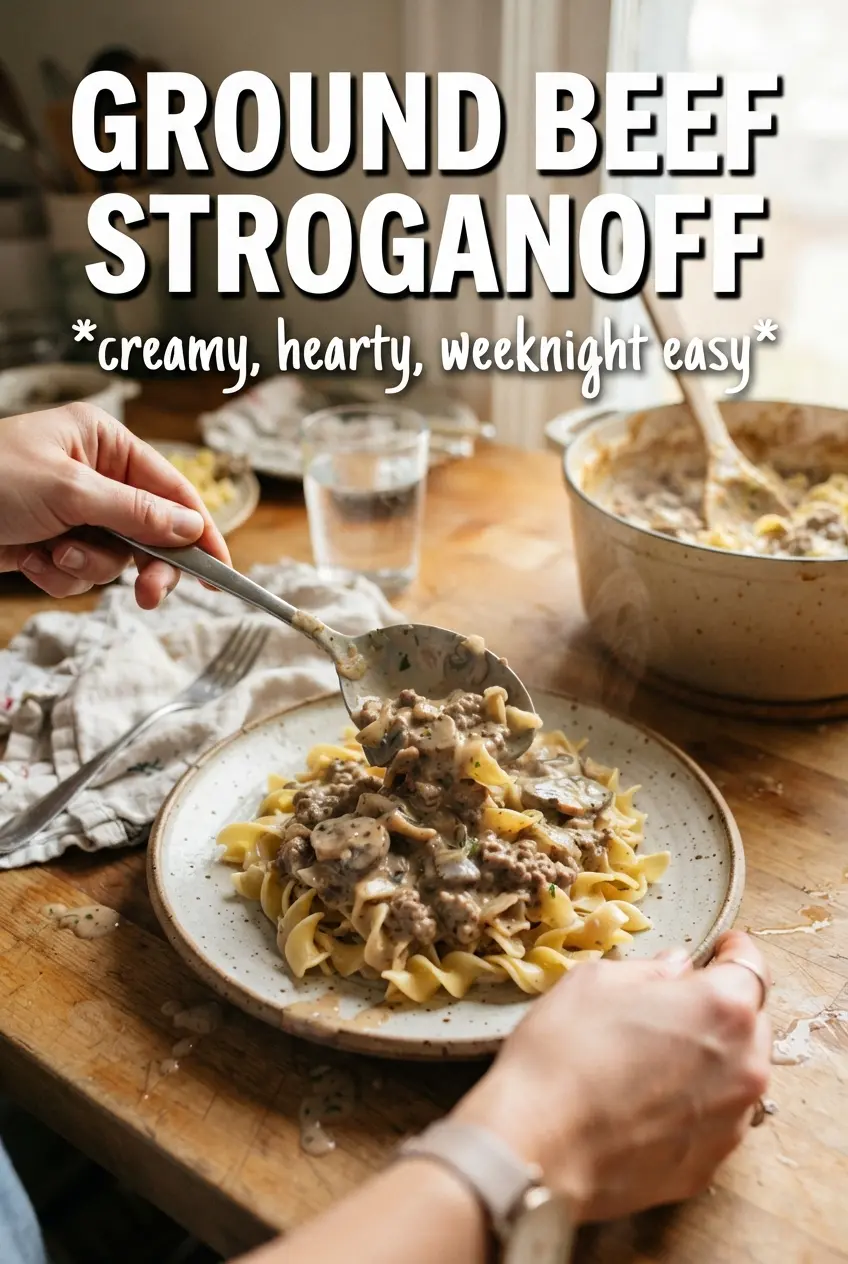
Ground Beef Stroganoff
Ingredients
Equipment
Method
- Brown the ground beef in a large skillet over medium-high heat, then drain excess fat. Keep cooking until the beef is no longer pink, about 6-8 minutes, and it should look evenly browned.
- Sauté the diced onion and sliced cremini mushrooms in the same skillet over medium heat for 6-7 minutes. Cook until the mushrooms release moisture and the onion looks softened, then add the minced garlic and cook 1 minute until fragrant.
- Return the browned beef to the skillet and sprinkle in the all-purpose flour, stirring to coat. Make sure the flour disappears into the meat mixture, with no visible dry pockets.
- Add the beef broth, Worcestershire sauce, and Dijon mustard, then stir and bring to a simmer. Simmer for 5-7 minutes until the sauce thickens enough to lightly coat a spoon.
- Remove the skillet from heat and stir in the sour cream and softened cream cheese until smooth. Stop stirring only when the sauce looks glossy and creamy with no visible streaks.
- Season with salt and pepper to taste. Serve the stroganoff over cooked egg noodles and top with fresh parsley and paprika.


