Silky, savory, and packed with the kind of deep tomato flavor that clings to every ridge of pasta, this sun-dried tomato vegan pasta earns its place in the regular dinner rotation fast. The sauce is creamy without dairy, the spinach wilts right into the pan, and the whole dish lands with that rich, restaurant-style feel you usually only get after a lot more effort.
What makes this version work is the layering. Sun-dried tomato oil starts the base, then garlic and tomato paste get cooked long enough to lose their raw edge and turn sweet and concentrated. Coconut cream gives body, while nutritional yeast adds the salty, nutty depth that keeps the sauce from tasting flat. A little pasta water pulls everything together into a glossy coating instead of a heavy blanket.
Below, I’ll walk through the one step that keeps the sauce from getting too thick, plus a few swaps that still give you a satisfying bowl if you need to adjust for what’s in the pantry.
The sauce turned out glossy and thick without feeling heavy, and the pasta water made it cling to the rigatoni instead of pooling in the bowl. I’ve already made it twice this week.
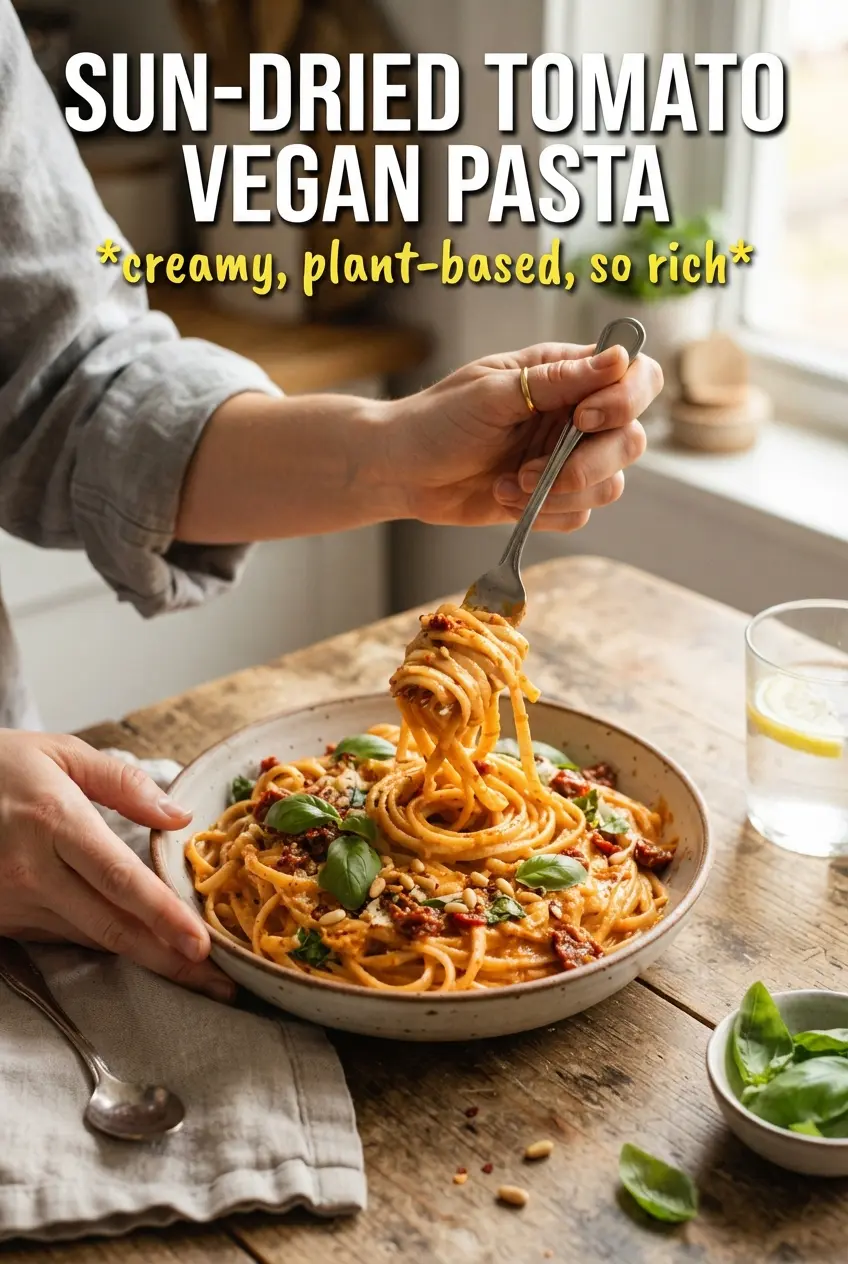
Creamy sun-dried tomato vegan pasta with spinach, basil, and that glossy dairy-free sauce is one to pin for easy dinners.
The Trick to a Creamy Vegan Sauce That Actually Clings
The mistake that ruins a lot of dairy-free pasta sauces is treating them like a quick stir-together situation. Coconut cream has body, but it still needs a little time on the heat to pick up the tomato paste, garlic, and seasoning so the final sauce tastes built, not blended. That short simmer is what keeps the flavor from reading as flat or coconut-heavy.
Pasta water is the other piece that matters. The starch helps the sauce emulsify and coat the noodles, especially with rigatoni or penne where you want the sauce tucked into the ridges and centers. If the pan looks tight before you add the pasta, don’t panic; a splash of reserved water loosens it into a glossy sauce instead of a thick paste.
- Sun-dried tomatoes in oil — The oil carries more flavor than dry-packed tomatoes, and it gives you a built-in sauté fat with depth. If you only have dry-packed tomatoes, soak them in hot water first and add a tablespoon of olive oil to the pan.
- Coconut cream — Full-fat coconut cream gives the sauce its body. Lite coconut milk thins out too much and won’t hold the sauce the same way.
- Nutritional yeast — This is what gives the sauce that savory, Parmesan-like edge. Don’t skip it if you want the sauce to taste complete rather than just creamy.
- Tomato paste — Cooking it for a minute matters. That little bit of heat pulls out sweetness and removes the raw, metallic edge it can have straight from the can.
Building the Sauce in the Right Order
Starting with the Flavor Base
Warm the sun-dried tomato oil first, then add the garlic and chopped tomatoes. You want the garlic fragrant and softened, not browned; once it starts to color, it turns bitter and takes over the whole dish. This first minute or two sets the base for everything that follows.
Cooking Out the Tomato Paste
Stir in the tomato paste and let it sizzle for about a minute before adding the coconut cream. It should darken a shade and smell sweeter. If you dump the cream in too early, the paste stays sharp and the sauce never gets that rounded, cooked flavor.
Finishing With Pasta Water and Spinach
Once the cream has simmered and thickened, add the cooked pasta and a splash of reserved water. Toss until the sauce looks glossy and coats the noodles instead of sitting in the bottom of the pan, then add the spinach and keep tossing just until it wilts. If the sauce feels too thick after the pasta goes in, that’s the moment for more pasta water, not more cream.
Make It Without Coconut
Use an unsweetened oat or cashew cream if you don’t want coconut flavor in the background. The sauce will be a little lighter and less rich, but the tomato paste and nutritional yeast still carry the dish. Just keep the simmer gentle so the base stays smooth.
Gluten-Free Pasta Swap
Use a sturdy gluten-free penne or rigatoni and cook it just to al dente. Gluten-free pasta can go from firm to mushy fast, and overcooked noodles won’t hold up in this thick sauce. Reserve a little extra pasta water because some brands drink up more than regular wheat pasta.
Add Protein Without Losing the Sauce
Stir in white beans or chickpeas at the same time as the spinach for extra heft. They soak up the sauce without changing the texture much, and they make the dish feel more like a full meal. Keep the heat low so the beans don’t break apart.
Storage and Reheating
- Refrigerator: Keeps for 3 to 4 days in a sealed container. The sauce thickens as it chills, so expect the pasta to drink up a little more of it.
- Freezer: Freezes well for up to 2 months, though the texture softens a bit after thawing. Freeze in individual portions for the easiest reheating.
- Reheating: Reheat gently on the stovetop with a splash of water or unsweetened plant milk. High heat can make the sauce split or dry the pasta out before the center warms through.
Questions I Get Asked About This Recipe
Sun-Dried Tomato Vegan Pasta
Ingredients
Equipment
Method
- Bring a large pot of salted water to a boil and cook the rigatoni or penne until al dente, about 10 minutes. Reserve 1 cup of pasta water, then drain and set aside.
- Heat the sun-dried tomato oil in a Dutch oven over medium heat until shimmering. Sauté the minced garlic and chopped sun-dried tomatoes for 2 minutes, stirring until fragrant and lightly softened (visual cue: small bubbles around the edges).
- Stir in the tomato paste and cook for 1 minute, keeping the mixture moving. Cook until the paste darkens slightly (visual cue: richer red-brown color).
- Add the coconut cream, Italian seasoning, red pepper flakes, and nutritional yeast. Simmer for 5 minutes until the sauce looks creamy and cohesive (visual cue: gentle bubbling and a smooth sheen).
- Add the drained pasta to the sauce and toss to coat, adding reserved pasta water as needed. Keep tossing until the sauce clings to the pasta (visual cue: glossy coating, not watery).
- Add the baby spinach and toss until wilted, about 1 to 2 minutes. Stop once the spinach turns fully dark green and tender (visual cue: leaves collapse).
- Season with salt and pepper to taste. Top with fresh basil and, if desired, an extra sprinkle of nutritional yeast (visual cue: herb flecks on the surface).


