Scalloped sweet potatoes bake into tender layers with a silky cream base, a little maple warmth, and a deeply browned Gruyere-and-parmesan top that cracks just slightly when you scoop into it. The thin slices soften into one another without turning watery, and the edges pick up the best kind of caramelized sweetness where the cream reduces against the pan.
What makes this version worth keeping is the balance. Sweet potatoes bring enough natural sugar that the dish can go cloying fast, so the garlic, thyme, cinnamon, and nutmeg need to stay subtle and steady rather than loud. The cream mixture should taste a touch seasoned before it goes into the oven, because the potatoes absorb a lot of that flavor as they bake. Gruyere melts smoothly and gives the top a nutty finish, while parmesan helps the crust brown instead of staying pale and soft.
Below, I’m walking through the one detail that matters most for the texture, plus a few swaps that help if you want to make this lighter, richer, or ahead of time without losing that layered, creamy finish.
The sauce soaked into the potato layers without turning greasy, and the top came out browned and bubbling exactly at the 20-minute mark after uncovering. I served it with ham and there wasn’t a spoonful left.
Love the maple-kissed layers and golden cheese crust on these scalloped sweet potatoes? Save it for your next holiday side dish.
The Slicing Thickness That Keeps Sweet Potatoes Tender, Not Soupy
The biggest mistake with scalloped sweet potatoes is slicing them unevenly. Thick pieces stay hard at the center while thin ones collapse into the cream, which leaves you with a dish that tastes cooked but eats patchy. Aim for thin, even slices so everything softens at the same rate and the cream can move between the layers instead of pooling underneath.
The foil-covered bake is doing most of the work here. That first stretch of covered time softens the potatoes without drying the surface, and the final uncovered bake is where the top turns deeply golden and the liquid reduces into a proper sauce. If you pull it too early, the middle will still feel firm when you try to serve it, so test the center with a knife all the way to the bottom of the dish.
What Each Ingredient Is Actually Doing in This Dish
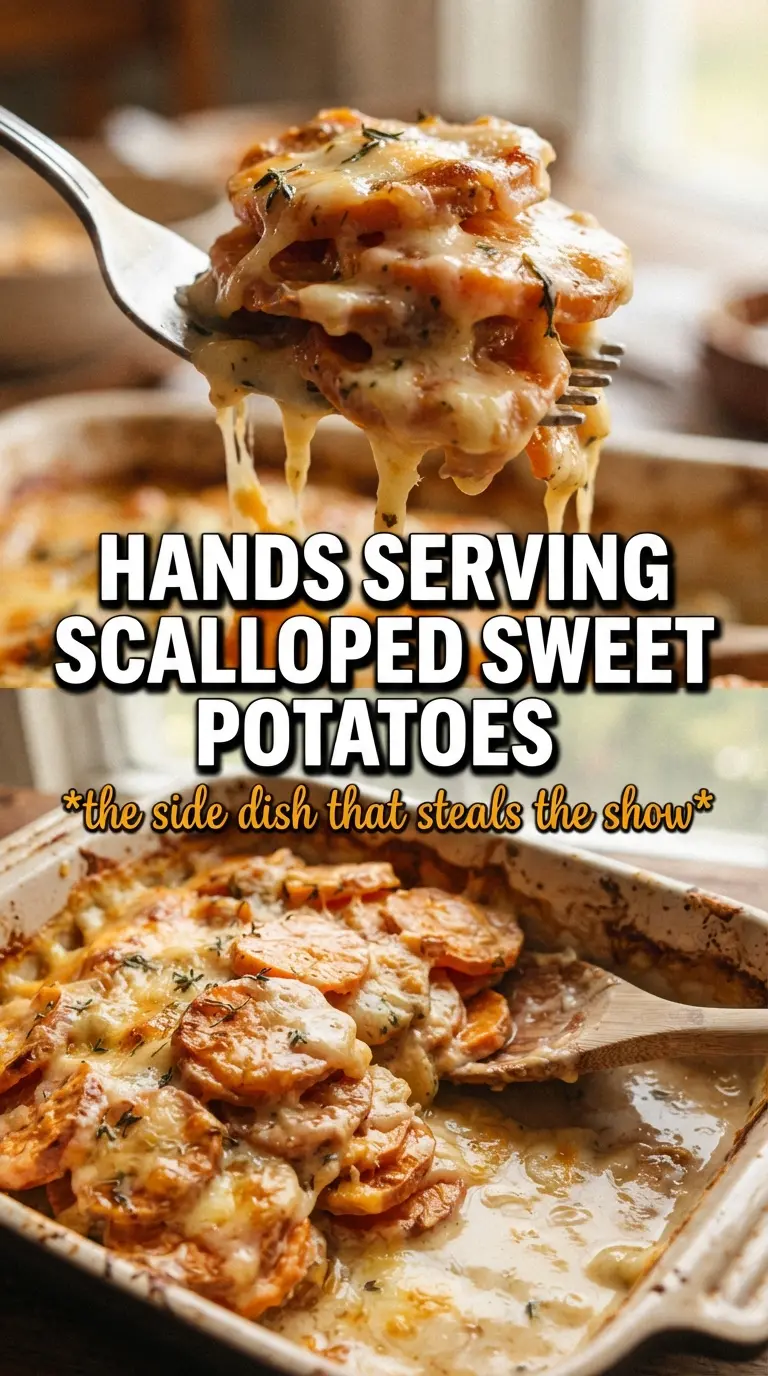
- Sweet potatoes — These need to be sliced thin and evenly so they soften into distinct layers instead of turning dense. A mandoline helps, but a sharp knife works if you keep the slices consistent.
- Heavy cream and whole milk — The cream gives the sauce body, while the milk keeps it from feeling too heavy. You can swap in more milk in a pinch, but the sauce will be thinner and less lush.
- Maple syrup — This doesn’t make the dish taste sweet like dessert; it just rounds out the earthy potatoes and helps the edges caramelize. Use real maple syrup, not pancake syrup, or the flavor turns flat.
- Gruyere and parmesan — Gruyere melts into that stretchy, nutty blanket on top, and parmesan helps it brown. If you skip the parmesan, the top can melt but stay pale.
- Thyme, cinnamon, and nutmeg — These should whisper, not shout. They add warmth and depth, but too much cinnamon will push the dish into pie territory.
Building the Layers So the Sauce Stays Silk-Smooth
Whisking the Cream Base
Mix the cream, milk, garlic, maple syrup, thyme, cinnamon, nutmeg, salt, and pepper before you touch the potatoes. That step matters because the seasoning spreads evenly through the dish instead of landing in one salty pocket. The mixture should taste gently savory with a hint of sweetness. If it tastes bland in the bowl, it’ll taste bland after an hour in the oven.
Overlapping the Potatoes
Lay the slices in overlapping rows, not random piles. Tight layering gives you that scalloped look and helps the cream move upward through the dish as it bakes. If the potatoes are stacked too loosely, the top dries out before the bottom turns tender. Pour the cream mixture over evenly and tap the dish once on the counter to settle the liquid between the layers.
Covered Baking First
Cover the dish tightly with foil for the first 40 minutes. That trapped steam softens the sweet potatoes and keeps the top from scorching before the center is ready. If your foil isn’t sealed well, the corners can dry out and the sauce can reduce too fast. The potatoes should be starting to surrender when you lift the foil, but not fully tender yet.
Finishing Under the Broiler-Friendly Top
After the cheese goes on, the final bake is where the dish turns from creamy to memorable. The top should bubble at the edges and brown in spots, while the sauce thickens underneath. If the cheese browns before the potatoes are tender, lower the pan one rack and give it a few more minutes. Let it rest for 10 minutes before serving so the sauce settles instead of running across the plate.
How to Adapt These Scalloped Sweet Potatoes Without Losing the Creamy Finish
Make It Dairy-Free
Use full-fat canned coconut milk in place of the cream and milk, but expect a faint coconut note and a slightly looser sauce. Skip the Gruyere and parmesan, or use a dairy-free melting cheese if you’ve tested one you trust. The potatoes will still cook up tender, but the top won’t brown the same way.
Use a Different Cheese Blend
If Gruyere isn’t in the fridge, use Swiss, fontina, or sharp white cheddar. Fontina gives the smoothest melt, cheddar gives a louder savory edge, and Swiss keeps the flavor close to the original. Keep parmesan in the mix if you want the top to brown properly.
Make It Ahead for a Holiday Table
Assemble the dish up to a day in advance, cover it, and refrigerate it before baking. Let it sit at room temperature while the oven preheats so the baking time doesn’t stretch too long. If it’s going into the oven cold, add extra time under foil until the center is hot and the potatoes yield easily.
Make It a Little Lighter
You can replace part of the heavy cream with extra whole milk, but don’t cut the dairy too far or the sauce turns thin. The dish will still bake up, but the texture will be less luxurious and the edges won’t coat the potatoes as well. This is the swap to use when you want a lighter side without changing the structure.
Storage and Reheating
- Refrigerator: Store covered for up to 4 days. The sauce will thicken as it chills, which is normal.
- Freezer: It freezes, but the texture gets softer after thawing. For the best result, freeze in portions, then thaw overnight in the refrigerator before reheating.
- Reheating: Reheat covered in a 350F oven until hot through. If you microwave it, the cheese top softens and the edges can get rubbery, so the oven is the better choice for keeping the layers intact.
Answers to the Questions Worth Asking
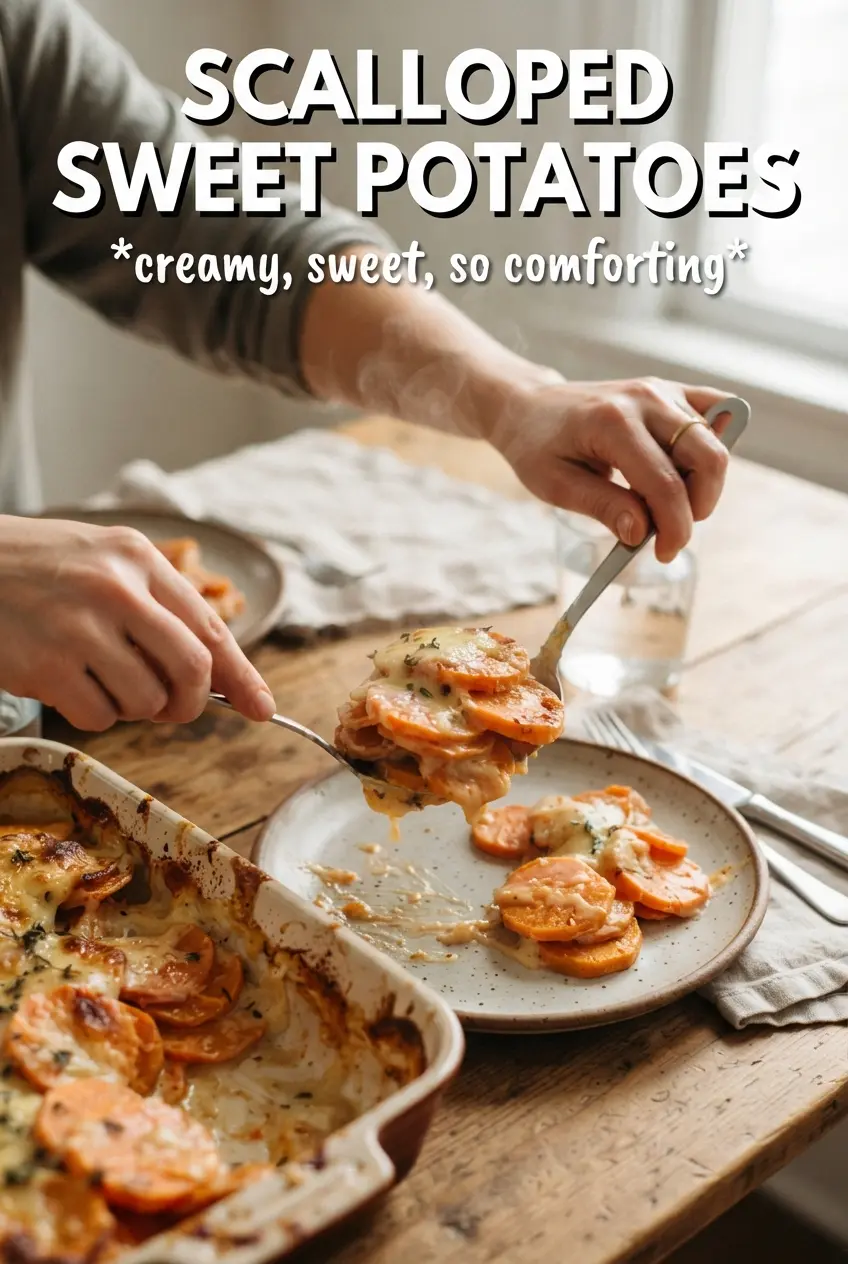
Scalloped Sweet Potatoes
Ingredients
Equipment
Method
- Preheat the oven to 375F and butter a 9x13 baking dish. The dish should be coated so the top releases cleanly.
- Whisk heavy cream, whole milk, minced garlic, maple syrup, thyme, cinnamon, nutmeg, salt, and pepper until smooth and evenly combined. The mixture should look speckled from the herbs and spices.
- Layer the thinly sliced sweet potatoes in overlapping rows in the baking dish. Arrange them tightly so the slices pack evenly.
- Pour the cream mixture over the sweet potatoes evenly. You should see it seep between the layers.
- Cover tightly with foil and bake at 375F for 40 minutes. The sweet potatoes should be starting to soften when you lift the foil carefully.
- Uncover and scatter the Gruyere and parmesan over the top. Create an even layer so the crust browns uniformly.
- Bake uncovered at 375F for 20-25 more minutes until the sweet potatoes are completely tender and the topping is golden and bubbly. Watch for bubbling at the edges and a set, browned surface.
- Rest the scalloped sweet potatoes for 10 minutes before serving. This helps the creamy layers thicken so the slices hold their shape.


