Golden pork chops, tender potatoes, and garlicky green beans all finish on one pan with a buttery pan sauce that seeps into every bite. The potatoes get a head start so they can turn crisp at the edges before the pork goes in, and the quick skillet sear on the chops gives you better color than oven-only cooking ever will.
The real trick here is timing. Bone-in pork chops need enough heat to cook through without drying out, and baby potatoes need enough time to soften before they roast beside them. Starting the potatoes first, then adding the seared chops and green beans later, keeps everything on the same schedule instead of leaving one part limp while you wait for another to catch up.
Below you’ll find the little details that keep the pork juicy, the potatoes caramelized, and the garlic butter from burning in the oven. The method is simple, but the order matters.
The potatoes got those browned edges I always want, and the pork stayed juicy at 145°F. I’ve made this twice now, and the garlic butter over the green beans is what makes the whole pan taste like dinner instead of just meat and potatoes.
Love these juicy sheet pan pork chops and caramelized potatoes? Save it to Pinterest for an easy one-pan dinner with built-in garlic butter.
The Trick to Keeping Pork Chops Juicy While the Potatoes Finish
Pork chops dry out when they spend too long in the oven, especially if they’re boneless or thin. Bone-in chops that are about 1 inch thick give you a little more forgiveness, but they still need a fast sear and a short finish so the center lands at 145°F without going past it. The potatoes need the opposite treatment: time first, then high heat, or they stay pale and underdone.
That’s why this recipe starts the potatoes alone. Once they’ve had a 15-minute head start, they’re already partly tender and starting to color, so the chops and green beans can finish alongside them instead of dragging out the total cook time. If your pork tends to overcook before the vegetables catch up, the fix is not more oven time. It’s giving the potatoes a jump start and searing the chops before they ever hit the sheet pan.
What Actually Matters in the Seasoning and Pan Sauce
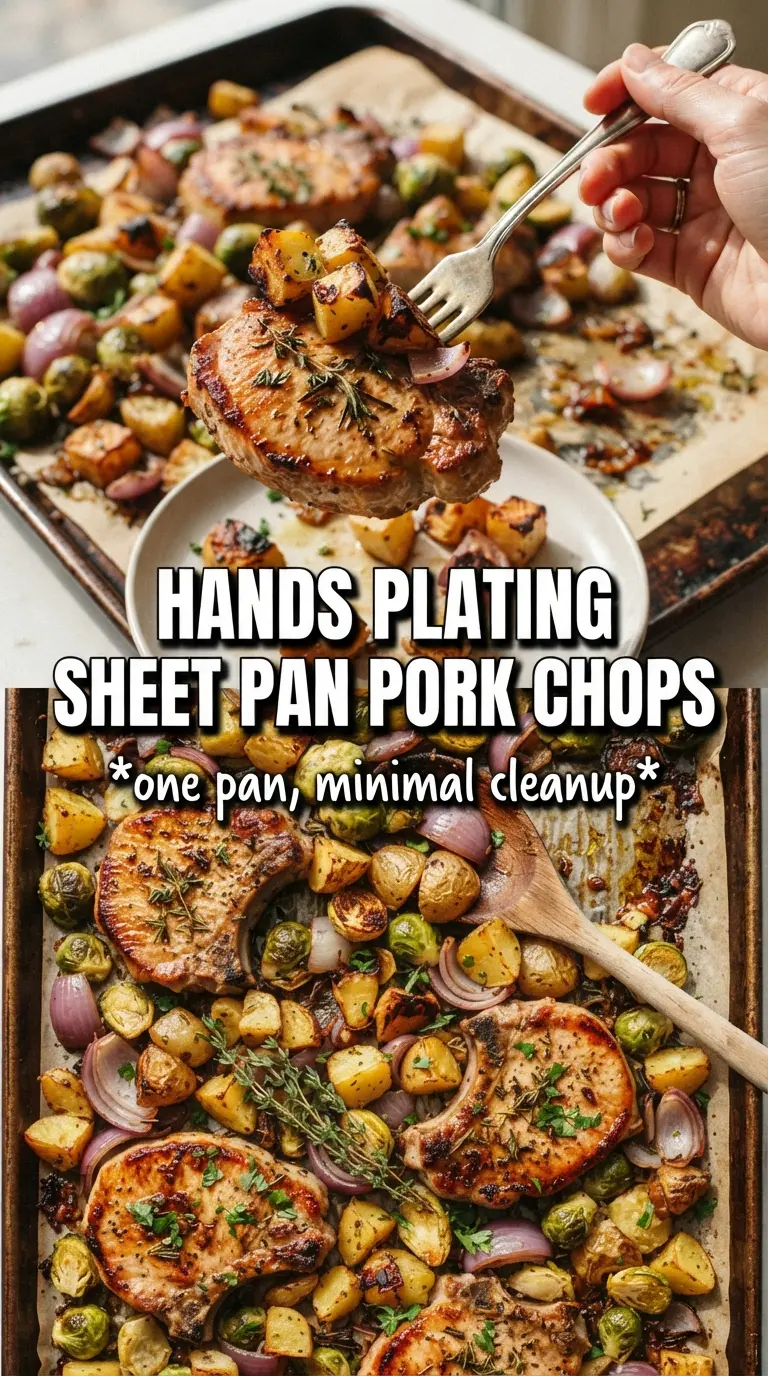
The rosemary, thyme, garlic powder, and smoked paprika do different jobs here. Rosemary and thyme bring the roast-y, herb-forward base; garlic powder seasons the potatoes without burning; smoked paprika gives the pork a deeper color and a little warmth. Fresh garlic goes into the butter at the end, not the beginning, because minced garlic can scorch during the final roast and turn bitter.
- Bone-in pork chops — Bone-in chops stay juicier than thin boneless cuts and handle the high-heat finish better. If boneless is what you have, choose chops that are at least 1 inch thick and start checking temperature early so they don’t go dry.
- Baby potatoes — Their small size and waxy texture help them roast into crisp-edged wedges without falling apart. Cut them evenly so the whole tray finishes at the same time.
- Green beans — They only need the last stretch of oven time, which keeps them bright and slightly snappy instead of limp. Trim them well so the ends don’t dry out on the pan.
- Butter and garlic — The melted butter carries the garlic over the top of the pork and potatoes and helps the surface take on a richer finish. Stir the garlic into warm butter right before drizzling so it stays fragrant, not browned.
How to Pull the Whole Pan Together Without Overcooking Anything
Getting the Potatoes Started
Toss the halved potatoes with olive oil, rosemary, thyme, garlic powder, salt, and pepper, then spread them out in a single layer on the lined sheet pan. Give them space so they roast instead of steam; crowded potatoes soften before they brown. After 15 minutes, the edges should be starting to color and the cut sides should look a little dry and matte.
Building Color on the Pork First
Season the pork chops with smoked paprika, salt, and pepper, then sear them in a hot skillet for 2 minutes per side. You’re not cooking them through here, just creating a browned surface that brings more flavor to the final dish. If the pan isn’t hot enough, the chops will gray before they brown, and you’ll lose that deep roasted taste.
Finishing Everything in One Roast
Push the potatoes toward the edges, set the chops in the center, and tuck the green beans around the pan. Mix the garlic with the melted butter and drizzle it over everything, then roast until the pork reaches 145°F in the thickest part. Pull the pan as soon as the thermometer says 145°F; pork chops climb a few degrees while they rest, and that carryover heat is what keeps them juicy.
How to Adapt This for Different Tables and Different Pantries
Make It Dairy-Free
Swap the butter for an equal amount of olive oil. You’ll lose a little of the rich, rounded finish, but the garlic still carries beautifully over the pork and vegetables, and the tray stays just as easy to pull together.
Use Boneless Pork Chops
Boneless chops work, but they cook faster and dry out more easily. Keep them thick, watch the oven closely, and start checking a few minutes early so they hit 145°F without crossing into tough territory.
Swap the Potatoes for Another Roasting Vegetable
Cauliflower florets or Brussels sprouts can stand in for the potatoes if you want something lower in starch. They’ll need less head start, though, so add them later than the potatoes or they’ll overbrown before the pork is done.
Make It Herbier Without Changing the Method
Fresh rosemary or thyme can replace the dried herbs if you have them on hand. Use about three times as much fresh as dried, and chop it finely so it clings to the potatoes instead of burning in loose needles on the pan.
Storage and Reheating
- Refrigerator: Store leftovers in an airtight container for up to 3 days. The potatoes soften a little as they sit, but the flavor holds up well.
- Freezer: You can freeze the pork and potatoes, but the green beans turn soft after thawing. Freeze in a tightly sealed container for up to 2 months if you don’t mind a softer vegetable side.
- Reheating: Warm leftovers in a 350°F oven until heated through. The oven brings the potatoes back better than the microwave; if you microwave, the pork can turn rubbery and the potatoes go mealy.
Answers to the Questions Worth Asking
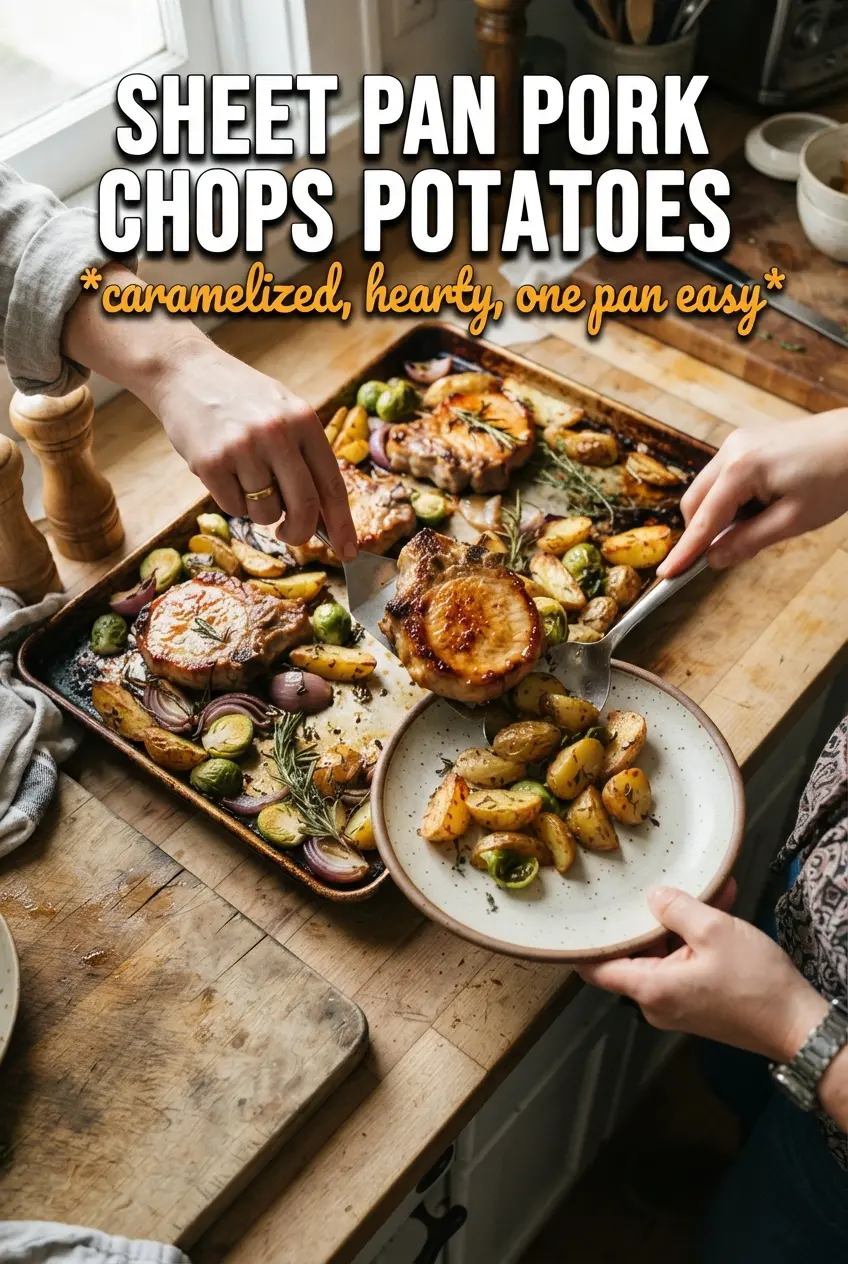
Sheet Pan Pork Chops and Potatoes
Ingredients
Equipment
Method
- Preheat the oven to 425°F and line a large rimmed baking sheet with parchment for easy release.
- Toss the baby potatoes with 2 tbsp olive oil, dried rosemary, dried thyme, garlic powder, salt, and pepper, then spread them in a single layer on the pan.
- Roast the potatoes for 15 minutes, until the edges start to turn golden.
- Season the bone-in pork chops with smoked paprika, salt, and pepper.
- Heat the remaining olive oil in a hot skillet and sear the pork chops for 2 minutes per side until browned.
- Push the potatoes to the edges, place the pork chops in the center, and add the green beans around the chops.
- Mix the minced garlic with the melted butter and drizzle it over everything so it pools around the chops.
- Roast for 18 to 20 minutes more until the pork chops reach 145°F, then garnish with fresh parsley and serve.


