Roasted Brussels sprouts and butternut squash turn this pasta into something that eats like a full meal, with caramelized edges, a nutty brown butter finish, and just enough Parmesan to pull everything into a glossy sauce. The vegetables bring sweetness and bite, the rigatoni catches every bit of butter and cheese, and the toasted hazelnuts add the kind of crunch that keeps each forkful interesting.
What makes this version work is timing. The vegetables roast separately so they both get the heat they need without crowding the pan, which keeps them browned instead of soft and steamy. Then the butter cooks with garlic and sage just long enough to turn fragrant and golden. That browned butter gives the whole dish depth without needing a heavy cream sauce.
Below, I’ve included the small details that matter most here: how to keep the butter from going from nutty to burnt, why pasta water matters more than you think, and the easiest swaps if you need to change the nuts or make this gluten-free.
The squash and Brussels roasted up with crisp edges, and the brown butter with sage made the whole bowl taste way richer than the ingredient list would suggest.
Save this Brussels sprouts and butternut squash pasta for the nights when you want roasted vegetables, brown butter, and a little crunch in every bite.
The Reason the Vegetables Need Their Own Pan
Brussels sprouts and butternut squash both contain a lot of moisture, and if they pile up on the same sheet pan they’ll steam before they brown. That matters here because the whole dish depends on contrast: crisp edges on the vegetables, silky pasta, and a sauce that feels rich instead of heavy. Roasting them separately gives each one enough space to caramelize properly.
Butternut squash turns soft and sweet when the edges catch color, while Brussels sprouts need direct heat to lose their raw, cabbage-like bite. If the sprouts are crowded, the outer leaves stay pale and the centers can taste flat. Spread them out, and you get those toasty bits that make the final bowl taste layered instead of one-note.
What Each Ingredient Is Actually Doing in This Dish
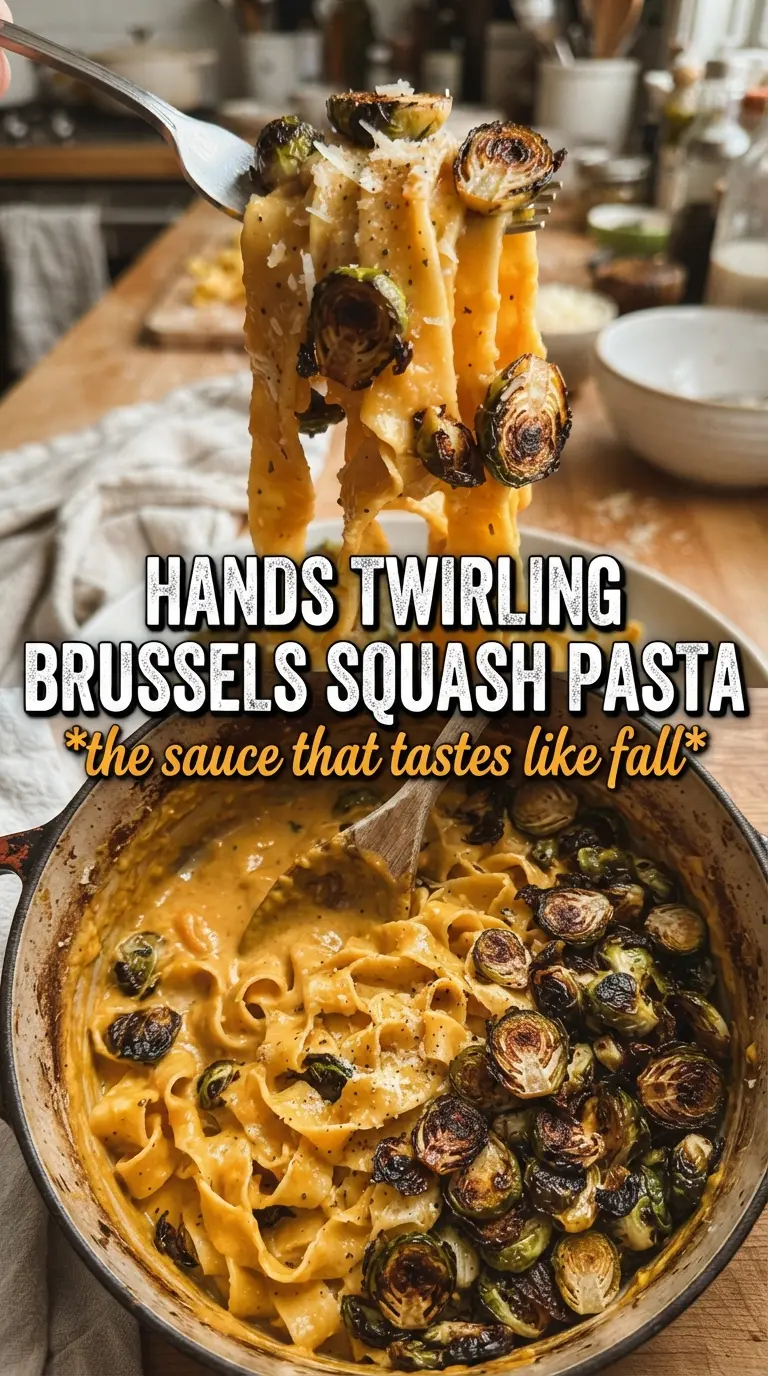
- Rigatoni or penne — A tube shape holds the brown butter and parmesan in the ridges and center, which is why this dish feels coated instead of slippery. Use a sturdy pasta here; thin strands don’t support the roasted vegetables as well.
- Butternut squash — This gives the pasta sweetness and a soft, creamy bite once it roasts. Cut the cubes evenly so they finish at the same time as the Brussels sprouts.
- Brussels sprouts — Their edges get crisp and almost sweet in the oven, and that little bit of bitterness keeps the dish from tasting too rich. Fresh, firm sprouts matter more than size.
- Butter, garlic, and sage — This is the backbone of the sauce. The butter should turn golden and smell nutty before the garlic goes in; if the garlic hits the pan too early, it can burn before the butter browns.
- Parmesan — It tightens the sauce and gives it salt and body. Grate it finely so it melts into the warm pasta instead of clumping.
- Hazelnuts or walnuts — The nuts bring the final crunch. Hazelnuts taste especially good here, but walnuts work well if that’s what you have on hand.
How to Keep the Brown Butter Glossy Instead of Grainy
Roasting the Vegetables for Color, Not Just Doneness
Roast the squash and Brussels sprouts at a high temperature until the edges are browned and the centers are tender when pierced with a fork. If they come out pale, they’ll taste soft and flat once mixed with the pasta. Don’t drown them in oil; a thin coating is enough to help them color without turning greasy. Give them space on the pan so the steam can escape.
Turning Butter Nutty Without Burning the Garlic
Melt the butter over medium heat and watch for the foam to settle, then look for the milk solids at the bottom of the pan to turn deep golden and smell toasted. Add the garlic and sage once the butter is already browned, not before. Garlic burns fast, and burned garlic tastes bitter in a sauce this delicate. Pull the pan off the heat if the color is moving faster than you expected.
Using Pasta Water to Bind Everything Together
Reserve pasta water before you drain the pasta, then add it to the brown butter a little at a time. The starch in that water helps the butter and Parmesan emulsify into a sauce that clings to the noodles instead of sliding to the bottom of the bowl. If the sauce looks greasy, it usually needs more pasta water and a little tossing, not more butter. Add the cheese off the direct heat so it melts into the sauce instead of clumping.
Three Ways to Adjust This Pasta Without Losing the Point
Make it gluten-free
Use a sturdy gluten-free penne or rigatoni that holds its shape after boiling. The sauce and vegetables don’t need changing, but cook the pasta just to al dente and toss it right away so it doesn’t break apart.
Skip the nuts
Leave out the hazelnuts or walnuts if you need a nut-free version, and add a few extra toasted breadcrumbs in their place for crunch. You’ll lose the nutty finish, but the roasted vegetables and brown butter still carry the dish.
Make it dairy-free
Swap the butter for a good olive oil and use a dairy-free Parmesan-style cheese if you want to keep the salty finish. You won’t get true brown butter flavor, but the sage, garlic, and roasted vegetables still make a deep, savory pasta.
Add protein without crowding the sauce
Fold in sliced grilled chicken, Italian sausage, or white beans at the very end. Keep the amount modest so the roasted vegetables and brown butter stay in charge instead of turning the bowl into a heavy pasta mix.
Storage and Reheating
- Refrigerator: Store leftovers in an airtight container for up to 4 days. The pasta will soak up some sauce as it sits.
- Freezer: It freezes, but the roasted vegetables soften after thawing. Freeze in portions for up to 2 months if you don’t mind a looser texture.
- Reheating: Warm it gently in a skillet with a splash of water over low heat, stirring often. High heat makes the butter separate and can dry out the pasta before the sauce loosens.
Questions I Get Asked About This Recipe
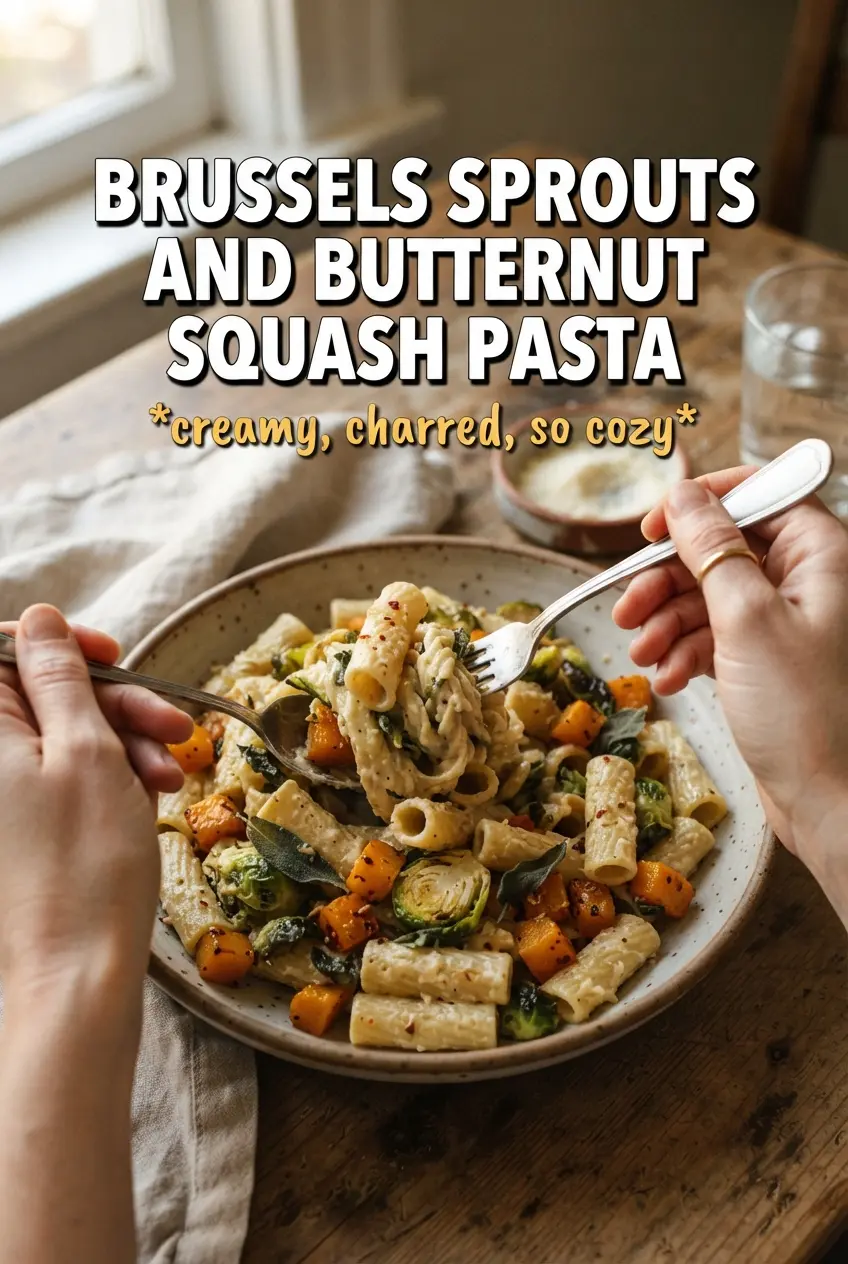
Brussels Sprouts and Butternut Squash Pasta
Ingredients
Equipment
Method
- Heat oven to 425F and toss cubed butternut squash with 1 tbsp olive oil, salt, and pepper on a sheet pan; roast for 25 minutes, stirring once, until caramelized and browned at the edges (visual cue: golden, glossy surfaces).
- On a second sheet pan, toss halved Brussels sprouts with the remaining 1 tbsp olive oil, salt, and pepper; roast for 25 minutes, stirring once, until caramelized and browned (visual cue: darkened cut sides and crisp edges).
- Cook rigatoni or penne in salted water until al dente, then reserve 1 cup pasta water before draining (visual cue: pasta still has a firm center).
- In a cast iron skillet over medium heat, melt unsalted butter and cook until it foams and turns golden with a nutty aroma; add minced garlic and chopped fresh sage and cook until fragrant and lightly browned (visual cue: speckled golden milk solids).
- Add drained pasta to the browned butter and toss with reserved pasta water until glossy and evenly coated (visual cue: sauce clings to pasta without pooling).
- Add roasted butternut squash and roasted Brussels sprouts and toss again to combine, then stir in grated parmesan to melt slightly (visual cue: parmesan turns the sauce creamy and speckled).
- Season with salt and pepper to taste, then top with toasted hazelnuts or walnuts (visual cue: nut pieces scattered over the top).


