Apple cider braised pork shoulder turns into the kind of dinner that quietly takes over the whole table. The pork cooks down until it pulls apart with a spoon, and the cider, mustard, and herbs reduce into a pan sauce that tastes sweet, savory, and a little sharp in the best way. It’s the sort of braise that feels generous without being fussy.
The key is building flavor in layers. A hard sear gives the pork the dark edges it needs before it ever hits the oven, and the onion, garlic, Dijon, and brown sugar create a base that balances the cider instead of letting it turn one-note sweet. Apples go in near the end of the braise so they hold some shape and perfume the sauce instead of disappearing completely.
Below, I’ve included the little details that matter most here: how to brown the pork properly, what kind of cider works best, and what to do if your sauce tastes flat before serving.
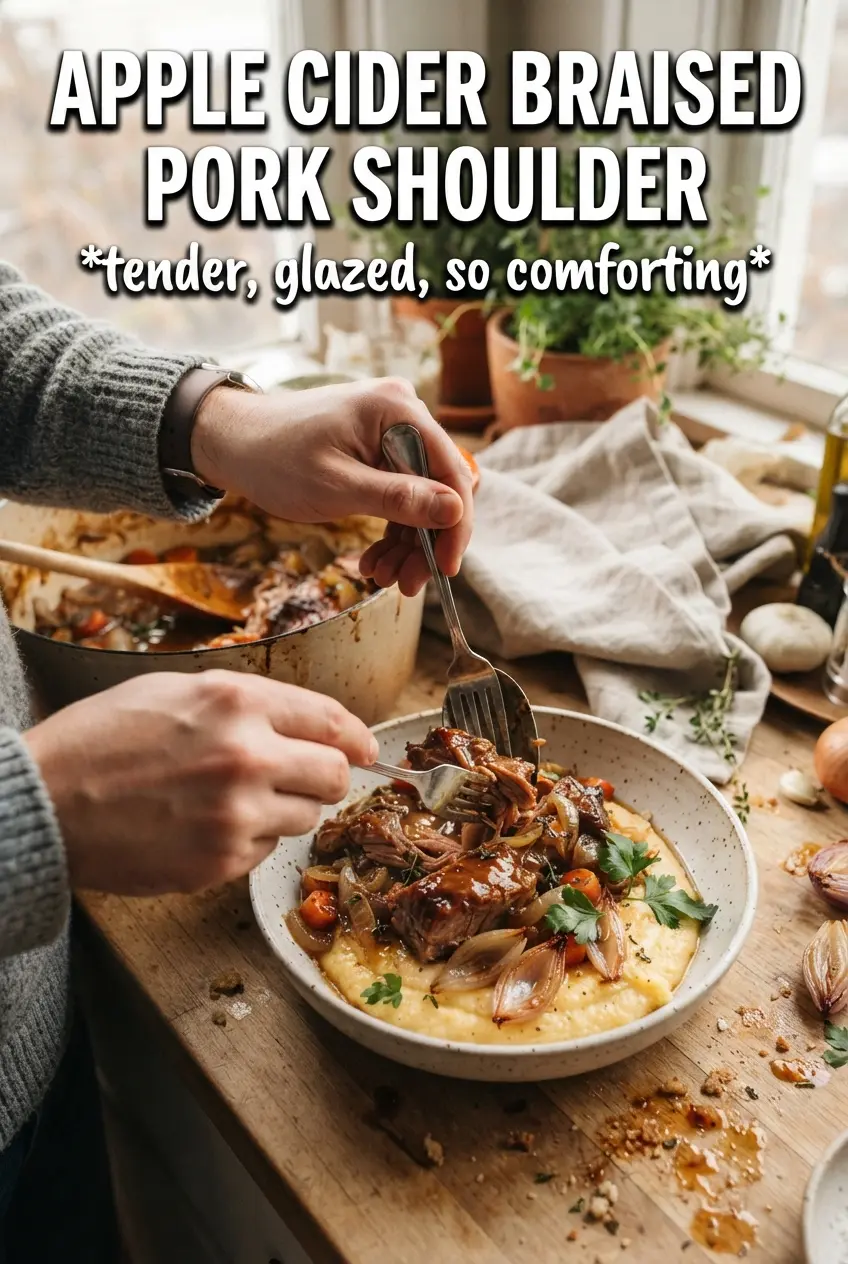
The pork was fall-apart tender and the cider sauce reduced into this glossy, rich gravy with just enough tang. I served it over mashed potatoes and my husband went back for seconds before I even sat down.
Save this apple cider braised pork shoulder for the night you want a slow-cooked dinner with tender pork, caramelized apples, and a glossy cider pan sauce.
The Sear and Deglaze That Keep This Braise from Tasting Flat
The biggest mistake with pork shoulder braises is skipping color. Pale pork gives you pale sauce, and pale sauce tastes thin no matter how long it cooks. A deep brown crust on the meat and a good scrape of the pan after the onions go in give this dish its backbone.
The other thing that matters here is balance. Apple cider brings sweetness, but Dijon, vinegar, and the browned bits in the pot keep it from turning cloying. If the pork goes straight into liquid without that first hard sear, the finished dish will still be tender, but it won’t taste like much beyond pork and apples.
- Pork shoulder — This cut has the fat and connective tissue that break down into tenderness over a long braise. Pork loin won’t work the same way; it dries out before it gets that shreddable texture.
- Apple cider — Fresh or hard cider both work, but avoid anything labeled apple cider vinegar drink or anything with a heavy spice blend. You want clean apple flavor that reduces into a sauce, not a mulled cider effect.
- Dijon mustard — Dijon gives the sauce sharpness and helps it emulsify a little in the pot. Yellow mustard won’t taste the same, and whole-grain mustard gives a chunkier finish if that’s what you have.
- Apples — Use a firm apple that holds its shape, like Honeycrisp, Braeburn, or Granny Smith. Soft apples will break down too much and disappear into the sauce.
What Each Ingredient Is Actually Doing in This Braise

In a braise like this, the liquid isn’t just there to keep things moist. It becomes the cooking medium, the sauce base, and the thing that carries all the browned flavor from the pot back into the meat. That’s why the onion and garlic get sautéed after the sear instead of going in raw; they pick up the fond and help dissolve it into the cider mixture.
The brown sugar doesn’t make this taste like dessert. It rounds out the acidity from the cider and vinegar so the sauce tastes full instead of sharp. The herbs should be added whole enough to perfume the pot without vanishing completely; thyme and rosemary both hold up well through the long cook, which is why they work better here than delicate herbs like parsley.
How to Build the Braise So the Pork Stays Juicy
Seasoning and Searing the Pork
Pat the pork dry and season it generously before it goes into the Dutch oven. When it hits the hot oil, it should hiss immediately and release from the pot on its own once the first crust forms. If you try to move it too soon, it’ll stick and tear; let each side brown deeply before turning. You’re looking for a dark mahogany color, not a quick tan.
Making the Cider Base
Once the pork comes out, cook the onion and garlic just until they soften and start to pick up color from the bottom of the pot. Whisk the cider, broth, Dijon, brown sugar, and vinegar together before pouring them in so the mustard dissolves evenly instead of clumping. Scrape the bottom well. That fond is what keeps the sauce from tasting boiled.
Slow Braising in the Oven
Return the pork to the pot, tuck in the apples and herbs, cover it tightly, and let it braise at 325°F until it pulls apart easily with a fork. If the lid doesn’t fit well, the liquid can reduce too fast and the top of the pork will dry out, so check the seal before it goes into the oven. Around the 3 1/2-hour mark, start testing the meat; it should shred with very little resistance. If it still feels tight, give it another 20 to 30 minutes.
Shredding and Finishing in the Juices
Shred the pork right in the pot so it soaks up the cider sauce while it’s still hot. This is where the dish turns from good to complete, because the meat drinks in the seasoned liquid instead of sitting on top of it. If the sauce looks thin, pull the pork out for a minute and simmer the liquid uncovered until it lightly coats a spoon, then fold the meat back in.
How to Adapt This for Different Tables and Different Schedules
Use hard cider for a sharper, less sweet sauce
Hard cider gives the braise a drier, more complex finish and trims some of the sweetness from the apples. If you use it, keep the brown sugar as written; if the cider is especially tart, the sauce will finish more savory and less jammy.
Make it dairy-free by serving it with olive oil mashed potatoes
The braise itself is already dairy-free, so the only adjustment is the serving side. Use olive oil or a plant-based butter in the mashed potatoes and the whole plate stays rich without losing the sauce-soaking comfort that makes this meal work.
Swap in bone-in pork shoulder if that’s what you bought
Bone-in pork shoulder braises beautifully, but it usually needs a little more time than boneless. Start checking it after the same window and plan on an extra 20 to 45 minutes if the meat around the bone still feels firm.
Make it ahead and reheat it the right way
This dish tastes even better after a night in the fridge because the cider sauce settles into the pork. Reheat it gently on the stovetop over low heat with a splash of broth or cider if the sauce has tightened up too much. High heat can dry the meat out and make the sauce taste sharper than it should.
Storage and Reheating
- Refrigerator: Store the pork and sauce together for up to 4 days. The flavors deepen, and the sauce may thicken as it chills.
- Freezer: It freezes well for up to 3 months. Cool it completely, portion it with plenty of sauce, and freeze it in airtight containers.
- Reheating: Warm it gently on the stove over low heat or in a covered dish in the oven. Don’t blast it on high heat or the pork will dry out before the sauce loosens back up.
Answers to the Questions Worth Asking
Apple Cider Braised Pork Shoulder
Ingredients
Equipment
Method
- Preheat the oven to 325F, then season the pork shoulder generously with salt and pepper.
- Set the Dutch oven on the stove and heat the olive oil over medium-high heat.
- Sear the pork in the Dutch oven on all sides until deeply browned, about 6 to 10 minutes total, using a visible crust as your cue.
- Remove the pork to a plate, then sauté the onion and garlic in the Dutch oven for 3 minutes, stirring until fragrant.
- Whisk the apple cider, chicken broth, Dijon mustard, brown sugar, and apple cider vinegar until smooth, then pour the liquid into the pot and scrape up browned bits.
- Return the pork to the pot and add the apples, thyme, and rosemary on top.
- Cover and braise at 325F for 3-1/2 to 4 hours, until the pork is fall-apart tender and easily pulls apart in the juices.
- Shred the pork in the juices and simmer uncovered for 5 to 10 minutes if you want a thicker, more caramelized sauce.
- Serve the shredded cider-braised pork over mashed potatoes with the apple cider pan sauce and apple pieces spooned on top.


