Plump cheese tortellini and a silky carbonara sauce belong together in a way that feels almost unfair. The pasta gives you a built-in filling, so every bite lands with a little more richness than a standard spaghetti carbonara, and the sauce clings to the folds instead of sliding off. Crispy pancetta, plenty of black pepper, and a shower of parmesan turn the whole bowl into something that tastes restaurant-level without asking for much more than careful timing.
The key here is treating the eggs like a sauce, not a scrambled breakfast waiting to happen. Hot tortellini and rendered pancetta fat warm the pan just enough to loosen the egg mixture, while starchy pasta water helps emulsify everything into that glossy finish you want. Garlic goes in briefly, just long enough to perfume the fat without burning, and the whole egg-plus-yolks ratio keeps the sauce rich but still spoonable.
Below, I’ve included the one step that matters most when you want carbonara to stay silky, plus a few swaps that work when you don’t have pancetta on hand.
The sauce turned out glossy and clung to every tortellini, and the black pepper with the pancetta made it taste like a much fancier dinner than it was.
Save this tortellini carbonara for the nights when you want silky sauce, crispy pancetta, and dinner on the table fast.
The Trick That Keeps Tortellini Carbonara Creamy Instead of Scrambled
Carbonara goes wrong fast when the eggs hit a pan that’s too hot. With tortellini, that risk is even higher because the pasta brings extra surface moisture and carries heat into the sauce quickly. The fix is simple: take the pan off the burner before the egg mixture goes in, then toss hard enough to coat every piece while adding pasta water a little at a time. That movement matters. It spreads the heat around instead of letting one hot spot cook the eggs into curds.
Parmesan also helps stabilize the sauce, but it won’t save you if the pan is screaming hot. The cheese should be finely grated so it melts into the egg mixture without clumping. If the sauce looks too tight at first, it usually needs a splash more pasta water and another round of tossing, not more heat.
What Each Ingredient Is Actually Doing in This Bowl
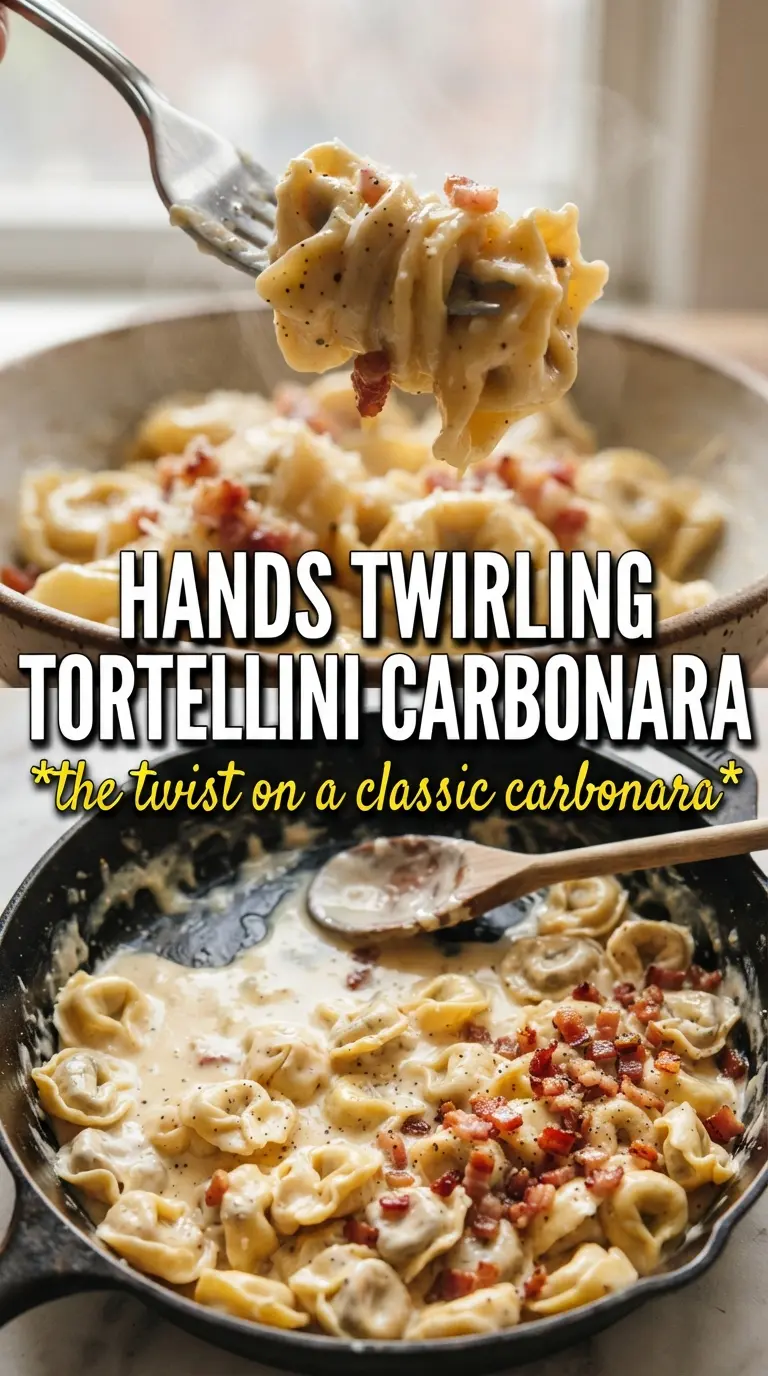
- Refrigerated cheese tortellini — This is what makes the dish feel substantial without adding a separate sauce component. Fresh or refrigerated tortellini holds up best here because it cooks quickly and its folds grab onto the carbonara instead of getting buried by it.
- Pancetta or thick-cut bacon — Pancetta gives you a clean, salty pork flavor and enough fat to build the sauce base. Bacon works well if that’s what you have, but keep the heat moderate so the rendered fat stays usable and doesn’t turn smoky or bitter.
- Egg yolks plus one whole egg — The yolks bring richness and body, while the whole egg keeps the sauce from feeling too heavy. All yolks would taste luxurious but can turn thick faster; the whole egg gives a little more flexibility when you add pasta water.
- Finely grated parmesan — This needs to melt smoothly, so grate it as fine as you can. Pre-grated parmesan often contains anti-caking agents that make the sauce grainier, especially if the pan is even a little too hot.
- Reserved pasta water — This is not just for thinning. The starch in the water helps the egg and cheese emulsify into a sauce that clings instead of pooling in the bowl.
- Nutmeg and black pepper — Nutmeg stays in the background, but it rounds out the richness in a way you notice if you leave it out. The black pepper should be generous; it’s one of the defining flavors of carbonara, and tortellini can handle it.
Building the Sauce Without Turning the Eggs into Scramble
Render the Pancetta Slowly
Cook the diced pancetta until the edges are crisp and the fat has melted out, but don’t rush it over high heat. You want browned bits and a clear pool of fat in the pan, not dark, hard pieces that taste burnt. Garlic goes in at the end for just one minute, long enough to soften and perfume the fat. If it starts to brown quickly, pull the pan off the heat immediately; burnt garlic will take over the whole dish.
Whisk the Carbonara Base Until Smooth
Mix the egg yolks, whole egg, parmesan, nutmeg, and lots of black pepper in a bowl until the mixture looks thick and uniform. It should look like a loose paste, not a watery custard. Finely grated cheese matters here because it dissolves into the eggs instead of sitting in little grainy pockets. If the mixture seems too stiff, that’s fine; the pasta water will loosen it later.
Coat the Tortellini Off the Heat
Drain the tortellini and move it straight into the pancetta pan while everything is still hot, then kill the heat before adding the egg mixture. Toss constantly so the heat from the pasta and pan warms the sauce gradually. Add reserved pasta water a splash at a time until the sauce turns glossy and loosens enough to coat the tortellini instead of clumping around it. If it starts looking thick and sticky, another spoonful of pasta water usually brings it right back.
Finish with Salt, Parsley, and More Cheese
Taste before you salt, because pancetta and parmesan already bring a lot of salt to the bowl. Add only what the dish needs, then top with parsley and extra parmesan right before serving. The parsley cuts through the richness and gives the bowl a fresh finish. Serve it immediately, while the sauce is still glossy and the tortellini is silky.
How to Adapt This for Different Pantries and Different Eaters
Swap pancetta for bacon when that’s what’s in the fridge
Bacon gives you a smokier, slightly sweeter carbonara, while pancetta stays cleaner and more savory. Use thick-cut bacon so it renders enough fat to carry the sauce, and keep an eye on the salt because bacon usually needs less seasoning adjustment than pancetta.
Make it gluten-free with gluten-free tortellini
Use a sturdy gluten-free refrigerated tortellini and cook it just until tender, because overcooked GF pasta can fall apart when you toss it with the sauce. The carbonara itself doesn’t need flour, so once the pasta is right, the rest of the dish stays the same.
Go lighter on the richness with half parmesan, half pecorino
Pecorino adds a sharper edge, so replacing part of the parmesan with it gives the sauce more bite without making it heavier. Don’t swap all of it unless you like a very salty finish; the parmesan keeps the sauce smoother and less aggressive.
Storage and Reheating
- Refrigerator: Store leftovers in an airtight container for up to 3 days. The sauce will thicken as it chills.
- Freezer: I don’t recommend freezing this one. Egg-based sauce and tortellini both take on a grainy, watery texture after thawing.
- Reheating: Warm leftovers gently in a skillet over low heat with a splash of water or milk, tossing often. High heat will scramble the eggs and tighten the sauce before the tortellini heats through.
Questions I Get Asked About This Recipe
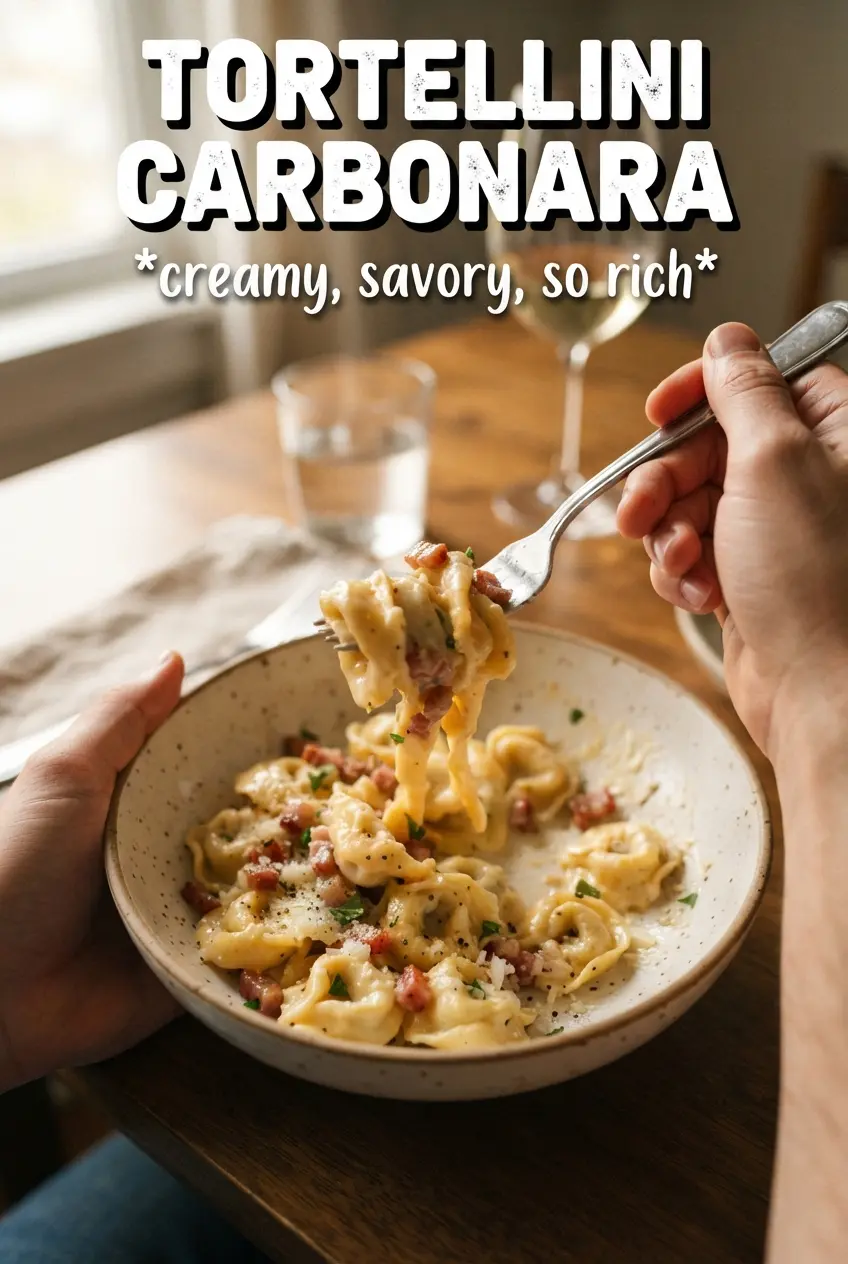
Tortellini Carbonara
Ingredients
Equipment
Method
- Bring a large pot of well-salted water to a boil and cook the refrigerated cheese tortellini until tender, using the package timing (do not drain). Reserve 1 cup pasta cooking water before draining.
- Cook the diced pancetta or thick-cut bacon in a skillet over medium heat until crispy, about 6–10 minutes. Add the minced garlic and cook for 1 minute, then remove the skillet from the heat.
- In a bowl, whisk together the egg yolks, whole egg, finely grated parmesan, nutmeg, and generous black pepper until smooth and well combined.
- Add the hot tortellini to the pancetta pan while it is off the heat, then quickly pour in the egg mixture and toss immediately.
- Toss vigorously while adding pasta water a splash at a time until the sauce turns silky and creamy, about 1–2 minutes.
- Season with salt to taste, then top with fresh parsley and extra parmesan before serving.


