Ratatouille soup turns a pile of summer vegetables into something soft, savory, and deeply comforting without losing the bright, garden-like flavor that makes the dish special. The eggplant melts into the broth, the zucchini and squash stay tender instead of mushy, and the tomatoes give the whole pot a rich, spoonable body that tastes like it simmered all afternoon even when it didn’t.
What makes this version work is the order. Salting the eggplant first pulls out excess moisture, which keeps it from turning spongy and dull in the pot. The onions and peppers build sweetness at the start, then the garlic, herbs, and tomatoes simmer just long enough to pull everything together without cooking the vegetables into paste. A finish of fresh basil and good olive oil keeps the soup from tasting flat at the end.
Below you’ll find the timing that keeps each vegetable intact, plus a few smart swaps if you need to work with what’s in the kitchen. The parmesan finish is optional, but it adds a salty edge that plays nicely with the herbs and tomato.
The eggplant stayed silky instead of turning to mush, and the basil at the end made the broth taste fresh. I served it with crusty bread and my husband went back for a second bowl before I even sat down.
Save this ratatouille soup for the nights when you want a vegetable-heavy dinner with silky broth and a basil finish.
The Eggplant Needs Salt Before It Ever Hits the Pot
Eggplant is the piece that can make this soup taste luxurious or turn it muddy. Salting it first draws out water, which means it browns a little better and keeps its texture instead of disappearing into the broth as a bland sponge. After 15 minutes, rinse it and dry it well so the pot doesn’t get watery right at the start.
The other place this dish can go sideways is the simmer. If the heat is too high, the zucchini and squash break down before the tomatoes have time to mellow, and the soup turns cloudy instead of clear and brothy. A steady simmer is enough here; you want the vegetables tender, not collapsed.
What Each Vegetable Is Doing in the Broth

- Eggplant — This gives the soup its soft, almost silky body. Smaller eggplants tend to be less bitter and less seedy, which is what you want here. If yours are large, salt them a little longer so they shed more moisture before cooking.
- Zucchini and yellow squash — These cook quickly and bring the lighter, sweeter vegetable flavor that keeps the soup from feeling heavy. Dice them evenly so they soften at the same rate. If you cut them too small, they’ll vanish into the broth before the rest of the vegetables are done.
- Red bell peppers and onion — This is the sweet base of the soup. They cook down first and build the savory foundation that makes the tomatoes taste fuller. Yellow onion works fine if that’s what you have.
- Crushed tomatoes plus diced tomatoes — The crushed tomatoes give body, while the diced tomatoes leave little bursts of tomato throughout the bowl. Using both gives you a broth that feels finished instead of thin. If you only have one kind, the soup still works; it just changes the texture.
- Herbes de Provence, basil, and thyme — The dried herbs simmer into the broth, and the fresh basil goes in at the end for a cleaner, brighter finish. Don’t swap all of that for Italian seasoning unless you have to; herbes de Provence gives this soup its more distinctly French-leaning character.
The Order That Keeps the Vegetables From Getting Lost
Building the Sweet Base
Start with the onion and bell peppers in olive oil and cook them until the onion turns translucent and the peppers soften at the edges. You’re not trying to brown them deeply; you’re letting their natural sweetness come forward so the soup tastes rounded instead of sharp. If the pan looks dry, add a small splash more oil rather than cranking up the heat.
Giving the Eggplant Room to Brown
Add the garlic and salted, dried eggplant next, and cook long enough for the eggplant to take on a little color and start to turn tender. Garlic burns fast, so it goes in only when the onions and peppers have already softened. If the eggplant still looks pale and stiff, give it a few extra minutes before moving on.
Keeping the Squash Tender, Not Shattered
Stir in the zucchini and yellow squash and cook just until they begin to soften. They only need a short head start before the tomatoes go in, because they’ll keep cooking during the simmer. If you leave them on the heat too long here, they’ll collapse later and leave you with a pot that tastes fine but looks tired.
Simmering the Pot Together
Add both tomatoes, the broth, and the herbs, then bring everything to a gentle simmer and let it cook until the vegetables are very tender. This is the point where the flavors stop tasting separate and start tasting like a real soup. Keep the lid partly on if the top is spattering, but don’t cover it completely or the broth won’t reduce enough.
Finishing With Fresh Basil and Olive Oil
Stir in the fresh basil after the heat is off or very low so it stays bright green and fragrant. Season with salt and pepper only after the simmer, because the broth and tomatoes can change the salt level as they reduce. A final drizzle of good olive oil adds gloss and gives each bowl a little richness right at the end.
How to Adapt This for a Bigger Pot, a Dairy-Free Bowl, or a Heartier Dinner
Dairy-Free by Default
The soup itself is naturally dairy-free as written. Just skip the parmesan finish and use a good finishing olive oil instead. You still get a rich bowl because the vegetables and tomatoes carry the flavor, not the cheese.
Make It Heartier With Beans
Stir in a can of drained cannellini beans during the last 10 minutes of simmering if you want more body and protein. The beans absorb some of the tomato broth and make the soup eat more like a full meal. They also hold up better than pasta, which can turn soft fast in a soup like this.
Swap in What’s in Season
You can use green zucchini only, or add chopped summer squash in place of one bell pepper if that’s what’s on hand. Keep the total volume about the same so the broth stays balanced. The flavor will shift slightly, but the method still works as long as you keep the vegetable pieces similar in size.
Storage and Reheating
- Refrigerator: Store for up to 4 days. The vegetables soften a little more overnight, and the broth thickens as it chills.
- Freezer: This freezes well for up to 3 months. Cool it completely first and leave a little headspace in the container since the broth will expand.
- Reheating: Warm it gently on the stove over medium-low heat. A hard boil will break down the zucchini and squash even further, so keep it at a low simmer until hot.
Answers to the Questions Worth Asking
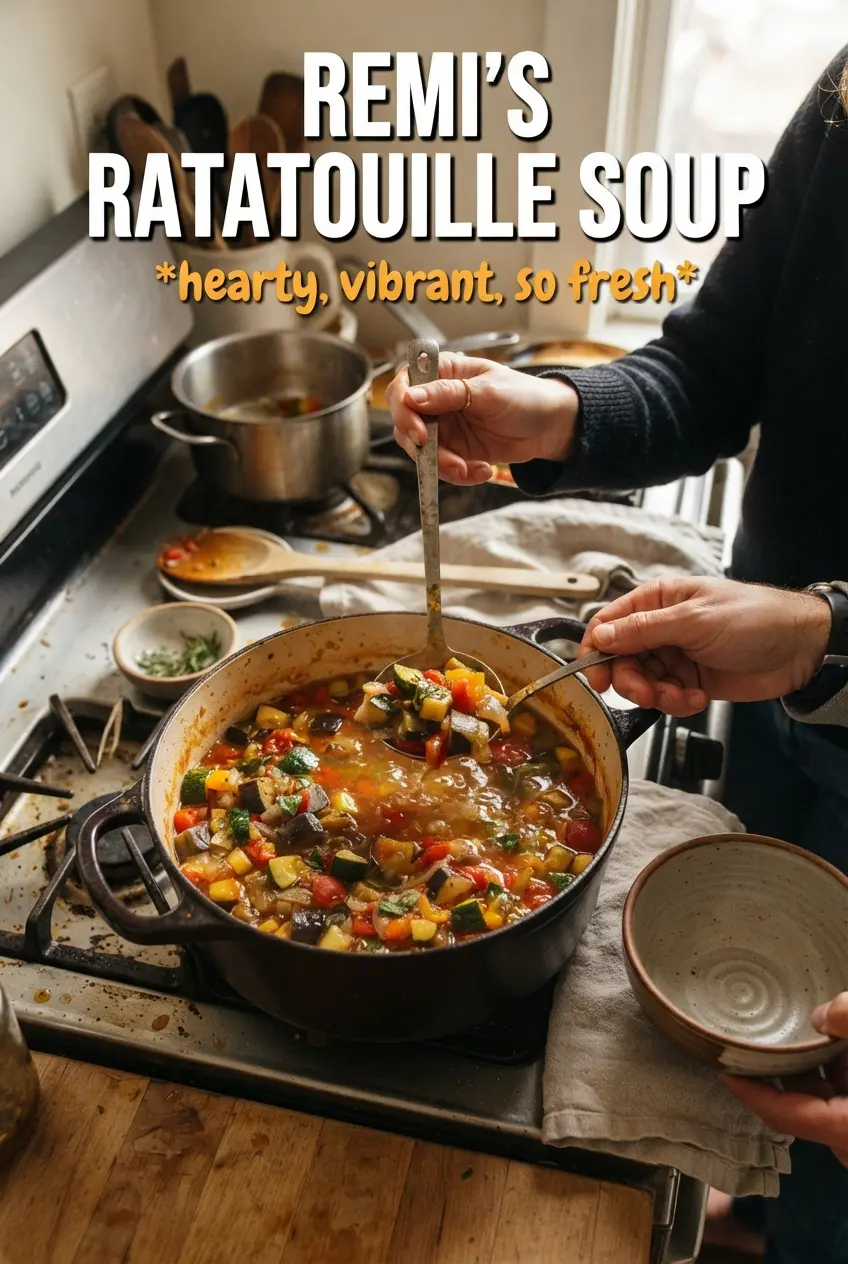
Remi's Ratatouille Soup
Ingredients
Equipment
Method
- Toss the diced eggplant with salt and let sit 15 minutes. Rinse and dry thoroughly so the soup simmers instead of steaming.
- Heat olive oil in a large pot over medium heat, then add the diced onion and red bell peppers. Sauté for 5 minutes until the onion softens and turns translucent.
- Add the minced garlic and the prepared eggplant, then cook for 5 minutes. Stir frequently until the eggplant edges look lightly browned.
- Add the zucchini and yellow squash and cook for 3 minutes. Keep stirring so the vegetables stay bright and start to soften.
- Add the crushed tomatoes, diced tomatoes, vegetable broth, herbs de Provence, dried basil, dried thyme, and red pepper flakes. Stir well to combine.
- Simmer for 20-25 minutes, stirring occasionally, until all vegetables are very tender. Look for a thick, cohesive broth with no crunchy spots.
- Stir in the chiffonade fresh basil, then season with salt and pepper to taste. The basil should wilt quickly and stay speckled throughout the soup.
- Finish with a drizzle of good olive oil, then serve as is or with parmesan on top. The surface should look lightly glossy.