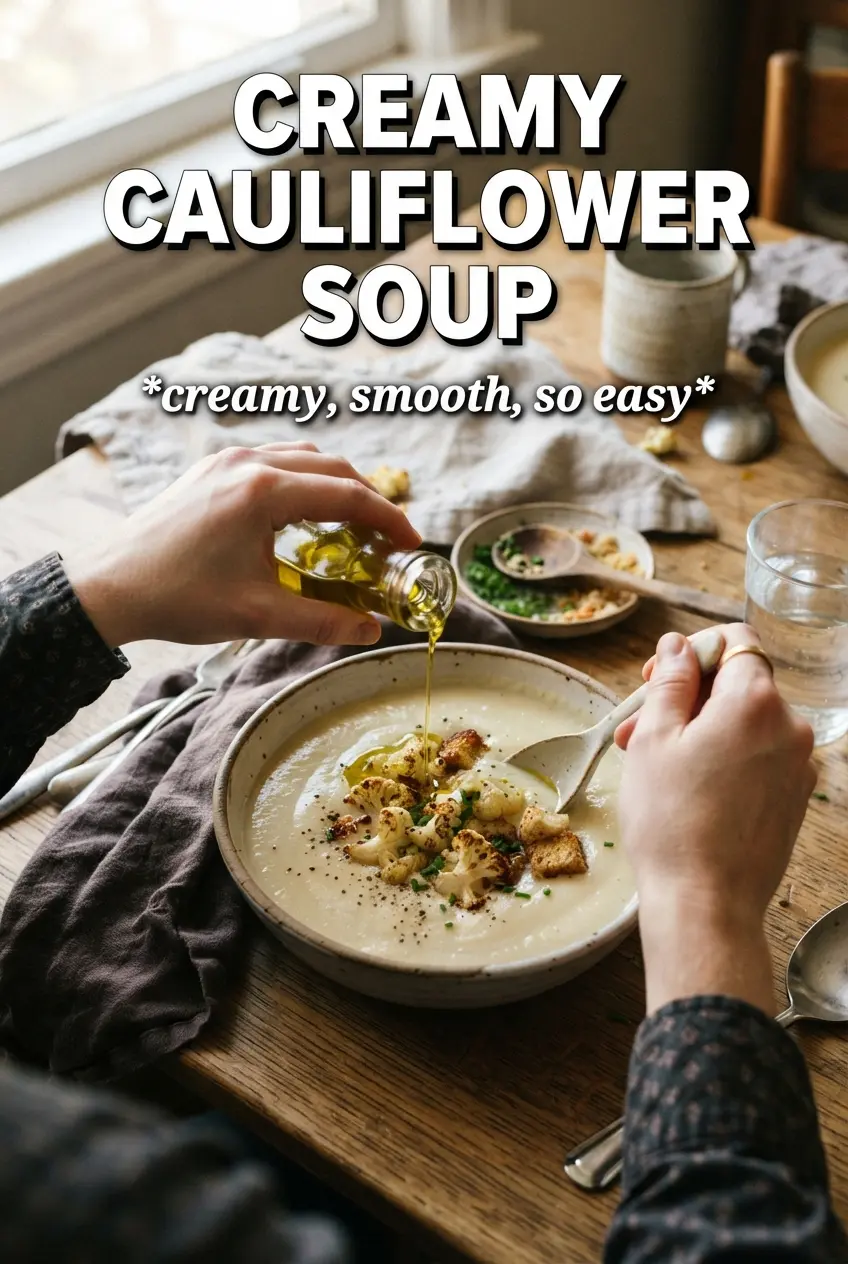
Silky, pale, and rich without feeling heavy, creamy cauliflower soup earns its place when you want something that tastes careful and comforting at the same time. The cauliflower turns soft enough to blend into a smooth base, while the roasted garnish gives every bowl a little bit of caramelized edge and texture. The truffle oil at the end is subtle, not showy, and that’s exactly why it works here.
The trick is building flavor in layers instead of relying on cream to do all the work. Sautéing the onion until it softens, cooking the garlic just long enough to lose its raw bite, and simmering the cauliflower until it collapses completely all matter more than the blender step. A smooth soup is easy to make once the vegetables are tender enough to cooperate.
Below, I’ll walk through the part that keeps this soup from tasting flat, plus the little garnish choices that make it feel finished instead of plain.
The roasted cauliflower on top made it taste restaurant-worthy, and the soup blended up unbelievably smooth. I also loved that the cream didn’t curdle at the end because it was stirred in off the heat.
Save this creamy cauliflower soup for the nights when you want a silky bowl with roasted florets, cream, and a little truffle finish.
The Part That Keeps Cauliflower Soup from Tasting Watery
Cauliflower gives you body, but it doesn’t bring much flavor on its own. That’s why this soup needs the onion, garlic, and butter cooked together before the broth goes in. If you rush that base, the finished soup can taste thin even when the texture is smooth.
The other thing that matters is how tender the cauliflower gets before blending. If the florets still have a little bite in the center, the soup won’t fully emulsify and you’ll end up with a grainier texture. Let it simmer until a fork slides through the stems with no resistance, then blend until the soup looks glossy and uniform.
- Cauliflower — This is the backbone of the soup, and it has to be cooked until soft enough to disappear into the broth. Save some florets for roasting because the contrast between the smooth soup and crisped garnish makes the whole bowl more interesting.
- Heavy cream — Adds richness and that velvety finish, but it should go in after blending and off the heat or on very low heat. If you add it too early and boil hard, the texture can turn dull or split.
- Butter and olive oil — Butter gives the soup a round, savory base, while the oil helps keep the butter from browning too fast. You can use all butter, but the soup tastes cleaner and less heavy with both.
- White pepper and nutmeg — These are the quiet seasonings that make the soup taste finished. White pepper disappears into the background; nutmeg adds warmth without reading as sweet.
Building the Base, Then Letting the Blender Do the Rest
Roasting the Garnish First
Toss the reserved cauliflower florets with olive oil and roast them at 425°F until the edges are deeply golden and the tips look crisped, 20 to 25 minutes. That extra step gives the soup texture and a roasted note that plain steamed cauliflower can’t match. If the florets crowd the pan, they’ll steam instead of brown, so spread them out in a single layer.
Softening the Onion and Garlic
Melt the butter in a large pot, then cook the diced onion until it turns translucent and fragrant, about 5 minutes. Add the garlic for just 1 minute, long enough to lose the raw edge without taking on color. If the garlic browns, it turns bitter and the whole soup tastes harsher than it should.
Simmering the Cauliflower Until It Collapses
Add the remaining cauliflower and broth, bring the pot to a boil, then drop it to a steady simmer for about 20 minutes. You want the cauliflower soft enough that it mashes apart the moment you press it with a spoon. If the liquid cooks down too much before the vegetables are tender, add a splash more broth; the soup should stay loose enough to blend smoothly.
Blending and Finishing the Texture
Blend the soup until completely smooth with an immersion blender, moving the blade all the way through the pot so no chunks hide at the bottom. Stir in the cream, nutmeg, and white pepper after blending. If your soup seems too thick, thin it with a little more warm broth; if it seems thin, let it simmer gently for a few minutes after blending, but keep the heat low once the cream is in.
Make It Dairy-Free Without Losing Body
Swap the butter for olive oil or a plant-based butter and use full-fat coconut milk instead of heavy cream. The soup will still blend silky, but it will taste slightly sweeter and less neutral than the dairy version. Add the coconut milk at the end and keep the heat gentle so the texture stays smooth.
Make It Thicker for a More Substantial Bowl
Use a little less broth or simmer the soup uncovered for a few extra minutes before blending. That concentrates the cauliflower flavor and gives you a spoon-coating texture instead of a lighter, pourable soup. Don’t reduce it after the cream goes in unless the heat is very low.
Skip the Truffle Oil if You Want a Cleaner Cauliflower Taste
The soup stands on its own without the truffle finish, especially if you want the roasted cauliflower garnish to lead. A drizzle of good olive oil and extra chives gives you a fresher, more straightforward bowl. Truffle oil is the accent, not the base.
Storage and Reheating
- Refrigerator: Store for up to 4 days. The soup thickens as it chills, so it may need a splash of broth or water when reheated.
- Freezer: It freezes well, but cream-based soups can look a little separated after thawing. Freeze it before adding the cream for the best texture, then stir the cream in after reheating.
- Reheating: Warm it gently on the stove over low heat, stirring often. High heat can cause the cream to break and can make the soup taste dull, so keep it just below a simmer.
Answers to the Questions Worth Asking
Creamy Cauliflower Soup
Ingredients
Equipment
Method
- Toss the reserved cauliflower florets with olive oil, then spread them on a sheet pan in a single layer. Roast at 425F for 20-25 minutes until golden, then set aside to garnish.
- Melt the butter in a large pot over medium heat until fully melted and shimmering. Sauté the diced onion for 5 minutes until softened.
- Add the minced garlic to the pot and cook for 1 minute, stirring constantly. Cook only until fragrant and not browned.
- Add the remaining cauliflower and broth to the pot, then bring the mixture to a boil. Once boiling, reduce to a simmer and cook for 20 minutes until very tender.
- Blend the soup completely smooth with an immersion blender, scraping down as needed for an even texture. Continue blending until no cauliflower bits remain.
- Stir in the heavy cream, nutmeg, and white pepper until evenly incorporated. Heat gently just to combine without letting it boil hard.
- Season with salt to taste and stir once more for balance. Serve in bowls topped with roasted cauliflower, a truffle oil drizzle, and chives.