Layered cornbread cake lands in that sweet spot between nostalgic and a little unexpected: tender, golden layers with a grainy cornmeal crumb, plus a honey butter frosting that melts into the cake instead of sitting on top like an afterthought. The honey and flaky salt on the finish pull the whole thing together, so every bite tastes like cornbread with a dessert-level upgrade.
The trick is treating the batter like cake batter, not quick bread batter. The cornmeal brings texture, but the flour, sugar, eggs, and dairy keep the layers soft enough to stack cleanly. The honey in both the cake and the frosting gives the dessert a round sweetness that feels warm rather than sharp, and the buttermilk keeps the crumb from turning dense.
Below you’ll find the little details that matter here: how to keep the layers from baking up dry, why the frosting needs to be whipped until it looks pale and fluffy, and the best way to finish the top so it looks bakery-worthy without any fuss.
The layers stayed so soft and the honey butter frosting was fluffy enough to spread without tearing the cake. I finished it with the flaky salt and it tasted like sweet cornbread in dessert form.
Like this layered cornbread cake? Save it to Pinterest for the next time you want a honey-kissed dessert with fluffy frosting and a salty finish.
The Trick to Keeping Cornmeal Cake Soft Enough to Stack
Cornmeal cakes can turn dry fast if the batter is overmixed or the layers bake a minute too long. Here, the flour does enough structural work to hold the cake together, while the milk, buttermilk, eggs, butter, and honey keep the crumb tender. The goal is a cake that still has a little grit from the cornmeal, but no toughness when you slice into it.
The other place people go wrong is treating this like cornbread and pulling it at the first sign of color. These layers should bake until a toothpick comes out clean and the tops spring back when touched lightly in the center. If the middle still sinks under your finger, give it another couple of minutes; underbaked cake tears apart when you frost it.
What Each Ingredient Is Doing in the Cake and Frosting
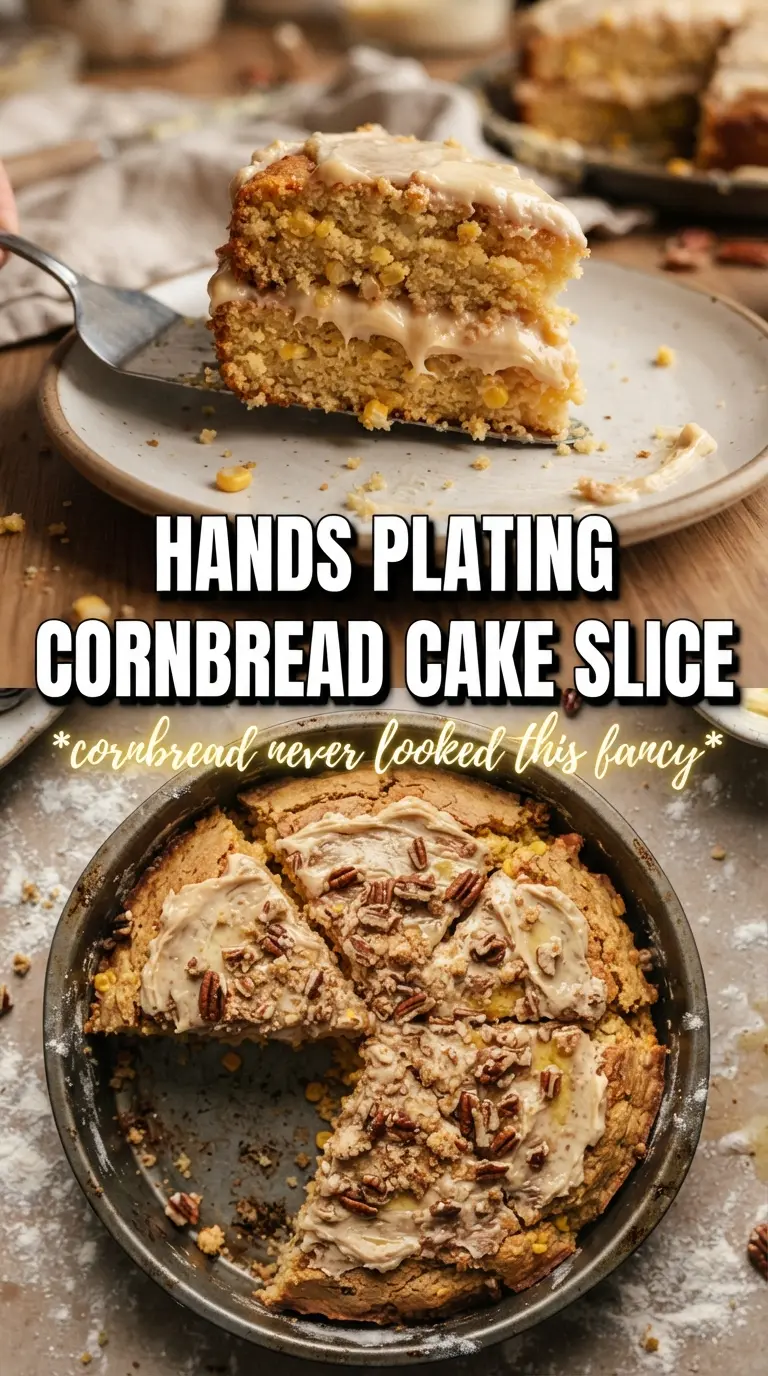
- Yellow cornmeal — This is what gives the cake its cornbread character. Fine cornmeal works best because it keeps the crumb pleasantly textured without turning sandy.
- Buttermilk — It adds tang and helps the baking soda do its job, which keeps the cake lighter. If you don’t have it, stir 1/2 tablespoon lemon juice or vinegar into 1/2 cup milk and let it sit for 5 minutes.
- Honey — Honey softens the sweetness and gives both the cake and frosting that warm, floral note. It also helps the frosting taste less sugary and more like a finish to the dessert.
- Unsalted butter — Use unsalted butter so you control the salt in both the batter and frosting. For the frosting, it needs to be fully softened so it whips up airy instead of dense.
- Heavy cream — Just a couple tablespoons loosens the frosting enough to spread cleanly between layers and around the sides. Add it slowly so the frosting stays thick and stable.
- Flaky sea salt — This isn’t decoration only. It sharpens the honey and makes the whole cake taste more balanced.
How to Build the Layers So the Frosting Stays Clean
Mix the Batter Just Until It Comes Together
Whisk the dry ingredients in one bowl and the wet ingredients in another, then fold them together until the flour streaks disappear. Stop there. Overmixing develops gluten in the flour and turns the cake chewy, which is the fastest way to lose that soft, crumbly cornbread texture. The batter should look smooth and thick, not elastic.
Divide Evenly for Flat, Stackable Layers
Pour the batter into three greased 8-inch pans and spread it level. Uneven pans mean uneven layers, and uneven layers are what make frosting slide around later. Tap each pan once on the counter to knock out big air pockets, then bake until the tops are set, lightly golden, and a toothpick comes out clean. Let the cakes cool completely before frosting or the honey butter layer will melt and slip.
Whip the Frosting Until It Turns Pale and Spreadable
Beat the softened butter, honey, powdered sugar, cream, vanilla, and salt until the frosting looks light and almost fluffy. If it seems stiff at first, keep beating; buttercream often needs a full minute or two to change texture. If it turns too loose, add a little more powdered sugar. You want it soft enough to spread without dragging crumbs but firm enough to hold the cake together.
Finish With Honey and Salt While the Frosting Is Fresh
Stack the layers with generous frosting between each one, then cover the outside with the remaining frosting. Drizzle honey over the top and finish with flaky salt while the frosting is still soft, so the topping settles in instead of sitting in separate puddles. A chilled cake slices more cleanly, but the final texture is best once it has rested long enough for the frosting to set.
Three Ways to Make This Cake Fit What You Need
Gluten-Free Version With the Same Cornbread Feel
Swap the all-purpose flour for a 1:1 gluten-free baking blend that includes xanthan gum. The cake will still bake up tender, but the crumb may be a little more delicate, so cool the layers completely before moving them. Fine cornmeal matters here because coarse cornmeal can make a gluten-free cake feel sandy.
Lighter Honey Frosting
If you want less sweetness, cut the powdered sugar back by about 1/2 cup and beat in an extra tablespoon of cream. The frosting will be softer and a little less structured, but it still spreads well and keeps that honey-butter flavor front and center.
Cupcake Version for Smaller Servings
Bake the batter in lined muffin tins and start checking them around 16 to 18 minutes. You’ll lose the dramatic layer effect, but you’ll keep the same sweet-salty finish and the same soft crumb. Pipe or swipe the frosting over the tops while the cupcakes are fully cool.
Storage and Reheating
- Refrigerator: Store covered for up to 4 days. The cake stays moist, but the frosting will firm up in the fridge.
- Freezer: Freeze unfrosted layers tightly wrapped for up to 2 months. Thaw them in the refrigerator before frosting. Fully frosted cake can be frozen, but the finish won’t be as neat after thawing.
- Reheating: This cake is best served at room temperature, not warmed. Let chilled slices sit out for 30 to 45 minutes so the frosting softens and the honey flavor comes forward again.
Answers to the Questions Worth Asking
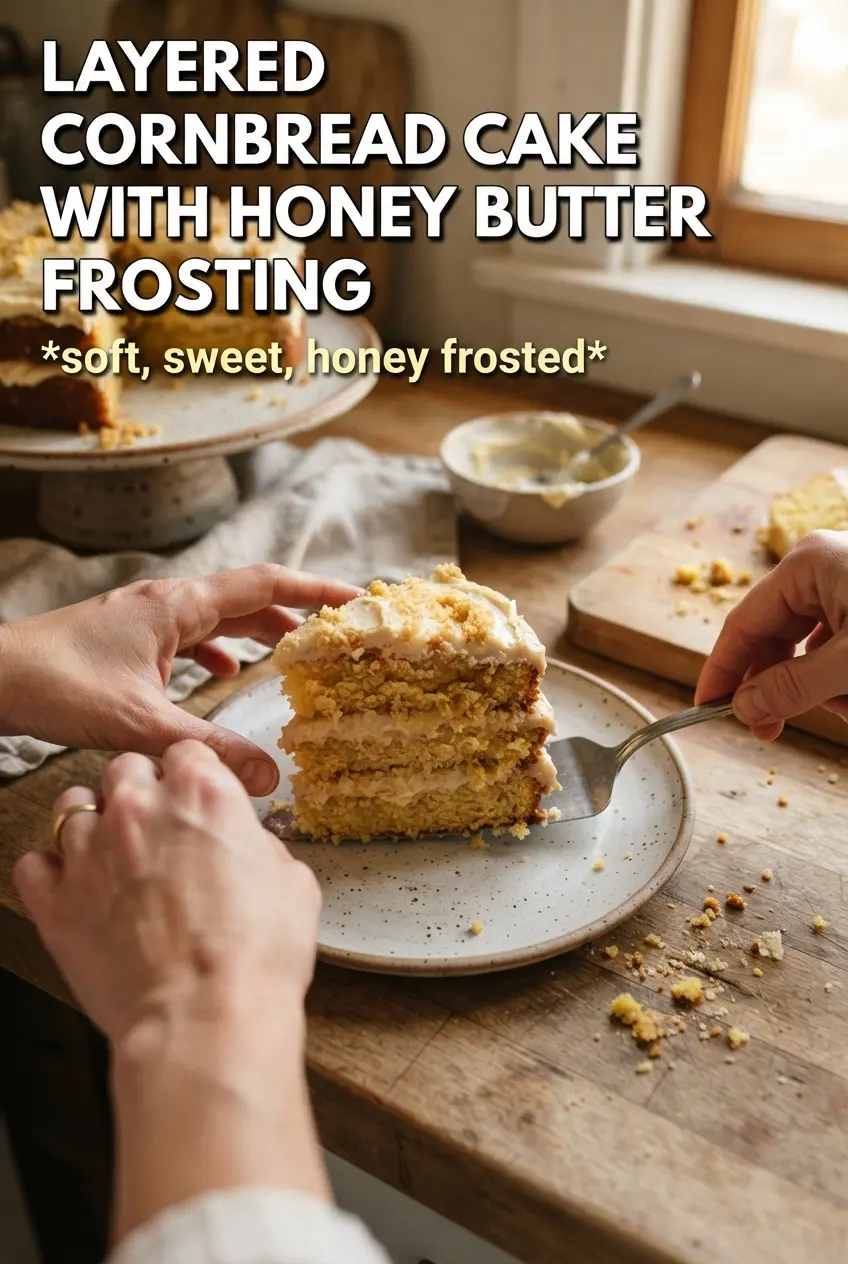
Layered Cornbread Cake With Honey Butter Frosting
Ingredients
Equipment
Method
- Preheat oven to 350F. Grease three 8-inch round pans.
- Whisk dry ingredients until evenly combined: all-purpose flour, yellow cornmeal, granulated sugar, baking powder, baking soda, and salt. Set aside.
- Whisk wet ingredients separately: eggs, whole milk, buttermilk, melted unsalted butter, honey, and vanilla. Mix until smooth.
- Fold wet into dry until just combined, avoiding overmixing. Divide the batter evenly between the three pans.
- Bake for 22-25 minutes at 350F until a toothpick inserted in the center comes out clean. Cool completely.
- Beat honey butter frosting ingredients until very light and fluffy: softened unsalted butter, honey, powdered sugar, heavy cream, vanilla, and salt. Beat until the texture looks airy.
- Frost generously between all layers. Spread to the edges so the stack stays level.
- Frost over the outside, smoothing the sides while still leaving some swirls if desired. Make sure the top is fully coated.
- Drizzle with honey and sprinkle flaky sea salt over the top. Finish while the frosting surface is still fresh-looking.


