Autumn pearl couscous salad has that sweet-savory balance that keeps people going back for one more forkful. The pearl couscous stays pleasantly chewy, the roasted butternut squash brings caramelized edges, and the goat cheese softens everything with a creamy tang. It eats like a side dish but lands with enough texture and contrast to feel a little special.
What makes this version work is the way each piece is handled separately before it all comes together. The couscous needs to cool before it meets the greens so the arugula stays perky, and the squash needs enough heat to brown instead of steam. A quick maple balsamic dressing ties the bowl together without overpowering the pecans, cranberries, or cheese.
If you’ve ever had grain salads turn soggy or flat, the notes below will help. I’m walking through the timing that keeps the textures distinct, plus a few smart swaps if you need to adjust the cheese, nuts, or greens.
The couscous held its shape, the squash stayed caramelized, and the maple balsamic pulled everything together without making the greens limp. I served it warm and it disappeared fast.
Save this autumn pearl couscous salad for a crisp, colorful side with roasted squash, cranberries, pecans, and maple balsamic dressing.
The Trick to Keeping Pearl Couscous Chewy Instead of Soft
Pearl couscous can go from pleasantly bouncy to heavy and damp fast if it sits hot in the bowl. That’s the mistake that flattens a lot of grain salads. Cook it until tender, then spread it out or let it cool before tossing it with the greens and dressing so each pearl stays separate instead of clumping into a warm mass.
The other place people lose texture is with the squash. Roasting at a high enough heat matters here because you want browned edges and dry surface heat, not steaming. If the pan looks crowded, the squash will soften instead of caramelize, and the whole salad loses that sweet, roasted contrast.
- Cooling the couscous — This keeps the arugula from wilting and stops the dressing from disappearing into the grains.
- Roasting the squash hard enough — Golden edges bring sweetness and depth; pale squash tastes flat next to the cranberries and cheese.
- Adding the cheese at the end — Goat cheese stays in little creamy pockets instead of melting into the bowl.
What Each Ingredient Is Actually Doing in the Bowl
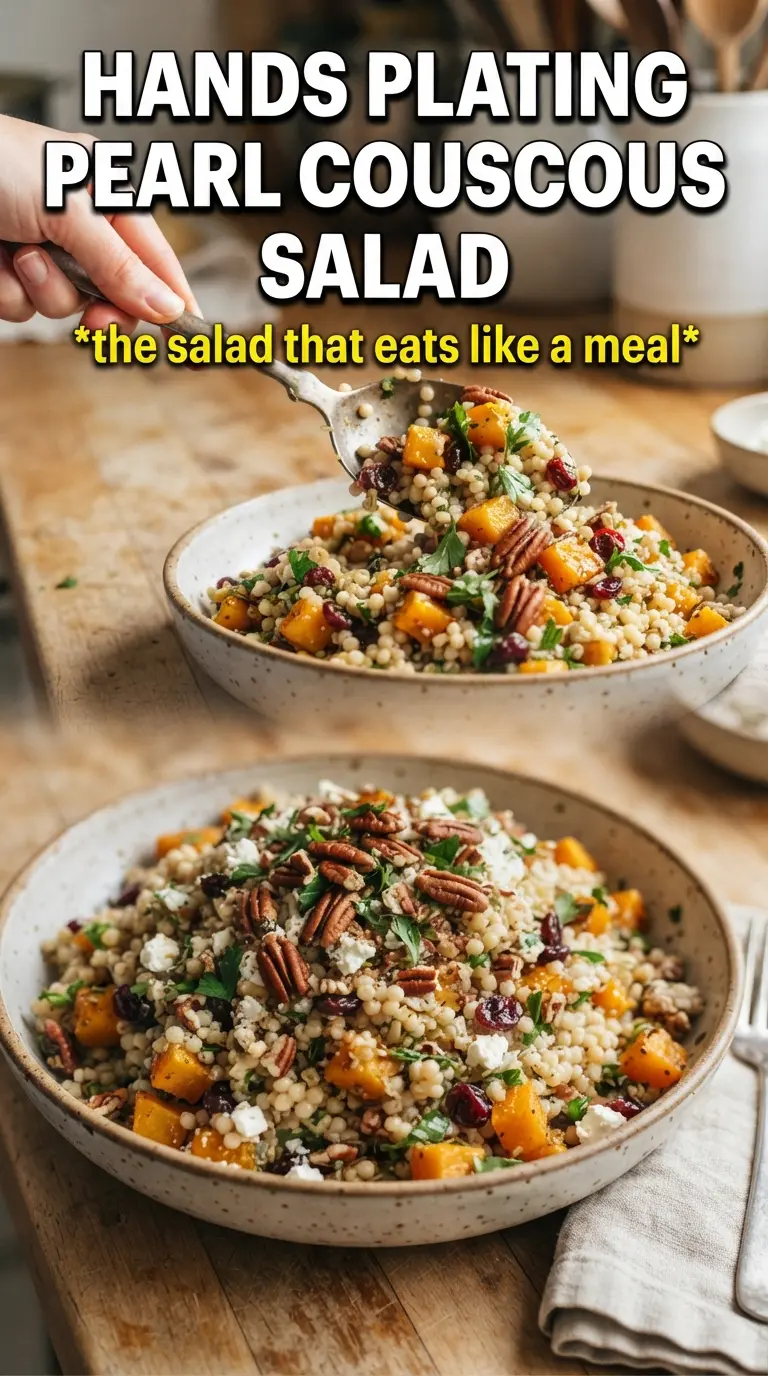
- Pearl couscous — This is the base that gives the salad body and chew. Regular couscous turns soft and fine; pearl couscous gives you a more substantial bite that holds up under dressing.
- Butternut squash — Roasted squash brings sweetness and a soft, caramelized texture that balances the tart cranberries and sharp cheese. Fresh-cut squash roasts best when the cubes are similar in size.
- Arugula or mixed greens — Arugula adds peppery bite, while mixed greens mellow the salad a little. If you want the strongest contrast, use arugula; if you want a softer side dish, use mixed greens.
- Goat cheese — The tang and creaminess matter here. Feta can work in a pinch, but it brings more salt and less creaminess.
- Maple balsamic dressing — Balsamic gives the dressing its sharp edge, and maple smooths it out so the salad doesn’t taste too acidic. Dijon helps the dressing stay emulsified long enough to coat the bowl evenly.
Building the Salad So Every Bite Stays Distinct
Roast the Squash Until It Has Edges
Toss the squash with oil, salt, and pepper, then spread it on a baking sheet in a single layer. You’re looking for browned corners and tender centers, not soft cubes that collapse when you stir them. If the pan is packed, the squash steams and loses that caramelized flavor that makes the salad taste finished.
Cook and Cool the Couscous
Cook the pearl couscous until just tender, then drain it well and let it cool to room temperature. If you add it while it’s still steaming, the greens wilt and the dressing gets absorbed too fast. A little cooling time keeps the texture clean and lets the dressing sit on the outside instead of turning the salad heavy.
Whisk the Dressing Until It Looks Creamy
Whisk the olive oil, balsamic, maple syrup, Dijon, salt, and pepper until the dressing turns glossy and slightly thickened. Dijon is doing more than adding flavor here; it helps the oil and vinegar hold together long enough to coat the couscous evenly. If the dressing separates quickly, keep whisking for another few seconds before you pour it over the bowl.
Toss Gently, Then Finish on Top
Combine the couscous, squash, greens, cranberries, and pecans, then toss lightly so the greens don’t bruise. Add the dressing a little at a time because you can always add more, but you can’t take it back once the salad starts looking wet. Finish with goat cheese and pumpkin seeds right before serving so they stay visible and give the top layer some texture.
How to Adapt This Autumn Couscous Salad Without Losing the Balance
Make It Dairy-Free
Skip the goat cheese and add a little extra pumpkin seed or pecan for richness. You’ll lose the tangy creaminess, so a tiny pinch more salt in the dressing helps the salad taste complete.
Swap the Nuts for Seeds
Use sunflower seeds or extra pumpkin seeds if you need a nut-free version. Toast them first so they bring the same crunch and a little roasted flavor, since untoasted seeds can taste flat against the squash.
Turn It Into a Heartier Main
Add chickpeas, shredded chicken, or roasted salmon on top and keep the dressing slightly lighter so the bowl doesn’t get heavy. The couscous and squash already carry the texture, so the protein should sit in the background instead of crowding the salad.
Storage and Reheating
- Refrigerator: Store for up to 3 days, but keep the goat cheese and pumpkin seeds separate if you want the best texture. The greens will soften a bit once dressed.
- Freezer: This salad doesn’t freeze well. The greens and dressing turn watery after thawing, and the squash loses its texture.
- Reheating: Serve it chilled or let it sit at room temperature for 15 to 20 minutes. If you want the squash warm, reheat only that part and add it back after the couscous and greens are already in the bowl.
Questions I Get Asked About This Recipe
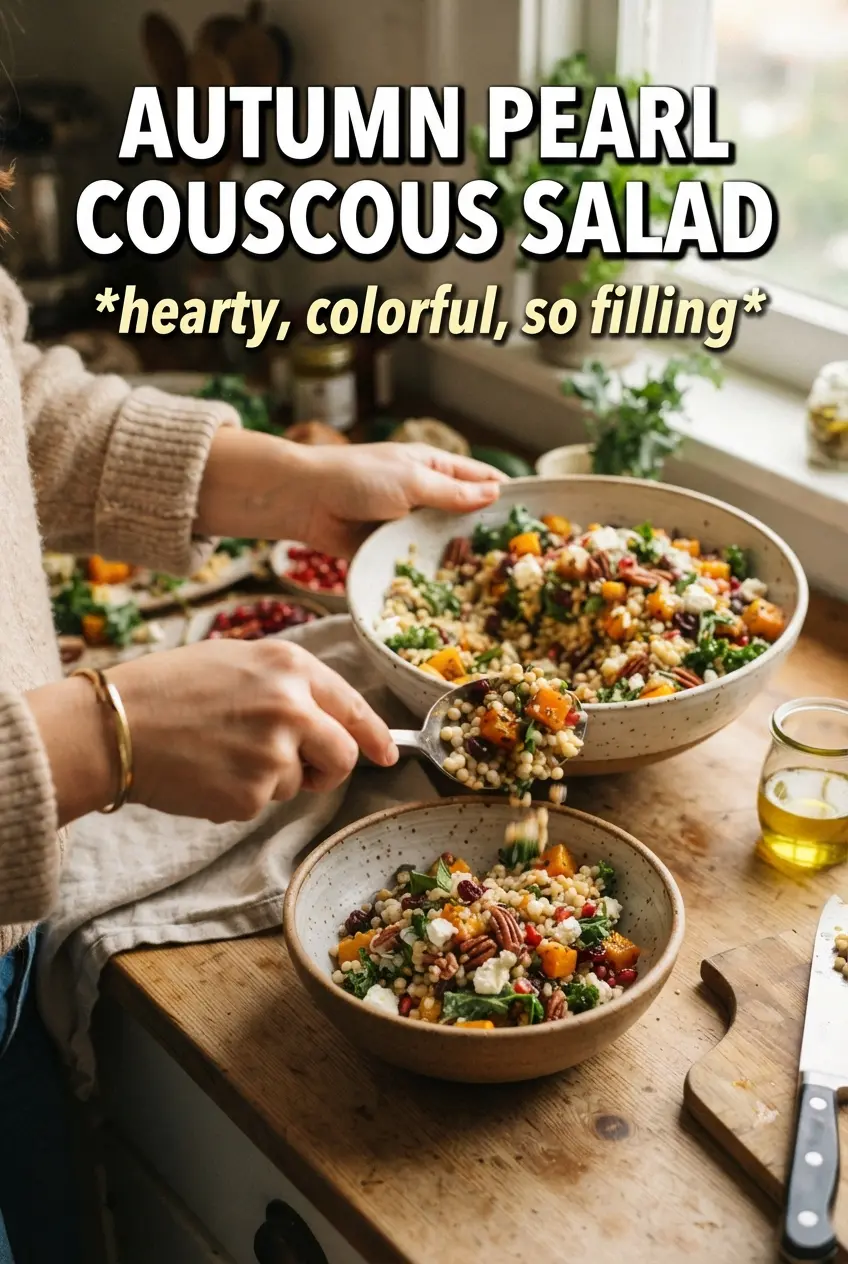
Autumn Pearl Couscous Salad
Ingredients
Equipment
Method
- Cook pearl (Israeli) couscous per package instructions, then cool to room temperature for even, fluffy pearls.
- Roast butternut squash on a sheet pan at 425F with olive oil, salt, and pepper for 25 minutes, until golden on the edges.
- Let the roasted butternut squash cool slightly so it won’t wilt the arugula when combined.
- Whisk olive oil, balsamic vinegar, maple syrup, and Dijon with salt and pepper until emulsified and glossy.
- Combine pearl (Israeli) couscous, roasted butternut squash, arugula or mixed greens, dried cranberries, and pecans in a large bowl.
- Drizzle dressing over the salad and toss gently until evenly coated.
- Top with goat cheese and pumpkin seeds before serving for a creamy, crunchy finish.


