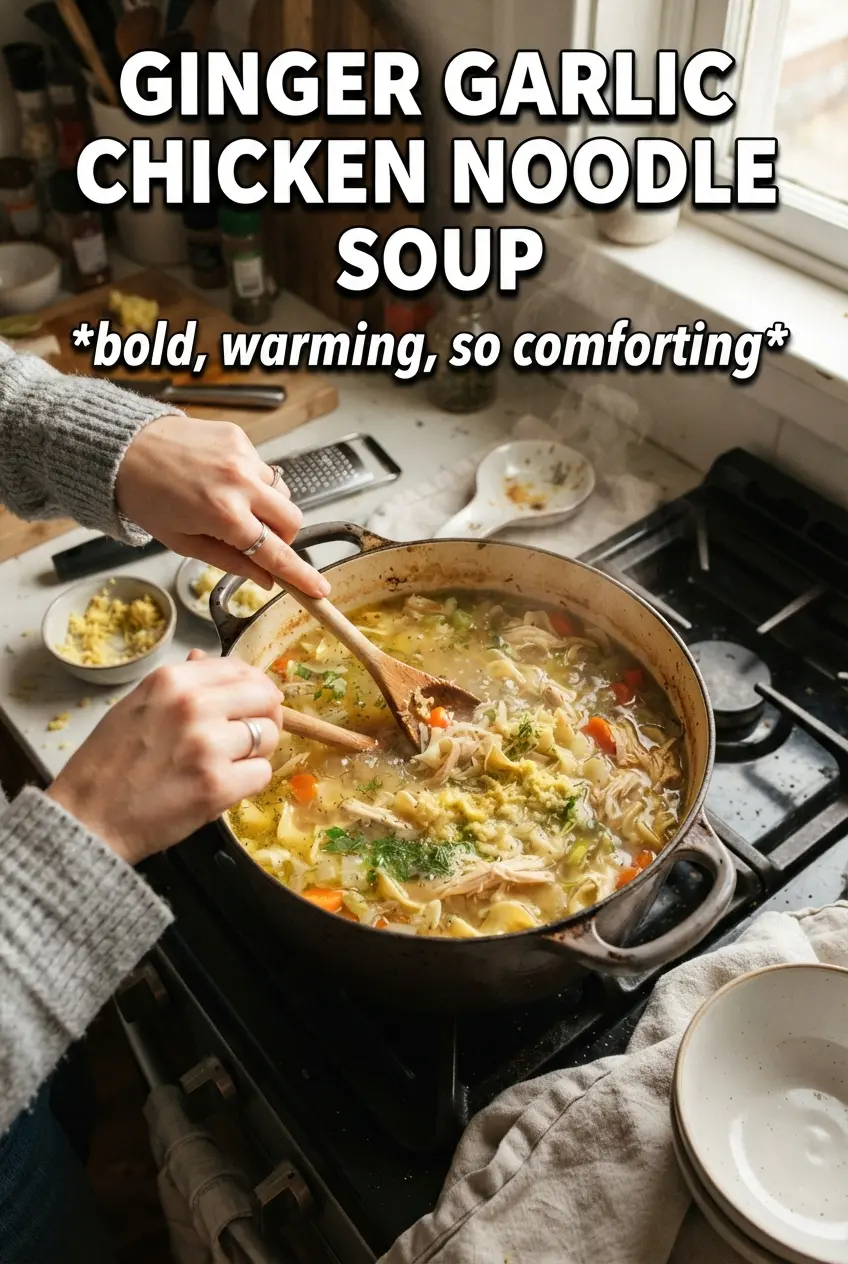
Ginger garlic chicken noodle soup lands in the bowl with a clear, golden broth that tastes bright, savory, and deep without feeling heavy. The ginger gives it warmth, the garlic rounds it out, and the noodles soak up just enough of that broth to make every spoonful comforting without turning mushy.
What makes this version work is the order: the onion, carrot, and celery get a head start so the broth has a sweeter base, then the garlic and ginger go in just long enough to bloom without burning. The chicken simmers right in the broth, which keeps the meat tender and gives the soup a fuller body than a broth-only version. A small splash of rice vinegar at the end wakes everything up, and sesame oil finishes the bowl with a nutty edge.
Below, you’ll find the timing that keeps the noodles from overcooking, the ingredient swaps that still keep the broth balanced, and a few practical fixes for when you want to make this ahead.
The broth had that clean ginger-garlic taste and the noodles stayed springy because I added them at the end. My husband went back for a second bowl before I even sat down.
Save this ginger garlic chicken noodle soup for the nights when you want a clear, fragrant broth and tender noodles without a long simmer.
The Broth Tastes Flat Only When the Aromatics Never Get a Head Start
If the onions, carrots, and celery go straight into liquid, they mostly steam and never build the sweet base that makes chicken soup taste finished. A few minutes in the pot before the broth goes in changes the whole soup. You get a rounder, less one-note broth without needing extra ingredients.
Garlic and ginger need an even shorter window. They should smell sharp and fragrant, not browned. Burnt garlic turns bitter fast, and ginger loses its clean bite if it cooks too long before the broth softens it back down.
- Onion, carrot, and celery — These build the soup’s backbone. Dice the onion small so it softens quickly, and slice the carrots and celery evenly so nothing stays crunchy while the chicken finishes.
- Fresh ginger — Fresh ginger gives this soup its warmth and lift. Ground ginger won’t give the same clean, bright flavor, so use the fresh stuff if you can.
- Chicken thighs or breasts — Thighs stay juicier and give the broth a little more richness. Breasts work fine if you keep the simmer gentle and pull them as soon as they’re cooked through.
- Ramen or egg noodles — Use whichever you have, but cook them at the end so they keep their texture. If they sit in the soup too long, they’ll swell and make the broth cloudy and starchy.
What Each Ingredient Is Doing in the Bowl

The chicken broth does the heavy lifting here, so use one that tastes good on its own. A bland broth stays bland no matter how much ginger and garlic you add. If you only have low-sodium broth, that works better than regular broth that’s already overly salty, because you can control the seasoning at the end.
Soy sauce adds depth and salt in one move, while rice vinegar sharpens the finish so the soup doesn’t taste muddy. Sesame oil is for the last minute only; it’s a finishing oil, not a cooking oil, and too much heat flattens its aroma. Green onions, cilantro, and sesame seeds don’t just garnish the bowl — they give the soup fresh top notes right before serving.
- Chicken broth — Choose a broth with a clean, savory taste. Homemade broth works beautifully, but a good store-bought version is absolutely fine.
- Soy sauce — This deepens the broth without making it taste like soy sauce soup. Tamari works if you need a gluten-free option.
- Rice vinegar — A small amount at the end brightens the broth and keeps the ginger from feeling heavy. Lemon won’t taste the same here.
- Sesame oil — Add it after the heat is off or just before serving. That’s the difference between a fragrant finish and a muted one.
Building the Soup So the Noodles Stay Springy
Softening the Vegetables First
Heat the oil in a large pot and cook the onion, carrots, and celery until the onion turns translucent and the edges of the vegetables start to soften. You want them fragrant and slightly sweet, not browned. If the heat is too high, the onions take on color before the carrots and celery have softened, which leaves the soup feeling uneven.
Blooming the Ginger and Garlic
Add the garlic and ginger and stir them for about 2 minutes, just until the whole pot smells sharp and warm. This is the point where the soup starts smelling like dinner. If you leave them in longer before adding the broth, the garlic can go bitter, so keep your eye on the pan and move quickly.
Simmering the Chicken Gently
Pour in the broth and soy sauce, then add the chicken and bring everything up to a boil before lowering it to a steady simmer. The broth should move with small bubbles, not a hard rolling boil, because aggressive boiling tightens chicken breast and makes it stringy. Simmer until the chicken is cooked through and easy to shred, then pull it out before it has a chance to dry out.
Finishing with Noodles and the Final Seasoning
Add the noodles only after the chicken is shredded and returned to the pot, then cook until just tender. Ramen goes fast, and egg noodles can go from done to bloated in a minute, so taste early. Stir in the sesame oil and rice vinegar off the heat, then season with salt and pepper until the broth tastes complete rather than just salty.
How to Adapt This Soup Without Losing the Balance
Gluten-Free Version
Use tamari instead of soy sauce and choose gluten-free noodles if needed. Rice noodles work too, but they soften faster than ramen, so drop them in at the very end and serve right away.
Chicken Thighs for a Richer Broth
Thighs bring more body and stay tender even if the soup simmers a little longer. They also shred into a softer, juicier texture that holds up well if you plan leftovers.
Vegetable-Forward Bowl
Skip the chicken and add sliced mushrooms, baby bok choy, or diced tofu near the end. You lose the deeper poultry flavor, so use a broth you trust and add a little extra soy sauce for backbone.
Storage and Reheating
- Refrigerator: Store for up to 4 days. The noodles will keep soaking up broth, so expect the soup to thicken a little.
- Freezer: Freeze the broth, chicken, and vegetables without the noodles for best texture. Cook fresh noodles after thawing so they don’t turn mushy.
- Reheating: Warm gently on the stove over medium-low heat until steaming. If the soup is already packed with noodles, add a splash of broth or water before reheating so the pot doesn’t dry out.
Questions I Get Asked About This Recipe
Ginger Garlic Chicken Noodle Soup
Ingredients
Equipment
Method
- Heat 1 tablespoon oil in a large pot over medium-high heat, then sauté onion, carrots, and celery for 4 minutes until softened and fragrant.
- Add garlic and ginger to the pot and cook for 2 minutes until very fragrant.
- Pour in broth and soy sauce, add chicken, bring to a boil, then simmer for 20 minutes until the chicken is cooked through.
- Remove the chicken, shred it, and return the shredded chicken to the pot.
- Add noodles and cook for 3-5 minutes until tender.
- Stir in sesame oil and rice vinegar, then season with salt and pepper to taste.
- Top with green onions, fresh cilantro, and sesame seeds before serving.