Vegetable beef soup earns its place in the rotation when the broth turns deep and savory, the beef softens without falling apart, and every spoonful lands with a mix of tender potato, sweet carrot, and just enough tomato to keep it from tasting flat. It’s the kind of pot that feels simple on paper and steadying on the table, especially when you want something filling that doesn’t need a pile of side dishes to feel complete.
The difference here is in the order. Browning the beef first builds a base that plain simmering can’t match, and the tomato paste gets cooked long enough to lose its raw edge before the broth goes in. That step gives the soup a darker color and a fuller flavor. Adding the potatoes later keeps them from breaking down too soon, while the green beans and corn go in near the end so they stay bright instead of tired.
Below, I’ve included the small details that matter most: how to keep the beef tender, when to salt so the broth tastes balanced, and a few swaps that still keep the soup hearty.
The broth turned out rich and the beef got tender right around the 30-minute mark after simmering. I loved that the potatoes held their shape and the green beans still had a little bite.
Save this vegetable beef soup for the nights when you want a deep, hearty broth with tender beef and chunked vegetables in every bowl.
The Browning Step That Gives the Broth Its Depth
Vegetable beef soup can taste thin when the beef goes straight into liquid without enough color on the surface. Browning the meat in batches changes that completely. You’re not just cooking the outside; you’re putting a layer of flavor in the pot that dissolves into the broth later. If the pan looks crowded, the beef will steam instead of sear, and you’ll lose the dark, savory edge that makes the soup taste cooked all the way through.
The other place people rush is the tomato paste. Let it cook with the onions, carrots, and celery until it darkens a shade and smells sweet instead of sharp. That short step keeps the soup from tasting like broth with vegetables floating in it. Once the broth goes in, scrape up every browned bit from the bottom of the pot. That’s where a lot of the flavor lives.
What Each Ingredient Is Actually Doing In This Soup
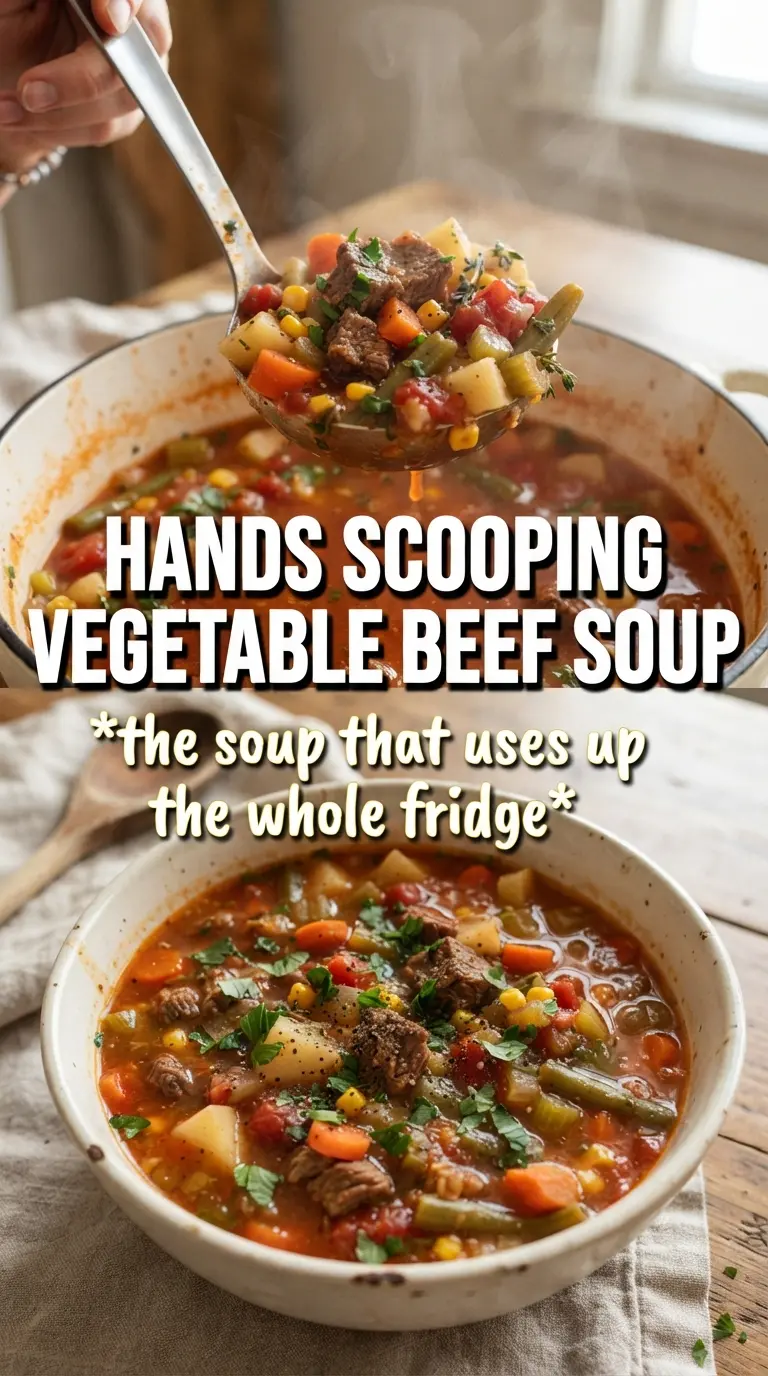
- Beef stew meat — This gives the soup its backbone, but only if it’s browned first and simmered long enough to soften. Chuck-style stew meat works best because it has enough connective tissue to turn tender instead of dry. If your pieces are large, cut them smaller so they become spoon-tender in the time the vegetables need.
- Beef broth — Use the best broth you can get here, because it’s the body of the soup. A weak broth makes the whole pot taste flat, even with good vegetables. If yours is low-sodium, that’s a plus, since you can season the finished soup more precisely.
- Tomato paste and diced tomatoes — The paste deepens the color and adds concentrated savory flavor, while the diced tomatoes keep the broth from feeling heavy. Cook the paste briefly before adding liquid so it loses its raw taste. If you only have tomato sauce, the soup will be softer and less defined, but it still works.
- Potatoes, carrots, celery, green beans, and corn — These give the soup its classic vegetable-beef balance, but they should go in at different times. Potatoes need longer; green beans and corn need less so they stay intact and sweet. Frozen corn is a smart shortcut because it holds its texture well.
- Worcestershire sauce and thyme — Worcestershire adds a quiet, rounded savoriness that plain salt can’t give. Thyme keeps the broth tasting like soup instead of stew. Don’t skip the bay leaf either; it won’t stand out on its own, but it gives the pot a more complete finish.
How To Build The Soup So The Vegetables Stay Tender
Searing The Beef Without Steaming It
Heat the oil until it shimmers, then add the beef in batches. You want a deep brown crust on several sides, not gray meat sitting in its own juices. If the pot gets crowded, the temperature drops and the beef releases moisture before it browns. Set the pieces aside once they have color; they’ll finish later in the broth.
Cooking The Aromatics Until They Turn Sweet
Add the onion, carrots, and celery to the same pot and cook them until the onion softens and the carrots lose their raw edge. Stir in the garlic and tomato paste near the end so they don’t burn. The tomato paste should darken a little and smell less metallic. If it catches on the bottom, lower the heat and add a splash of broth before it scorches.
Letting The Pot Simmer In Layers
Once the broth, tomatoes, Worcestershire, thyme, and bay leaf are in, bring everything to a boil and then lower it to a steady simmer. A hard boil will toughen the beef and break the vegetables apart later. After about 30 minutes, the beef should be starting to turn tender, and the broth should look a little darker and more unified. That’s your sign to add the potatoes.
Adding The Vegetables In The Right Order
Potatoes need time to cook through, but green beans and corn need only a short finish. Add the potatoes first and simmer until a fork slides in with little resistance. Then stir in the green beans and corn for the last few minutes so they stay bright and don’t turn mushy. Pull out the bay leaf before serving and taste the broth one last time for salt and pepper.
Three Ways To Make This Soup Fit What You Have On Hand
Use Sweet Potatoes Instead Of Regular Potatoes
Sweet potatoes bring a softer texture and a slight sweetness that plays well with the beef and tomatoes. Cut them into similar-size cubes and add them in the same place you’d add regular potatoes. The broth will taste a little warmer and rounder, but the soup still keeps its hearty feel.
Make It Gluten-Free Without Changing The Texture
This soup is naturally gluten-free as written as long as your beef broth and Worcestershire sauce are certified gluten-free. That’s the only place gluten usually sneaks in. Check the labels once, and the texture and flavor stay exactly where they should be.
Turn It Into A Vegetable-Forward Pot
If you want more vegetables and less beef, cut the meat to 1 pound and increase the carrots, celery, green beans, or corn a bit. The broth will still taste rich because the browned beef and tomato paste do the heavy lifting. Just keep enough broth in the pot so the vegetables can move around and cook evenly.
Storage and Reheating
- Refrigerator: Store for up to 4 days. The broth gets even better after a day, but the potatoes will soften a little more each time it sits.
- Freezer: It freezes well for up to 3 months. Cool it completely first, then freeze in portions so the vegetables don’t spend too long thawing and going soft.
- Reheating: Warm it gently on the stove over medium-low heat until hot. A hard boil can break down the potatoes and make the beef feel stringy, so keep it at a low simmer and stir now and then.
Questions I Get Asked About This Recipe
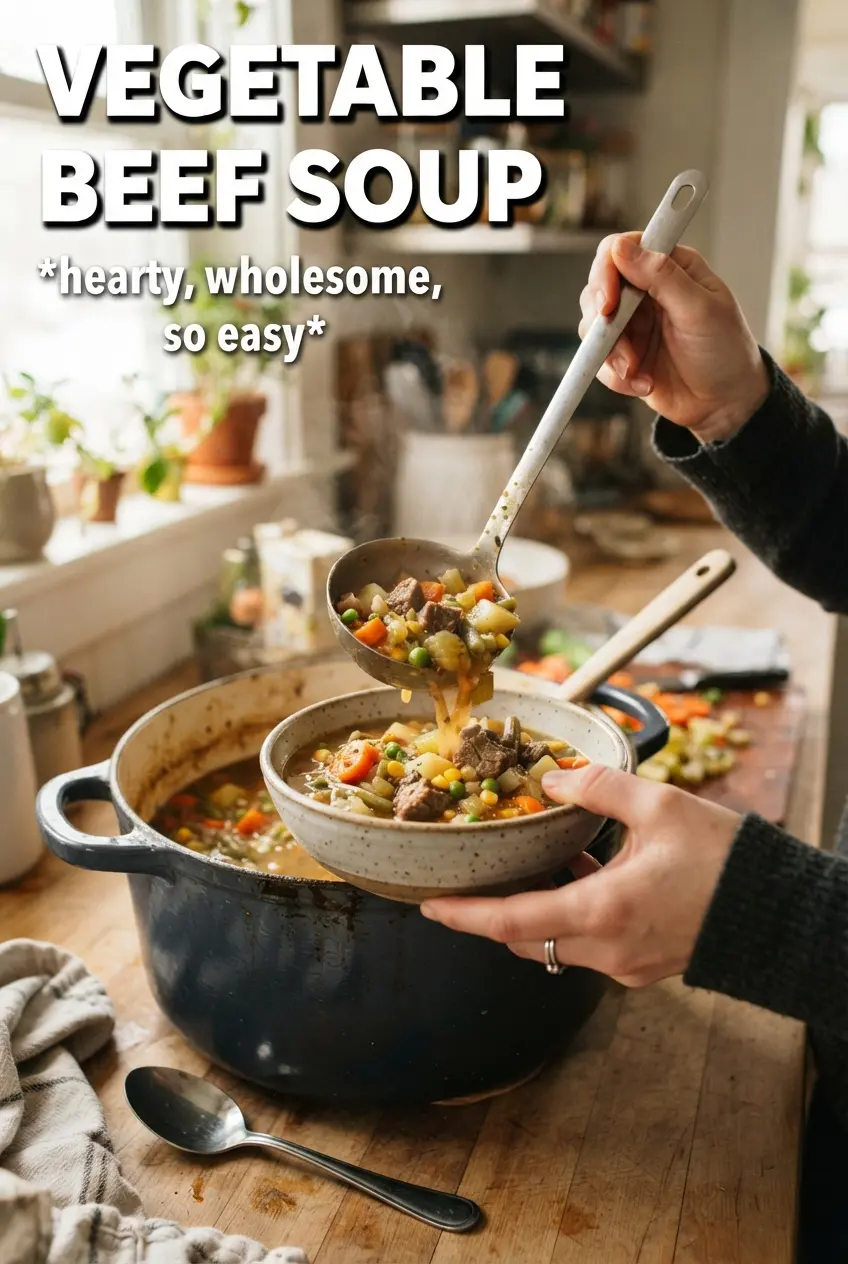
Vegetable Beef Soup
Ingredients
Equipment
Method
- Heat 2 tablespoons olive oil in a large Dutch oven over medium-high heat. Sear beef stew meat in batches until browned on all sides, then remove to a plate.
- In the same Dutch oven, sauté onion, carrots, and celery for 5 minutes. Add minced garlic and tomato paste, then cook for 2 minutes.
- Return browned beef to the pot, then add beef broth, diced tomatoes, Worcestershire sauce, dried thyme, and bay leaf. Bring to a boil over high heat.
- Reduce heat to low and simmer for 30 minutes, keeping a steady gentle bubble.
- Add cubed potatoes and cook for 15 minutes, stirring occasionally so they cook evenly.
- Add green beans and frozen corn for the last 8 minutes. Cook until the beans are tender-crisp and the corn is hot.
- Remove the bay leaf, then season with salt and pepper to taste. Stir well and serve hot.