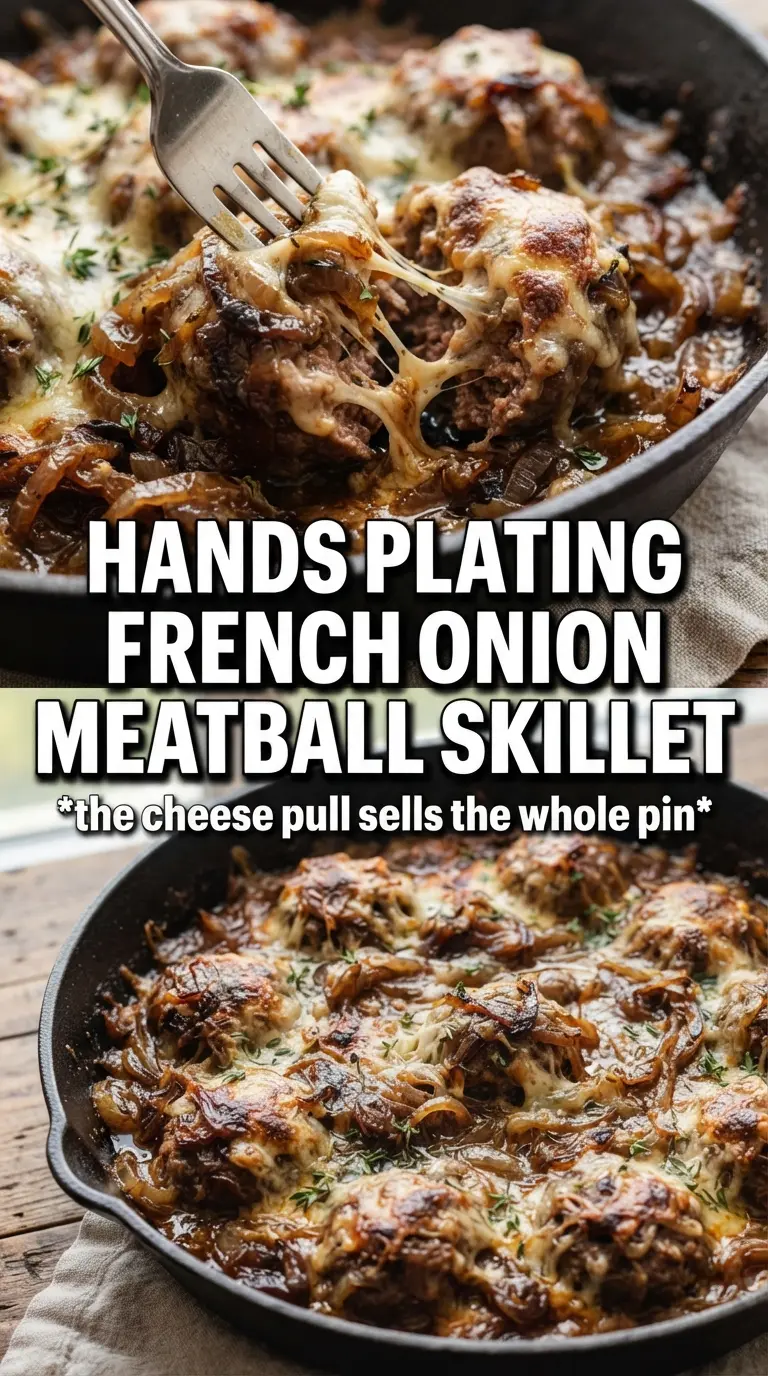
French onion meatball skillet brings all the deep, savory comfort of French onion soup into a one-pan main dish that actually eats like dinner. The onions cook down until they turn jammy and sweet, the meatballs stay tender in the middle, and the Gruyere melts into a bronzed, bubbling top that pulls the whole skillet together. It’s the kind of meal that feels a little special without asking for much more than patience at the stove.
The key is giving the onions enough time to move past soft and pale into deeply caramelized. That slow cooking builds the base of the sauce, and the wine and broth lift up every browned bit left behind from the meatballs. The meatballs themselves are kept simple on purpose so the onion broth can stay the loudest flavor in the pan.
Below you’ll find the small details that matter here: when to pull the onions before they scorch, how to keep the meatballs juicy while they finish in the sauce, and the trick for getting the cheese melted and blistered without drying out the skillet.
The onions turned sweet and almost silky, and the Gruyere broiled up with those little browned spots I was hoping for. My husband kept saying it tasted like French onion soup turned into a full meal.
Save this French Onion Meatball Skillet for the nights when you want caramelized onions, bubbling Gruyere, and a one-pan dinner that tastes like French onion soup with substance.
The Part Most People Rush: The Onions
French onion flavor lives or dies on the onions. If they’re only softened, the skillet tastes sharp and one-note; once they’ve cooked all the way down to a deep golden brown, they bring sweetness and body that make the whole dish taste like it simmered for hours. Medium-low heat is the sweet spot here. Too much heat gives you browned edges and raw-tasting centers instead of the soft, almost marmalade-like texture you want.
The other trap is crowding the pan with too much butter at once and then walking away. Onions need occasional stirring and time to lose their water before they start caramelizing. If the bottom starts sticking, that’s not a problem — it usually means you’re building flavor. A splash of wine loosens those browned bits and turns them into the base of the sauce instead of a scorched layer on the pan.
What Each Ingredient Is Actually Doing in This Skillet
- Ground beef — This gives the meatballs enough richness to stand up to the onions and cheese. An 80/20 blend works best because it stays juicy through the final simmer.
- Breadcrumbs and egg — These hold the meatballs together and keep them tender. Don’t skip them unless you want firmer, denser meatballs.
- Worcestershire — It adds the savory depth that makes the skillet taste fuller without turning it into a steak sauce dish. A little goes a long way.
- Yellow onions — This is where the French onion character comes from. Thin slicing matters because it helps them cook evenly and melt down instead of staying stringy.
- Dry white wine — Use something dry, not sweet. It sharpens the sauce and lifts the browned bits from the pan; chicken broth can work in a pinch, but the sauce loses some of that classic French onion edge.
- Gruyere — This is the cheese that gives you the nutty, stretchy finish. Swiss is the closest swap if Gruyere is expensive or hard to find, but the flavor will be milder.
Building the Sauce So It Stays Rich Instead of Thin
Brown the Meatballs First
Start the meatballs in butter and let them get color before you move them out of the pan. That crust gives the finished skillet more depth, and the browned bits left behind are part of the sauce. You’re not cooking them through at this stage; you’re giving them a head start and creating the flavor base the onions will pick up later.
Caramelize the Onions Slowly
Add the onions to the same skillet and keep the heat at medium-low. Stir often enough to keep the edges from scorching, but not so often that they never make contact with the pan. They should go from firm and pale to soft, golden, and eventually deep brown and sweet. If they start drying out before they’re done, a small splash of water or broth keeps them moving without cooling the pan too much.
Deglaze and Build the Broth
Once the onions are deeply caramelized, add the garlic and thyme for just a minute so they don’t burn. Pour in the wine and scrape the pan until the bottom is clean, then add the broth and Worcestershire. The sauce should look loose at first; it thickens a little as it simmers and coats the meatballs. If it tastes flat, it usually needs another pinch of salt more than it needs more liquid.
Finish Under the Broiler
Return the meatballs to the skillet and let them simmer until cooked through. Then cover everything with Gruyere and slide the skillet under the broiler until the cheese is melted and spotted with brown. Watch it closely. The line between bubbly and burned is short, and a hot broiler will go from perfect to too dark in under a minute.
How to Adapt This Skillet for Different Tables
Gluten-Free Meatballs
Swap the breadcrumbs for a gluten-free breadcrumb mix or finely crushed gluten-free crackers. The texture stays close to the original as long as you use the same amount and don’t overmix the meat. The skillet sauce is naturally gluten-free as long as your Worcestershire sauce is certified gluten-free.
Dairy-Free Version
Use olive oil or a dairy-free butter substitute for cooking the onions and browning the meatballs, then finish with a dairy-free melting cheese if you can find one that actually melts well. The sauce will still taste savory and onion-rich, but it won’t have the same nutty finish as Gruyere.
Lighter Meatballs
Ground turkey works if you want a leaner skillet, but it needs extra care because it dries out faster than beef. Add a tablespoon of olive oil to the meat mixture and pull the skillet from the oven as soon as the meatballs reach doneness. The onions and cheese carry most of the flavor, so the swap still works.
Storage and Reheating
- Refrigerator: Store covered for up to 3 days. The onions will thicken as they chill, and the cheese will lose some of its fresh melt.
- Freezer: Freeze the meatballs and onion sauce without the cheese topping for up to 2 months. Thaw in the fridge before reheating, then add fresh Gruyere near the end.
- Reheating: Warm gently on the stovetop over low heat with a splash of broth to loosen the sauce. If you reheat it too fast, the meatballs can turn dry and the cheese can separate.
Questions I Get Asked About This Recipe
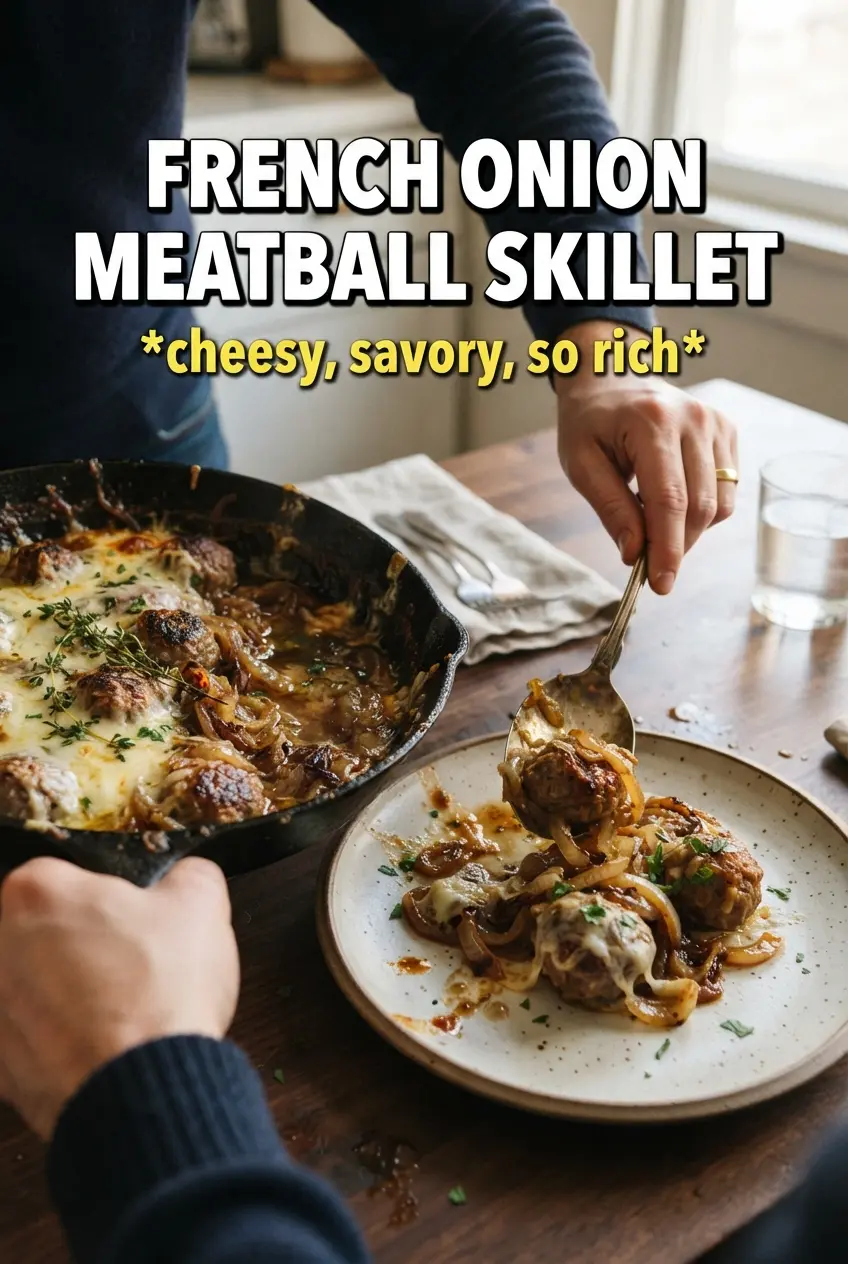
French Onion Meatball Skillet
Ingredients
Equipment
Method
- In a mixing bowl, combine ground beef, breadcrumbs, egg, Worcestershire, garlic powder, salt, and pepper until evenly mixed; roll into meatballs. Keep them similar in size so they brown at the same pace.
- Heat butter in an oven-safe skillet over medium heat and brown the meatballs in batches as needed, turning until golden all over. Remove browned meatballs to a plate.
- Reduce heat to medium-low and cook the sliced onions in the same skillet until deeply caramelized, about 30-35 minutes, stirring occasionally. Look for thick, dark amber onions and no raw onion smell.
- Add minced garlic and fresh thyme to the onions and cook for about 1 minute until fragrant. Stir constantly so the garlic doesn’t brown too fast.
- Pour in the dry white wine to deglaze, scraping up the browned bits from the bottom of the skillet. Cook for 1-2 minutes until the wine smell mellows.
- Add beef broth and Worcestershire, then bring the sauce to a gentle simmer. Taste and adjust with salt and pepper.
- Nestle the browned meatballs into the caramelized onion sauce and simmer for 10 minutes. You should see light bubbling around the edges.
- Scatter Gruyere over the entire surface so it covers the meatballs and sauce. Broil for 3-5 minutes until the cheese is golden and bubbly.


