Hobo foil packets come off the heat with the kind of dinner everyone leans in for: tender meat, soft potatoes, sweet carrots, and butter-slicked vegetables all steaming together in one tidy package. The foil traps enough heat to cook everything evenly, but the real payoff is the way the juices from the meat soak into the potatoes and onions underneath. That’s what keeps this from tasting like separate ingredients tossed together at the last minute.
The key is layering the vegetables low and keeping the meat on top, where it can cook through without burying the potatoes under too much moisture too soon. Heavy-duty foil matters here because thin foil tears when you flip the packets or lift them off the grate. If you’re cooking over a campfire, steady medium heat is the difference between tender potatoes and scorched bottoms.
Below, I’ve included the small details that keep the packets sealed, the timing that prevents undercooked potatoes, and a few easy swaps if you want to change up the meat or vegetables without losing the comfort-food feel.
The potatoes were perfectly tender by the time the meat was done, and the butter kept everything from drying out. We opened the packets at the table and there was steam everywhere.
Like these hobo foil packets? Save them for a campfire dinner with tender potatoes, buttery vegetables, and no dishes to wash.
The Part That Keeps the Potatoes Tender Instead of Burnt
The biggest mistake with foil packets is stacking everything in a way that leaves the potatoes half-steamed and half-charred. Potatoes need the longest time, so they belong closest to the heat in a layer that can catch moisture and soften gradually. If you tuck them too tightly against thick meat or pack the foil too loosely, the heat moves unevenly and one side finishes before the other.
Cut the potatoes and carrots into even slices so they cook at the same pace. Thin, uneven pieces turn mushy before the center of the thicker ones is done. The packets also need a tight seal with a little room inside for steam. That trapped steam is what turns a pile of raw ingredients into dinner.
What Each Ingredient Is Actually Doing in the Packet
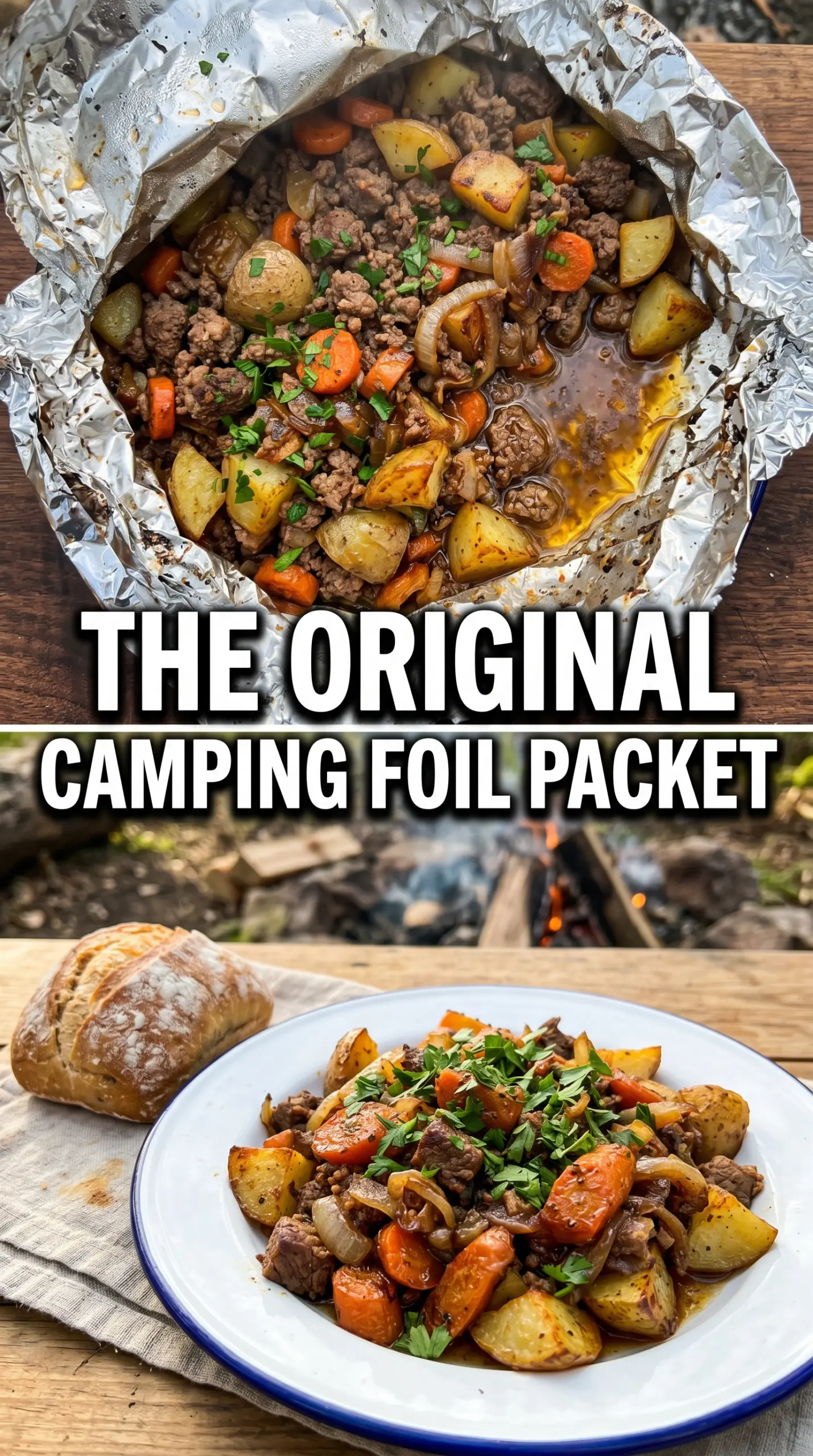
- Ground beef or stew meat — Ground beef cooks faster and gives you a softer, more classic foil-dinner texture. Stew meat brings a meatier bite, but it needs the full cook time and works best cut into smaller, even portions.
- Potatoes — These are the backbone of the packet. Yukon golds or red potatoes hold their shape better than russets, which can get crumbly if they sit too long in steam.
- Carrots and onions — Carrots add sweetness and keep their texture; onions melt into the juices and season everything underneath. Slice both thin enough to finish on time, but not so thin they disappear.
- Green beans — Canned green beans are convenient and bring a soft, familiar texture. Fresh green beans work too, but they need thinner slices or a slightly longer cook if you want them tender.
- Heavy-duty foil — This is one place where the upgrade matters. Regular foil tears easily when you flip the packets or pull them apart hot, and once the seal breaks you lose steam and slow the cooking.
- Butter — The butter melts into the vegetables and keeps the packet from tasting flat. It also helps carry the garlic powder and pepper through the whole packet instead of leaving the seasoning sitting on top.
How to Build a Foil Packet That Cooks Evenly Over the Fire
Start with the Vegetables on the Bottom
Lay the potatoes down first, then add the carrots, onions, and green beans in a shallow pile. That gives the denser vegetables a head start against the heat while the meat finishes on top. If you pile everything too high, the center stays cramped and the outer edges overcook before the middle softens.
Season Before You Seal
Salt, pepper, and garlic powder need to go on before the packet is folded shut so the steam can carry them through the vegetables. The butter belongs on top of the meat, where it can melt down through the layers. If you add it at the end, after cooking, it just sits there instead of seasoning the packet.
Seal Tight, Then Flip Once
Fold the foil up and over the food so the seams are crimped tightly, but leave a little space above the ingredients for steam to move. Place the packets over medium heat and flip them halfway through the cook so both sides get even exposure. If one side burns early, the heat is too high or the foil is too thin, and the potatoes will tell you before the meat does.
Rest Before Opening
Let the packets sit for 5 minutes after cooking. That short rest settles the steam and keeps you from burning your hands when you open them. Open the foil slowly and away from your face, because the burst of steam is part of what makes these packets feel like a small campfire event.
Ways to Change the Packet Without Losing the Comfort-Food Feel
Use chicken instead of beef
Boneless chicken thighs work best here because they stay juicy in the foil. Cut them into even pieces and keep the same cook time, checking that the potatoes are tender before serving. Chicken breast works too, but it dries out faster if the packets run long.
Make it dairy-free
Swap the butter for olive oil or a dairy-free butter alternative. You’ll lose a little of the rich, classic campfire taste, but the vegetables will still cook up tender and seasoned. Olive oil gives the packet a cleaner, more savory finish.
Use fresh green beans or a different vegetable mix
Fresh green beans, zucchini, bell peppers, or mushrooms all work, but watery vegetables need a little restraint or they can make the packet soggy. Keep the pieces larger for vegetables that cook fast, and tuck them near the top so they don’t turn to mush before the potatoes are done.
Make it gluten-free
This recipe is naturally gluten-free as written, as long as your garlic powder and seasonings are certified gluten-free. That’s one reason foil packets are such an easy campfire meal: the method does the work without needing breadcrumbs, sauces, or thickeners.
Storage and Reheating
- Refrigerator: Store leftovers in an airtight container for up to 3 days. The vegetables soften a bit more after chilling, but the flavor stays good.
- Freezer: These freeze best before cooking, not after. Assemble the packets, wrap them well, and freeze flat for up to 2 months; thaw before grilling if you want the potatoes to cook evenly.
- Reheating: Reheat covered in a 325°F oven until hot through, or warm gently in a skillet with a splash of water. High heat dries out the meat and turns the potatoes mealy before the center gets hot.
Answers to the Questions Worth Asking
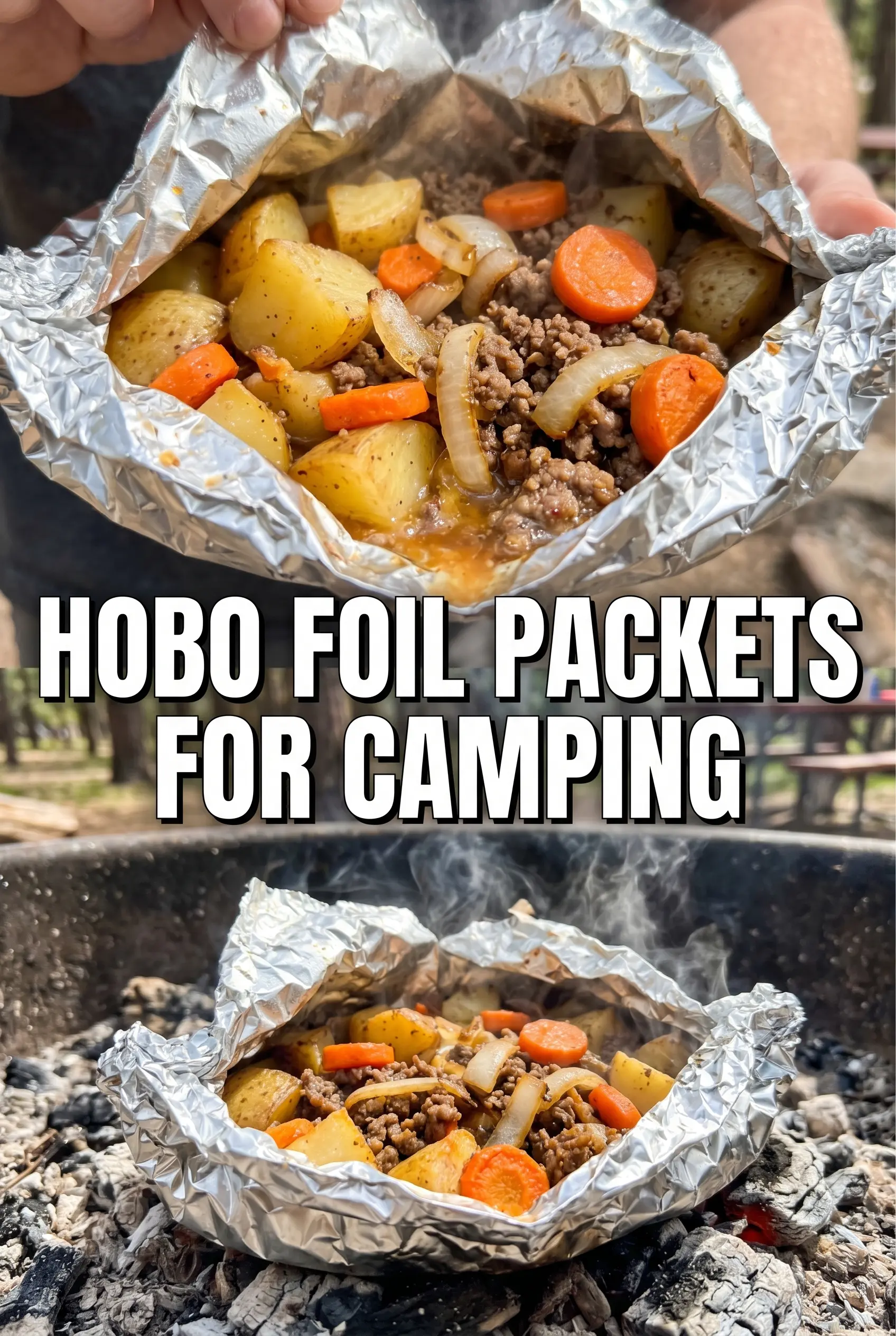
Hobo Foil Packets
Ingredients
Equipment
Method
- If using ground beef, form it into 4 patties; if using stew meat, divide it into 4 portions.
- Lay out 4 heavy-duty aluminum foil sheets and arrange them so you can build one packet per sheet.
- On each foil sheet, layer the potatoes, carrots, and onions first, then add the drained green beans.
- Place a portion of meat on top of the vegetable layers on each sheet.
- Season each packet with salt, pepper, and garlic powder, then top with 1 tablespoon butter.
- Fold the foil into sealed packets, pressing edges together so the steam stays trapped.
- Place packets on a campfire grate over medium heat for 25-30 minutes, flipping halfway so both sides cook evenly.
- Look for visible steam when you flip and again near the end of cooking, indicating the vegetables are tender.
- Let the packets cool for 5 minutes before carefully opening to avoid steam burns.
- Serve immediately, spooning out the steaming meat and vegetables from each packet.