Golden hash browns, smoky ham, sweet peppers, and onions come together in one cast iron skillet, then get tucked under a layer of melted cheddar and soft-set eggs. It’s the kind of breakfast that feels hearty enough for a long morning but still cooks fast enough to keep hungry people from hovering around the stove. The best part is the texture contrast: crisp edges on the potatoes, tender vegetables, savory ham, and creamy yolks if you pull it at the right moment.
This version works because the hash browns get time on the heat before anything wet goes in. That first stretch is what builds the crust, and it’s what keeps the potatoes from turning pale and soggy once the ham and vegetables show up. The cheese goes on near the end so it melts into the skillet instead of drying out on top. If you’ve ever had a breakfast skillet that tasted fine but ate like mush, the fix is usually right there in the order of operations.
Below, I’m walking through the parts that matter most: how to get the potatoes browned instead of steamed, which ingredient actually carries the flavor, and how to adapt the skillet if you want to stretch it, lighten it up, or swap ingredients based on what’s in the fridge.
The hash browns got crisp around the edges even with the ham and peppers added in, and the eggs set up perfectly under the foil without overcooking. I served it straight from the skillet and everyone went back for seconds.
Save this cheesy western skillet for the mornings when you want crisp hash browns, melted cheddar, and eggs all in one cast iron pan.
The Trick to Crisp Hash Browns Instead of a Steamed Mess
The skillet only works if the potatoes get a head start. Frozen hash browns carry a lot of moisture, and if you rush in with the ham, peppers, and onions too soon, everything softens before the surface has a chance to brown. Let the hash browns sit undisturbed often enough to form contact with the pan, then stir just enough to keep them from scorching.
The other mistake is crowding the pan with cold ingredients. Ham and vegetables go in after the potatoes have picked up color, because they cool the skillet and release moisture. A cast iron pan helps here because it holds heat well, but it still needs time to recover after each addition.
- Cast iron skillet — This is the right pan because it holds heat steady enough to brown the potatoes and then finish the eggs under a lid. A heavy skillet also gives you better edges on the hash browns than a thin pan would.
- Frozen hash browns — Frozen is fine here, and it’s actually easier than fresh because the shred size is consistent. Don’t thaw them first or they’ll break down before they crisp.
- Ham — Use fully cooked ham, not raw. It adds salt, smoke, and heft without needing extra time in the pan.
- Cheddar cheese — Sharp cheddar gives you more flavor than mild cheese, especially once it melts over the potatoes and eggs. Pre-shredded works, but freshly shredded melts a little cleaner.
- Eggs — These finish the skillet and give it that classic western breakfast feel. Keep the heat gentle once they go in so the whites set before the cheese turns greasy.
What Each Ingredient Is Actually Doing in This Recipe

- Primary ingredient (the foundation) — This is the star of the dish and carries most of the flavor. Quality matters here more than anywhere else.
- Salt and pepper (the seasonings that matter most) — These enhance all other flavors without masking them. Apply generously; underseasoned dishes taste flat.
- Fat (butter, oil, or from the meat) — Fat carries flavors and keeps the dish from tasting dry. It’s also what makes food taste delicious and satisfying.
- Acid (lemon, lime, vinegar, or tomato) — Acid brightens the dish and prevents it from tasting one-dimensional or heavy. It also helps balance rich flavors.
- Aromatics (garlic, onion, ginger) — These add depth and complexity. They mellow and become sweet when cooked, different from their raw state.
- Spices or herbs (the personality) — These give the dish its character and make it distinctive. Toast them to bloom their flavors or add fresh ones to finish.
- Supporting ingredients (vegetables, proteins) — These add texture, nutrition, and complementary flavors. They should support the star ingredient, not compete with it.
- Proper cooking technique (heat, time, stirring) — Even with great ingredients, technique determines the final result. Pay attention to temperature and timing.
Building the Skillet in the Right Order
Starting with the Potatoes
Heat the butter or oil in a large cast iron skillet until it shimmers, then add the frozen hash browns in an even layer. Let them cook long enough to turn golden on the bottom before stirring; if you keep moving them too soon, they’ll never develop that browned crust. You want the potatoes to sound like a steady sizzle, not a wet hiss.
Adding the Ham and Vegetables
Once the potatoes are browned, stir in the diced ham, bell pepper, and onion. Cook until the onions soften and the peppers lose their raw edge, which usually takes only a few minutes. If the pan starts looking dry, add a touch more butter or oil rather than lowering the heat too much, because you still want the surface hot enough to keep the browning going.
Finishing with Eggs and Cheese
Make six wells in the potato mixture and crack an egg into each one. Sprinkle the cheese over the top, cover the skillet, and cook just until the whites are set and the yolks are where you want them. If the cheese melts before the eggs are done, your heat is too high; lower it and let the trapped steam do the work.
Dairy-Free Version
Use oil instead of butter and skip the cheese, or finish with a dairy-free cheddar-style shred if you have one that melts well. The skillet will still be savory and filling, but you’ll lose the rich, gooey finish that cheddar gives the original.
Swap the Ham for Bacon or Sausage
Cook bacon or sausage first, then use a little of the rendered fat to brown the hash browns. Bacon brings more crunch and smoke, while sausage adds a softer, spiced bite. Either one makes the skillet richer than ham, but you’ll need to watch the salt more closely.
Make It Vegetarian
Leave out the ham and add extra onion, peppers, and a handful of sautéed mushrooms if you want more depth. A pinch of smoked paprika helps replace some of the savory notes you lose without the meat.
Storage and Reheating
- Refrigerator: Store leftovers up to 3 days. The hash browns soften a bit, but the flavor holds up well.
- Freezer: This freezes, but the eggs change texture, so I don’t recommend freezing the finished skillet. If you want to plan ahead, freeze just the cooked potato-ham-vegetable base and add fresh eggs later.
- Reheating: Reheat in a skillet over medium-low with a lid until hot, or use the oven for better texture. The common mistake is blasting it in the microwave, which turns the potatoes soggy and the eggs rubbery.
Answers to the Questions Worth Asking
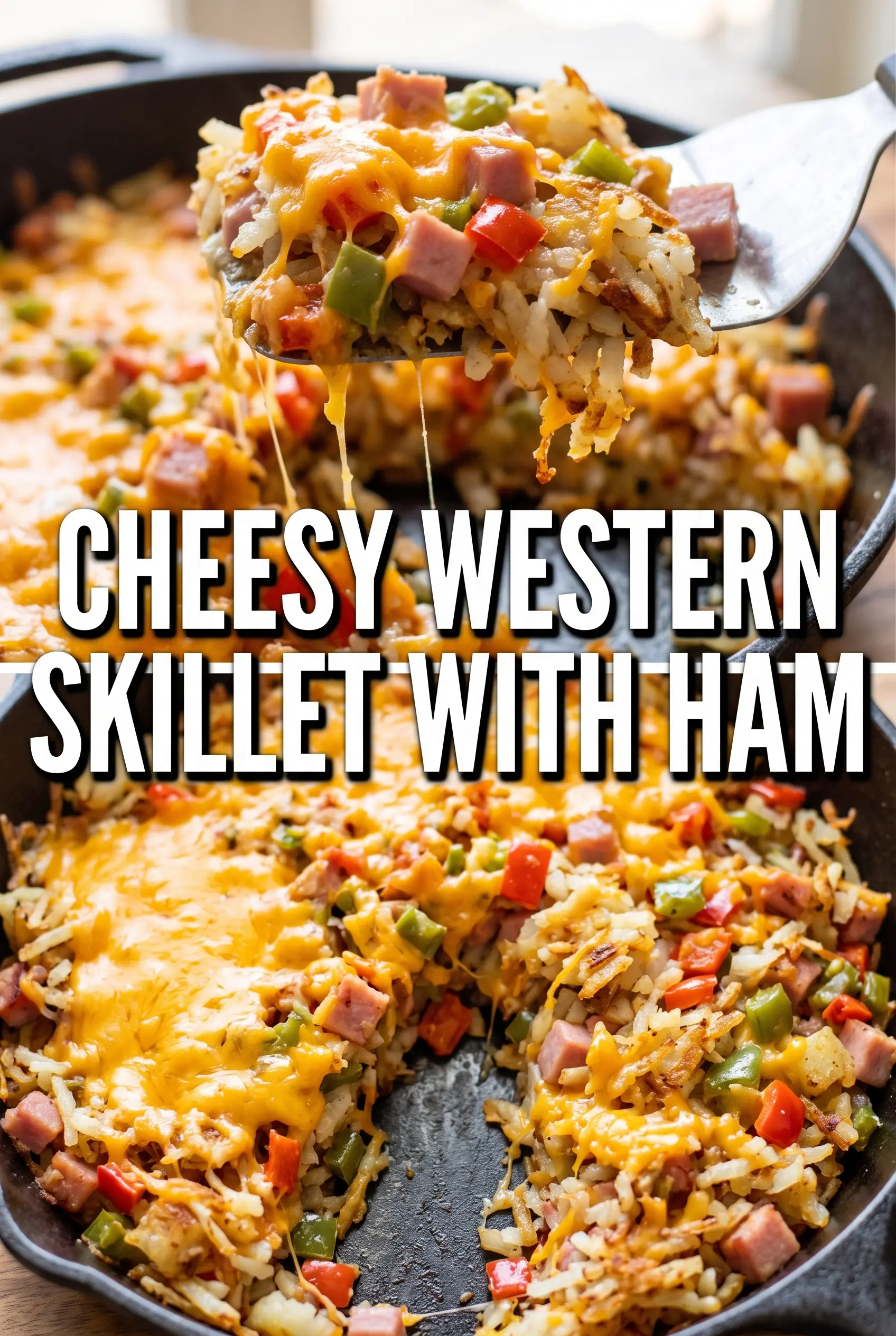
Cheesy Western Skillet with Hash Browns and Ham
Ingredients
Equipment
Method
- Heat 3 tablespoons butter or oil in a large cast iron skillet over campfire until shimmering.
- Add the frozen hash browns and cook for 10 minutes, stirring occasionally, until golden.
- Add the diced ham, bell pepper, and onion to the skillet and cook for 5 minutes more.
- Create 6 wells in the hash brown mixture and crack 1 egg into each well.
- Sprinkle 2 cups shredded cheddar cheese over everything and cover with a lid or foil.
- Cook for 8-10 minutes until the eggs are set to desired doneness, watching for bubbling around the edges.
- Season with salt and pepper to taste and serve directly from the skillet.