Steaming ramen over a campfire has a way of turning a humble packet into the meal everyone circles back for after a long day outside. The broth gets salty and savory, the noodles stay springy if you don’t overcook them, and the eggs turn the whole bowl into something that feels far more satisfying than the short ingredient list would suggest.
This version works because the noodles, vegetables, and eggs all cook in the same pot, which keeps the cleanup simple and lets the broth pick up a little more body from the starch and the egg whites. Saving the seasoning packets until the end keeps the broth from tasting flat or overly salty too early, and it gives you a little more control once everything is in the bowl. The vegetables thaw right in the hot water, so there’s no extra pan to manage at the campsite.
Below, I’ll walk you through the small timing details that matter most, plus a few ways to adapt this if you’re cooking for a crowd or swapping in what you brought along.
The eggs poached right in the pot and the broth tasted way better than plain instant ramen. I added a splash of hot sauce at the end and my kids went back for seconds.
Like this campfire ramen? Save it to Pinterest for the nights when you want a fast one-pot meal with eggs, vegetables, and almost no cleanup.
The Part Most Camp Ramen Gets Wrong: The Eggs Go In Near the End
If the eggs go in too early, they turn rubbery before the noodles are done. If they go in after the seasoning, the broth can get cloudy and the whites can break up more than you want. The sweet spot is after the noodles have had a head start and the vegetables are already hot, when the pot is boiling gently enough to poach the eggs without shredding them.
The other thing that matters here is heat control. A roaring fire can boil the pot too hard, which will beat up the noodles and make the eggs tough around the edges. You want a steady boil at first, then a gentler simmer once the eggs are in so the whites set cleanly and the yolks stay just a little soft.
- Boiling water first — This is the only way the noodles cook evenly over a campfire. If the water barely simmers, the ramen turns limp before the eggs are even set.
- Frozen mixed vegetables — These are the easiest camp-friendly vegetable option because they need no prep and cool the broth down just enough to keep the boil from running away.
- Eggs — Fresh eggs work best because they hold together as they poach. Older eggs can still work, but the whites spread more in the broth.
- Seasoning packets — Use them at the end so you can taste the broth first. Some brands are saltier than others, and finishing at the end keeps the bowl from tasting harsh.
What Each Ingredient Is Actually Doing in the Pot
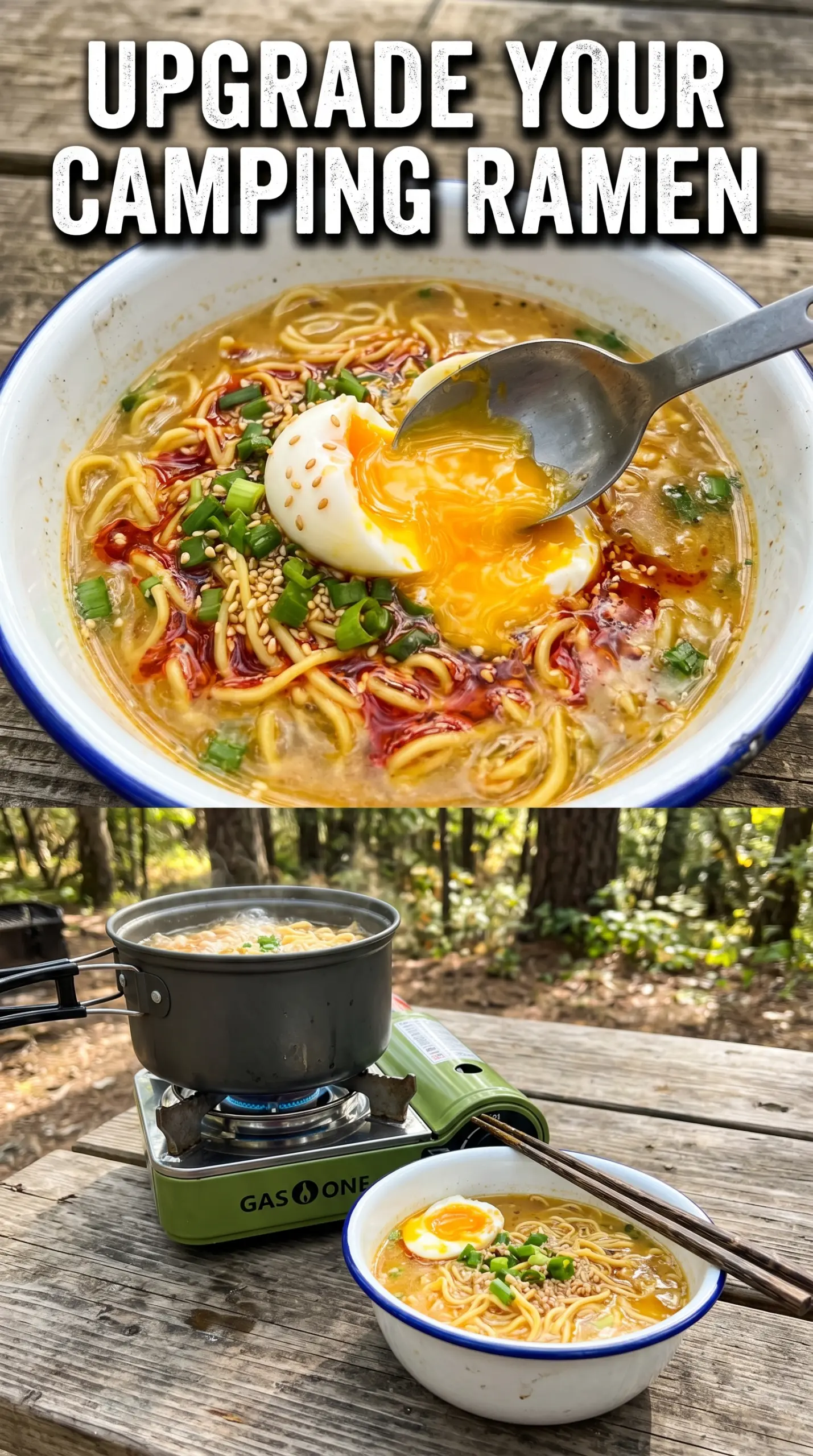
- Instant ramen noodles — These cook fast and bring enough starch to give the broth a little body. Toss the seasoning packets aside until the end so the noodles don’t soak in an overly salty broth while they cook.
- Eggs — They turn this from a snack into a full meal. Crack them directly into the pot and leave them alone for a minute so the whites can set before you stir or ladle.
- Frozen mixed vegetables — They’re the easiest way to add color and a little texture without packing a separate cooler section for fresh produce. Don’t thaw them first; they go in straight from frozen.
- Green onions — Add these at the end for a fresh sharp bite. If you cook them too long, they disappear into the broth.
- Soy sauce and hot sauce — These are the finishing moves, not the base. Soy sauce deepens the savory flavor, while hot sauce gives the bowl some lift if you want a little heat.
How to Keep the Noodles Tender and the Eggs Soft Over a Campfire
Getting the Water Hot Enough
Bring the water to a real boil before the noodles go in. Campfire heat can be uneven, so if the pot is sitting in a weak flame, the noodles will absorb water too slowly and go mushy before they ever taste done. Once the water is boiling, keep an eye on it and move the pot if the boil gets too aggressive.
Cooking the Noodles and Vegetables Together
Add the noodles and frozen vegetables at the same time and stir once or twice so nothing clumps at the bottom. Three minutes is the target, but the real cue is texture: the noodles should be loosening and nearly tender, not floppy. If you cook them too long before the eggs go in, they’ll lose that springy bite by the time you serve.
Poaching the Eggs in the Broth
Crack the eggs directly into the pot and leave them alone for a few seconds so the whites can firm up around the yolks. Then nudge the broth gently around them if needed. A hard boil will tear the whites apart, so lower the heat a touch if the pot is raging.
Seasoning at the End
Stir in the seasoning packets after the eggs have cooked through. That keeps the broth from getting too salty while the noodles absorb liquid and gives you a chance to taste before adding soy sauce or hot sauce. If the broth tastes flat, add a little soy sauce first, then hot sauce if you want more punch.
How to Adapt Campfire Ramen for Different Camps, Diets, and Leftovers
Make It Vegetarian
This recipe is already close, but check that your ramen seasoning packet doesn’t contain meat-based flavoring if that matters to you. The eggs keep it filling, and the vegetables do enough work that you won’t miss anything else.
Make It Dairy-Free and Budget-Friendly
There’s no dairy here to begin with, which makes it easy to keep campsite-friendly. If you’re stretching the meal, add an extra package of ramen or another egg before you add extra toppings; that gives you more volume without changing the method.
Swap the Vegetables for What You Brought
Small broccoli florets, snap peas, thin-sliced mushrooms, or cabbage all work well if you have them packed instead of frozen vegetables. Just cut them small so they cook in the same few minutes as the noodles, or they’ll stay crunchy while everything else is done.
Storage and Reheating
- Refrigerator: Store leftovers up to 2 days. The noodles will soften as they sit, and the broth will thicken a little from the starch.
- Freezer: I don’t recommend freezing this dish. The noodles turn mushy and the eggs change texture after thawing.
- Reheating: Reheat gently on the stove with a splash of water to loosen the broth. A hard boil will overcook the eggs and make the noodles fall apart.
Answers to the Questions Worth Asking
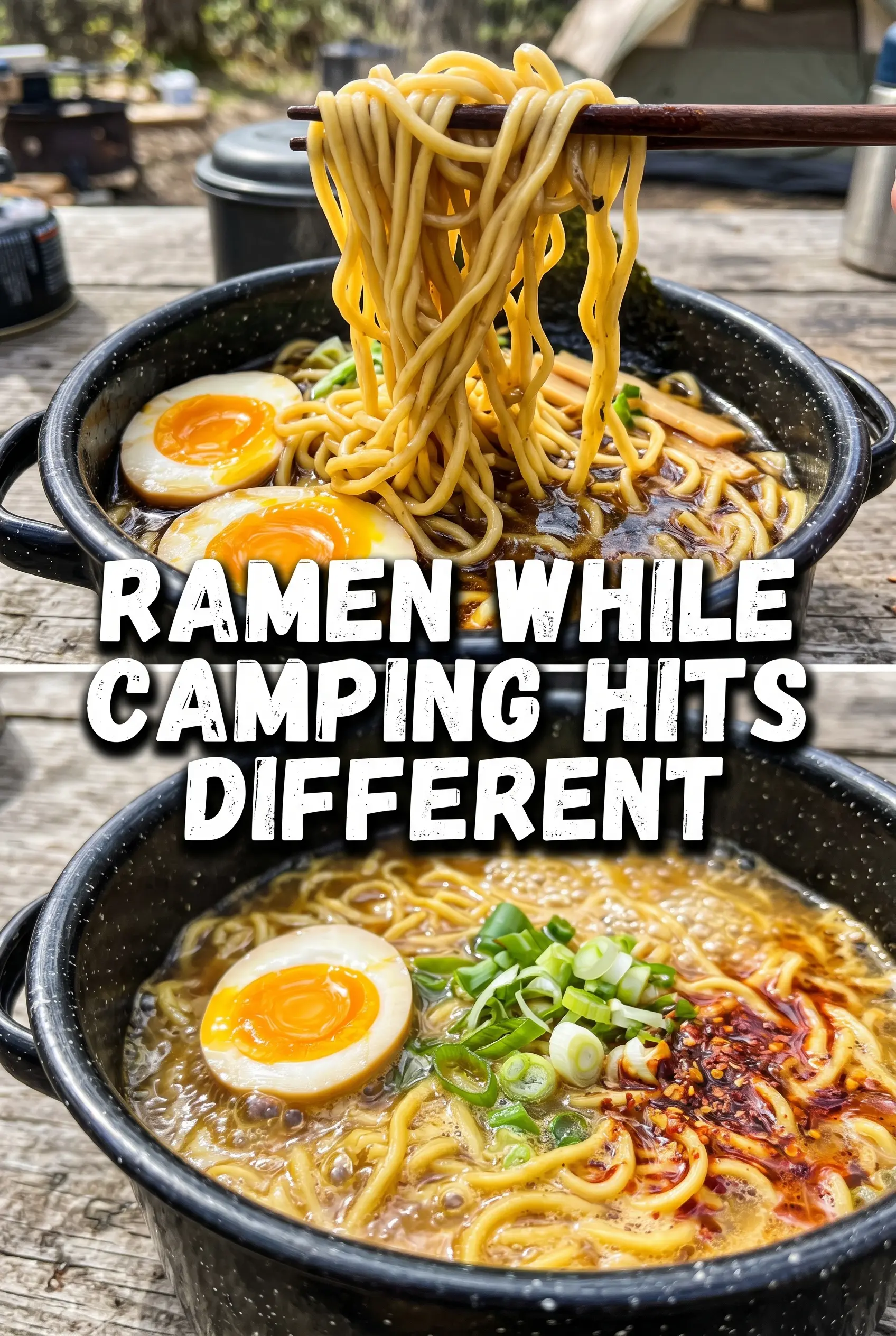
Ramen While Camping
Ingredients
Equipment
Method
- Bring 6 cups water to a boil in a pot over the campfire. You should see steady bubbling from the bottom of the pot.
- Add 4 packages instant ramen noodles (reserve the seasoning packets) and 1 cup frozen mixed vegetables to the boiling water. Stir so everything is submerged and cook immediately at a rolling boil.
- Cook for 3 minutes, keeping the water at a steady boil. Watch for the noodles beginning to soften and separate.
- Crack 4 eggs directly into the pot. Keep the liquid at a gentle boil so the egg whites set while the yolks thicken.
- Continue cooking for 3 to 4 minutes until the eggs are poached and the noodles are tender. The noodles should be fully soft and the eggs should look set with glossy yolks.
- Stir in the reserved ramen seasoning packets and combine everything thoroughly. Taste the broth and make sure the seasoning is evenly mixed.
- Divide the ramen into bowls. Aim for an even mix of noodles, vegetables, and egg in each bowl.
- Top with 2 green onions and drizzle with soy sauce to taste. Finish with hot sauce on the side or directly on top if desired.