Grilled mango pineapple chicken lands on the plate with sticky edges, smoky char, and a glaze that tastes bright, sweet, and lightly tangy all at once. The chicken stays juicy while the marinade caramelizes on the grill, and the grilled fruit on the side turns the whole dish into something that feels a little special without asking for much more effort than a good weeknight dinner.
The key is balance. Mango puree gives body, pineapple juice brings sharpness, and honey helps the marinade cling and brown instead of running straight through the grates. Lime keeps the sweetness from getting heavy, while garlic and ginger give the fruit enough backbone to taste like a real sauce, not dessert on chicken.
Below, I’ll walk through the one step that matters most for flavor and texture, plus the best way to keep the marinade from becoming watery on the grill. The fruit slices are worth doing too; they add a fresh, caramelized finish that makes this recipe feel complete.
The marinade caramelized beautifully and the chicken stayed juicy even on the grill. I loved how the grilled mango and pineapple picked up those smoky edges without falling apart.
Save this grilled mango pineapple chicken for the nights when you want smoky chicken, caramelized fruit, and a tropical glaze that tastes built for the grill.
The Marinade Needs to Be Sweet Enough to Brown, Not Burn
The biggest mistake with fruit-based chicken marinades is treating them like a sauce from the start. Mango and pineapple both carry a lot of natural sugar, and sugar can go from glossy to scorched fast over medium-high heat. That’s why this version works best when you reserve some marinade for basting and keep the heat controlled enough to build color instead of blackening the surface.
Marinating for at least 2 hours gives the salt, lime, and aromatics time to season the chicken through. Go too long with pineapple-heavy marinades and the texture can turn a little soft around the edges, especially with thinner breasts, so 2 to 6 hours is the sweet spot here.
- Chicken thighs stay juicier and handle the grill better if you want a little forgiveness. Breasts work fine too, but they need closer attention and should come off as soon as they hit 165°F.
- Mango puree gives the marinade body. If you use a thinner mango juice instead, the coating will be lighter and won’t cling as well.
- Pineapple juice adds tang and helps the glaze taste bright. Fresh juice is great, but canned juice works just as well here.
- Lime juice sharpens the sweetness and keeps the whole dish from tasting flat. Bottled lime juice will work in a pinch, though fresh tastes cleaner.
What Each Ingredient Is Actually Doing in This Dish
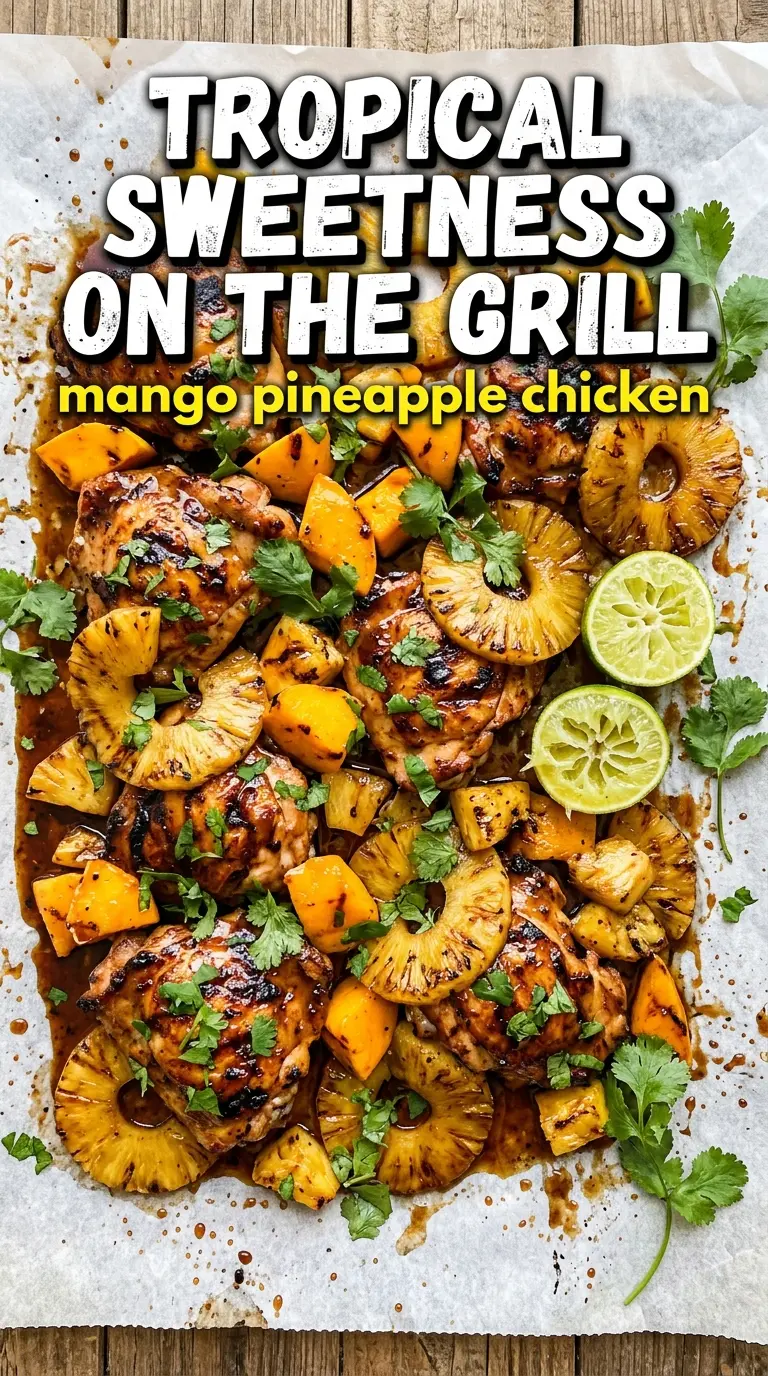
Chicken breasts or thighs are the canvas here. Thighs give you more built-in juiciness and a little more margin on the grill, while breasts slice neatly and cook a bit faster if they’re even in thickness.
Mango puree and pineapple juice build the fruity base. Puree gives the marinade enough substance to stick, while the juice keeps it pourable and bright. If your puree is very thick, loosen it with a spoonful or two of pineapple juice so it coats evenly.
Honey is doing more than sweetening. It helps the glaze brown and cling during grilling, which is what gives you those sticky edges. Lime juice, garlic, and ginger keep the marinade from tasting heavy, and they give it the sharp, savory lift that makes the fruit taste intentional instead of sugary.
Getting the Char Before the Glaze Goes Sticky
Mix the Marinade Until It Looks Smooth
Blend everything until the mixture is fully combined and glossy, with no streaks of honey or clumps of garlic and ginger. That smoothness matters because uneven marinade tends to stick in spots and burn in others. Reserve half a cup before the chicken goes in so you have clean basting liquid later. Once raw chicken touches the marinade, that portion is no longer safe to use on the finished meat unless it gets boiled first.
Let the Chicken Sit Long Enough to Pick Up Flavor
Two to six hours in the fridge is enough to season the chicken and let the fruit base work into the surface. Less than two hours and you’ll taste the glaze mostly on the outside. More than six can make the texture a little mushy, especially if the pineapple juice is strong. Turn the chicken once if you remember, but don’t keep opening the container and fussing with it.
Grill Hot, Then Baste at the Right Moment
Set the grill to medium-high and let it heat fully before the chicken goes on. You want a quick sear that leaves defined grill marks and a little char at the edges, not a slow cook that dries the meat out before the glaze can set. Brush on the reserved marinade during the last few minutes of cooking so it thickens on contact instead of dripping straight into the fire. If the flames flare up, move the chicken to a cooler spot and let the sugar calm down.
Give the Fruit a Fast, Hard Finish
Grill the mango and pineapple slices for just a couple of minutes per side. You’re looking for softened fruit with browned edges and visible grill marks, not collapsing pieces. Thicker slices hold together better, so cut them generously if you want them to land on the plate cleanly. Serve them right away while the juices are still hot and fragrant.
How to Adapt This for Thighs, Breasts, or a Lighter Plate
Use chicken thighs for the most forgiving grill result
Thighs stay moist even if the grill runs a little hot, and they hold onto the sweet glaze especially well. They take about the same time, but they’re harder to overcook, which makes them the best choice if you’re serving a crowd or working with an unfamiliar grill.
Swap in chicken breasts for a leaner dinner
Breasts work well here if they’re pounded or sliced to an even thickness. They’ll taste a little cleaner and lighter, but they dry out faster, so pull them the moment the thickest part reaches 165°F and let them rest before slicing.
Make it dairy-free and gluten-free without changing the method
This recipe already fits both dairy-free and gluten-free eating as written, as long as your ingredients are labeled cleanly. The only thing to watch is cross-contamination on the grill or in any bottled pineapple juice or seasoning blends that sneak in additives.
Turn the leftover marinade into a finishing glaze
If you want a thicker glaze for serving, bring the reserved clean marinade to a boil in a small saucepan and simmer it until it coats the back of a spoon. That concentrates the mango and pineapple and gives you a glossy finish for drizzling over sliced chicken and fruit.
Storage and Reheating
- Refrigerator: Store leftovers for up to 3 days. The fruit softens a bit, but the chicken stays flavorful.
- Freezer: The cooked chicken freezes well for up to 2 months, though the grilled fruit gets too soft to bother freezing. Freeze the chicken without the fruit for the best texture.
- Reheating: Warm the chicken gently in a covered skillet over low heat with a splash of water or pineapple juice. High heat dries out the glaze fast and makes the fruit sugars turn sticky instead of glossy.
Questions I Get Asked About This Recipe
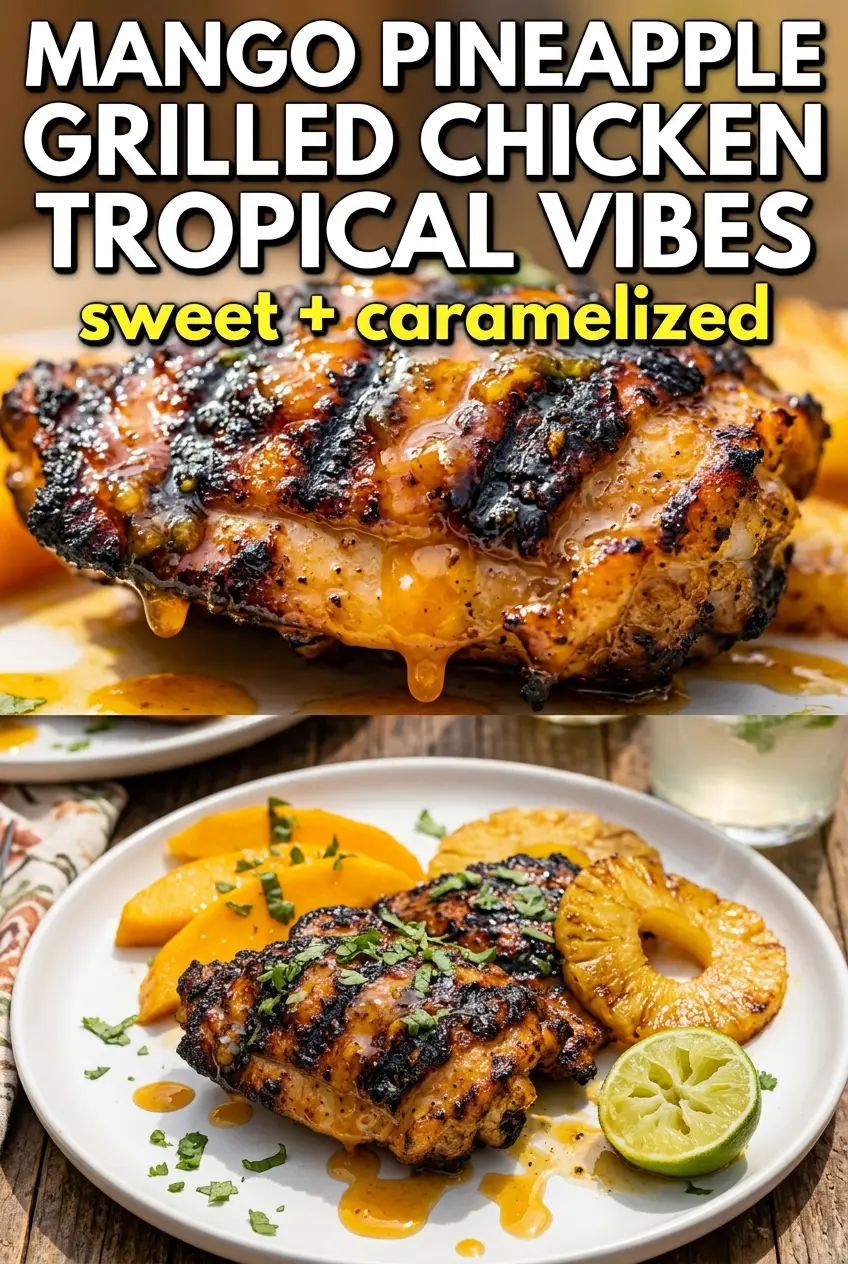
Grilled Mango Pineapple Chicken
Ingredients
Equipment
Method
- Blend mango puree, pineapple juice, honey, lime juice, garlic, ginger, salt, and pepper until smooth and glossy.
- Reserve 1/2 cup marinade for basting so you can brush it on during grilling.
- Marinate chicken for 2-6 hours, keeping it covered in the refrigerator until ready to grill.
- Preheat a grill to medium-high heat (about 400°F) and place chicken on the grates.
- Grill chicken for 6-7 minutes per side, basting with the reserved marinade while it cooks and turning once for grill marks.
- Add fruit slices to the grill and cook for 2 minutes per side until lightly caramelized and grill-lined.
- Serve the grilled chicken with the grilled fruit on top or alongside.