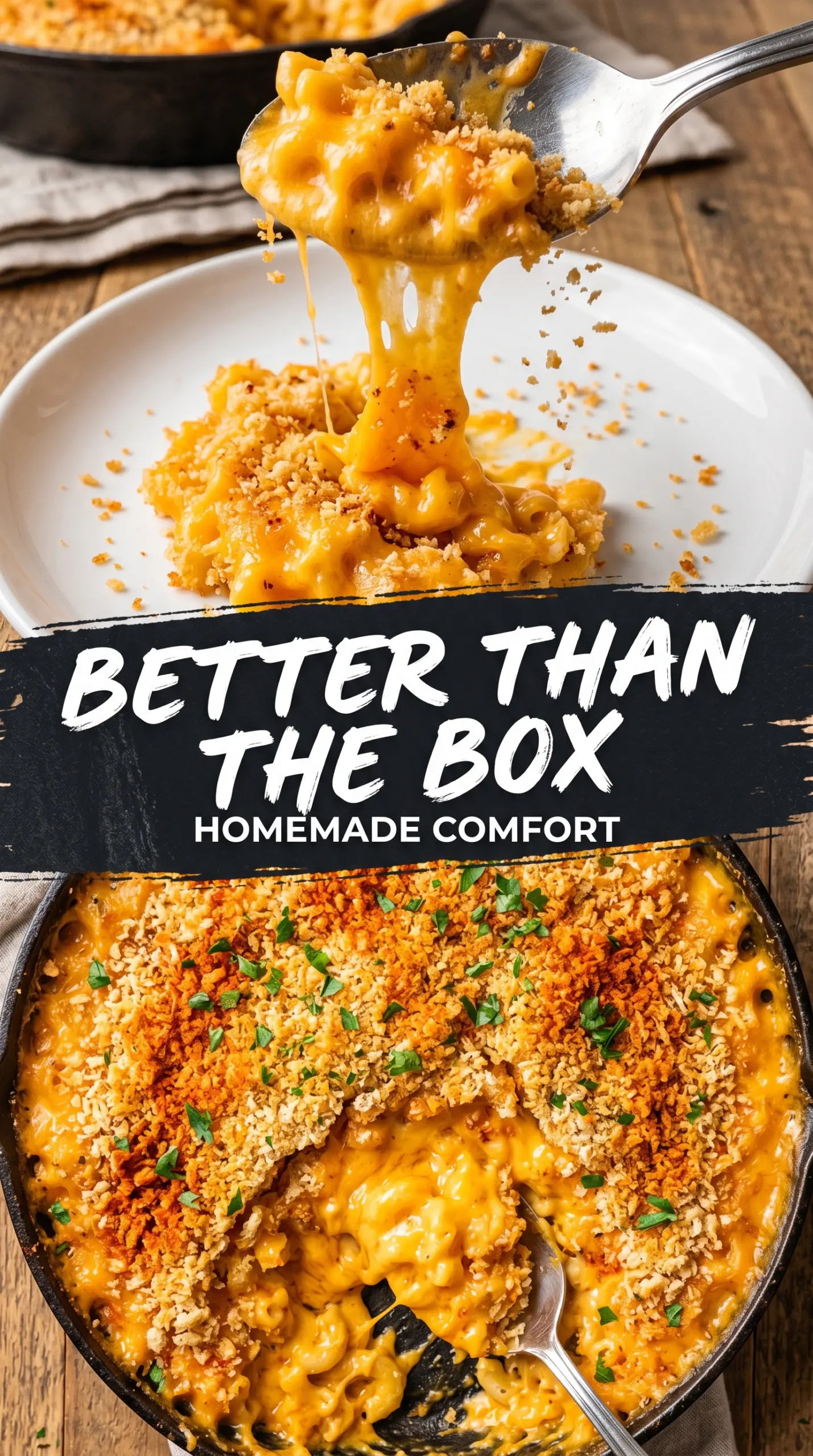
Smoked mac and cheese hits that rare middle ground between comfort food and cookout side: creamy enough to feel indulgent, sturdy enough to hold a crust, and smoky enough that people keep circling back for another spoonful. The best version isn’t just cheese sauce on pasta. It’s a casserole with contrast — silky in the center, browned and crisp on top, with just enough smoke to sharpen the richness.
This version works because the sauce starts with a proper roux, then gets built with milk and cream before the cheese goes in off the hottest part of the heat. That keeps the sauce smooth instead of grainy. The smoked Gouda does more than add flavor; it gives the dish that lingering woodsy note that makes the cheddar taste even sharper. And the panko topping stays separate from the sauce until the end, which is how you get a crust instead of soggy breadcrumbs.
Below you’ll find the one timing detail that matters most in the smoker, plus a few smart swaps if you want to change the cheese blend or make this without a smoker.
The sauce stayed silky even after smoking, and the panko topping got that perfect crunchy lid without drying out the pasta underneath. My husband went back for a second serving before the brisket was even carved.
Love the smoky crust and ultra-creamy center? Save this smoked mac and cheese for your next BBQ side night.
The Trick to Keeping Smoked Mac and Cheese Creamy Instead of Grainy
The biggest mistake with smoked mac and cheese is treating the smoker like an oven and leaving the sauce too loose going in. Heat keeps working on the cheese the whole time, and a thin sauce can turn oily by the time the top browns. What you want is a sauce that already coats the pasta well before it ever hits the pan.
That’s why the roux matters here. It gives the milk and cream enough body to hold the cheese without splitting, and it gives you a little insurance if the smoker runs hot for a few minutes. The other piece people miss is the pasta texture: cook it just until tender, not soft. It finishes in the smoker, and overcooked macaroni will go mushy under all that cheese.
- Roux — This is what keeps the sauce from breaking. Cook the butter and flour long enough to lose the raw flour smell, but not so long that it darkens much. You want a pale paste that thickens the sauce without adding a toasted flavor.
- Sharp cheddar — Use a good sharp cheddar here. It gives the dish its main cheese flavor, and the pre-shredded kind usually melts less smoothly because of the anti-caking coating.
- Smoked Gouda — This is the ingredient that makes the smoke taste built in, not just added on top. If you can’t find it, regular Gouda plus a little smoked paprika works, but the finish won’t have the same deep, mellow smoke.
- Panko — Regular breadcrumbs can turn dusty and dense. Panko stays lighter and crisps into a better crust, especially when it’s tossed with butter before it goes on top.
What Each Ingredient Is Actually Doing in This Recipe
- Primary ingredient (the foundation) — This is the star of the dish and carries most of the flavor. Quality matters here more than anywhere else.
- Salt and pepper (the seasonings that matter most) — These enhance all other flavors without masking them. Apply generously; underseasoned dishes taste flat.
- Fat (butter, oil, or from the meat) — Fat carries flavors and keeps the dish from tasting dry. It’s also what makes food taste delicious and satisfying.
- Acid (lemon, lime, vinegar, or tomato) — Acid brightens the dish and prevents it from tasting one-dimensional or heavy. It also helps balance rich flavors.
- Aromatics (garlic, onion, ginger) — These add depth and complexity. They mellow and become sweet when cooked, different from their raw state.
- Spices or herbs (the personality) — These give the dish its character and make it distinctive. Toast them to bloom their flavors or add fresh ones to finish.
- Supporting ingredients (vegetables, proteins) — These add texture, nutrition, and complementary flavors. They should support the star ingredient, not compete with it.
- Proper cooking technique (heat, time, stirring) — Even with great ingredients, technique determines the final result. Pay attention to temperature and timing.
Building the Sauce Before It Ever Sees Smoke
Starting With the Roux
Melt the butter, whisk in the flour, and keep it moving until the mixture looks smooth and smells a little nutty. You’re not cooking it for color here; you’re cooking out the raw starch so the sauce tastes clean. If the roux gets too dark, the sauce can pick up a stale, heavy note that fights the cheese.
Whisking in the Dairy
Add the milk and cream gradually, whisking until the mixture goes from thin and lumpy to glossy and thick enough to coat the back of a spoon. This is the point where patience pays off. If you dump the dairy in too fast, the flour can clump before it hydrates, and you’ll chase little lumps the rest of the way.
Melting the Cheese Off the Heat
Pull the pan off the burner before stirring in the cheese. High heat is what makes a cheese sauce go grainy or greasy, especially with a mix like cheddar and Gouda. Stir until it’s fully melted and smooth, then season it and fold it through the pasta while the sauce is still warm and fluid.
Letting the Topping Crisp Without Drying the Center
Mix the panko with melted butter until every crumb looks lightly coated, then scatter it over the top in an even layer. Put the pan in the smoker at 225°F and watch for bubbling around the edges and a deep golden top. If the top darkens too quickly, the smoker is running hot; move the pan to a cooler spot or tent it loosely with foil for the last stretch.
Make It With Just One Cheese
If you only have cheddar, use it all and add a teaspoon of Dijon or a pinch of smoked paprika to replace some of the depth Gouda brings. The texture will still be creamy, but the flavor will lean sharper and less mellow.
Gluten-Free Version
Swap the flour for a gluten-free all-purpose blend and use gluten-free pasta and breadcrumbs. The sauce still needs the same gentle heat, but expect the topping to brown a little faster, so start checking it near the 60-minute mark.
Dairy-Lighter Trade-Off
You can replace the heavy cream with more milk, but the sauce will be looser and a little less rich. If you go this route, keep the pan on the smoker toward the shorter end of the cook time so it doesn’t dry out before the center sets.
Bacon or Jalapeño Upgrade
Fold in crisp bacon, roasted jalapeños, or both before smoking if you want a stronger BBQ-side personality. Bacon adds salt and crunch, while jalapeños cut through the richness and keep the dish from feeling too heavy.
Storage and Reheating
- Refrigerator: Store covered for up to 4 days. The sauce will thicken as it chills, but it stays creamy if it was cooked properly.
- Freezer: It freezes, but the texture gets a little less silky after thawing. For best results, freeze in portions and reheat only what you need.
- Reheating: Warm it covered in a 300°F oven with a splash of milk stirred in, or reheat gently on the stovetop over low heat. High heat is what turns the sauce greasy and makes the pasta dry at the edges.
Answers to the Questions Worth Asking
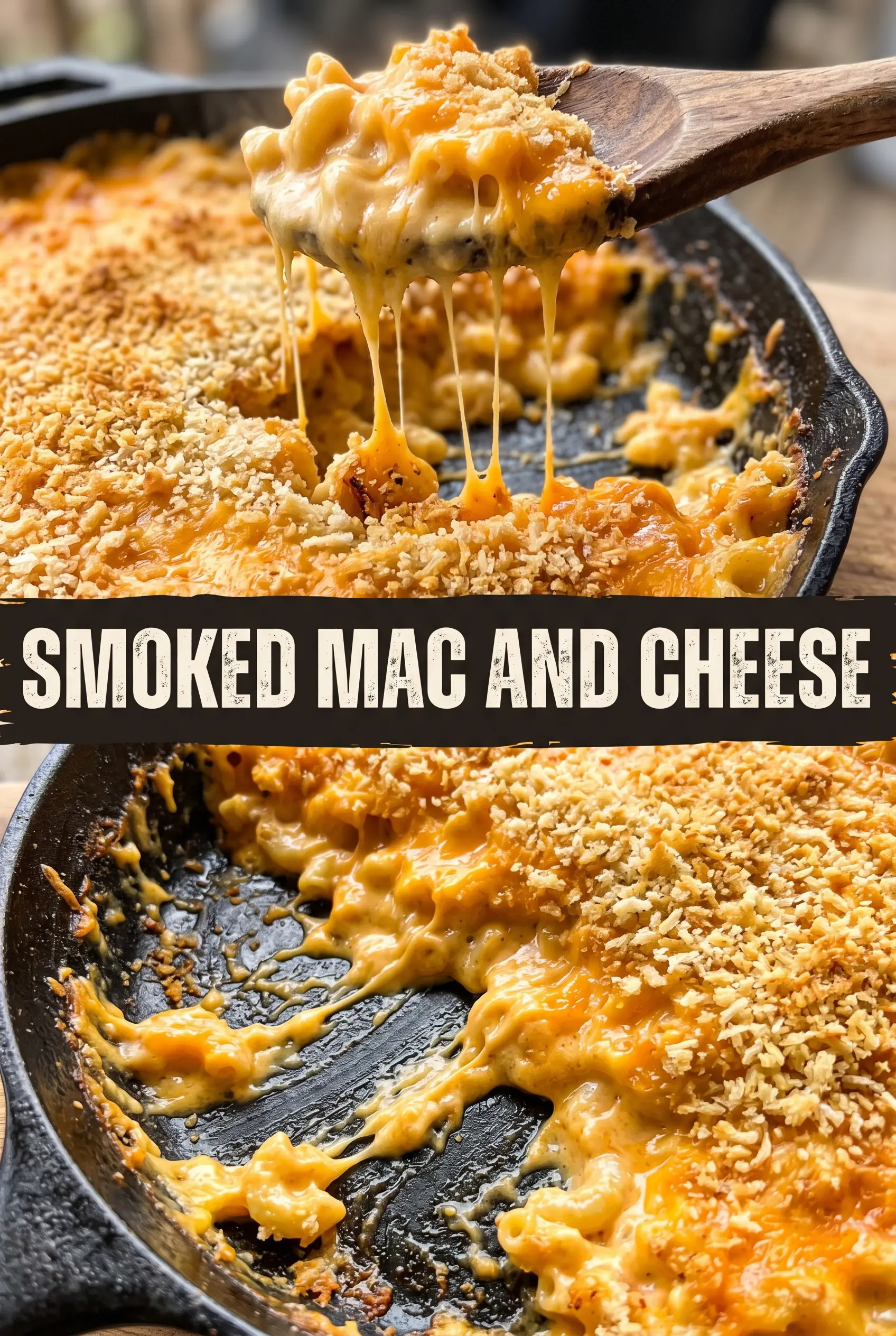
Smoked Mac And Cheese
Ingredients
Equipment
Method
- Prepare smoker to 225°F, keeping the temperature steady for low-and-slow melting. You should see light smoke and a consistent heat level before adding the pan.
- Melt the butter until fully liquid and glossy, about 1-2 minutes. Keep heat at medium so the flour can cook without browning.
- Add the flour and whisk until smooth, cooking for 1-2 minutes to remove raw flour taste. The mixture should look like a thick paste.
- Whisk in the milk and heavy cream gradually until the sauce is smooth and starts to thicken, 3-5 minutes. Keep stirring to prevent lumps.
- Add the sharp cheddar and smoked Gouda and whisk until melted and silky, 2-4 minutes. Season with garlic powder, salt, and pepper as the cheeses melt.
- Mix the cooked elbow macaroni with the cheese sauce in an aluminum pan until every noodle is coated. The mixture should look creamy and evenly speckled.
- Top with panko breadcrumbs mixed with melted butter in an even layer. The surface should look dry and lightly clumpy like a crust.
- Smoke for 60-90 minutes at 225°F until the mac and cheese is visibly bubbly at the edges and the top is golden. You want the center to reach a thick, rolling bubble rather than just steaming.
- Let the smoked mac and cheese rest for 10 minutes before serving. The sauce will set slightly so it stays creamy when portioned.