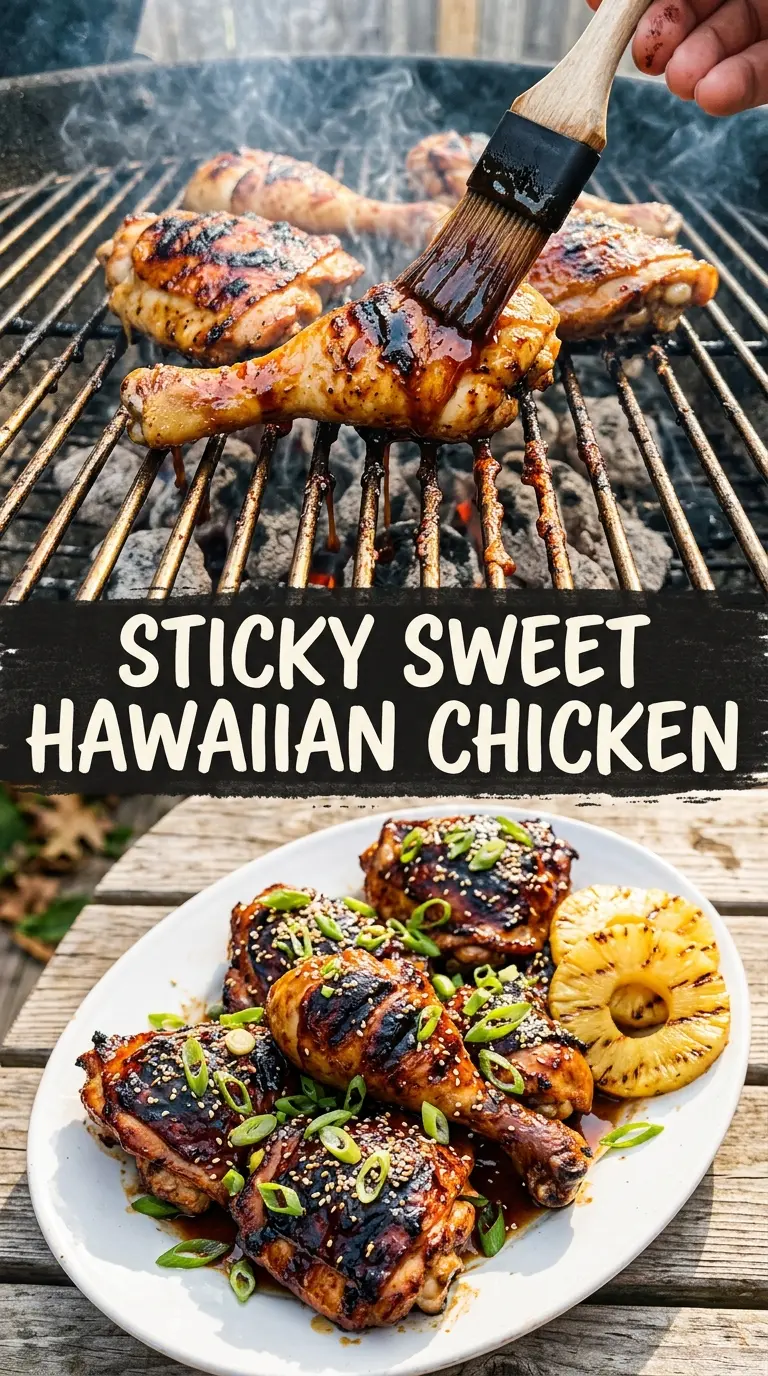
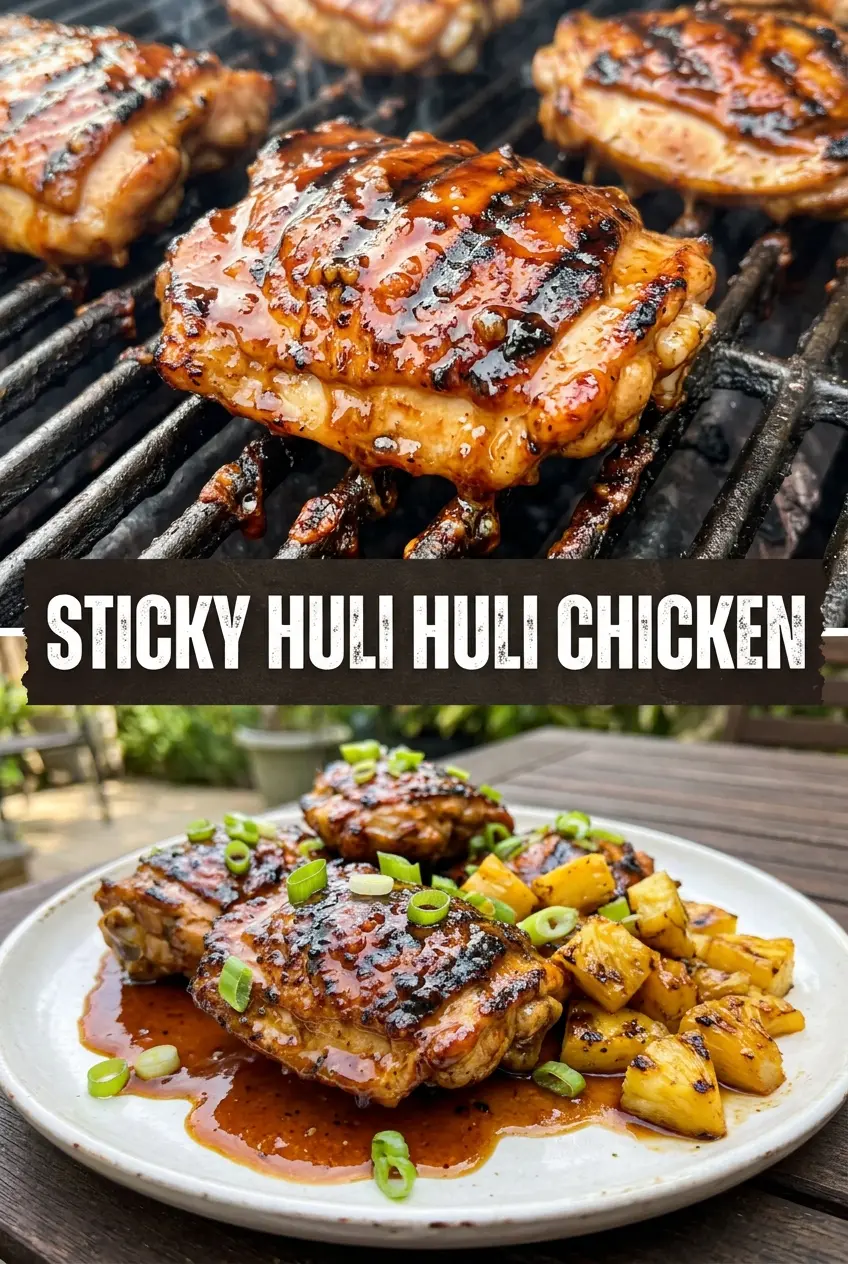
Grilled Huli Huli chicken hits that sweet-savory spot where the skin turns sticky, the edges char, and the meat stays juicy enough to pull apart with a fork. The glaze clings instead of sliding off, and every turn on the grill builds another layer of caramelized flavor. It’s the kind of chicken that gets everyone hovering near the grill before dinner is even ready.
What makes this version work is the balance in the marinade. Soy sauce brings the salt, brown sugar gives the lacquer, pineapple juice adds brightness, and ketchup helps the glaze thicken and cling when it hits the heat. Ginger and garlic keep it from tasting flat, while a little sesame oil rounds everything out without taking over. The trick is to reserve some marinade for basting before the chicken ever touches raw meat, then keep the heat at medium so the sugar can caramelize instead of burning.
Below, I’ve included the details that matter most: how to keep the glaze from scorching, which chicken cuts handle the grill best, and a few swaps that still keep the spirit of Huli Huli chicken intact.
The chicken came off the grill with that sticky, caramelized coating I was hoping for, and the marinade didn’t burn because I basted at the end just like you said. My husband kept saying it tasted like real island BBQ.
Save this sticky, caramelized Grilled Huli Huli Chicken for the next time you want a Hawaiian-style grill dinner with a glaze that actually clings.
Why the Glaze Sticks Instead of Burning Off
Huli Huli chicken can go wrong fast if the sugar hits too much heat too soon. The outside turns dark before the chicken cooks through, and the glaze ends up bitter instead of glossy. Medium heat is the sweet spot here because it gives the marinade time to reduce and tighten around the chicken while the meat stays juicy.
The other thing that matters is turning the chicken often. That repeated flipping is part of the original huli huli idea, and it keeps the sauce from sitting in one spot long enough to scorch. You’re not looking for one dramatic sear; you’re building layers of sticky caramelization, one turn at a time.
- Thighs or legs — Dark meat handles this sauce best. It stays tender through the longer grill time and gives you a little more forgiveness if the heat runs a touch high.
- Brown sugar — This is what makes the glaze lacquered and shiny. White sugar will sweeten the marinade, but it won’t give you the same depth or that deep amber finish.
- Pineapple juice — It adds brightness and helps the marinade taste like more than just soy and sugar. Fresh or bottled both work, but use juice, not pineapple nectar, or the glaze can turn heavy.
- Reserved marinade — This is the basting sauce, and it must be held back before the chicken goes in. Once raw chicken has touched the marinade, don’t use it again unless you boil it first.
What Each Ingredient Is Doing in This Island-Style Marinade
- Soy sauce — This gives the marinade its salt and savory backbone. Use regular soy sauce for the best balance; low-sodium works if that’s what you keep on hand, but the finished glaze will taste a little softer.
- Brown sugar — It doesn’t just sweeten the chicken. It helps the marinade caramelize on the grill, which is what gives Huli Huli chicken that sticky finish.
- Ketchup — This sounds humble, but it helps the glaze thicken and cling. It also brings a little acidity, which keeps the sauce from tasting one-note.
- Sherry or chicken broth — Sherry adds a deeper, rounder note, while broth keeps the marinade savory and light. If you don’t want alcohol, broth is the cleanest swap.
- Fresh ginger and garlic — Fresh is worth using here because both ingredients need to punch through the sweet marinade. Powdered versions won’t give the same sharp, lively edge.
- Sesame oil — A small amount is enough. It adds that toasted aroma in the background, and too much will take over the whole dish.
Turning, Basting, and Pulling It at the Right Moment
Mixing the Marinade
Whisk the marinade until the brown sugar dissolves as much as it can and the mixture looks glossy, not grainy. If the sugar sits in clumps, it won’t coat the chicken evenly and you’ll end up with uneven browning on the grill. Reserve half a cup before the chicken goes in so you have a clean basting sauce later.
Marinating for Real Flavor
Give the chicken at least 2 hours, and up to 8 if you have the time. Less than that, and the seasoning stays mostly on the surface; longer than 8 can make the texture too soft because of the pineapple juice and ginger. Keep it refrigerated the whole time, then let the chicken lose its chill for a bit before grilling so it cooks more evenly.
Grilling Over Medium Heat
Set the chicken on a medium grill and turn it often. You should hear a steady sizzle, not aggressive flare-ups. If flames start licking the sugar on the surface, move the chicken to a cooler spot for a minute; otherwise, the outside will blacken before the inside reaches temperature.
Finishing to a Sticky Glaze
Baste with the reserved marinade during the last part of cooking, not at the start. That timing gives you glossy layers without giving the sugar too long to burn. Pull the chicken when it hits 165°F at the thickest part and the glaze looks dark, shiny, and set around the edges.
Boneless Chicken Thighs for Faster Grilling
Use boneless thighs if you want dinner on the table faster. They’ll cook in less time and still stay juicy, but they won’t give you the same dramatic grill marks or that classic hands-on flip-and-baste feel.
Gluten-Free Version
Swap in tamari for the soy sauce and check that your ketchup is gluten-free. The flavor stays close to the original, and the glaze still caramelizes the same way.
Pineapple-Free Swap
If you’re out of pineapple juice, use orange juice for a different kind of brightness. It won’t taste exactly like Huli Huli chicken, but it keeps the marinade lively and helps the sugar balance the salt.
Storage and Reheating
- Refrigerator: Store leftovers in an airtight container for up to 4 days. The glaze will firm up a bit as it chills, which is normal.
- Freezer: It freezes well for up to 2 months. Wrap portions tightly and thaw overnight in the refrigerator before reheating.
- Reheating: Reheat covered in a 325°F oven until hot, or warm gently in a skillet with a splash of water. High heat dries out the chicken and can turn the glaze sticky in the wrong way.
Questions I Get Asked About This Recipe
Grilled Huli Huli Chicken
Ingredients
Equipment
Method
- Whisk together soy sauce, brown sugar, ketchup, pineapple juice, sherry, ginger, garlic, and sesame oil until the sugar dissolves and the mixture looks smooth.
- Reserve 1/2 cup marinade for basting so you can brush it on during grilling.
- Marinate the chicken for 2-8 hours, covered, so the meat absorbs the sweet-savory flavors.
- Preheat the grill to medium heat, then place chicken on the grates and grill, turning (huli) frequently to build char and glaze.
- Baste the chicken with the reserved marinade as you cook so the surface becomes sticky and caramelized.
- Continue grilling for 25-30 minutes total until the internal temperature reaches 165°F and the chicken is caramelized with charred edges.