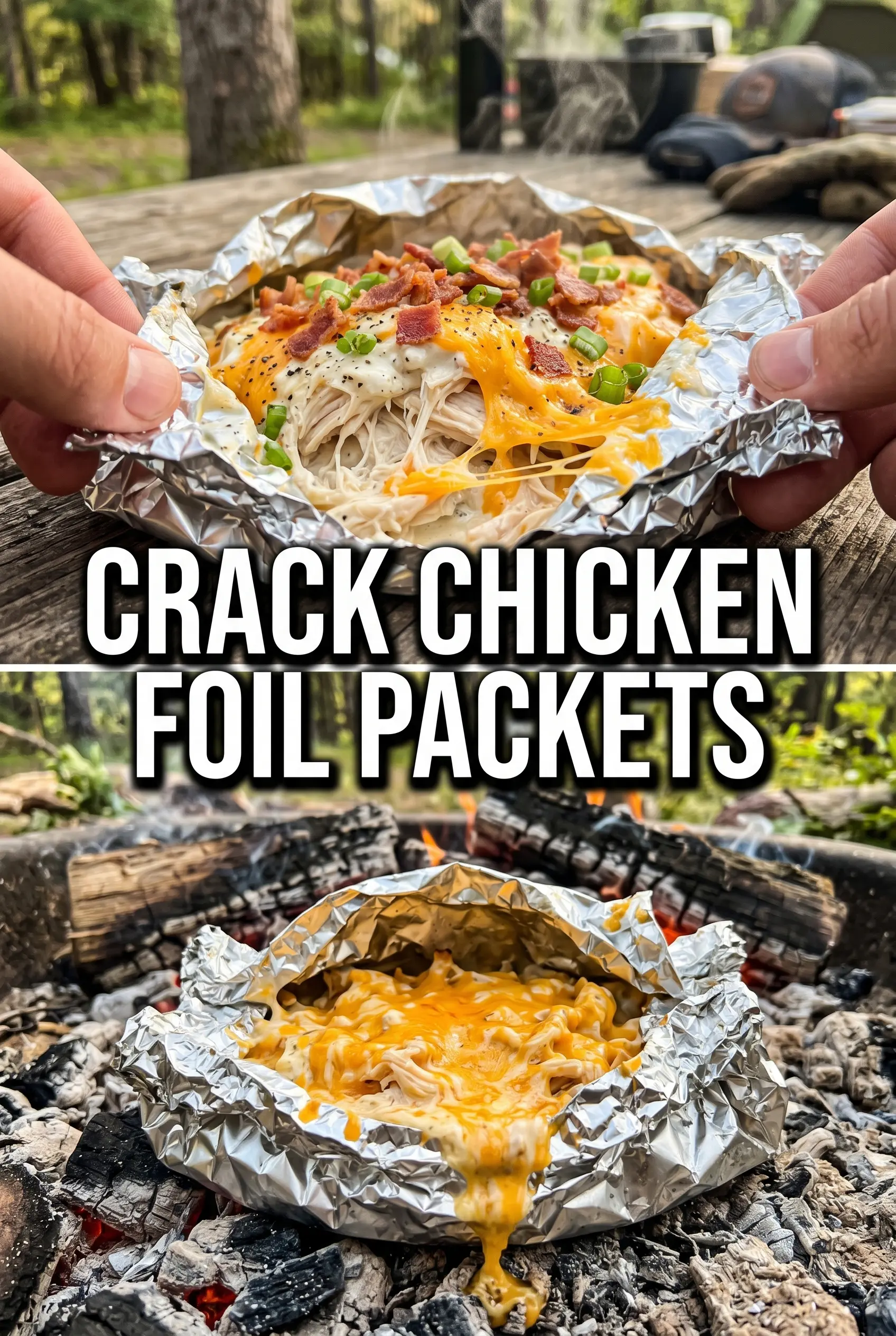
Crack Chicken Foil Packets come off the heat with tender chicken, smoky bacon, and a creamy ranch-cheddar sauce that melts right into every bite. The foil keeps the chicken juicy while the cheese and cream cheese turn into a rich coating instead of sliding off into the fire or onto the grill. It’s the kind of dinner that feels casual and a little fun, but still lands with enough big flavor to make people hover around the packet waiting for theirs.
The trick is keeping the packets sealed well enough to trap steam, but not so tight that the cheese can’t melt evenly. Heavy-duty foil matters here because regular foil tears too easily once the packets get moved around over a campfire grate. Cooking the bacon first also matters; raw bacon won’t render fast enough in the short cooking time, and you’d end up with greasy chicken instead of crisp, smoky bites.
Below, I’ve included the parts that matter most: how to keep the chicken from drying out, what to watch for when sealing the packets, and a few ways to adapt this for the oven or a backyard grill when campfire cooking isn’t practical.
The chicken stayed juicy and the ranch, bacon, and cheddar melted into the best creamy sauce inside the packet. I cooked it right over the coals for 22 minutes and it was perfect.
Save these Crack Chicken Foil Packets for your next campfire dinner when you want juicy chicken, smoky bacon, and melted ranch cheese in one packet.
The Packet Seal That Keeps the Chicken Juicy
A foil packet works because it traps steam around the chicken, but that only happens if the seams are folded tightly and the top has a little space above the filling. Crimp the edges well, then fold them over again so the packets stay shut when you move them on and off the grate. If they’re pinched too flat against the chicken, the cheese melts out before the chicken finishes cooking.
The other mistake is starting with chicken breasts that are uneven in size. A thick breast at one end and a thin one at the other will cook unevenly, and the thinner side dries out while you wait for the thickest part to reach 165°F. If your chicken breasts are large, pound them lightly so they’re closer in thickness before you build the packets.
What Each Layer Is Doing in the Packet
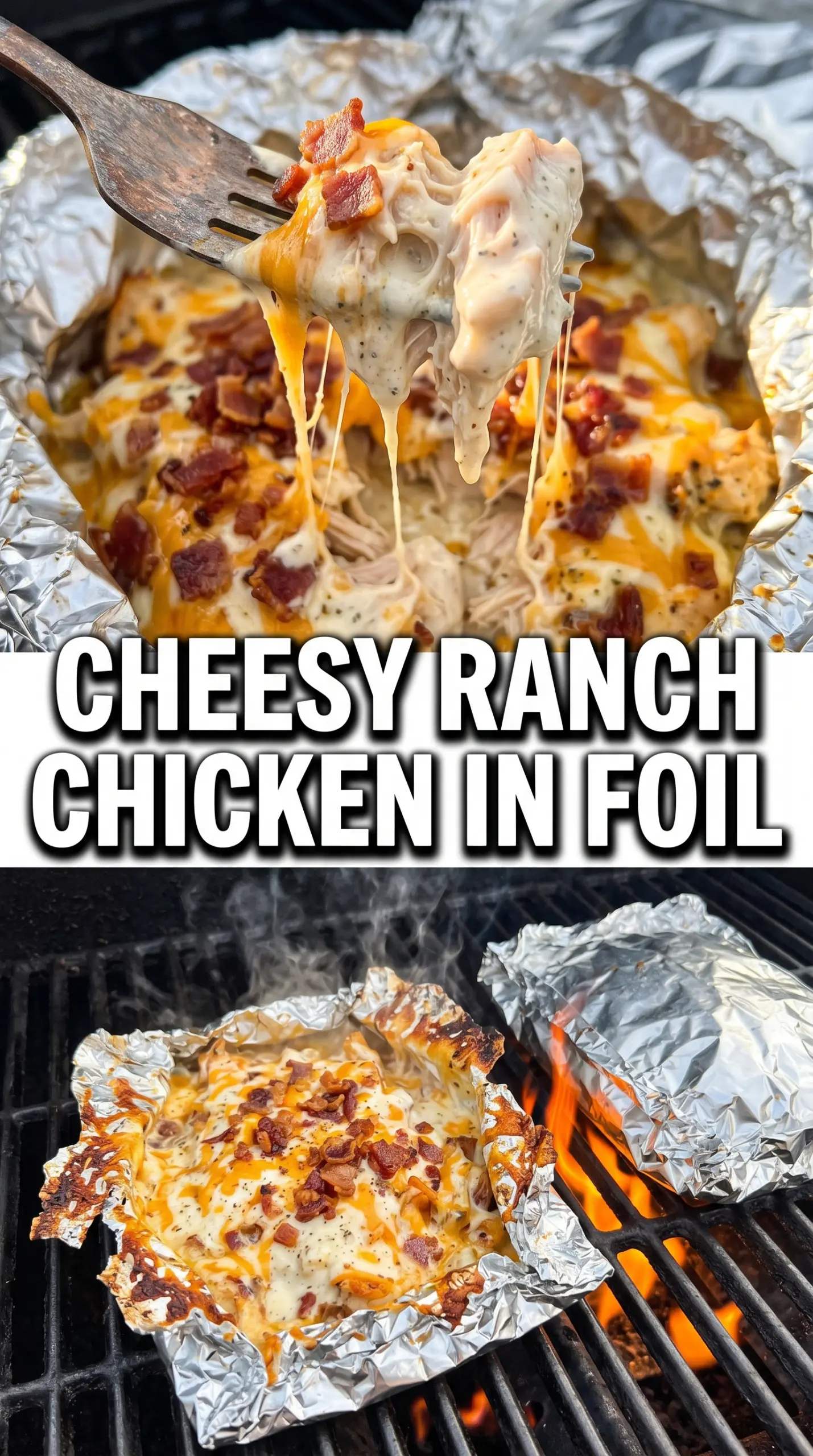
- Chicken breasts — Boneless breasts give you lean meat that cooks cleanly in foil. Thighs work too, but they’ll add more fat and a slightly richer texture, and you may need a few extra minutes if they’re thick.
- Ranch seasoning mix — This is the backbone of the flavor and it saves you from having to measure several spices. Use the packet here; homemade ranch seasoning can work, but it needs enough salt and dried herbs to stand up to the bacon and cream cheese.
- Bacon — Cook it first so it’s already crisp and smoky before it goes into the packet. Raw bacon won’t render properly in the short cook time, and it can leave the chicken greasy instead of giving you those salty bites throughout.
- Cream cheese — Cubing it helps it melt more evenly across the chicken instead of staying in one cold lump. Full-fat cream cheese gives the smoothest result; lower-fat versions can work, but they don’t melt as silkily.
- Cheddar cheese — Sharp cheddar gives the strongest flavor, which matters because the chicken itself is mild. Pre-shredded cheese is fine here, though freshly grated cheese melts a little smoother.
- Green onions — They cut through the richness and keep the packet from tasting heavy. Add them before cooking so they soften just enough without losing all their bite.
- Heavy-duty foil — This is one place where the heavy-duty stuff earns its keep. Thin foil tears, especially if you’re using tongs or cooking over a campfire grate.
Building the Packets So the Cheese Melts, Not Burns
Seasoning the Chicken First
Lay each chicken breast flat on its own sheet of foil and sprinkle the ranch seasoning evenly over the top. The seasoning starts flavoring the meat immediately, and because the chicken is covered, the salt has time to work into the surface as it cooks. If you dump the seasoning in one pile, you’ll end up with salty spots instead of an even ranch flavor.
Layering the Bacon and Cheese
Scatter the bacon over the seasoned chicken, then add the cheddar, cream cheese cubes, and green onions. Keep the cheese mostly on top of the chicken so it melts down over the meat instead of spilling out the sides. If your cream cheese is too cold, it will still melt fine, but smaller cubes give you better coverage.
Sealing and Cooking Over Heat
Fold the foil into a tight packet and leave enough room inside for steam to circulate. Set the packets over medium heat on a campfire grate and cook for 20 to 25 minutes, depending on the thickness of the chicken. The chicken is done when the thickest part reaches 165°F and the juices run clear; if you open the packet too early, you lose heat and slow down the melt.
Opening and Serving Without Losing the Sauce
Let the packets sit for a minute before opening them, then lift the top away from your face because the steam is hot. Open them carefully so the melted cheese mixture stays inside the foil and can be spooned over the chicken. That creamy bacon-ranch sauce is the best part, so scrape up every bit from the bottom of the packet.
How to Adapt These Packets for the Grill, Oven, or Keto Table
Backyard Grill Version
Set the packets over medium heat on a grill and close the lid to keep the heat steady. Grill marks won’t show through the foil, but the chicken cooks evenly and stays juicy. Rotate the packets once halfway through if your grill has hot spots.
Oven-Baked Dinner
Bake the sealed packets on a sheet pan at 400°F for about 25 to 30 minutes, depending on the size of the chicken breasts. The oven version gives you the same creamy result without babysitting a fire, and it’s the easiest way to make these on a weeknight.
Low-Carb or Keto-Friendly
This recipe already fits a low-carb way of eating as written. Serve it with grilled zucchini, cauliflower rice, or a simple green salad instead of starchy sides, and the packet still feels hearty enough to stand on its own.
Storage and Reheating
- Refrigerator: Store leftovers in an airtight container for up to 3 days. The sauce thickens as it chills, which is normal.
- Freezer: It freezes, but the cream cheese can turn a little grainy after thawing. For the best texture, freeze only if you need to and thaw it overnight in the refrigerator.
- Reheating: Reheat gently in a covered skillet over low heat or in a 300°F oven until warmed through. High heat can make the cheese separate and the chicken dry out before the center gets hot.
Questions I Get Asked About This Recipe
Crack Chicken Foil Packets
Ingredients
Equipment
Method
- Place 1 boneless chicken breast on a sheet of heavy-duty aluminum foil and center it so it will fold evenly over the top. Arrange the chicken with the smooth side facing up for even cooking.
- Sprinkle each chicken breast with 1 packet ranch seasoning mix, distributing it across the surface. Make sure the seasoning covers most of the top so it absorbs as it cooks.
- Top each chicken breast with crumbled bacon, shredded cheddar cheese, and cubed cream cheese. Tuck the cream cheese pieces close to the center so they melt into the sauce.
- Add green onions over the top of each packet. Keep them on the top layer so they stay bright while the cheese melts.
- Fold the foil into sealed packets, crimping the edges tightly to prevent steam from escaping. Leave a little headspace so the packet puffs slightly during cooking.
- Place packets on a campfire grate over medium heat for 20-25 minutes until the chicken reaches 165°F. Keep heat steady so the foil steams through the thickest part without burning.
- Carefully open packets and serve hot. Open away from your face and let steam escape before removing the chicken mixture.