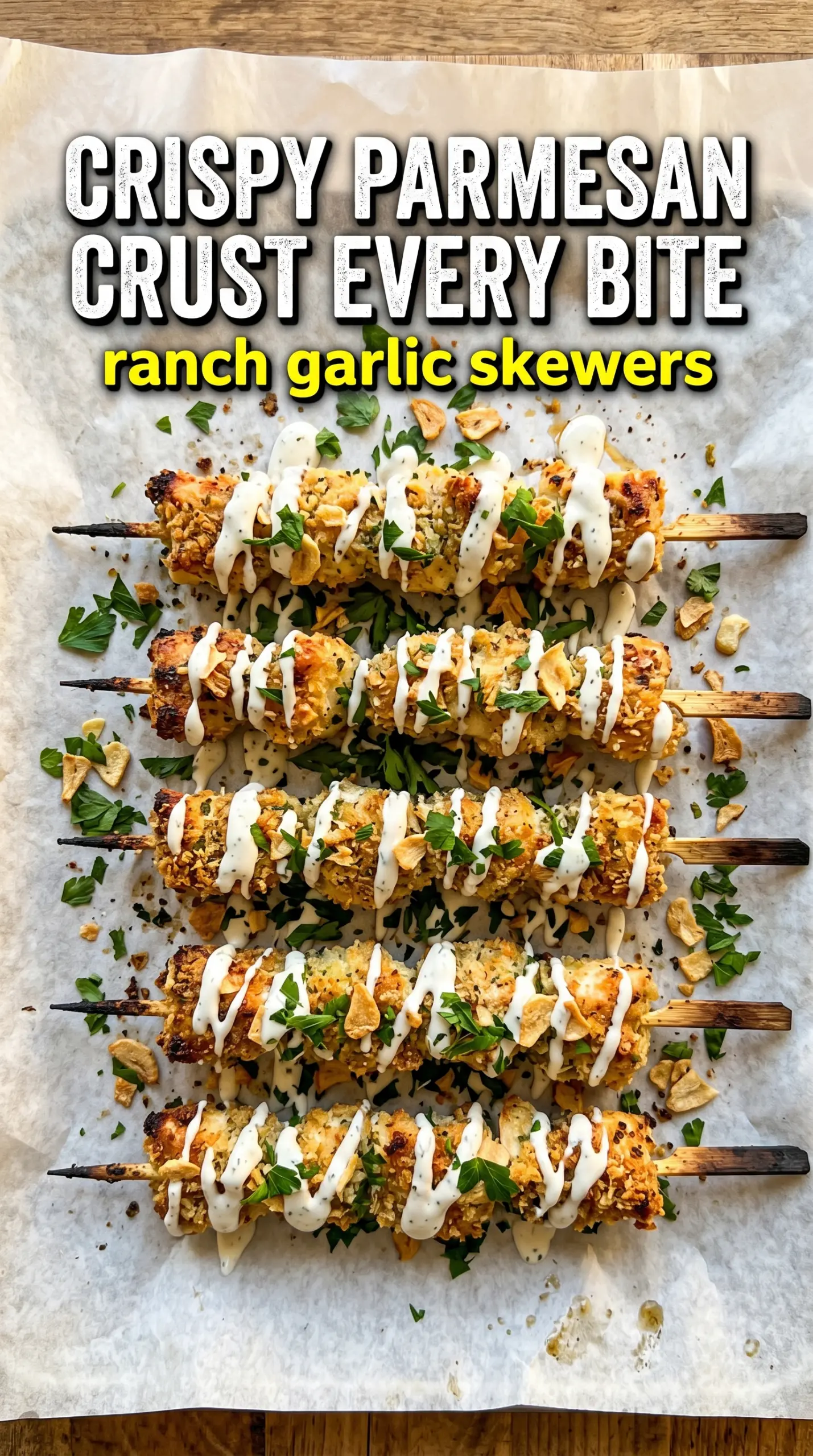
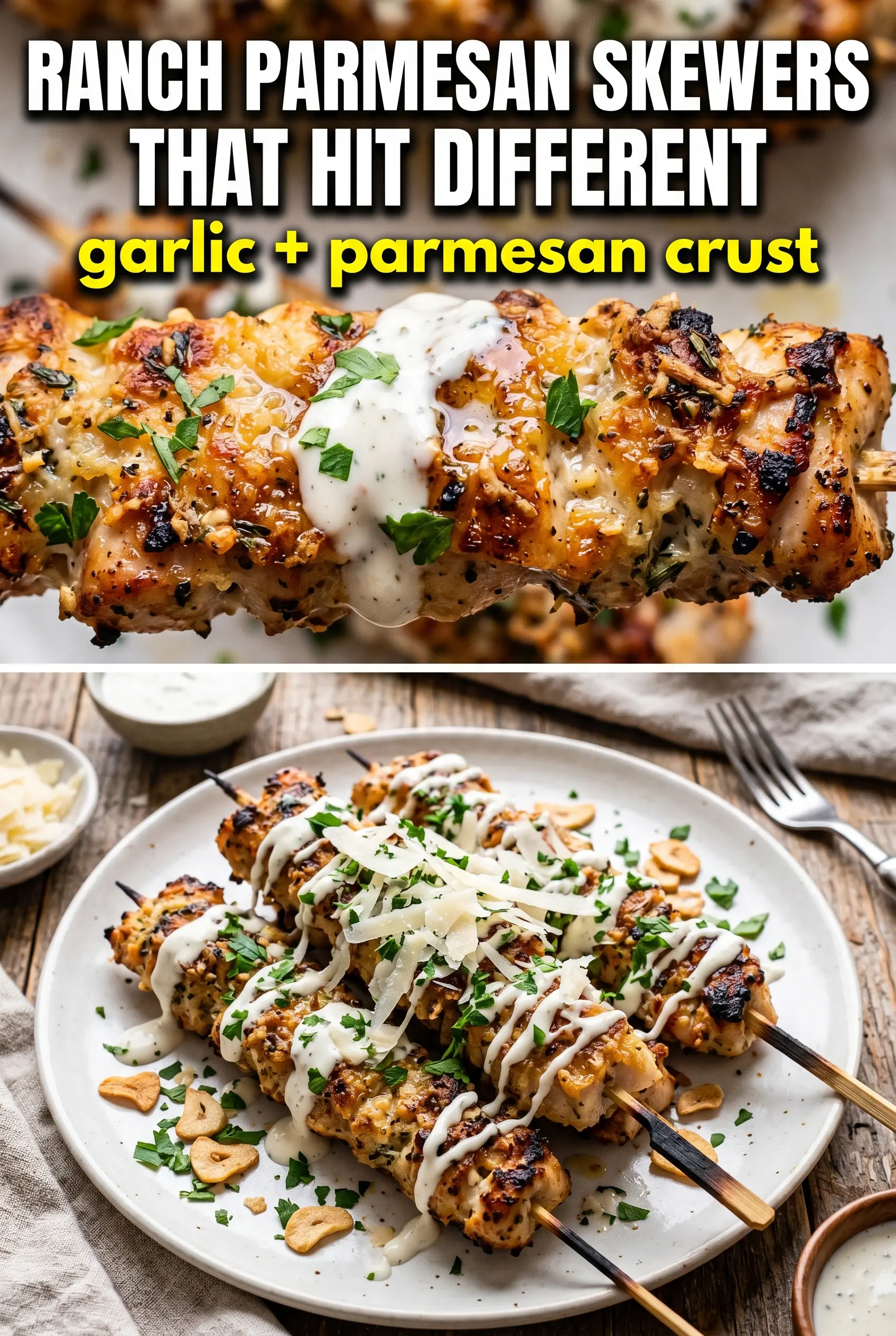
Grilled Ranch Garlic Parmesan Chicken Skewers come off the grill with crisp, salty edges, juicy centers, and just enough char to make the parmesan taste nutty instead of heavy. The ranch seasoning pulls the whole marinade together, but it’s the combination of oil, grated cheese, and garlic that gives the chicken its clingy coating and those little browned bits that people reach for first.
This version works because the chicken gets a short marinate, not a soak overnight. Ranch dressing adds moisture and tang, while the dry seasoning mix keeps the flavor from fading on the grill. Parmesan in the marinade does more than season; it helps the surface brown and gives the skewers that savory crust you can actually see in the finished pieces. If you’ve had grilled chicken skewers turn dry or bland, the fix is in the balance here.
Below, I’ve included the small details that matter most: how long to marinate, why soaked skewers help, and what to watch for when the chicken goes from tender to overcooked in just a minute or two.
The parmesan browned up into this amazing crust on the grill, and the chicken stayed juicy all the way through. I served it with extra ranch and there wasn’t a single skewer left.
Keep these Grilled Ranch Garlic Parmesan Chicken Skewers handy for the nights when you want crisp edges, juicy chicken, and a ranch-parmesan crust that holds up on the grill.
Why the parmesan belongs in the marinade, not just on top
The biggest mistake with cheesy grilled chicken is waiting until the end to add all the cheese. Parmesan mixed into the marinade gives the surface something savory to cling to before it ever hits the grill, and that matters because high heat can strip away delicate seasoning fast. Here, the cheese helps build those browned spots without needing a breadcrumb coating or a heavy sauce.
Ranch dressing does the moisture work, but it also brings salt, acid, and fat in one move. The olive oil keeps the chicken from drying out and helps the seasoning distribute evenly. If the marinade looks thick, that’s a good thing; it should coat the chicken chunks instead of running off like salad dressing on its own.
- Chicken breasts — They stay lean and cook quickly on skewers. Cut the pieces into even chunks so the grill gives you one finished skewer instead of a mix of dry and underdone pieces.
- Ranch dressing — This adds tang and moisture. A bottled dressing works fine here because it’s acting as a base, not the main flavor story.
- Parmesan cheese — Grated parmesan melts and browns better than finely shredded supermarket dust. If you only have the shelf-stable canister version, use it, but expect a slightly less pronounced crust.
- Garlic and ranch seasoning — These are the backbone of the flavor. Fresh garlic gives a sharper edge, while the packet seasoning brings the familiar ranch profile that stands up to the grill.
- Wooden skewers — Soak them long enough to keep them from scorching. Dry skewers can catch before the chicken is done, especially over medium-high heat.
What Each Ingredient Is Actually Doing in This Chicken Marinade
- Chicken breasts (the lean protein) — Cut evenly so pieces cook at the same rate. Lean chicken picks up marinade flavors quickly without needing long soaking.
- Soy sauce or tamari (the savory base) — This provides umami and salt that seasons the chicken all the way through. Low-sodium versions work if that’s your preference.
- Fresh citrus juice (lime, lemon, or orange) — Acid tenderizes the surface and brings brightness. Fresh juice tastes better than bottled in marinades.
- Olive oil or sesame oil (the carrier) — Oil helps the marinade coat evenly and prevents the chicken from sticking on the grill. It also carries aromatic flavors throughout.
- Garlic and ginger (fresh aromatics) — These add pungent depth that mellows slightly when grilled, becoming sweet and mellow rather than harsh.
- Honey or brown sugar (the caramelizer) — A small amount helps the chicken brown and glaze on high heat. Too much can burn before the chicken finishes cooking.
- Fresh herbs (cilantro, parsley, or basil) — These bring freshness that prevents the marinade from tasting heavy. Add some after grilling to keep the dish bright.
- Proper marinating time (30 minutes to 4 hours) — Longer isn’t always better. Acid can soften the chicken surface if it sits too long, so find the balance between flavor and texture.
Getting a crust on the grill without drying out the chicken
Coating the Chicken Evenly
Stir the marinade until the parmesan is distributed and the garlic isn’t clumped at the bottom. Add the chicken and turn it until every piece is coated; the seasoning should cling in a thin layer, not pool in the bowl. If you marinate too long, the ranch and salt can make the outside of the chicken a little soft, so 30 minutes to 2 hours is the sweet spot.
Threading and Prepping the Grill
Slide the chicken onto soaked skewers with a little space between pieces so the heat can move around them. If you pack them too tightly, the centers steam before the edges brown. Preheat the grill to medium-high and oil the grates well; that’s what gives you clean release and those dark grill marks instead of torn chicken sticking behind.
Grilling to the Right Finish
Cook the skewers for 5 to 6 minutes per side, then start checking the thickest piece for 165°F. The outside should pick up char in spots, and the parmesan may crisp around the edges. If the grill is too hot, the cheese can blacken before the chicken cooks through, so if you see aggressive flare-ups, move the skewers to a slightly cooler zone and keep going.
How to adapt these skewers for different grills and diets
Dairy-Free Version
Swap the parmesan for 2 to 3 tablespoons of nutritional yeast and use a dairy-free ranch dressing. You’ll lose the sharp salty bite of real parmesan, but you’ll keep a creamy, savory coating that still browns nicely on the grill.
Boneless Thighs Instead of Breasts
Use chicken thighs if you want a little more forgiveness on the grill. They stay juicier if you get distracted, but they’ll need an extra minute or two since they’re usually thicker and richer than breast meat.
Oven or Broiler Method
If you don’t have a grill, cook the skewers on a foil-lined sheet pan under the broiler, turning once. You won’t get the same smoky char, but you will get good browning fast, so watch closely and don’t walk away.
Storage and Reheating
- Refrigerator: Store leftovers in an airtight container for up to 3 days. The coating softens a little, but the flavor stays strong.
- Freezer: Freeze the cooked chicken off the skewers for up to 2 months. Wrap it well so freezer burn doesn’t dull the parmesan and garlic.
- Reheating: Reheat gently in a 325°F oven or air fryer until warmed through. High heat dries out chicken breasts fast, so don’t blast them in the microwave unless you’re willing to trade texture for speed.
Answers to the questions worth asking
Grilled Ranch Garlic Parmesan Chicken Skewers
Ingredients
Equipment
Method
- In a bowl, mix ranch dressing, olive oil, Parmesan, garlic, ranch seasoning mix, Italian seasoning, salt, and pepper until fully combined.
- Add the chicken chunks to the marinade and toss to coat thoroughly, then refrigerate for 30 minutes to 2 hours.
- Thread the marinated chicken onto soaked wooden skewers in an even layer so the pieces cook at the same rate.
- Preheat the grill to medium-high heat and lightly oil the grates.
- Grill the skewers for 5-6 minutes per side, until the chicken reaches 165°F and shows nice char marks.
- Garnish with fresh parsley and serve immediately with extra ranch for dipping.