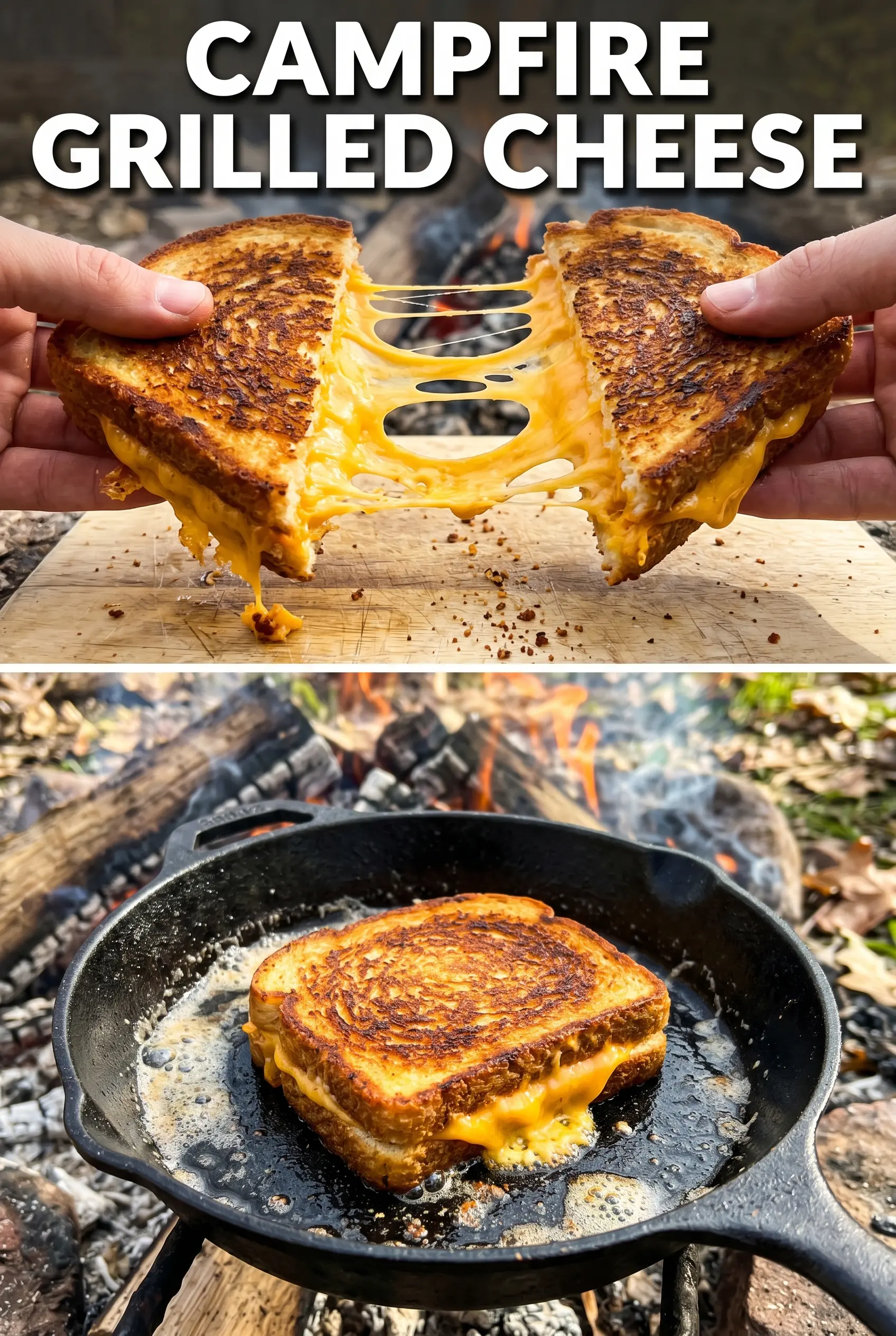
Campfire grilled cheese gets the kind of crisp, smoky edges that a stovetop sandwich can’t quite match. The bread turns deeply golden over the fire, the cheese melts into a stretchy middle, and the whole thing tastes like a proper lunch instead of a rushed bite between activities. When it’s done right, the outside shatters a little when you bite in, then gives way to that soft, molten center.
The trick is managing heat, not chasing it. Campfire cooking can go from too cool to scorching in a few feet, so this sandwich works best over steady medium heat on a grate or in a cast iron skillet. Buttering the outside of the bread gives you that even crust, and choosing a cheese that melts smoothly keeps the middle from going greasy or clumpy before the bread is ready.
Below, you’ll find the one campfire habit that makes the difference between toasted and burned, plus the best cheese swaps when you want a sharper bite or a milder melt.
The bread turned perfectly crisp over the fire and the cheese melted all the way through without burning the outside. My kids asked for a second round before we even packed up.
Save this campfire grilled cheese for the next time you want a golden, melty sandwich cooked right over the fire.
The Part That Stops Campfire Grilled Cheese From Burning Before It Melts
The biggest mistake with grilled cheese over an open fire is treating it like a fast stovetop sandwich. Fire heat is uneven, and the hot spots are brutal. If the grate is sitting directly over aggressive flames, the bread will darken long before the cheese softens. You want steady coals or a calm flame, then enough distance that the sandwich has time to cook through.
Cast iron helps because it buffers that heat and gives the bread a more even crust. If you’re using a grate alone, keep the sandwich moving if one side starts coloring too fast. The goal is a slow, even toast with cheese that’s fully melted when the bread reaches that deep golden color.
- Lower, steadier heat — This matters more than any other part of the recipe. Medium heat gives the cheese time to melt before the bread burns.
- Butter on the outside — Softened butter spreads evenly and helps the bread brown without dry patches. Cold butter tears the bread and leaves uneven spots.
- Cast iron skillet — This is the safest option if your fire runs hot. It evens out the heat and gives you more control than an open grate.
What the Bread and Cheese Are Doing While the Fire Does Its Work

- Bread — A sturdy sandwich bread holds up best because it can take the butter and heat without collapsing. Thin sandwich bread works, but very soft bread can go limp before it browns.
- Cheese — American melts the smoothest and gives that classic pull. Cheddar adds sharper flavor but can get oily if the fire is too hot. Swiss melts nicely too, though it brings a nuttier finish.
- Butter — This is the browning agent. Use softened butter so you can coat the bread edge to edge; that even layer is what gives you a uniform crust.
Getting the Sandwich Golden Before the Cheese Gives Out
Building the Outside Coat
Butter one side of each bread slice generously, all the way to the edges. That outer layer is what hits the heat, so any bare spot will toast paler and drier than the rest. Press the sandwich together with the butter on the outside and the cheese tucked neatly in the middle. If the filling pokes out, it can leak and glue itself to the grate or skillet.
Cooking Over the Fire
Set the sandwiches on a campfire grate or in a cast iron skillet over medium heat. Leave them long enough for the first side to develop a deep golden crust, then turn once and cook the second side the same way. If the bread is browning too fast, move it farther from the heat instead of flipping constantly, which can keep the cheese from catching up. The sandwich is done when both sides are crisp and the cheese is fully melted, not just warm.
Serving While It’s Still Stretchy
Take the sandwiches off the heat and cut them in half right away. That first cut is when you get the best cheese pull, before the heat settles and the filling firms up. Serve them hot, while the crust is crisp and the center is still soft and molten. Waiting even a few minutes changes the texture more than you’d think.
Three Small Changes That Make Campfire Grilled Cheese Work for Different Tastes
Sharp Cheddar Version
Swap in cheddar for a more pronounced cheese flavor and a little more bite. It melts well, but it’s less forgiving than American, so keep the heat moderate and don’t rush the first side. Too much heat can make cheddar grease out before the bread finishes.
Dairy-Free Sandwich
Use a plant-based butter and a dairy-free melting slice that’s designed for heat. The texture won’t be quite as stretchy as the classic version, but the crust still gets crisp and satisfying if the pan or grate isn’t too hot.
Extra-Crunch Camp Version
Use a sturdier bread like sourdough or country loaf for more structure and a thicker crust. It takes a touch longer to heat through, but it holds up better if the sandwich sits on the grate a little unevenly.
Storage and Reheating
- Refrigerator: Store leftovers for up to 2 days. The bread softens as it sits, so expect less crunch after chilling.
- Freezer: Not a great freezer sandwich. The cheese texture changes and the bread loses its crisp edge once thawed.
- Reheating: Warm in a skillet over low heat so the bread re-crisps while the cheese loosens again. Microwaving makes the bread soggy before the center gets properly hot.
Answers to the Questions Worth Asking
Campfire Grilled Cheese
Ingredients
Equipment
Method
- Butter one side of each bread slice generously so the outside turns golden when it grills.
- Place cheese between two slices of bread with butter on the outside to form 4 sandwiches.
- Place the sandwiches on a campfire grate or in a cast iron skillet over medium heat until the bread begins to toast, about 4–5 minutes.
- Flip the sandwiches and continue cooking on the second side until the bread is golden brown and the cheese is fully melted, about 4–5 minutes.
- Remove from heat, cut in half, and serve hot so the melted cheese stretches between the halves.