Juicy grilled chicken gets its best texture and brightest flavor from a marinade that does more than just sit on the surface. The Dijon gives the chicken a little backbone, the citrus keeps everything lively, and the honey helps the edges take on that deep, burnished color on the grill without tipping into bitterness. When it’s done right, the chicken comes off tender, savory, and just tangy enough to keep you going back for another bite.
This version works because the marinade is balanced. The oil carries the flavor and keeps the chicken from drying out, while the orange juice softens the sharpness of the mustard and the lemon keeps the finish clean. I like using thyme here because it feels natural with both the citrus and the grill, and garlic gives the whole thing a warm, rounded base. The trick is giving the chicken enough time to absorb flavor without leaving it in the marinade so long that the texture starts to go soft.
Below, I’ve included the part that matters most: how long to marinate based on the cut you’re using, what to watch for on the grill, and a few easy swaps if you need to work with what’s already in your kitchen.
The chicken picked up the citrus-Dijon flavor all the way through, and the honey helped it grill up with those golden edges without drying out. I used thighs, and after 3 hours in the marinade they came out unbelievably juicy.
Save this citrus Dijon grilled chicken for the nights when you want bright marinade flavor and clean grill marks without a fussy ingredient list.
The Mistake That Makes Citrus Marinades Taste Flat on the Grill
The most common problem with citrus chicken is treating the marinade like it’s all acid. If you load up on lemon and orange juice without enough oil, mustard, and seasoning, the chicken can taste sharp on the outside but dull underneath. Dijon does more than add tang here; it helps the marinade cling to the meat and gives the finished chicken a fuller, more savory edge.
Another thing worth watching is time. Citrus can work fast, which is good, but it can also start to tighten the surface of the chicken if you leave it in too long. For boneless cuts, 2 to 4 hours is plenty. For bone-in pieces, you can stretch that to 6 to 8 hours and still keep a good texture. Any longer and the outside starts to get a little mushy before the grill even gets a chance to do its job.
What Each Ingredient Is Actually Doing in This Marinade
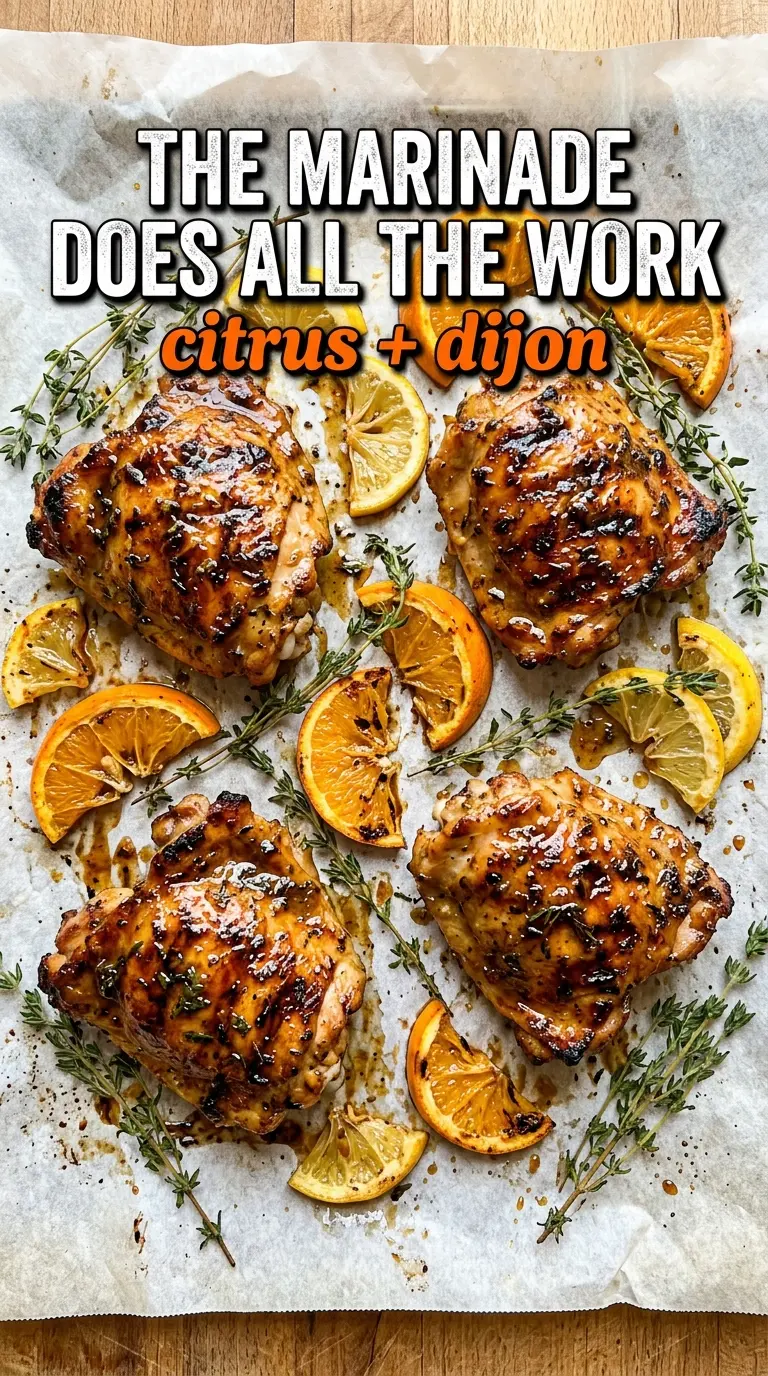
- Chicken — Any cut works, but the timing changes with the cut. Boneless breasts grill quickly and need the shortest marinating window; thighs hold up beautifully to longer marinating and stay juicier if you’re nervous about overcooking.
- Dijon mustard — This is the backbone of the marinade. It adds sharpness, helps emulsify the oil and citrus, and gives the chicken that French-American restaurant-style finish you don’t get from plain lemon juice alone.
- Orange juice and lemon juice — Orange brings sweetness and roundness, while lemon keeps the marinade bright and prevents it from tasting sugary. Fresh juice matters more here than it does in a lot of recipes because bottled juice can taste muddy once it hits the grill.
- Olive oil — Oil carries the flavor and protects the chicken from drying out over direct heat. A decent everyday olive oil is fine; this isn’t the place to use your best finishing oil.
- Honey — It softens the mustard’s bite and helps the surface brown. If you skip it, the chicken will still work, but you’ll lose some of the color and the roundness in the marinade.
- Dried thyme — Thyme gives the marinade a little herbal lift that fits the citrus without fighting it. Fresh thyme can be used, but use a bit more because dried herbs need less volume to show up.
- Garlic — Mince it finely so it disperses through the marinade instead of sticking in clumps that can burn on the grill. If you grate it, it will taste a little stronger and more integrated.
Getting the Chicken Off the Grill Without Drying It Out
Whisking the Marinade Until It Clings
Start by whisking the Dijon, juice, oil, honey, garlic, thyme, salt, and pepper until the mixture looks smooth and slightly thickened. If it looks separated, keep whisking for another few seconds; the mustard should help bring it together. That emulsion matters because it helps the flavor stick to the chicken instead of sliding off in the bag.
Marinating for the Right Window of Time
Place the chicken in a zip-top bag or shallow dish and coat it well. Boneless chicken is ready in 2 to 4 hours, while bone-in pieces can go up to 8 hours. If you leave it much longer with this much citrus, the texture starts to turn soft on the outside before it cooks.
Grilling to Juicy, Not Dry
Preheat the grill to medium-high and oil the grates if needed. Shake off excess marinade before the chicken goes on, then cook until the outside has good browning and the internal temperature reaches 165°F in the thickest part. If the outside is getting dark too fast, move the pieces to a cooler zone and let them finish gently; high heat alone is what dries out grilled chicken.
Resting Before You Slice
Let the chicken rest for 5 minutes after grilling. That short pause keeps the juices from running out the second you cut in. If you slice too soon, even perfectly cooked chicken will look dry on the plate.
How to Change the Marinade Without Losing the Balance
Boneless breast version
Use chicken breasts and keep the marinating time closer to 2 hours so the citrus doesn’t start to firm up the outside. Grill over medium-high heat, but pull them the moment they hit 165°F. Breasts dry out faster than thighs, so this version depends on shorter cooking, not more marinade.
Dairy-free and gluten-free as written
This recipe already fits both diets without any changes, as long as your Dijon mustard is gluten-free. That makes it an easy one to serve to a mixed crowd without giving up the creamy-sounding texture that Dijon brings to the marinade.
No orange juice on hand
Use extra lemon juice plus a teaspoon of honey to replace the missing sweetness. The result will be sharper and a little less rounded, which works fine if you like a brighter, more assertive marinade. Just don’t replace the orange with more lemon one-for-one or the balance gets too sour.
Stovetop grill pan instead of an outdoor grill
A grill pan works if you cook in batches and don’t crowd the surface. You’ll get good browning, but not quite the same smoke-driven edge you get outside. Keep the heat medium-high and let the chicken release naturally before turning it so the marinade doesn’t tear.
Storage and Reheating
- Refrigerator: Store cooked chicken for up to 4 days. It stays flavorful, though the texture is best within the first 2 days.
- Freezer: Freeze cooked chicken for up to 2 months, wrapped well. Slice it before freezing if you plan to use it for salads or wraps later.
- Reheating: Reheat gently in a covered skillet over low heat or in a 300°F oven with a splash of water or broth. High heat is the mistake here; it pushes already-cooked chicken from warm to dry in a hurry.
Answers to the Questions Worth Asking
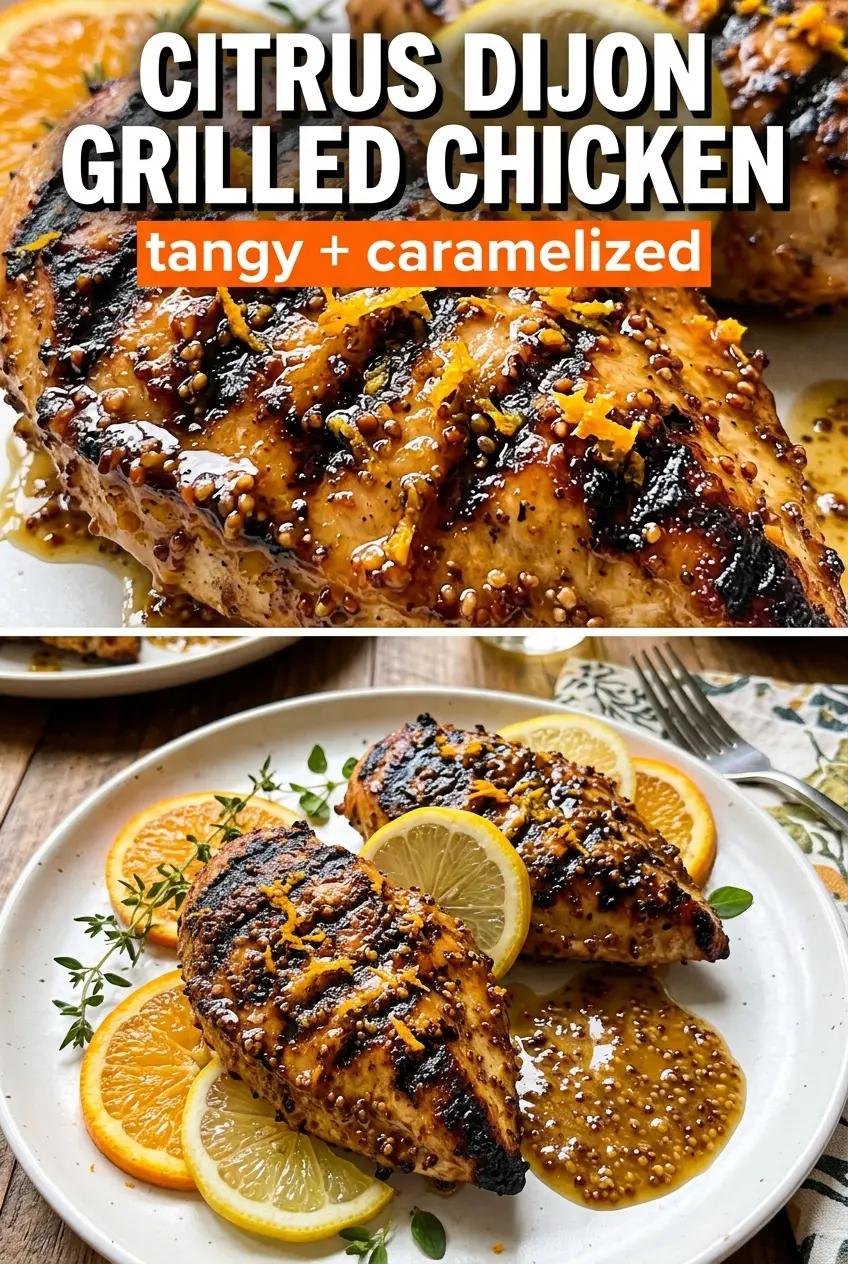
Citrus Dijon Grilled Chicken Marinade
Ingredients
Equipment
Method
- Whisk together olive oil, Dijon mustard, orange juice, lemon juice, garlic, honey, dried thyme, salt, and pepper until smooth and fully combined (no visible mustard streaks).
- Place the chicken in a large zip-top bag and pour the marinade over it, then seal and gently press to coat all pieces.
- Marinate in the refrigerator for 2-8 hours, turning the bag once halfway for even flavor.
- Preheat the grill to medium-high heat until hot (about 375–450°F).
- Grill chicken until the internal temperature reaches 165°F, timing varying by cut and thickness; move pieces as needed for even browning.
- Let the chicken rest for 5 minutes before serving so juices redistribute, then plate with lemon and orange slices and fresh herbs.