Campfire cheeseburger hobo packets turn a simple burger night into a full meal with almost no cleanup. The beef stays juicy, the potatoes cook under everything and soak up the burger drippings, and the cheese melts over the top in that satisfying way that only foil packet cooking seems to pull off. When the foil opens, you get tender potatoes, sweet onions, juicy tomato, and a cheeseburger that tastes like it has been working harder than it actually has.
The part that makes this version work is the layering. Potatoes go down first because they need the longest time over the heat, and slicing them thin matters more than anything else here. The patties are pressed thin so they cook through in the same window as the vegetables, and the final cheese melt happens after the packets come off the hottest part of the fire. That keeps the cheese soft instead of dried out or rubbery.
Below, I’ve included the little details that keep foil packets from turning soggy or underdone, plus a few smart swaps if you want to change up the filling or cook these outside the campfire setup.
The potatoes came out tender, the burger stayed juicy, and the cheese melted perfectly after those last few minutes sealed up. We made these at the campsite, and everyone wanted to open their packet first.
Campfire Cheeseburger Hobo Packets are a one-packet dinner with juicy beef, tender potatoes, and melted cheddar worth saving for your next fire night.
The Reason Thin Potatoes and a Flat Patty Matter Here
Foil packets fail when the vegetables and meat need different cooking times. Potatoes that are cut too thick stay firm while the beef is already done, and a thick burger patty can overcook the foil while waiting on the potatoes. The fix is simple: slice the potatoes thin and form the beef into thin patties so everything finishes together.
That layering order matters too. Potatoes and onions belong on the bottom because they need the most direct heat and they benefit from the burger drippings as they cook. Tomatoes go on top so they soften without disappearing into mush. If you’ve ever opened a packet and found dry meat with half-raw potatoes underneath, the issue was almost always thickness, not the fire.
What Each Ingredient Is Actually Doing in These Packets
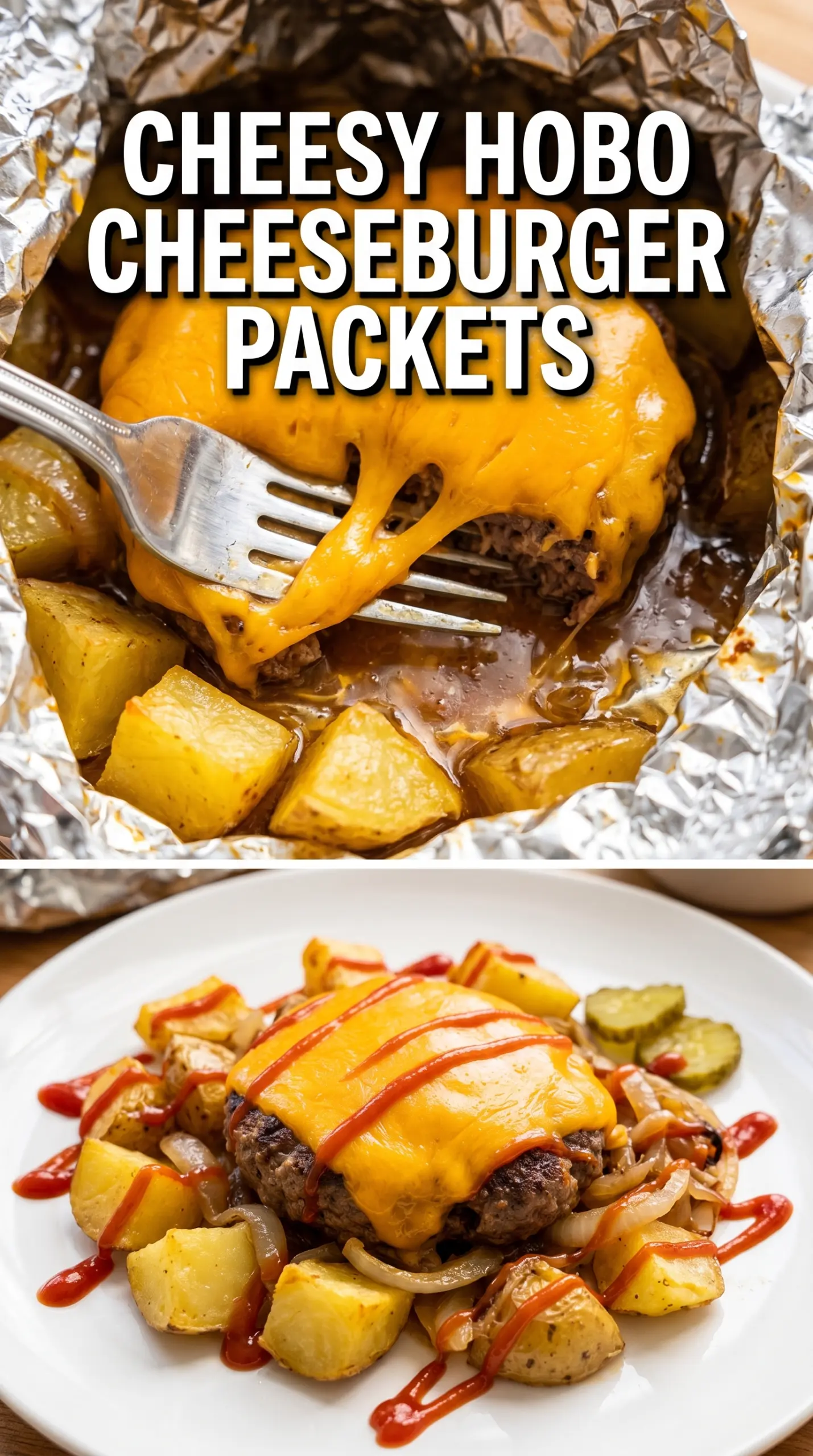
- Ground beef — Use beef with enough fat to stay juicy over campfire heat. Very lean beef dries out fast in foil, and there’s no grill surface to rescue it. If you want a swap, ground turkey works, but the packets will taste lighter and a little less burger-like.
- Potatoes — Thin slices are the whole game here. They cook through in the time the burger needs and pick up flavor from the meat and condiments. Waxy potatoes hold their shape best, but any potato works if you slice it thin enough.
- Onion — The onion melts into the potatoes and gives the packets that classic burger-and-griddle sweetness. Slice it thin so it softens instead of staying crunchy. Yellow or white onions both work well.
- Cheddar cheese — Add it at the end, not at the beginning. Early cheese just dries out against the foil. A mild cheddar melts cleanly, but sharp cheddar gives the strongest burger flavor.
- Ketchup and mustard — These are more than toppings; they season the whole packet and give it that cheeseburger taste without needing a separate sauce. The amount here is enough to flavor everything without flooding the foil.
- Heavy-duty foil — This matters. Thin foil tears when you flip the packets, especially once the potatoes soften and the juices collect inside. If you only have regular foil, double it before sealing.
How to Build the Packets So Nothing Sticks, Burns, or Stays Raw
Start with the potatoes and onions
Lay the sliced potatoes and onions directly on the foil so they sit in the hottest zone first. A light seasoning at this stage helps everything taste seasoned all the way through, not just on the surface. If the potatoes are cut thick, they’ll still be stubborn after 30 minutes, so keep the slices thin and even.
Press the beef thin before sealing
Form the beef into four thin patties instead of thick burger discs. That shape lets the meat cook at the same pace as the vegetables and keeps the center from staying pink while the potatoes keep going. Don’t pack the beef too tightly or it turns dense after cooking.
Seal tightly, then cook over medium heat
Fold the foil into a snug packet with enough room for a little steam but not so much that the ingredients float around. Cook over medium heat rather than a roaring fire; high flames burn the outside of the foil and leave the center lagging behind. Flip halfway through so the potatoes and beef cook evenly from both sides.
Melt the cheese at the end
Open the packets carefully because the steam is hot and fast. Add the cheese once the beef and potatoes are done, then reseal briefly so the residual heat melts it without overcooking the rest. Five minutes of rest gives the juices a chance to settle, which keeps the first bite from spilling out all over the plate.
How to Change These Packets Without Losing the Point
Make It Dairy-Free
Skip the cheese and finish with an extra spoonful of ketchup and mustard, or add a dairy-free slice near the end if you like that melted finish. The packets still taste like cheeseburger dinner because the seasoning and beef drippings carry the flavor; you’re just losing the creamy top layer.
Use Ground Turkey or Chicken
This works, but the result is leaner and a little less rich. Add a drizzle of oil to the patties before sealing so the meat doesn’t dry out, and watch the packets closely because poultry can go from done to dry fast over live heat.
Swap in Sweet Potatoes
Sweet potatoes bring a sweeter, softer bite and need the same thin slicing as regular potatoes. They cook well here, but they lean more toward a sweet-savory camp meal than a classic burger flavor. If you use them, keep the mustard in the mix because it sharpens the finish.
Cook Them in the Oven Instead
Set the sealed packets on a sheet pan and bake until the potatoes are tender and the beef is cooked through. You lose a little campfire smokiness, but the structure stays the same and the cheese still melts beautifully at the end. This is the best option when the weather turns or you want the same meal without a fire.
Storage and Reheating
- Refrigerator: Store leftovers in an airtight container for up to 3 days. The potatoes soften a bit more after chilling, but the flavor holds well.
- Freezer: These freeze poorly once the potatoes and tomatoes are cooked, so I don’t recommend freezing the finished packets.
- Reheating: Reheat gently in a skillet with a splash of water and a lid, or in the oven wrapped in foil until hot. The common mistake is blasting them in the microwave, which makes the potatoes rubbery and the beef dry.
Answers to the Questions Worth Asking
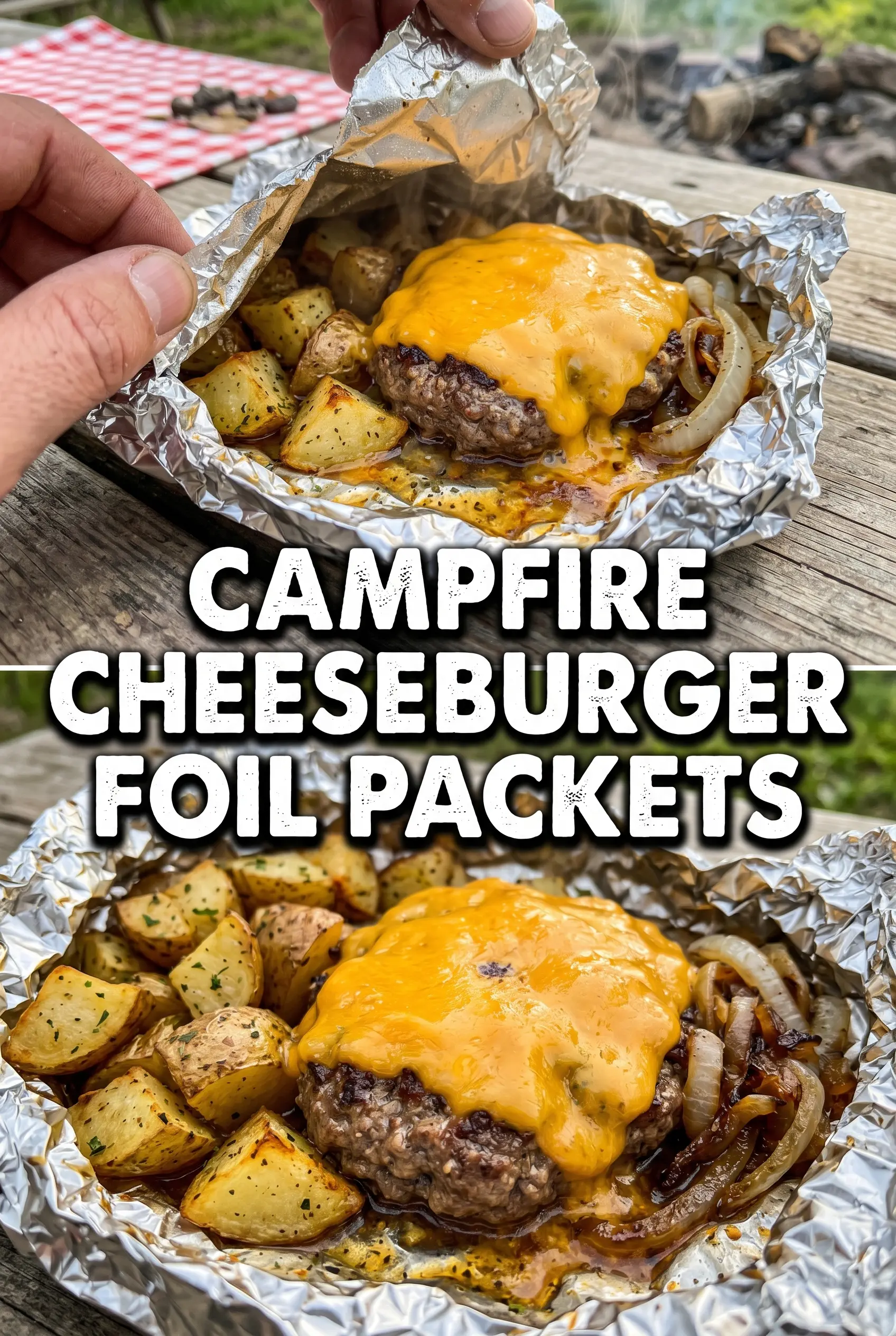
Campfire Cheeseburger Hobo Packets
Ingredients
Equipment
Method
- Form the ground beef into 4 thin patties and season with salt and pepper, pressing evenly so the thickness is consistent.
- Lay out 4 sheets of heavy-duty aluminum foil and layer the thinly sliced potatoes and sliced onions on each one.
- Place a burger patty on top of the potato-onion layer, then add the sliced tomato slices over the meat.
- Drizzle each packet with ketchup and mustard so it seeps into the layers while cooking.
- Fold the foil into sealed packets, crimping the edges tightly so steam stays inside.
- Place the packets on a campfire grate over medium heat and cook for 25-30 minutes, turning or flipping halfway through for even heating.
- Open the packets carefully and lay 1 slice of cheddar cheese on top of each hot burger filling, then reseal briefly just until the cheese melts (about 2-3 minutes).
- Let the packets cool for 5 minutes, then serve in the foil or on hamburger buns if using.