Cheesy, saucy spaghetti baked in a Dutch oven has a way of turning a campfire meal into the one people talk about later. The edges pick up a little crust, the center stays saucy, and the cheese melts into a thick, golden lid that scoops up beautifully. It eats like comfort food, but it’s built for real outdoor cooking, which means one pot, sturdy ingredients, and a texture that holds up after the coals do their work.
This version works because the pasta is already cooked before it goes into the Dutch oven, so you’re not fighting for moisture or uneven doneness over the fire. The sauce gets mixed with the spaghetti and beef before baking, which keeps everything coated instead of letting the noodles dry out on top. A little Parmesan under the mozzarella adds a salty finish and helps the top brown instead of just melting flat.
Below you’ll find the timing that keeps the cheese bubbling without scorching the bottom, plus a few smart swaps if you’re cooking for a crowd or changing things up for the camp menu.
The cheese came out bubbly and browned on top, and the spaghetti stayed saucy instead of drying out. I used a 12-inch Dutch oven over coals and it was perfect at 35 minutes.
Cheesy Campfire Spaghetti Bake is the kind of Dutch oven dinner that comes out bubbly, saucy, and scoopable every time.
The Part That Keeps Campfire Spaghetti From Turning Dry
The biggest mistake with Dutch oven pasta is treating it like an oven casserole and forgetting that campfire heat is less predictable. If the noodles go in undercooked, they’ll steal too much moisture and the sauce can tighten up before the cheese melts. If they go in fully dry and loose, the whole dish can bake up unevenly, with clumps on the bottom and bare noodles on top.
This bake works because the spaghetti is already cooked, drained, and fully coated before it ever sees the coals. That means the Dutch oven is doing the finishing work, not the heavy lifting. You’re after a hot, unified filling and a melted top, not a long bake that tries to fix the pasta inside the pot.
- Cooked spaghetti — Use it just shy of the texture you’d want at the table. It’ll soften a little more as it bakes, and that protects you from mushy noodles.
- Ground beef — Brown it well enough to pick up some color. If it stays gray, the filling tastes flat no matter how much sauce you add.
- Spaghetti sauce — Jarred sauce is fine here because camp cooking needs something stable and dependable. A thick sauce clings better than a watery one.
What the Mozzarella and Parmesan Are Doing Here
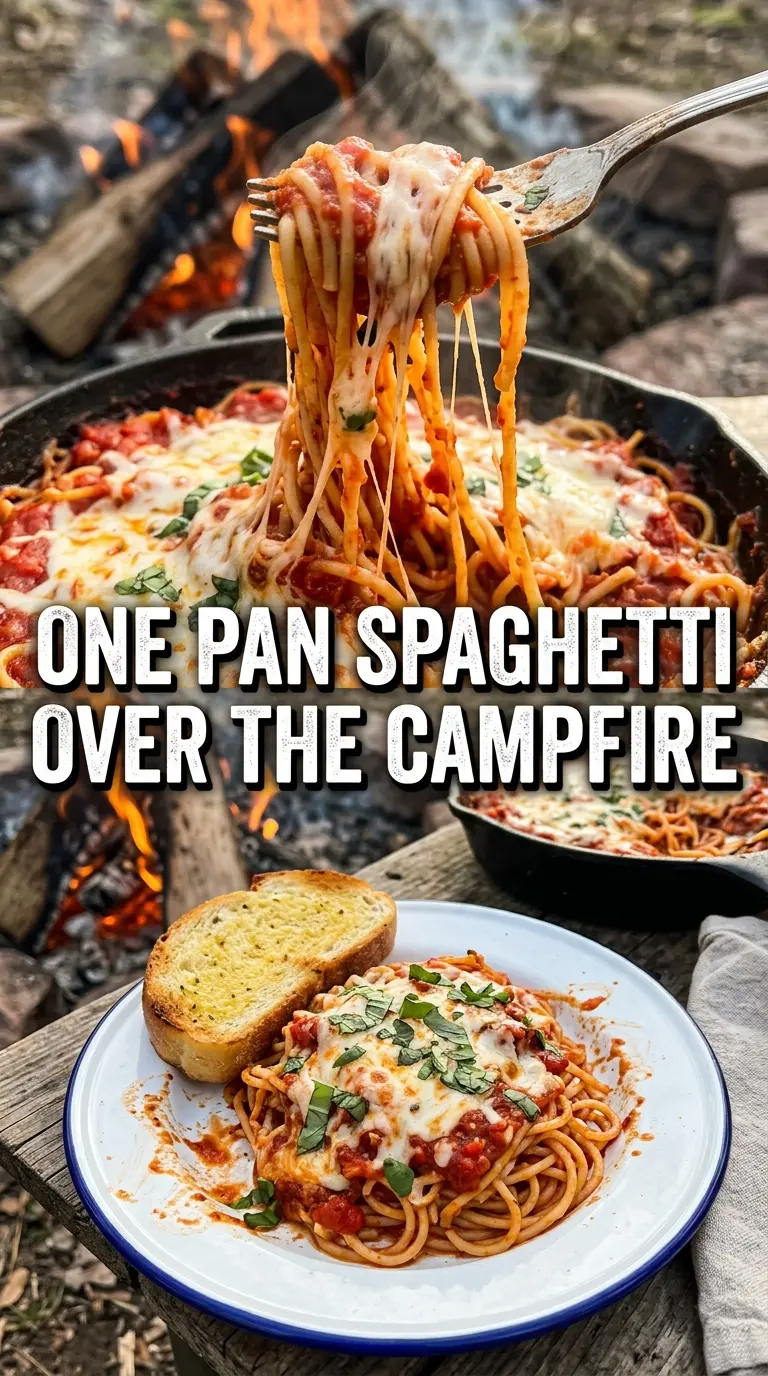
The cheese isn’t just a topping. Half the mozzarella mixed into the pasta helps everything hold together and turns the filling creamy as it heats. The remaining mozzarella on top creates that bubbling, stretchy lid everyone wants to crack open at the table, while the Parmesan adds salt and a little edge of browning that keeps the top from tasting one-note.
Italian seasoning and garlic powder sound basic, but they matter because campfire heat can mute flavors faster than a kitchen oven. Those dried seasonings disperse through the sauce and beef more evenly than fresh garlic would in this kind of bake. If you want to change anything, change the sauce first, not the seasoning balance.
- Mozzarella — Shredded mozzarella melts best when it’s evenly distributed. Pre-shredded works fine here; freshly shredded gets a touch silkier if you have it.
- Parmesan — Use the grated kind you’d actually sprinkle over pasta. It helps the top set with a little color instead of just turning into one smooth blanket of cheese.
- Cooking spray — Don’t skip it. Dutch ovens can grab on the bottom, especially once the cheese starts to melt and the pasta settles in.
Building the Bake Over Coals, Not Overthinking It
Cooking the Beef First
Brown the ground beef in a skillet over the campfire until there’s no pink left and some of the bits have taken on color. Drain off the excess fat so the finished bake doesn’t turn greasy at the bottom. If the beef is swimming in drippings, the sauce slides off the pasta instead of coating it.
Mixing the Filling While It’s Warm
Stir the cooked spaghetti, beef, sauce, half the mozzarella, Italian seasoning, and garlic powder together while the pasta is still warm. Warm noodles grab the sauce better, so the whole mixture turns glossy instead of patchy. You want every strand coated before it goes into the Dutch oven.
Setting Up the Dutch Oven
Spray the inside of the Dutch oven, then spread the pasta mixture in an even layer. Add the remaining mozzarella and the Parmesan across the top so the cheese melts in one even cap. Uneven layering is what causes dry corners and a soggy center, especially when campfire heat shifts around the pan.
Baking Until Bubbling
Cover the Dutch oven and set it on hot coals with coals on the lid as well. Cook until the cheese is melted, bubbling at the edges, and just starting to spot with gold, about 30 to 35 minutes. If the bottom seems to be cooking faster than the top, pull a few coals away from underneath and let the top finish with the lid heat.
Resting Before You Scoop
Let the bake sit for 5 minutes before serving. That short rest helps the sauce settle and keeps the first spoonful from collapsing into a loose tangle of pasta. If you cut into it straight away, the cheese runs everywhere and the slices won’t hold their shape.
How to Change the Campfire Spaghetti Without Breaking It
Swap in Italian sausage for part of the beef
Use half beef and half Italian sausage if you want more seasoning and a richer finish. The sausage brings built-in herbs and fat, so the bake tastes a little fuller, but it also makes the dish heavier. Drain well or the bottom can turn oily.
Make it meatless with a thicker sauce
Skip the beef and use a hearty marinara or vegetable-packed sauce. The texture changes from meaty and substantial to softer and more sauce-forward, so choose a sauce with body rather than a thin one. A handful of sautéed mushrooms would add back some chew if you want it.
Use gluten-free spaghetti
Gluten-free spaghetti works if you cook it just to al dente and handle it gently when mixing. It tends to soften faster than regular pasta once it hits the sauce, so don’t overcook it before baking. The final dish will be a little more delicate, but still holds up well.
Storage and Reheating
- Refrigerator: Store leftovers in an airtight container for up to 4 days. The pasta will soak up more sauce as it sits, so the texture gets a little firmer.
- Freezer: It freezes well for up to 2 months. Cool it completely, pack it tightly, and thaw overnight before reheating.
- Reheating: Reheat covered in the oven with a splash of water or extra sauce so the pasta loosens again. The most common mistake is blasting it uncovered, which dries out the noodles and makes the cheese tough.
Questions I Get Asked About This Recipe
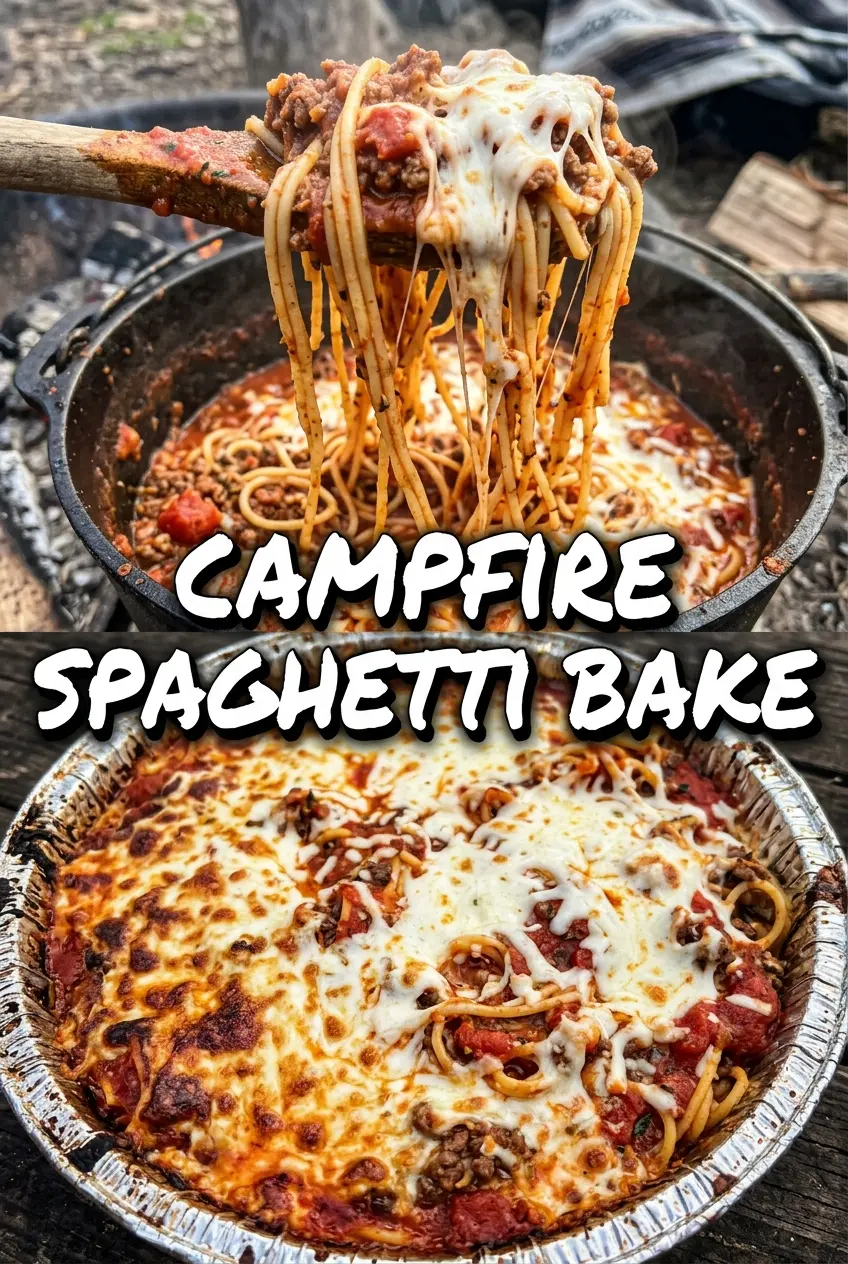
Campfire Spaghetti Bake
Ingredients
Equipment
Method
- Brown ground beef in a skillet over campfire until cooked through, then drain excess fat.
- Mix cooked spaghetti, beef, spaghetti sauce, half the mozzarella, Italian seasoning, and garlic powder until evenly coated.
- Spray Dutch oven with cooking spray and add the spaghetti mixture, spreading it into an even layer.
- Top with remaining mozzarella and Parmesan so the surface bakes up golden and bubbly.
- Cover Dutch oven and place it on campfire coals with coals on top of the lid for even heat transfer.
- Cook for 30-35 minutes until cheese is melted and bubbly, with a visibly set, lightly browned top.
- Let cool for 5 minutes before serving so the bake sets up and slices/serves more cleanly.