Golden, buttery campfire potatoes deliver the kind of smoky, salty comfort that disappears fast once the packet opens. The edges turn tender and lightly crisp, the onions soften into the potatoes, and every bite gets coated in melted butter and paprika. It’s the sort of side dish that feels bigger than the ingredient list suggests.
What makes this version work is the layering. Thin potato slices cook evenly in the foil packet, while the onion slices add moisture and a little sweetness so the potatoes don’t dry out over the fire. The butter goes in as cubes instead of melted, which lets it baste the potatoes as it melts instead of running straight to one corner of the packet.
Below, I’ve included the small details that matter most with foil packet potatoes: how to keep the packet sealed, how to judge the heat over a campfire, and what to change if you want to make them without cheese or with a different seasoning blend.
The potatoes turned tender all the way through, and the butter with paprika soaked into every layer. I flipped the packet once like you said and the bottom didn’t burn at all.
Save these campfire potatoes for the nights when you want smoky foil packet potatoes with buttery onions and crisp-tender edges.
The Part That Keeps Campfire Potatoes From Turning Mushy
The biggest mistake with foil packet potatoes is packing them too tightly and cooking them over heat that’s too fierce. Potatoes need steady medium heat so the inside softens before the outside turns dark and leathery. Thin slices help, but the real difference comes from giving the steam a little room to move inside the packet.
Double-layered heavy-duty foil matters here. A single flimsy sheet can tear when you flip the packet or when the butter starts sizzling, and once the seal opens, the potatoes dry out fast. The packet should be sealed snugly, not smashed flat; you want a little air space so the onions and butter can do their job.
- Thin-sliced potatoes — Slice them about 1/8-inch thick so they cook at the same pace. If some pieces are thicker, those spots will stay firm while the thin ones go soft.
- Onion — The onion isn’t just there for flavor. It gives off a little moisture and sweetness, which helps keep the potatoes from tasting flat or dry.
- Butter cubes — Cubed butter melts more evenly through the packet than melted butter poured over the top. That slow melt coats the slices as they cook instead of pooling in one corner.
- Heavy-duty foil — This is one place where the sturdier option matters. If you only have regular foil, use two sheets per packet and fold the edges over twice.
What Each Ingredient Is Actually Doing Over the Fire
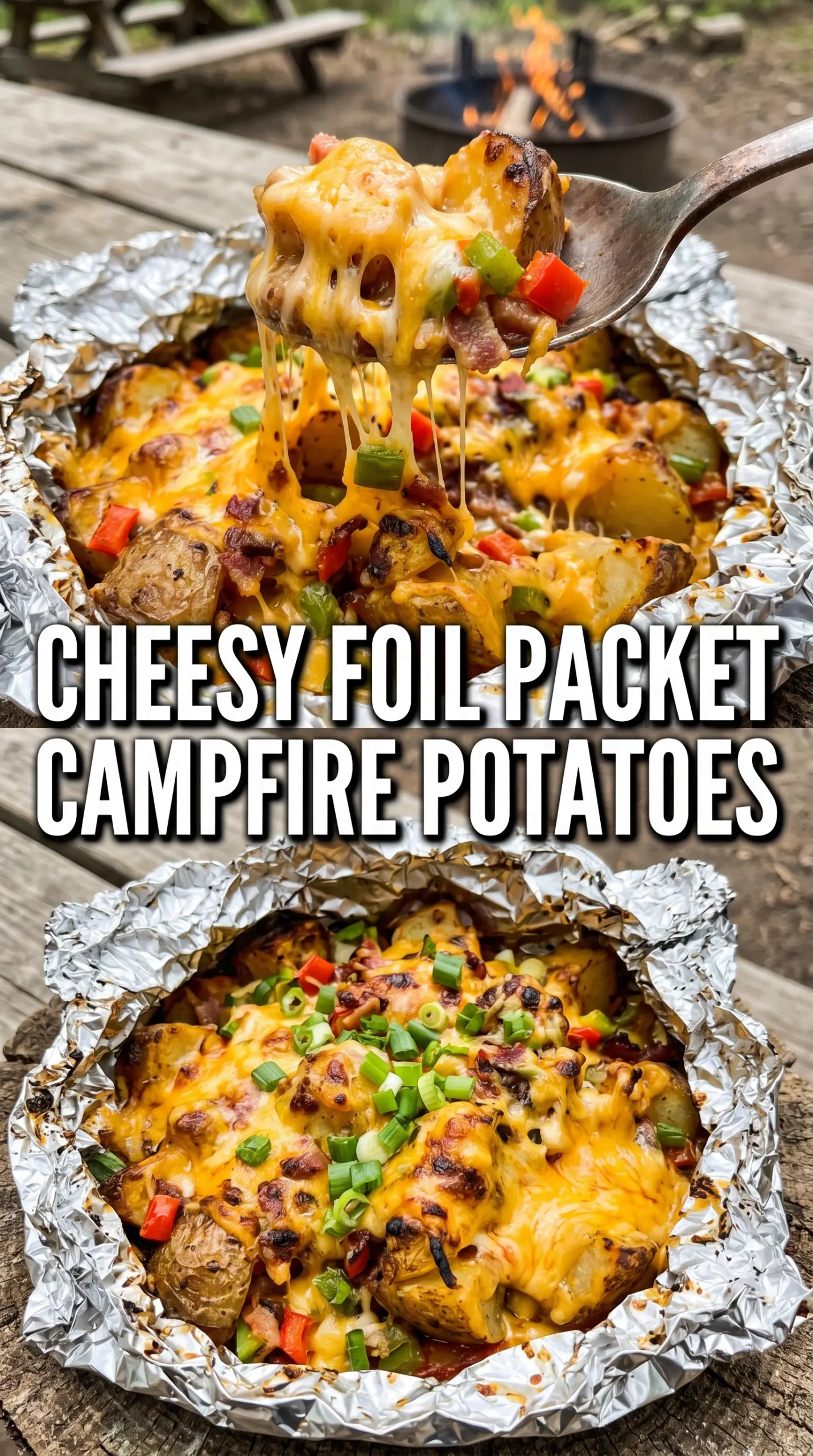
- Potatoes — Medium potatoes hold their shape well and turn creamy inside without falling apart. Russets work if that’s what you have, but they’ll be a little fluffier and more prone to breaking when you open the packet.
- Garlic powder and paprika — Garlic powder gives the potatoes their savory backbone, and paprika adds color plus a light smoky note that plays well with campfire cooking. Fresh garlic is not the better swap here because it can burn or taste sharp in a closed packet.
- Cheddar cheese — This is optional, but it makes the potatoes feel more like a loaded side dish. Add it only at the end so it melts without turning greasy or stringy from overcooking.
- Foil — The packet is part of the recipe, not just packaging. It traps steam, but it also protects the potatoes from direct flame so the slices can soften evenly.
How to Build the Packet So the Potatoes Cook Evenly
Layering the potatoes and onions
Spread the potato slices in an even layer on the foil, then tuck the onion slices between and over them. Don’t pile everything into a thick mound or the center will stay underdone while the outside edges overcook. A loose, even layer gives the heat a chance to reach every slice.
Seasoning before sealing
Dot the top with butter cubes, then sprinkle on the garlic powder, paprika, salt, and pepper. The seasoning needs to land on the potatoes themselves, not just the foil, or it won’t distribute well once the butter starts melting. After that, fold the packet tightly and crimp the edges so steam stays inside.
Cooking over medium campfire heat
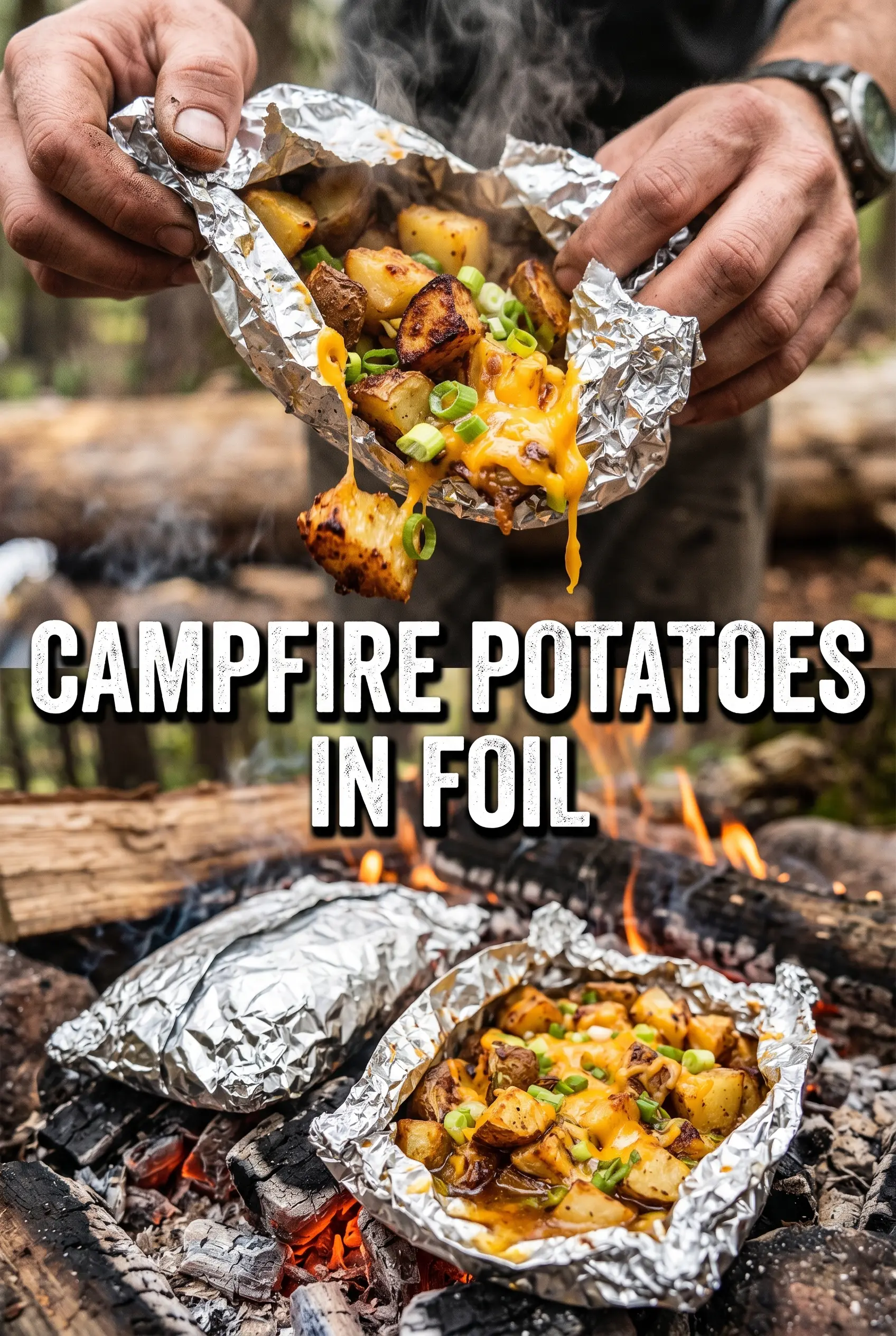
Set the packet on a grate over medium heat and flip it halfway through cooking. If the heat is too hot, the foil will scorch before the potatoes soften; if it’s too low, the potatoes will steam without much color. At 25 to 30 minutes, the slices should feel tender when pierced through the foil and the packet should smell buttery and savory.
The cheesy finish
Open the packet carefully because the steam is strong, then sprinkle the cheese over the hot potatoes if you’re using it. Reseal the packet for a couple of minutes so the cheese melts from the residual heat. If you leave it open too soon, the cheese will sit on top instead of melting into the potatoes.
How to Adjust Campfire Potatoes for Different Camps and Diets
Dairy-Free Foil Packet Potatoes
Swap the butter for olive oil or a plant-based butter that holds up to heat. You’ll lose a little of the classic buttery flavor, but the potatoes still roast up nicely and the paprika and onion carry more of the seasoning.
Make It Cheesy and Hearty
Add cooked bacon bits, green onions, or extra cheddar after the packet comes off the fire. Bacon adds salt and crunch, but it’s best already cooked so it doesn’t release grease into the packet and muddy the flavor.
Oven or Grill Instead of a Campfire
Bake the sealed packet on a sheet pan at 400°F or cook it on a grill over medium heat. The timing stays close, but the oven gives you more even cooking, while the grill adds a little more smoke and darker edges on the bottom layer.
Storage and Reheating
- Refrigerator: Store leftovers in an airtight container for up to 3 days. The potatoes soften a bit more as they sit, but the flavor stays good.
- Freezer: These don’t freeze well once cooked. The potato texture turns grainy after thawing, so it’s better to make only what you’ll eat soon.
- Reheating: Warm them in a skillet over medium-low heat with a small knob of butter or a splash of oil. The mistake to avoid is blasting them in the microwave, which makes the slices rubbery before the centers heat through.
Answers to the Questions Worth Asking
Campfire Potatoes
Ingredients
Equipment
Method
- Layer the potato and onion slices on a large double-layer of heavy-duty aluminum foil. Keep the slices even so they cook at the same rate.
- Dot the top with cubed butter and season with garlic powder, paprika, salt, and black pepper. Distribute spices across the layers so each bite is seasoned.
- Fold the foil into a sealed packet. Press the seams shut to prevent steam and juices from leaking.
- Place the packet on a campfire grate over medium heat for 25-30 minutes. Flip halfway through to brown both sides.
- Open the packet, sprinkle with shredded cheddar cheese if desired, and reseal. Let it steam and melt for 2 minutes until the cheese softens.
- Serve the potatoes hot directly from the packet. The steam and melted butter will loosen the slices for an easy fork lift.