Golden honey garlic chicken skewers hit that sweet spot between sticky, savory, and just-charred enough at the edges. The glaze clings to the chicken instead of sliding off the grill, and the quick marinade gives the meat enough time to pick up flavor without turning the outside soft or muddy. When the skewers come off right, you get caramelized bits on the tips and juicy chicken in the center.
The trick here is balance. Honey brings the gloss and browning, soy sauce adds salt and depth, and lemon juice keeps the sweetness from taking over. I also like reserving part of the marinade for basting, but only after it’s set aside before the chicken goes in. That keeps the finished skewers safe and gives you a thicker, stickier coating on the grill.
Below, I’ll walk through the part that matters most: how to keep the chicken juicy while still getting a proper caramelized finish. There’s also a note on soaking wooden skewers, which sounds small until one catches fire and ruins the batch.
The marinade caramelized beautifully on the grill and the chicken stayed juicy even after an extra minute or two. I made these for dinner and my husband kept sneaking pieces off the platter before I could serve them.
Save these sticky honey garlic chicken skewers for the nights when you want grilled chicken with a glossy glaze and almost no cleanup.
The Marinade Timing That Keeps the Chicken Juicy, Not Mushy
Chicken breasts can go dry fast on the grill, so the marinade has to do two jobs at once: season the meat and help protect it from high heat. The honey and oil coat the outside, while the soy sauce and lemon bring enough salt and acid to push flavor into the chicken without breaking down the texture. If you leave it in too long, especially past four hours, the lemon starts working against you and the surface can turn a little soft.
That’s why chunk size matters here. Cut the chicken into even pieces so they cook at the same rate, and keep them large enough to stay juicy after grilling. Smaller pieces dry out before they can take on a good char, and uneven chunks mean some skewers finish before others.
What Each Ingredient Is Actually Doing in the Glaze
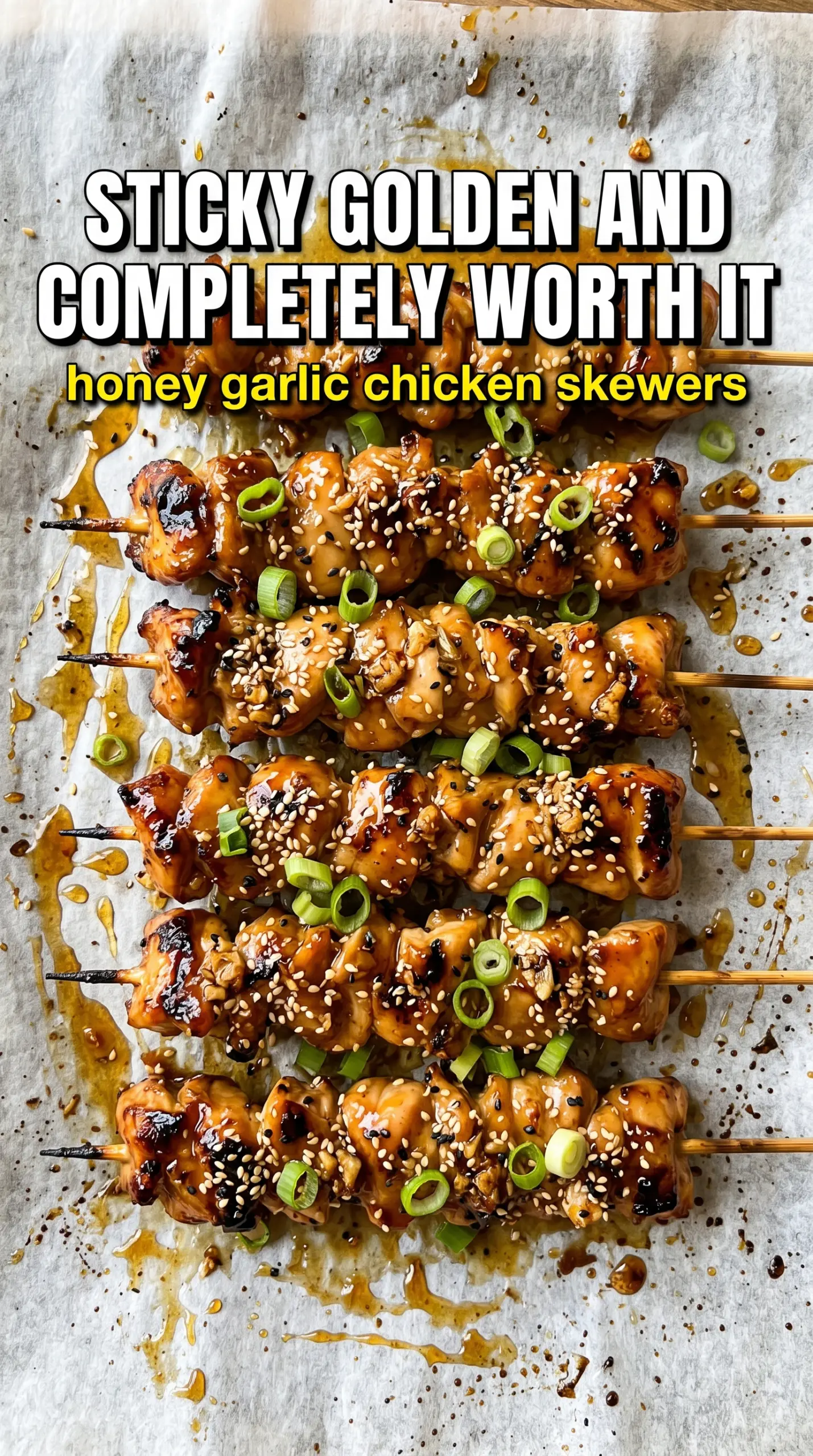
- Chicken breasts — These cook quickly and give you a clean, lean bite that works well with the sticky glaze. Chicken thighs also work if you want a richer result and a little more insurance against overcooking.
- Honey — This is what makes the exterior lacquered and caramelized. Don’t swap in plain sugar syrup and expect the same result; honey gives both body and color as it reduces on the grill.
- Soy sauce — This supplies the salt and the deep savory base that keeps the glaze from tasting one-note. Use regular soy sauce for the best balance; low-sodium works if you want more control, but the finished flavor will be a touch lighter.
- Garlic — Fresh minced garlic matters here because it perfumes the marinade and browns lightly on the grill. Garlic powder won’t give the same sharp, roasted edge.
- Lemon juice — Just enough acid wakes up the honey and soy without making the chicken tangy. If you’re out, rice vinegar is the closest swap, though it tastes a little softer and less bright.
- Olive oil — This helps the marinade cling and keeps the surface from drying out over the flames. A neutral oil works too, but olive oil adds a little roundness to the finished glaze.
The Grill Work That Gives You Char Without Burning the Glaze
Mixing the Marinade
Whisk the honey, soy sauce, olive oil, garlic, lemon juice, and pepper until the honey loosens and everything looks emulsified. If the honey sits in streaks at the bottom, the chicken won’t marinate evenly. Reserve 1/4 cup before the chicken goes in, then keep that portion separate for basting later.
Soaking and Threading the Skewers
Soak wooden skewers long enough that they’re fully saturated, not just wet on the outside. Thread the chicken pieces with a little space between each one so heat can move around the meat and the edges can caramelize. Packed-together chunks steam instead of grill, and that’s how you lose the sticky glaze.
Grilling to a Sticky Finish
Set the skewers over medium-high heat and let the first side develop color before you start fussing with them. The chicken should release more easily once it has a crust; if it’s sticking hard, give it another minute. Baste with the reserved marinade during the last few minutes of cooking so it thickens on the surface instead of scorching early.
Knowing When They’re Done
Pull the skewers when the chicken is opaque through the center and the edges are lightly charred. A thermometer should read 165°F in the thickest piece. If the glaze starts to darken too fast, move the skewers to a slightly cooler spot on the grill and finish them there rather than letting the honey burn.
How to Adjust the Skewers for Different Tables
Gluten-Free Version
Use tamari or a certified gluten-free soy sauce in place of regular soy sauce. The glaze stays just as sticky and savory, but double-check that your skewers and any store-bought garnishes are gluten-free too if you’re cooking for someone sensitive.
Chicken Thigh Swap
Boneless, skinless thighs give you a juicier, richer skewer and they’re a little more forgiving on the grill. They may need an extra minute or two, but the payoff is a more tender bite and a deeper savory flavor under the glaze.
No-Grill Oven Method
Bake the skewers on a lined sheet pan at 425°F, turning once and basting near the end. You won’t get the same smoky char, but the honey-garlic coating still turns glossy and browned. Broil for the last minute if you want a little extra edge, and watch it closely because the honey can go from browned to burnt fast.
Storage and Reheating
- Refrigerator: Store leftovers in an airtight container for up to 3 days. The glaze may thicken and lose some shine, but the flavor holds up well.
- Freezer: Freeze cooked chicken off the skewers for up to 2 months. The texture is best if you freeze the pieces in a single layer first, then pack them into a bag once solid.
- Reheating: Reheat gently in a covered skillet with a spoonful of water, or warm in a 300°F oven until just heated through. High heat dries out the chicken fast and can make the honey coating sticky in the wrong way.
Questions I Get Asked About This Recipe
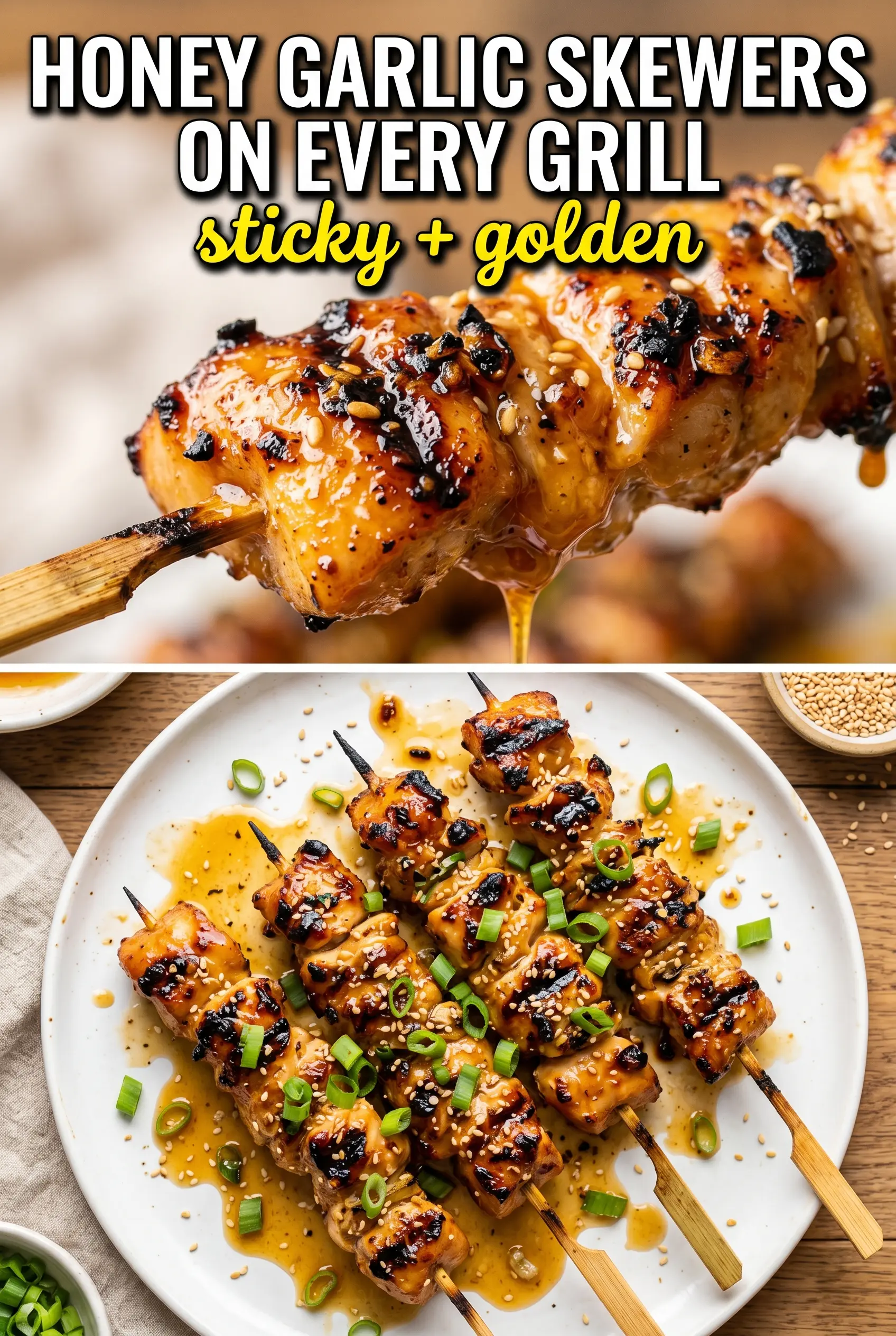
Honey Garlic Chicken Skewers
Ingredients
Equipment
Method
- Whisk together honey, soy sauce, olive oil, garlic, lemon juice, and black pepper until the honey is fully dissolved and the mixture looks glossy.
- Measure out and reserve 1/4 cup of the marinade for basting so you can glaze the skewers while grilling.
- Marinate the chicken in the remaining marinade for 1-4 hours, covered, turning once if you like for even coating and flavor.
- Thread the marinated chicken onto soaked wooden skewers, leaving a little space between chunks so they cook evenly.
- Preheat the grill to medium-high heat and grill the skewers for 5-6 minutes per side, basting with the reserved marinade during grilling so the glaze turns sticky and caramel-colored.
- Garnish the honey garlic chicken skewers with fresh parsley and serve hot so the glaze stays glossy.