Tri-tip comes off the grill or out of the oven with a dark, peppery crust and a pink, juicy center when it’s handled the right way. The cut has enough beefy flavor to stand on its own, but it shines when you give it a hard sear, a simple spice rub, and a proper rest before slicing. That last part matters more than most people think; slice too soon and the juices run right out onto the cutting board.
This version keeps the seasoning bold and straightforward, with salt, pepper, garlic, paprika, and oregano building a crust that tastes like classic Santa Maria-style beef without needing a long ingredient list. The roast is brought up to room temperature before cooking, which helps it cook evenly, and it’s pulled at 130-135°F so the carryover heat finishes it at a perfect medium-rare. Whether you grill it or roast it, the method is the same where it counts: high heat first, then a controlled finish.
Below, I’ve included the details that make tri-tip easier to nail at home, including how to slice it correctly and what to change if you want to cook it in the oven instead of on the grill.
The crust on this tri-tip was outstanding, and pulling it at 135°F gave us a perfectly pink center after resting. I sliced it against the grain like you said and it was tender enough that even the leftovers were great the next day.
Save this grilled or oven-roasted tri-tip for the nights when you want a crusty, pink-centered beef roast without a long ingredient list.
The sear is the whole game with tri-tip
Tri-tip is one of those cuts that can go from excellent to disappointing fast if it’s cooked like a pot roast instead of a steak-sized roast. It needs aggressive heat at the beginning to build that crust, then a controlled finish so the center stays pink and juicy. The biggest mistake is overcooking it out of caution; tri-tip tastes best around medium-rare, and once it pushes past that, the texture turns noticeably firmer.
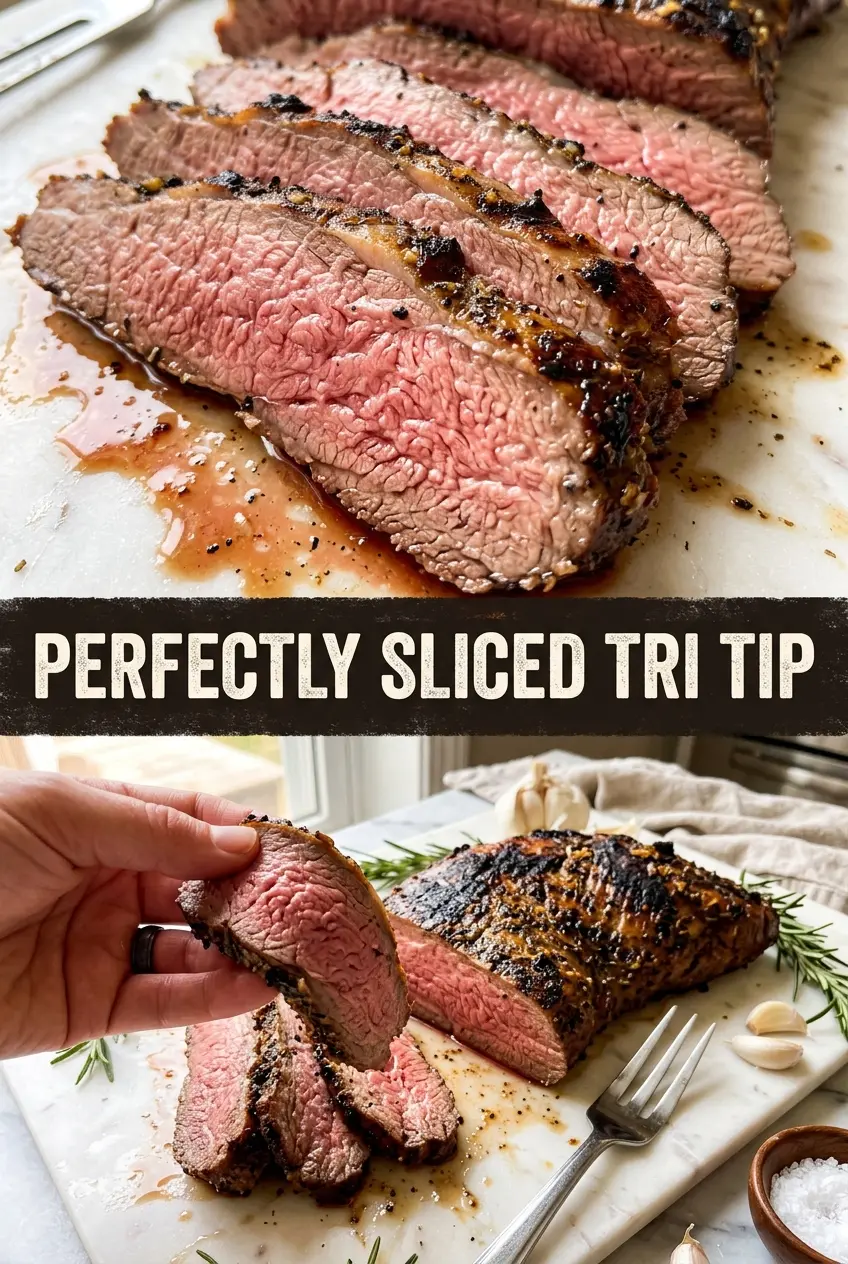
Another thing that changes the outcome is how you slice it. Tri-tip has a grain that runs in two directions, so if you just cut straight across the whole roast without paying attention, some pieces end up chewy even when the meat is cooked properly. Resting it for 15 minutes gives the juices time to settle, and slicing against the grain keeps each piece tender.
What the spice rub is doing here
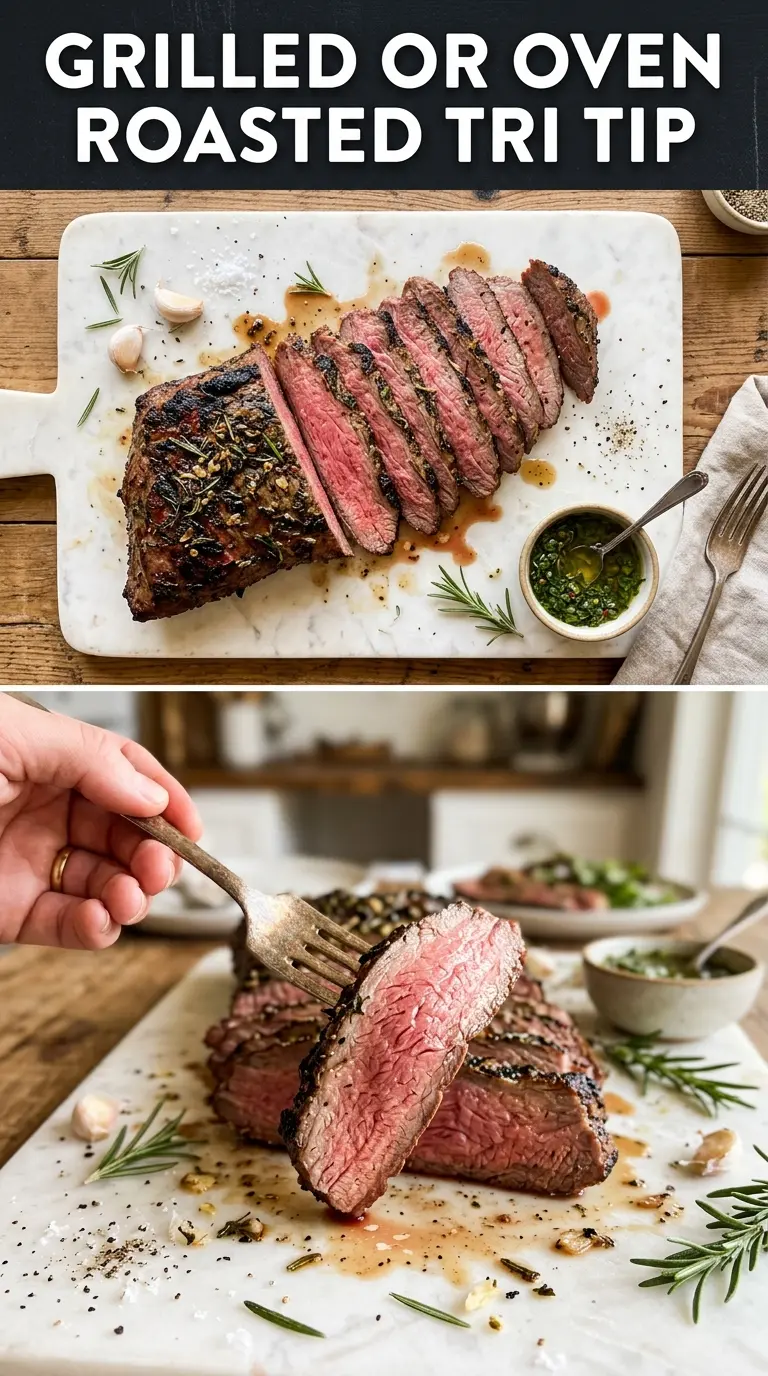
- Tri-tip roast — This cut has enough marbling and beef flavor to stay juicy through high heat, but it still cooks quickly enough to behave more like a roast-steak hybrid than a slow roast. If you can, choose one with even thickness so it cooks more evenly from end to end.
- Olive oil — The oil helps the rub cling and encourages even browning. You don’t need a fancy bottle here, but skip anything with a harsh flavor because the beef should still be the main taste.
- Kosher salt — Salt is doing more than seasoning the surface; it helps the meat taste beefier and keeps the crust from tasting dusty. Table salt works in a pinch, but you’d use less because it’s finer and denser.
- Garlic powder, paprika, onion powder, and oregano — This blend gives you a deep, savory crust with a little warmth and herbiness. Fresh garlic isn’t the right swap here because it can burn before the roast finishes, and smoked paprika only works if you want a little barbecue edge.
How to get the crust first and the center second
Mixing and coating the roast
Stir the salt, pepper, garlic powder, paprika, onion powder, and oregano together first so the rub lands evenly on the meat instead of in clumps. Rub the tri-tip with olive oil, then press the seasoning all over the surface, including the thinner edges. Let it sit at room temperature for 30 minutes so the roast starts cooking more evenly; if it goes in ice-cold, the outside has to overcook before the center catches up.
Grilling over high heat
Put the tri-tip over high heat and sear it for about 5 minutes per side to build a dark crust. After that, move it to indirect heat and close the lid so the interior can rise gently to 130-135°F. If the outside is getting too dark before the center is ready, the heat is too fierce; move it farther from the flames and let the grill do the rest of the work.
Oven-roasting after the sear
If you’re using the oven, sear the roast in a hot skillet first, then transfer it to a 425°F oven for 20-25 minutes. That skillet sear is what gives you the browned crust; the oven just finishes the middle without blasting it with more direct heat. Pull it when the thermometer reads 130-135°F in the thickest part, because the temperature will climb while it rests.
Resting and slicing
Let the roast rest for a full 15 minutes before you cut it. If you slice too early, the juices spill out and the meat eats drier than it should. Cut thin slices against the grain, and watch the direction carefully on the roast because tri-tip’s grain changes partway through; that’s the difference between tender slices and chewy ones.
Three ways to work this tri-tip into your dinner plan
Garlic-herb tri-tip for a softer crust
Reduce the black pepper a little and add a touch more oregano if you want the seasoning to lean more herb-forward and less peppery. The roast will still brown well, but the crust will taste gentler and less assertive.
Smoked paprika tri-tip for a BBQ edge
Swap the paprika for smoked paprika if you want a deeper barbecue-style flavor without adding sauce. It gives the crust a campfire note, but use it lightly because too much can overpower the beef.
Gluten-free and dairy-free as written
This recipe already works for both gluten-free and dairy-free cooking, as long as your spice blends are pure and haven’t been cross-contaminated. That makes tri-tip a strong main dish for mixed-diet dinners because nobody has to eat a second-choice version.
Batch cooking for sandwiches and salad bowls
Cook the roast to the same doneness, then chill the leftovers before slicing them thin for sandwiches or cold salad bowls. Tri-tip holds up well cold, and the seasoning tastes even bolder the next day.
Storage and Reheating
- Refrigerator: Store sliced tri-tip in an airtight container for up to 4 days. It stays tender if you keep it from drying out.
- Freezer: Freeze tightly wrapped slices for up to 2 months. Freeze them in portions so you only thaw what you need.
- Reheating: Warm it gently in a covered skillet with a splash of beef broth, or heat it low in the oven. High heat dries out tri-tip fast, so avoid blasting it in the microwave unless you don’t mind losing some of the texture.
Questions I Get Asked About This Recipe
Tri Tip - Grilled or Oven-Roasted
Ingredients
Equipment
Method
- Mix kosher salt, black pepper, garlic powder, paprika, onion powder, and dried oregano in a bowl until evenly combined, creating a uniform spice rub.
- Pat tri-tip roast dry, then rub it with olive oil so the seasoning sticks all over.
- Coat the tri-tip generously with the spice rub, pressing lightly so you see a dense, speckled surface.
- Let the seasoned tri-tip sit at room temperature for 30 minutes so the flavors penetrate and the surface dries slightly for better browning.
- Preheat the grill for high heat, then sear the tri-tip over direct heat for 5 minutes per side until a dark crust forms.
- Move the tri-tip to indirect heat and cook until it reaches 130-135°F for medium-rare, checking with a thermometer through the thickest part.
- Heat a hot cast iron skillet until very hot, then sear the tri-tip to build crust on the outside.
- Transfer to the oven and roast at 425°F for 20-25 minutes until the tri-tip reaches 130-135°F for medium-rare.
- Remove the tri-tip from heat when it hits 130-135°F, then rest for 15 minutes so juices redistribute and the center stays pink.
- Slice tri-tip against the grain into thin pieces to keep each slice tender, showing the crusty exterior and pink interior.