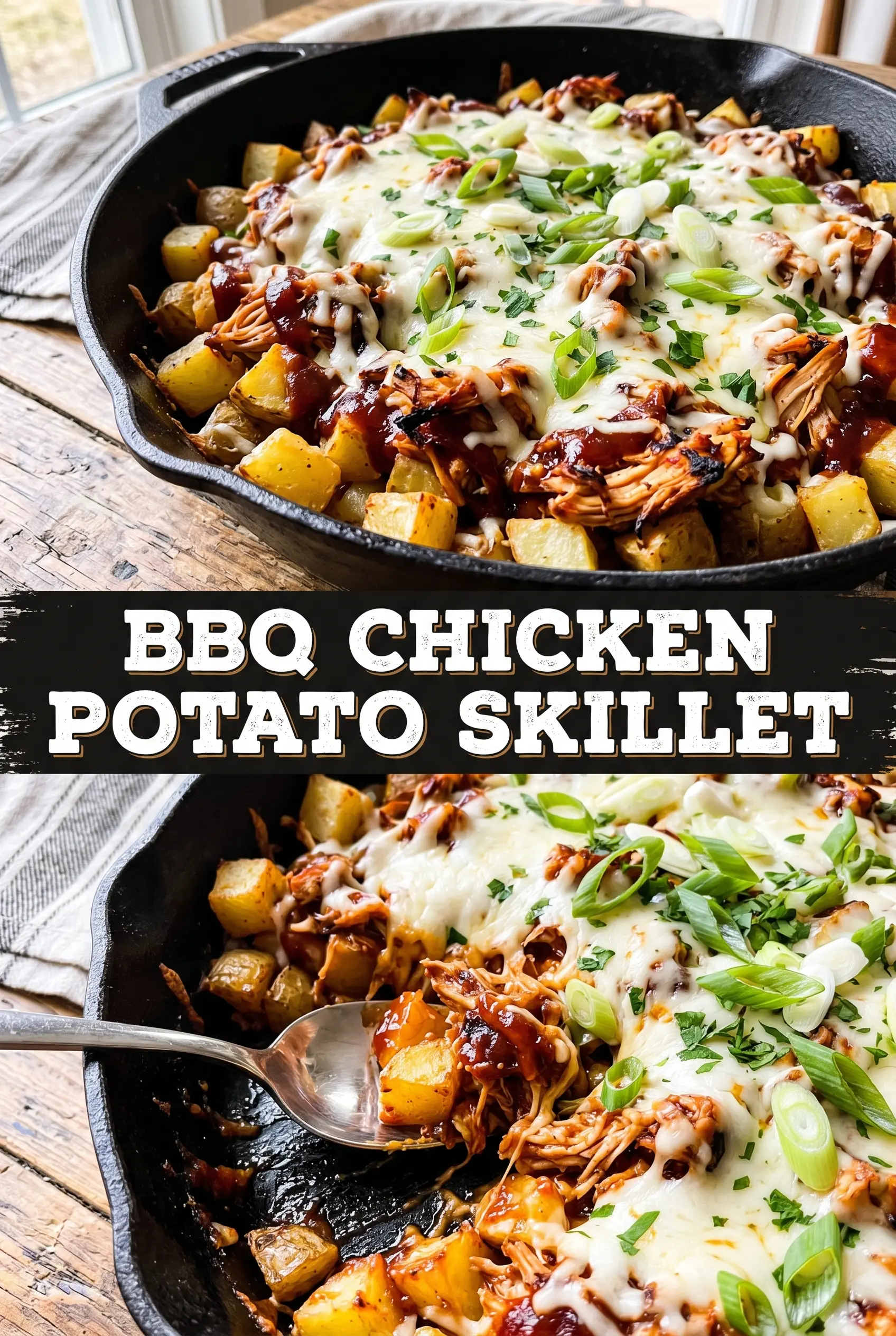
BBQ chicken and potatoes hit that sweet spot between hearty and low-fuss: crisp-edged potatoes, juicy chicken thighs, and a sticky sauce that clings to every bite. When it’s done right, the skillet comes to the table bubbling at the edges with a little char on the potatoes and just enough melted cheese to pull everything together.
This version works because the potatoes get a head start before the chicken goes in. That matters. If everything starts together, the potatoes stay pale and the chicken waits around, which is how you end up with soft vegetables and overcooked meat. Using chicken thighs keeps the skillet from drying out, and the BBQ sauce goes in near the end so it glazes instead of burning.
Below, I’ll walk through the small timing choices that keep the potatoes tender and the sauce glossy, plus a few easy swaps if you need to work with what’s already in the fridge.
The potatoes got those crispy edges I was hoping for, and adding the BBQ sauce at the end kept it glossy instead of sticky and burnt. My husband went back for seconds before I even sat down.
Save this BBQ Chicken Potato Skillet for a one-pan dinner with crispy potatoes, smoky chicken, and a melted cheese finish.
The Trick to Keeping the Potatoes Ahead of the Chicken
The potatoes need enough time to pick up color before the chicken and vegetables join the pan. If they go in raw and everything cooks together, the chicken is usually done before the potatoes have softened in the center. Giving the potatoes that first 10 minutes in the skillet is what turns this from a mixed-up dinner into an actual skillet meal with texture.
Stir them occasionally, not constantly. You want the cut sides to sit against the hot pan long enough to brown, and you want enough movement to keep them from sticking hard to the cast iron. If the skillet looks dry before the potatoes are ready, a small splash of oil is better than lowering the heat too much.
What Each Ingredient Is Actually Doing in This Skillet

- Chicken thighs — Thighs stay juicy while the skillet finishes cooking and hold up better than breasts under a sticky sauce. If you swap in chicken breast, cut it into smaller pieces and pull it off the heat the second it’s cooked through, because it dries out fast.
- Potatoes — Dice them small and evenly so they soften in the time it takes the chicken to cook. Yukon Golds give the best creamy center, but russets work if you want a fluffier interior and don’t mind a little more breakage.
- BBQ sauce — This is the glaze, so use one you actually like on its own. A thin, sugary sauce can scorch if it’s added too early; a thicker sauce clings better and gives you that lacquered finish at the end.
- Smoked paprika — It deepens the grilled, campfire feel even if you’re cooking indoors. If you don’t have it, regular paprika works, but you’ll lose some of that smoky backbone.
- Shredded cheese — Add it only after the sauce has coated everything and the heat is low. High heat turns the cheese oily and grainy instead of giving you a smooth melt.
Building the Skillet So the Sauce Glazes Instead of Burns
Start with the Potatoes on Their Own
Heat the oil in a cast iron skillet and add the diced potatoes first. Let them cook for about 10 minutes over medium heat, stirring every couple of minutes so they brown on multiple sides. The goal is a little color on the outside and a head start on tenderness, not full cooking. If you rush this part, the potatoes stay hard in the middle and never catch up before the chicken is done.
Add the Chicken and Vegetables Together
Once the potatoes have started to soften, add the chicken, bell pepper, onion, smoked paprika, salt, and pepper. The vegetables release a little moisture, which helps the spices spread and keeps the chicken from sticking while it sears. Cook for 12 to 15 minutes, stirring enough to brown the chicken but not so much that everything steams. The chicken should be opaque all the way through, and the onions should look softened at the edges.
Finish with Sauce and Cheese
When the chicken is cooked, add the BBQ sauce and stir until everything is coated in a glossy layer. Keep the heat moderate; if the skillet is screaming hot, the sugars in the sauce can tighten up and burn in spots before they glaze. Sprinkle the cheese over the top, close the grill lid or cover the pan for about 2 minutes, and stop as soon as the cheese melts. You want soft, pooled cheese, not browned, crusty edges.
Swap the Chicken for Smoked Sausage
Slice smoked sausage into coins and add it with the peppers and onions instead of the chicken. You’ll lose the lean, saucy bite of chicken thighs, but you gain a deeper smoky flavor and a faster cook time because the sausage only needs to heat through and brown at the edges.
Make It Dairy-Free
Leave off the cheese or use a dairy-free shreds that melts well. The skillet still works because the BBQ sauce carries the finish, and skipping the cheese makes the dish a little sharper and less rich without changing the main texture.
Use Sweet Potatoes for a Different Kind of Sweetness
Sweet potatoes work well here if you want a softer, sweeter base under the smoky BBQ sauce. Cut them a little smaller than regular potatoes so they cook in the same window, and expect a creamier texture with less crispness around the edges.
Storage and Reheating
- Refrigerator: Store leftovers in an airtight container for up to 4 days. The potatoes soften a bit as they sit, but the flavor holds up well.
- Freezer: It freezes, but the potatoes will be softer after thawing. Freeze in portions for up to 2 months, and expect a more tender, less crisp texture when reheated.
- Reheating: Reheat in a skillet over medium-low heat with a splash of water or a spoonful of BBQ sauce, then cover until hot. The common mistake is blasting it in the microwave, which dries the chicken and makes the sauce separate.
Questions I Get Asked About This Recipe
BBQ Chicken Potato Skillet
Ingredients
Equipment
Method
- Heat olive oil in a cast iron skillet on the grill over medium heat. Add the potatoes and cook for 10 minutes, stirring occasionally, until they begin to soften and look lightly browned at the edges.
- Add the chicken thighs, bell pepper, onion, smoked paprika, salt, and pepper to the skillet. Cook for 12-15 minutes, stirring occasionally, until the chicken is cooked through and the vegetables look tender.
- Add BBQ sauce and stir to coat all the ingredients. Top with shredded cheese and close the grill lid for 2 minutes to melt, watching for bubbling or fully softened cheese.
- Serve the skillet hot directly from the cast iron to keep the cheese melted and the BBQ sauce glossy.