Caribbean jerk smoked pork comes off the smoker with a dark, crackly bark, deep smoke, and enough heat to keep every bite interesting. The pork shoulder turns tender enough to pull apart with almost no effort, but it still holds onto those bold jerk spices instead of disappearing into the background. That contrast is what makes this one worth keeping in rotation.
The marinade does the heavy lifting here. Scotch bonnet peppers, thyme, allspice, cinnamon, nutmeg, lime, and soy sauce build the classic jerk balance of heat, spice, salt, and brightness, while the brown sugar helps the surface caramelize into that sticky, charred crust smokers are known for. Overnight marinating matters. Pork shoulder is thick and forgiving, but it still needs time for those flavors to work past the surface.
Below, I’ve included the small details that keep the bark from going bitter, the meat from drying out, and the spice level from getting away from you. If you’ve ever had jerk pork that tasted flat or smoked pork that came out bland, the fixes are in here.
The bark got beautifully dark and the pork pulled apart after the rest, but it still had a clean jerk heat instead of just tasting smoky. I served it with rice and beans and everyone kept going back for more.
Save this Caribbean jerk smoked pork for the next time you want a smoky bark, juicy pull, and real island heat on the table.
The Smoke Level Matters More Than the Spice Mix
Jerk seasoning can carry a lot of heat and still taste flat if the pork spends too much time in a smoker that runs hot and dry. Pork shoulder needs a steady 225-250°F so the fat has time to render slowly and the bark can build without burning the sugar in the marinade. If the temperature swings too high, the outside darkens before the inside gets tender, and the result is sharp bitterness instead of that deep, savory crust.
The other common miss is rushing the rest. Pork shoulder needs time after smoking for the juices to settle back through the meat. Pulling too soon sends all that moisture onto the board instead of into the shredded pork. Letting it rest gives you cleaner strands, better texture, and meat that stays juicy when you toss it with the bark.
What Each Ingredient Is Actually Doing in This Pork
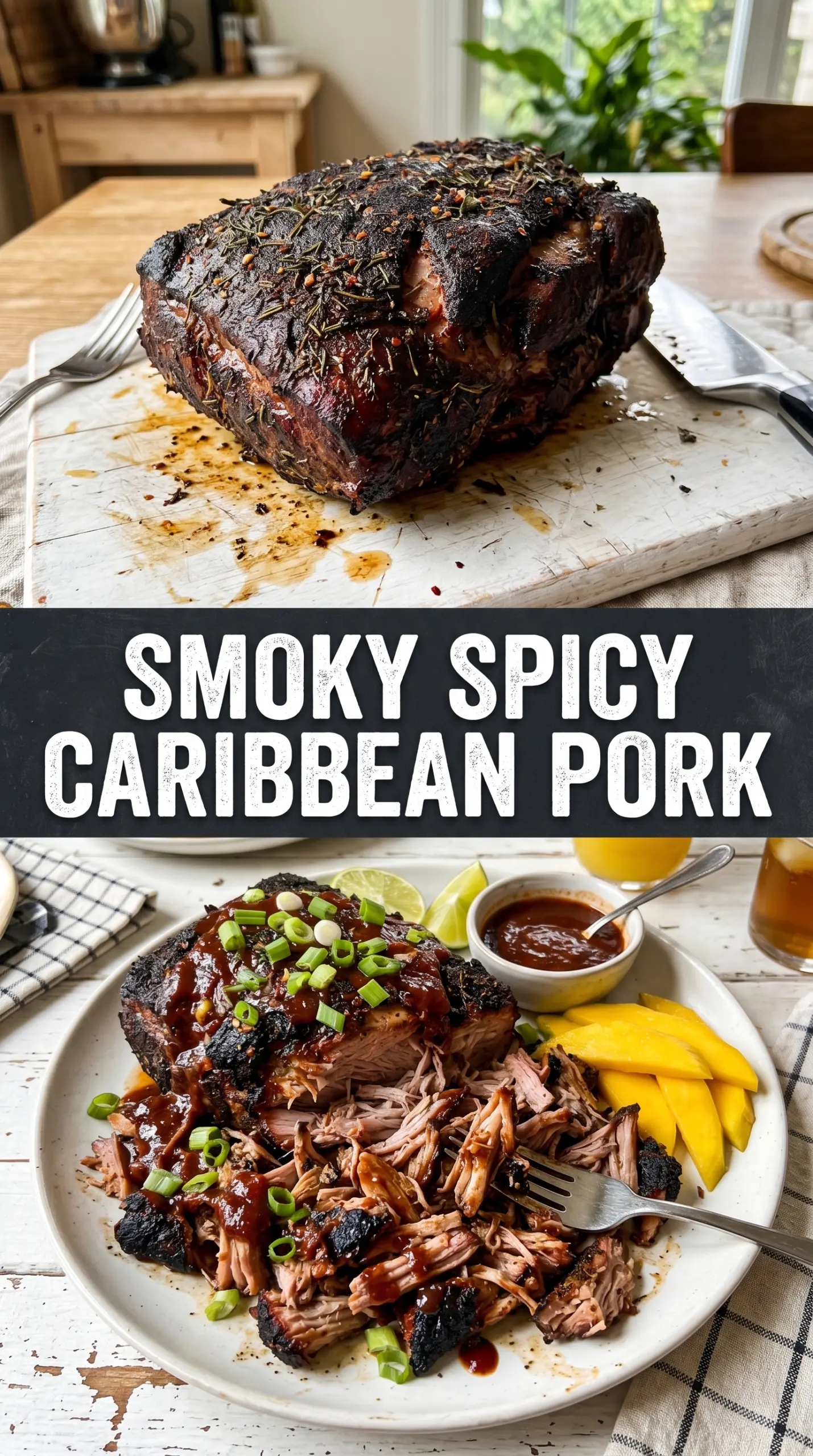
- Pork shoulder — This cut is the right choice because the fat and connective tissue break down into pull-apart meat during the long smoke. Pork loin won’t give you the same texture or forgiveness.
- Scotch bonnet peppers — They bring the signature jerk heat and fruitiness. If you need less fire, seed them as written or swap in habaneros, which land in a similar range with a slightly different fruit note.
- Fresh thyme, allspice, cinnamon, and nutmeg — These are the backbone of the jerk profile. Ground spices work here, but fresh thyme matters more than dried because it gives the marinade a brighter, woodsy edge that cuts through the smoke.
- Brown sugar, lime juice, and soy sauce — Brown sugar helps the bark darken and the lime keeps the marinade from tasting heavy. Soy sauce adds salt and a deeper savory note, and tamari works just as well if you need a gluten-free version.
- Vegetable oil — The oil helps the marinade coat the pork evenly and cling to the scored surface. Don’t leave it out, or the spices stay patchy instead of forming a proper paste.
Building the Jerk Bark Before the Smoke Takes Over
Blending the Marinade Smooth
Blend the green onions, peppers, garlic, thyme, spices, soy sauce, lime juice, oil, and brown sugar until the mixture looks like a thick, spoonable paste. You want it smooth enough to coat the pork evenly, but not so thin that it runs off before it has a chance to do its job. If the blender stalls, add a tablespoon of water only if you need it to get things moving; too much liquid makes the seasoning slip off the meat.
Scoring and Coating the Shoulder
Cut shallow slashes across the fat cap and the thickest parts of the shoulder, then work the marinade into every cut and all over the surface. Those slashes give the seasoning a path into the meat, and they also help the bark form in ridges instead of a smooth, bland shell. If the pork is cold from the refrigerator, let it sit long enough to take the chill off before it goes into the smoker so the surface starts cooking evenly.
Smoking Low and Slow
Set the smoker up for a steady 225-250°F with fruit wood for a sweet smoke that plays well with the jerk spices. Lay the pork in fat-side up if your smoker runs hot from below, and leave it alone until the internal temperature climbs into the 195-203°F range and the probe slides in with almost no resistance. If the bark starts darkening too fast, the heat is too high or the sugar load is scorching; back it down instead of trying to save it with foil.
Resting Before the Pull
Let the pork rest for at least 30 minutes after it comes off the smoker. That pause keeps the juices inside the meat instead of pouring out the second you shred it. When you pull it, look for long strands that separate easily and dark, sticky pieces of bark mixed all the way through. That’s the good part, so don’t discard it.
Tone It Down Without Losing the Jerk Character
Use one seeded Scotch bonnet instead of four, or replace part of the pepper with a milder habanero for less heat. The pork will still taste like jerk because the thyme, allspice, lime, and brown sugar are doing more than just supporting the chile.
Gluten-Free Jerk Pork
Swap the soy sauce for tamari or coconut aminos. Tamari gives the closest savory depth with the same salty balance, while coconut aminos taste a little sweeter and lighter, so you may want to keep the brown sugar as written.
Using a Pork Butt or Smaller Shoulder
A pork butt works the same way because it’s the same general cut, just shaped differently. For a smaller shoulder under 5 pounds, start checking earlier, since the time matters less than the temperature and the tenderness when the probe goes in.
Storage and Reheating
- Refrigerator: Store pulled pork in an airtight container for up to 4 days. The bark softens a little, but the flavor stays strong.
- Freezer: It freezes well for up to 3 months. Portion it with a little of the cooking juices so it doesn’t dry out when thawed.
- Reheating: Warm it covered in a low oven or in a skillet with a splash of the reserved juices. High heat dries out pulled pork fast and turns the edges hard before the center is hot.
Questions I Get Asked About This Recipe

Caribbean Jerk Smoked Pork
Ingredients
Equipment
Method
- Blend the green onions, scotch bonnet peppers, garlic, fresh thyme, brown sugar, allspice, black pepper, cinnamon, nutmeg, soy sauce, lime juice, and vegetable oil until smooth. Stop and scrape the blender as needed so the mixture is evenly puréed.
- Score the pork shoulder by cutting shallow lines across the surface, then rub the jerk marinade all over, making sure it gets into the cuts. Press firmly so the spice mixture adheres in every scored section.
- Marinate the pork overnight in the refrigerator. Keep it covered so the surface stays in contact with the marinade.
- Prepare your smoker to 225–250°F using fruit wood for smoke. Wait until the chamber holds steady temperature before adding the pork.
- Smoke the pork for 6–8 hours until the internal temperature reaches 195–203°F. Keep the lid closed as much as possible and look for a dark, tacky bark forming on the outside.
- Let the smoked pork rest for 30 minutes after it comes off the smoker. You should see juices settle and the bark firm up slightly as it cools.
- Pull the pork and serve. The pulled meat should be fork-tender with a visibly concentrated spice crust and smoky flavor.