Sticky honey lime grilled chicken lands right in that sweet spot between weeknight practical and cookout-worthy. The glaze turns glossy and caramelized on the grill, clinging to the chicken instead of sliding off, and the lime keeps the sweetness bright enough that every bite tastes fresh. Thighs come off juicy, drumsticks pick up extra char, and both get that sticky edge people go back for with a second helping.
The part that makes this version work is the balance in the marinade. Honey gives you browning and shine, but it needs lime juice and zest to keep the sauce from tasting flat. Olive oil helps the chicken brown without scorching too fast, and a short marinating window is enough to season the meat without softening it into mush. Reserved marinade for basting builds that lacquered finish, but it has to be handled the right way so the chicken stays safe and the glaze stays clean.
Below, I’ll walk through the one timing choice that keeps the chicken juicy, the ingredient swap that saves dinner when you’re out of limes, and a few ways to adapt this for the oven or a dairy-free table without losing the sticky finish.
The glaze got thick and sticky on the grill instead of burning, and the lime kept it from tasting too sweet. I basted the chicken near the end like you said and it came out glossy with great char.
Love that sticky honey lime glaze? Save this grilled chicken for your next cookout when you want bright citrus, caramelized edges, and almost no cleanup.
The Grill Glaze That Sticks Instead of Sliding Off
The biggest mistake with honey-based grilling sauces is adding too much of the glaze too early. Honey burns fast, especially over direct heat, and once it scorches you lose both the color and the clean sweetness that makes this chicken work. The trick here is to treat the marinade as two parts: one part for flavoring the chicken, and one clean portion reserved for basting near the end.
That split keeps the glaze glossy instead of bitter. You’ll also notice this recipe leans on chicken thighs or drumsticks, which give you a little forgiveness on the grill. They stay juicy long enough for the sugars to caramelize, while lean breast meat would dry out before the glaze gets its proper finish.
What Each Ingredient Is Actually Doing in This Dish
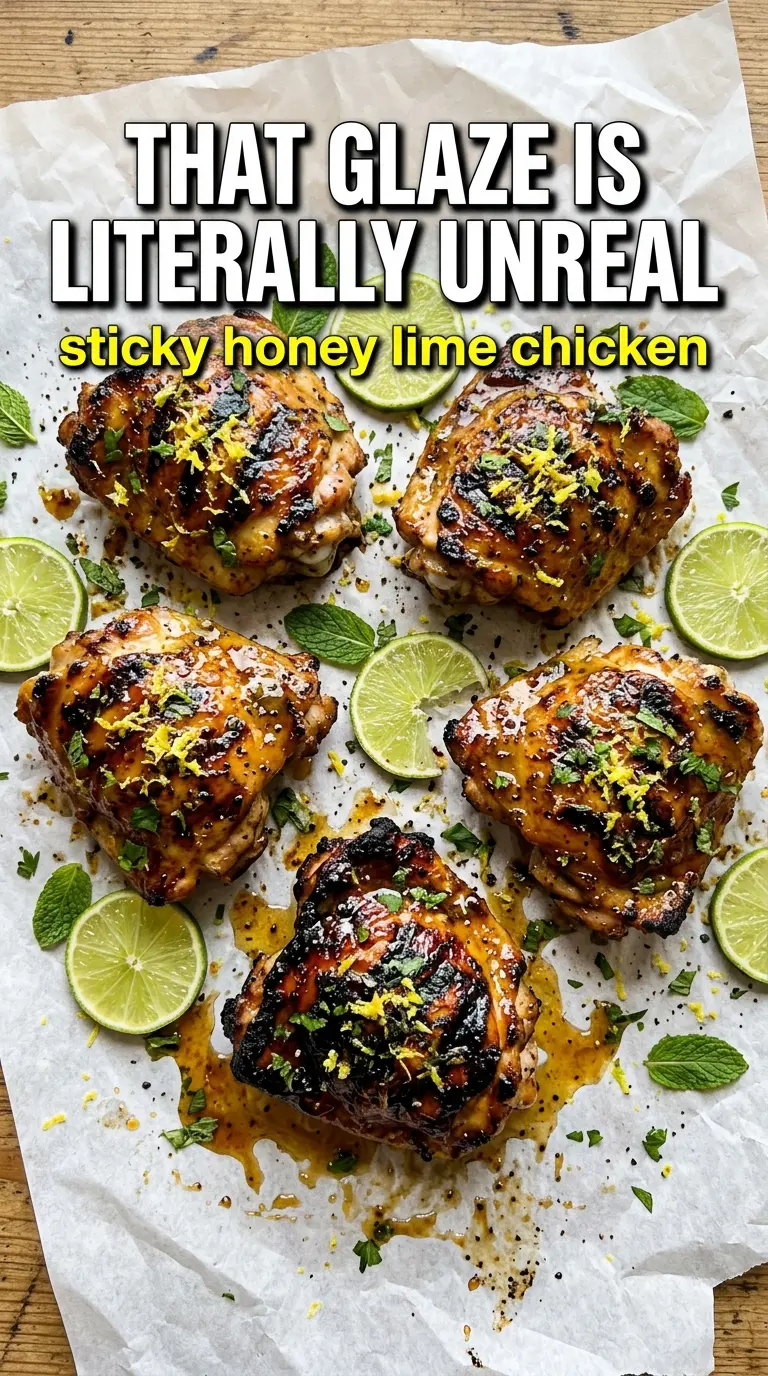
- Chicken thighs or drumsticks — These cuts stay juicy through the longer grill time and tolerate the basting better than boneless breasts. If you use breasts, keep them thicker and pull them as soon as they hit 165°F so they don’t dry out.
- Honey — This is what gives the chicken its sticky sheen and helps the surface caramelize. There isn’t a real substitute that behaves the same way on the grill; maple syrup will work in a pinch, but it tastes sharper and won’t thicken quite as tacky.
- Lime juice and zest — Juice brings the brightness, but zest carries the lime flavor through the heat. If you only use juice, the marinade tastes thinner and more one-note after grilling.
- Olive oil — It helps the marinade coat evenly and keeps the chicken from sticking as the sugars begin to brown. A neutral oil works too, but olive oil adds a little more roundness.
- Garlic, cumin, and chili powder — These are what keep the glaze from tasting like sweet citrus candy. Cumin gives warmth, chili powder adds a soft edge, and garlic anchors the whole thing.
How to Build the Sticky Glaze Without Burning the Chicken
Mixing the Marinade
Whisk the honey, lime juice, zest, olive oil, garlic, cumin, chili powder, salt, and pepper until the honey loosens and the mixture looks smooth and glossy. If the honey is stubborn, warm it for a few seconds first so it blends evenly. The marinade should smell bright and savory at the same time, not sharply acidic on its own.
Separating the Basting Portion
Reserve one-third of the marinade before it touches the raw chicken. That clean portion is what you’ll brush on while grilling, and keeping it separate matters because anything that contacts raw poultry can’t safely be used as a finishing sauce. If you forget and mix it all together first, you’ll need to boil it before using it for basting, which changes the texture and dulls the fresh lime flavor.
Grilling to Sticky, Not Charred
Preheat the grill to medium, not high, so the honey has time to caramelize instead of burning in seconds. Grill the chicken in the hottest part only long enough to get color, then keep turning and basting as the glaze builds. You’re looking for a deep golden lacquer and a few browned edges, not blackened spots; when the internal temperature reaches 165°F, pull it off and let it rest briefly so the juices settle back into the meat.
Use maple syrup when you’re out of honey
Maple syrup will still give you a glossy glaze, but it tastes a little deeper and less floral than honey. It also browns faster, so lower the heat slightly and watch the chicken more closely during the last few minutes.
Make it dairy-free without changing anything
This recipe is naturally dairy-free as written, which is one reason it works so well for a crowd. The glaze stays glossy without butter or cream, so there’s nothing to swap out.
Turn it into oven chicken when the grill isn’t an option
Bake the marinated chicken on a rack over a sheet pan at 425°F, then broil briefly at the end to help the glaze set. You won’t get quite the same smoke and char, but you’ll still get a sticky coating and juicy meat.
Swap in skin-on pieces for extra char
Skin-on thighs or drumsticks give you crisped edges and a little extra richness, but the skin can drip and flare more easily. Keep the grill at medium and move the chicken around if the flames start licking the glaze too aggressively.
Storage and Reheating
- Refrigerator: Store leftovers for up to 4 days. The glaze will firm up as it chills, but the chicken stays flavorful.
- Freezer: Freezes well for up to 2 months. Wrap tightly and thaw in the fridge so the glaze doesn’t turn watery from a fast thaw.
- Reheating: Reheat covered in a 325°F oven with a splash of water or extra lime juice to loosen the glaze. Microwaving works, but it can make the honey coating sticky in a heavy, gummed-up way.
Questions I Get Asked About This Recipe
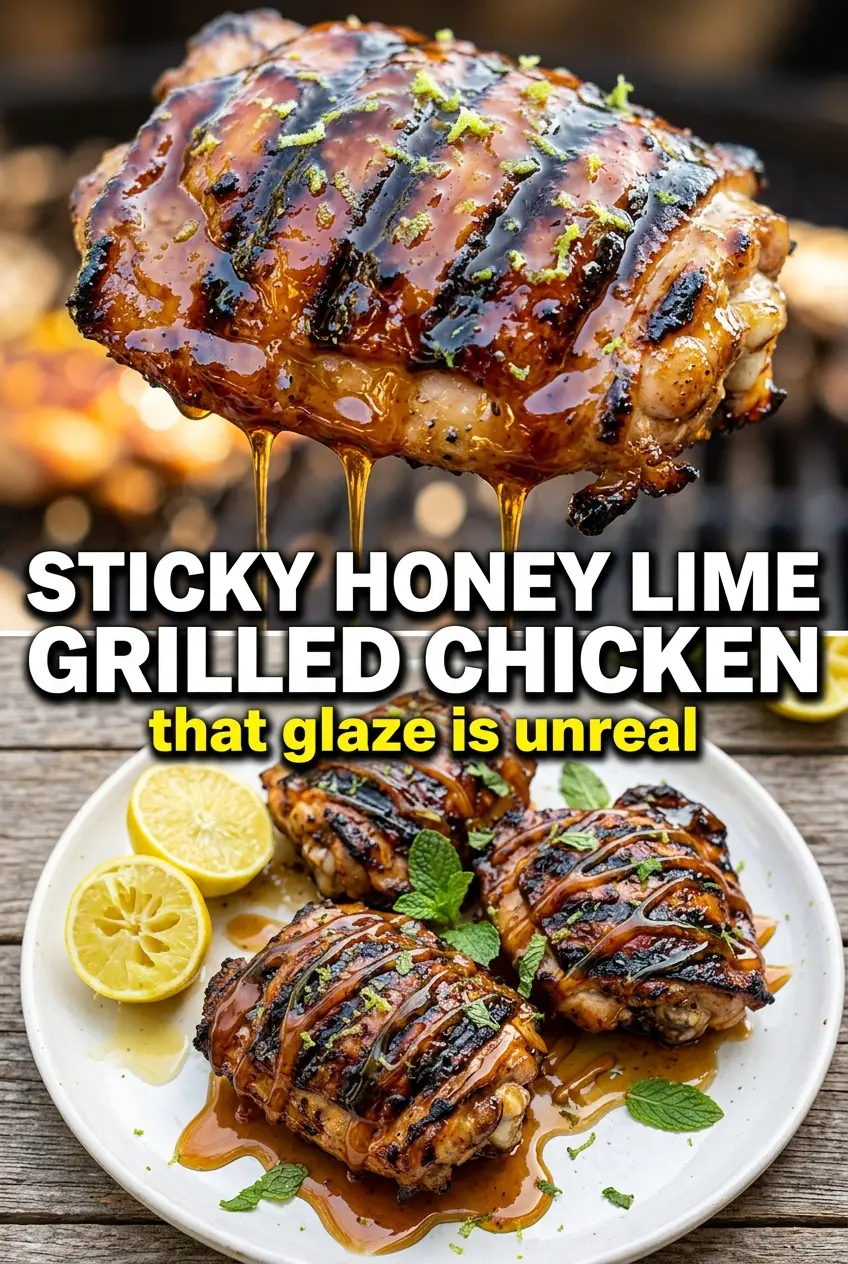
Sticky Honey Lime Grilled Chicken
Ingredients
Equipment
Method
- Whisk together honey, lime juice, lime zest, olive oil, garlic, cumin, chili powder, salt, and pepper until smooth and fragrant. The mixture should look glossy and evenly combined.
- Reserve 1/3 cup of the marinade for basting and set it aside. Keep it separate so it can be brushed during grilling.
- Marinate the chicken for 1-4 hours in the refrigerator. Cover to prevent drying out and for best flavor absorption.
- Preheat the grill to medium heat. Aim for steady heat so the glaze caramelizes without burning.
- Grill chicken for 7-8 minutes per side, basting frequently with the reserved marinade. Look for caramelized color and a lacquered shine as the glaze reduces.
- Continue grilling and basting until the internal temperature reaches 165°F and the glaze is sticky. The coating should cling to the surface rather than run like a liquid.
- Garnish with fresh cilantro and lime wedges right before serving. Serve with extra lime wedges for bright citrus.