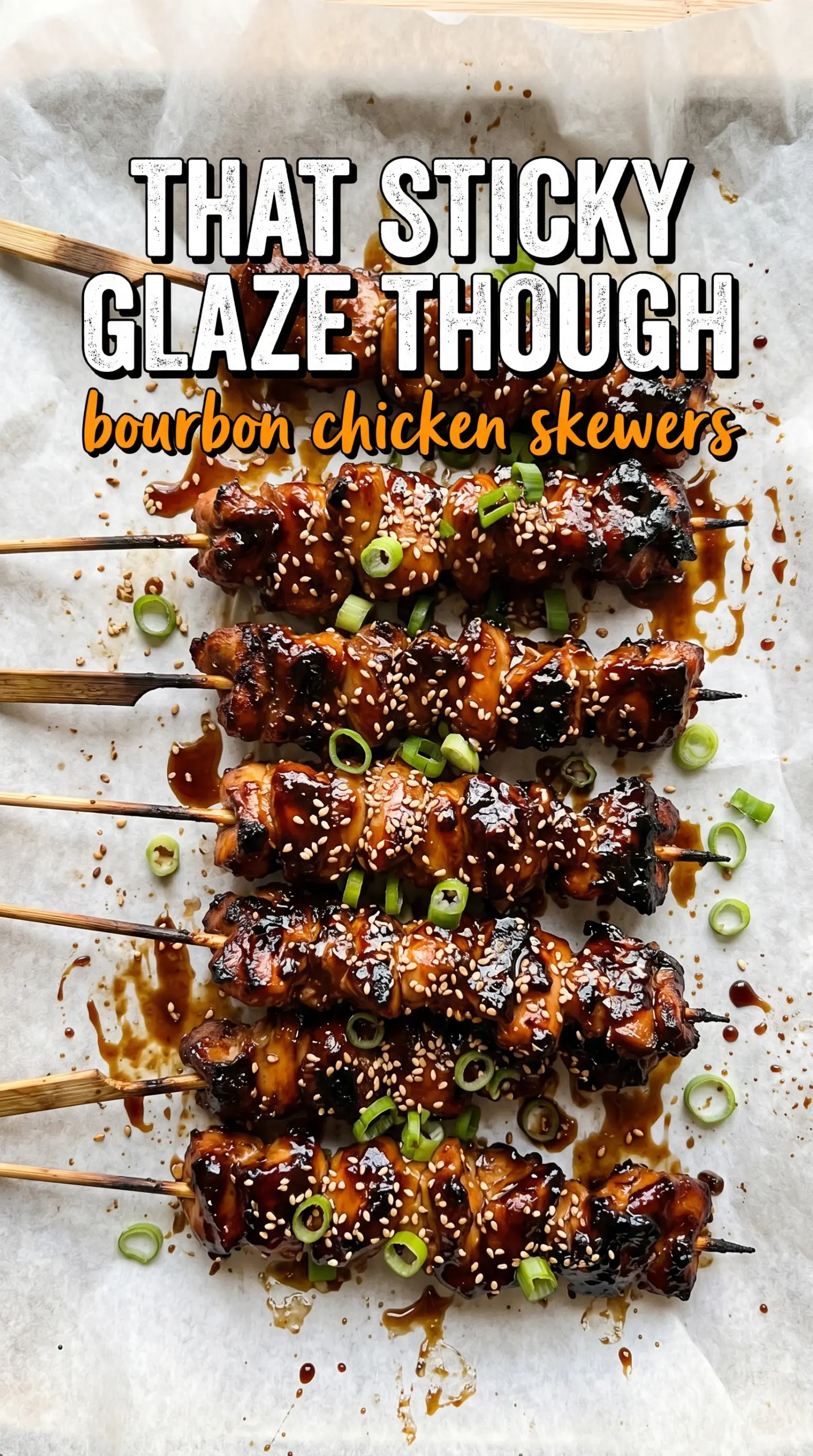
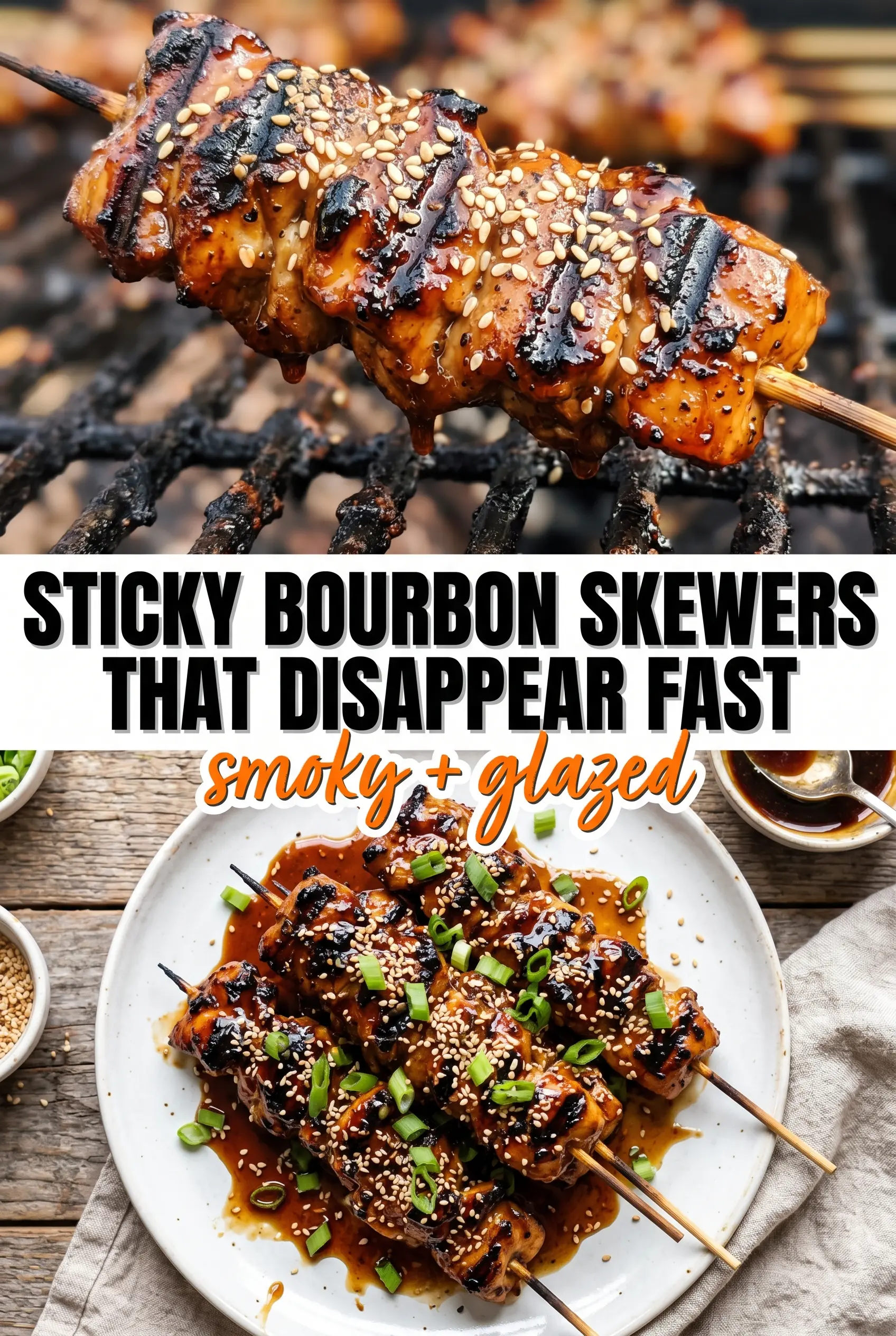
Sticky bourbon chicken skewers hit that sweet spot between glossy, caramelized, and just enough char to keep every bite interesting. The glaze clings to the chicken instead of sliding off, and the edges pick up a deep brown finish on the grill that makes these disappear fast. They work as a main dish, but they also land right in party appetizer territory because nobody passes up food on a stick when it smells like brown sugar, garlic, and smoke.
What makes this version work is balance. Bourbon brings a warm, oaky note, soy sauce handles the salt, and honey plus brown sugar build the sticky coating that turns lacquered on the grill. I also like reserving part of the marinade for basting, because that keeps the flavor concentrated without risking raw marinade getting brushed on at the end. A short marinate is enough for tenderness and flavor; too long and the chicken starts to take on a cured texture from the soy.
Below you’ll find the trick to keeping the glaze from burning before the chicken cooks through, plus a few smart swaps if you want to adjust the heat or make the recipe work without a grill.
The glaze turned sticky and glossy right on the grill, and the chicken stayed juicy even after the second round of basting. My husband kept grabbing “just one more” skewer until the platter was empty.
Sticky bourbon chicken skewers are all about that glossy glaze and char-kissed finish — save this one for grill nights when you want something bold, sticky, and fast.
The Marinade Needs Space to Thicken, Not Just Time to Sit
The biggest mistake with bourbon chicken skewers is treating the marinade like a sauce that can do everything at once. Here, the sugar, honey, and bourbon need time to mingle with the soy and aromatics so the mixture tastes rounded instead of sharp, and the chicken only needs enough time to pick up flavor and a little tenderness. If you marinate for too long, the soy starts to dominate and the texture can turn a little tight on the outside.
- Bourbon — This adds warmth and depth, not a boozy punch. The alcohol mostly cooks off, leaving behind the caramel note that makes the glaze taste richer than a standard soy-brown sugar marinade.
- Brown sugar and honey — These are what make the coating sticky and glossy. Brown sugar gives deeper molasses flavor, while honey helps the marinade cling and lacquer the chicken as it cooks.
- Soy sauce — This does the heavy lifting for salt and umami. Low-sodium soy sauce works fine if that’s what you keep on hand, but don’t swap in a watery seasoning blend or the glaze loses structure.
- Fresh ginger and garlic — Fresh is worth it here. Powdered versions won’t give you the same bright edge, and the finished skewers taste flatter without that bite under the sweetness.
What Each Ingredient Is Actually Doing in This Chicken Marinade
- Chicken breasts (the lean protein) — Cut evenly so pieces cook at the same rate. Lean chicken picks up marinade flavors quickly without needing long soaking.
- Soy sauce or tamari (the savory base) — This provides umami and salt that seasons the chicken all the way through. Low-sodium versions work if that’s your preference.
- Fresh citrus juice (lime, lemon, or orange) — Acid tenderizes the surface and brings brightness. Fresh juice tastes better than bottled in marinades.
- Olive oil or sesame oil (the carrier) — Oil helps the marinade coat evenly and prevents the chicken from sticking on the grill. It also carries aromatic flavors throughout.
- Garlic and ginger (fresh aromatics) — These add pungent depth that mellows slightly when grilled, becoming sweet and mellow rather than harsh.
- Honey or brown sugar (the caramelizer) — A small amount helps the chicken brown and glaze on high heat. Too much can burn before the chicken finishes cooking.
- Fresh herbs (cilantro, parsley, or basil) — These bring freshness that prevents the marinade from tasting heavy. Add some after grilling to keep the dish bright.
- Proper marinating time (30 minutes to 4 hours) — Longer isn’t always better. Acid can soften the chicken surface if it sits too long, so find the balance between flavor and texture.
Building the Glaze Without Burning the Chicken
Mix the Marinade Until the Sugar Dissolves
Whisk the bourbon, soy sauce, brown sugar, honey, garlic, ginger, and red pepper flakes until the sugar is mostly dissolved and the marinade looks smooth. If you can still feel a gritty layer at the bottom, keep whisking; undissolved sugar burns faster on the grill and can make the glaze patchy. Reserve part of the marinade before it touches the chicken so you have a clean basting sauce later.
Marinate Just Long Enough
Coat the chicken chunks in the marinade and let them sit for 1 to 4 hours. One hour gives you plenty of flavor for a weeknight, while the longer window builds a deeper bourbon-soy taste without overworking the meat. Keep it refrigerated the whole time, and don’t push it overnight unless you like a firmer, saltier bite.
Thread and Grill With Clean, Even Gaps
Soak the wooden skewers, then thread the chicken pieces on with a little space between each one so the heat can move around them. Crowding the pieces traps steam, and steamed chicken won’t pick up the same caramelized edges. Grill over medium-high heat and turn the skewers only when the first side releases with some color; if they stick hard, they need another minute.
Baste at the End, Not the Beginning
Brush on the reserved marinade during the last few minutes of grilling, not from the start. That timing is what gives you the sticky finish without blackening the sugar before the chicken cooks through. The skewers are done when the chicken feels firm, the juices run clear, and the glaze looks shiny and slightly set at the edges.
How to Adjust These Skewers for Your Grill, Pantry, or Diet
Make it gluten-free
Use gluten-free tamari in place of soy sauce. The glaze still turns sticky and savory, but tamari usually tastes a little rounder and less sharp, so the bourbon and brown sugar read a bit more clearly.
Swap chicken thighs for a juicier result
Boneless thighs work well if you want a more forgiving skewer that stays juicy even if the grill runs hot. They bring a richer bite and hold up especially well if you’re serving these as an appetizer where they may sit for a few minutes before eating.
Turn up the heat
Add more red pepper flakes or a spoonful of chili garlic sauce to the marinade. That gives the sticky glaze a little back-end heat without changing the texture, but keep the extra chile modest or it will overshadow the bourbon.
Broil them instead of grilling
If you don’t have a grill, broil the skewers on a lined sheet pan close to the heat source and turn once halfway through. Watch them closely, because the sugar in the glaze can go from glossy to scorched fast under the broiler.
Storage and Reheating
- Refrigerator: Store leftovers in an airtight container for up to 3 days. The glaze will tighten as it chills, which is normal.
- Freezer: The cooked chicken freezes well for up to 2 months, but the glaze won’t stay quite as glossy after thawing. Freeze the skewers off the sticks if you want easier storage.
- Reheating: Reheat gently in a covered skillet over low heat or in a 300°F oven until warmed through. High heat dries out the chicken and can make the sugar in the glaze harden instead of turning sticky again.
Answers to the Questions Worth Asking
Sticky Bourbon Chicken Skewers
Ingredients
Equipment
Method
- Whisk bourbon, soy sauce, brown sugar, honey, garlic, ginger, and red pepper flakes in a bowl until the sugar dissolves and the mixture looks glossy.
- Reserve 1/4 cup marinade for basting, then set the reserved portion aside.
- Marinate the chicken in the remaining marinade for 1-4 hours in the refrigerator, turning once if possible to coat evenly.
- Thread the marinated chicken onto soaked wooden skewers, leaving a little space between chunks for even caramelization.
- Grill over medium-high heat for 5-6 minutes per side, basting with the reserved marinade during grilling until the glaze is darkened and sticky at the edges.
- Garnish the skewers with sesame seeds and green onions right before serving so the topping stays fresh and visible.