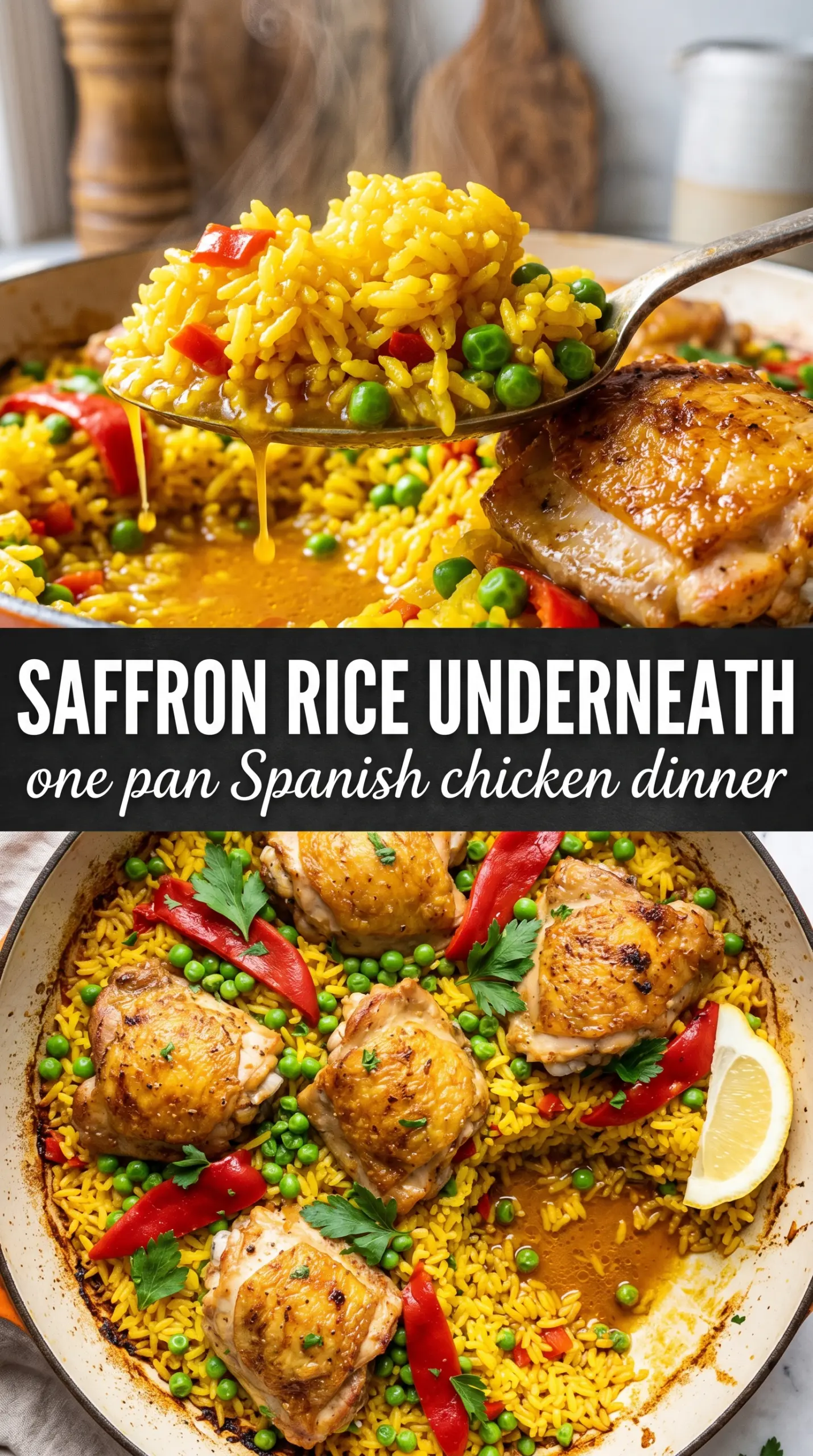
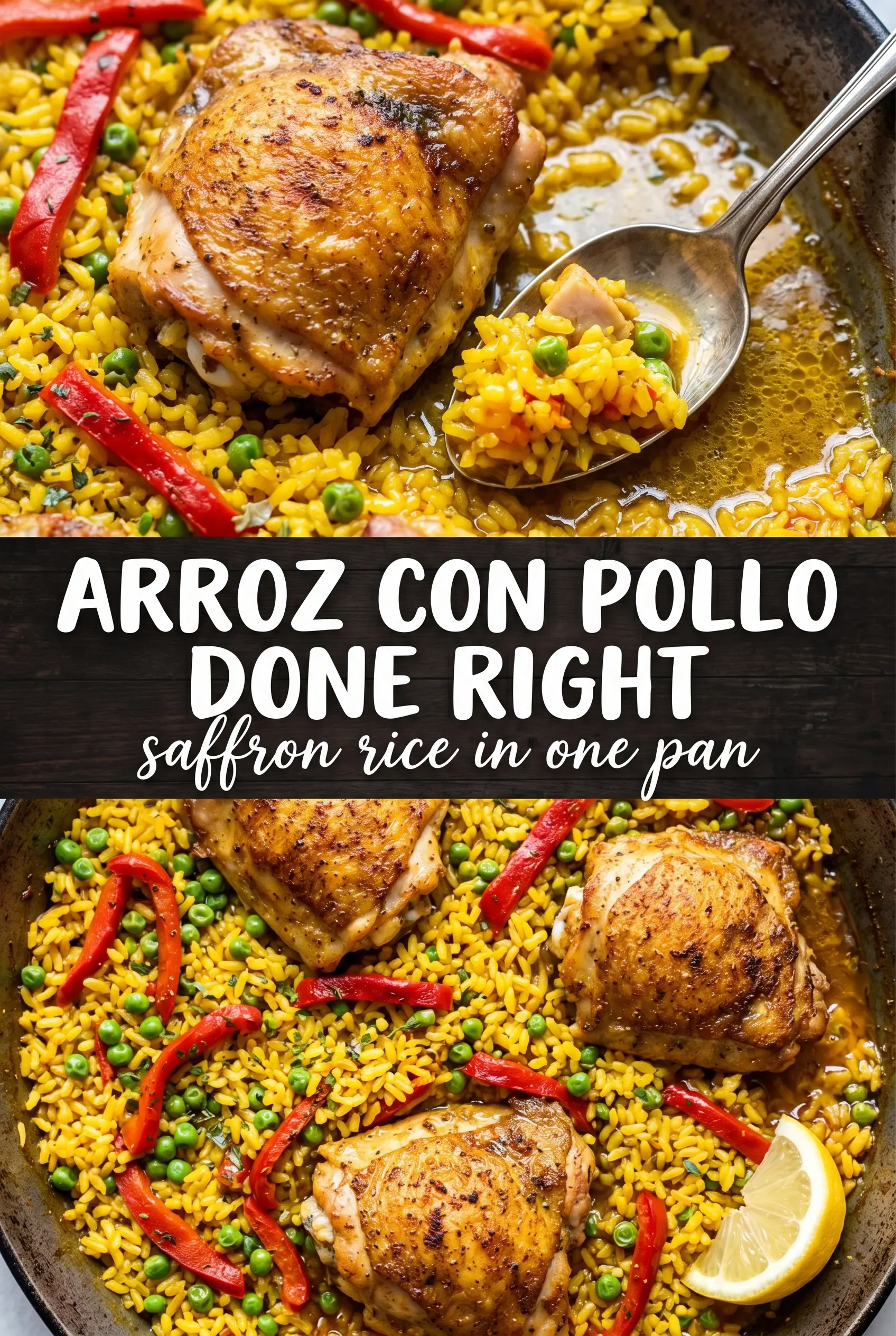
Golden chicken thighs over saffron-tinged rice is the kind of pan dinner that gets scraped clean without any extra effort at the table. The chicken drips into the rice as it cooks, so every grain picks up paprika, tomato, wine, and all those savory browned bits from the bottom of the pan. What you end up with is not separate chicken and rice, but one dish that tastes built from the same place.
This version works because the rice is toasted before the liquid goes in, which helps it hold its shape instead of turning soft and gummy. The saffron is bloomed in warm water first, so it actually perfumes the whole pan instead of disappearing into the broth. Bone-in thighs stay juicy through the longer simmer, and the skin has already done its work by the time the lid goes on.
Below, I’ve included the small details that matter most: how to keep the rice from sticking, when to add the peas so they stay bright, and what to swap if you want to adjust the pan without losing the character of the dish.
The rice came out fluffy and full of flavor, and the saffron really came through after blooming it first. My chicken skin stayed crisp enough even after simmering, which I never expected in a one-pan dish.
Save this one-pan Spanish chicken and rice for the night when you want saffron rice, crisp-edged chicken, and dinner all in the same skillet.
The Step That Keeps the Rice from Turning Mushy
The biggest mistake in dishes like this is rushing the liquid in before the rice has had a chance to toast. A brief toast in the oil and chicken drippings gives the grains a little protection, which helps them stay separate while they absorb the broth and tomato mixture. That small extra minute changes the whole texture of the pan.
The other place people lose control is heat. Once the rice comes to a simmer, the pan needs to stay at a steady medium-low so the bottom doesn’t scorch before the top is cooked. If the lid is venting too much steam or the liquid is boiling hard, the rice will cook unevenly and the chicken can dry out before the grains finish.
- Long grain rice — This is the right rice for a fluffy finish. Short-grain rice turns creamier and can tip this dish toward a softer, denser texture.
- Bone-in chicken thighs — They hold up to the simmer and keep the pan flavorful. Boneless thighs can work, but they need less time and are easier to overcook.
- Saffron — Even a small amount gives the rice its signature aroma and color. Bloom it in warm water first; that pulls the flavor out instead of leaving it trapped in the threads.
- Smoked paprika — This adds depth and a little warmth that suits the chicken and tomatoes. Regular paprika works in a pinch, but you lose some of that Spanish-style savoriness.
Building the Pan in the Right Order
- Chicken thighs — Season them before they hit the pan so the skin and the meat are flavored all the way through. Searing skin-side down first gives you the browned base that seasons the rice later.
- Rice — Stir it through the onions and peppers until the grains look glossy and lightly toasted. That keeps it from going soft when the broth goes in.
- Diced tomatoes — These bring acidity and body. Use the liquid from the can too; it helps create a richer cooking broth.
- White wine — This is what loosens the browned bits from the pan and adds a clean sharpness. If you skip it, add a splash more broth and a squeeze of lemon at the end.
- Peas — Add them at the end so they stay green and sweet. If they go in too early, they lose their pop and the color fades.
Getting from Sear to Simmer Without Losing the Bottom of the Pan
Brown the Chicken First
Season the thighs with smoked paprika, salt, and pepper, then set them skin-side down in hot olive oil and leave them alone until the skin is deeply golden. If the chicken sticks when you try to lift it, it needs another minute; good browning releases on its own. Pull the thighs out once the skin has color, but don’t drain the pan. Those drippings are the base of the rice.
Cook the Vegetables Until They Stop Smelling Raw
The onion and bell pepper need a few minutes in the same pan to soften and pick up the browned flavor left behind by the chicken. Add the garlic only at the end of that stage so it doesn’t scorch and turn bitter. You want the vegetables softened, not browned hard, because they need to melt into the rice rather than stand out as separate pieces.
Toast the Rice Before the Liquid Goes In
Stir the rice through the vegetable mixture until the grains look a little translucent at the edges. That tells you the starches have been coated and the grains are ready for liquid. Pour in the wine, tomatoes, broth, saffron water, and turmeric, then bring everything to a simmer before nestling the chicken back on top. If the pan boils hard at this point, the rice on the bottom can burst before the center is tender.
Finish with a Gentle Rest
Cover the pan and cook it until the rice is tender and the liquid is absorbed, then scatter the peas over the top and let the pan rest off the heat. That resting time matters more than it looks like it should; it evens out the moisture so the rice finishes fluffy instead of wet in the center. Finish with parsley and lemon so the whole pan wakes up at the end.
What to Change When You Need to Work Around the Pantry
Make It Dairy-Free Without Changing the Method
This dish is naturally dairy-free as written, which is one reason it works so well for a crowd. Keep the finish bright with parsley and lemon, since there’s no cream or cheese to soften the edges of the rice.
Swap the Wine for Extra Broth
If you don’t cook with wine, use the same amount of chicken broth and add a little extra lemon at the end. You’ll lose a bit of the sharp, aromatic note wine gives the pan, but the dish will still taste layered and full.
Use Boneless Chicken Thighs in a Shorter Cook
Boneless thighs work if that’s what you have, but they cook faster and don’t give quite the same richness to the rice. Reduce the covered cook time and start checking early so they stay juicy instead of going stringy.
Storage and Reheating
- Refrigerator: Store leftovers covered for up to 4 days. The rice firms up a bit as it chills, but the flavor gets even better.
- Freezer: It freezes well for up to 2 months in airtight containers. Freeze in portions so the rice reheats more evenly.
- Reheating: Warm it covered on low with a splash of broth or water so the rice loosens again. The common mistake is blasting it in the microwave until the chicken dries out before the center of the rice has softened.
Answers to the Questions Worth Asking
One Pan Spanish Chicken And Rice
Ingredients
Equipment
Method
- Season the chicken thighs with smoked paprika, salt, and pepper. Heat olive oil in a Dutch oven over medium-high heat and sear skin-side down for 6 minutes until golden; remove to a plate.
- In the same Dutch oven, sauté onion and diced red bell pepper for 4 minutes, stirring until softened. Add minced garlic and cook for 1 minute, until fragrant.
- Add the long grain rice and toast briefly for 1 minute. Pour in the white wine, then stir in the diced tomatoes, chicken broth, saffron liquid, and turmeric until evenly combined.
- Bring the mixture to a simmer. Nestle the chicken thighs skin-side up into the rice so they contact the liquid.
- Cover and cook on medium-low for 25-30 minutes, until the rice is tender. Keep it at a gentle simmer and avoid lifting the lid during cooking.
- Scatter the frozen peas over the top, cover, and cook for 5 minutes to warm through. Rest the pan for 5 minutes off the heat so the rice finishes absorbing juices.
- Garnish with fresh parsley and lemon, then serve while the rice is hot and the chicken is juicy.