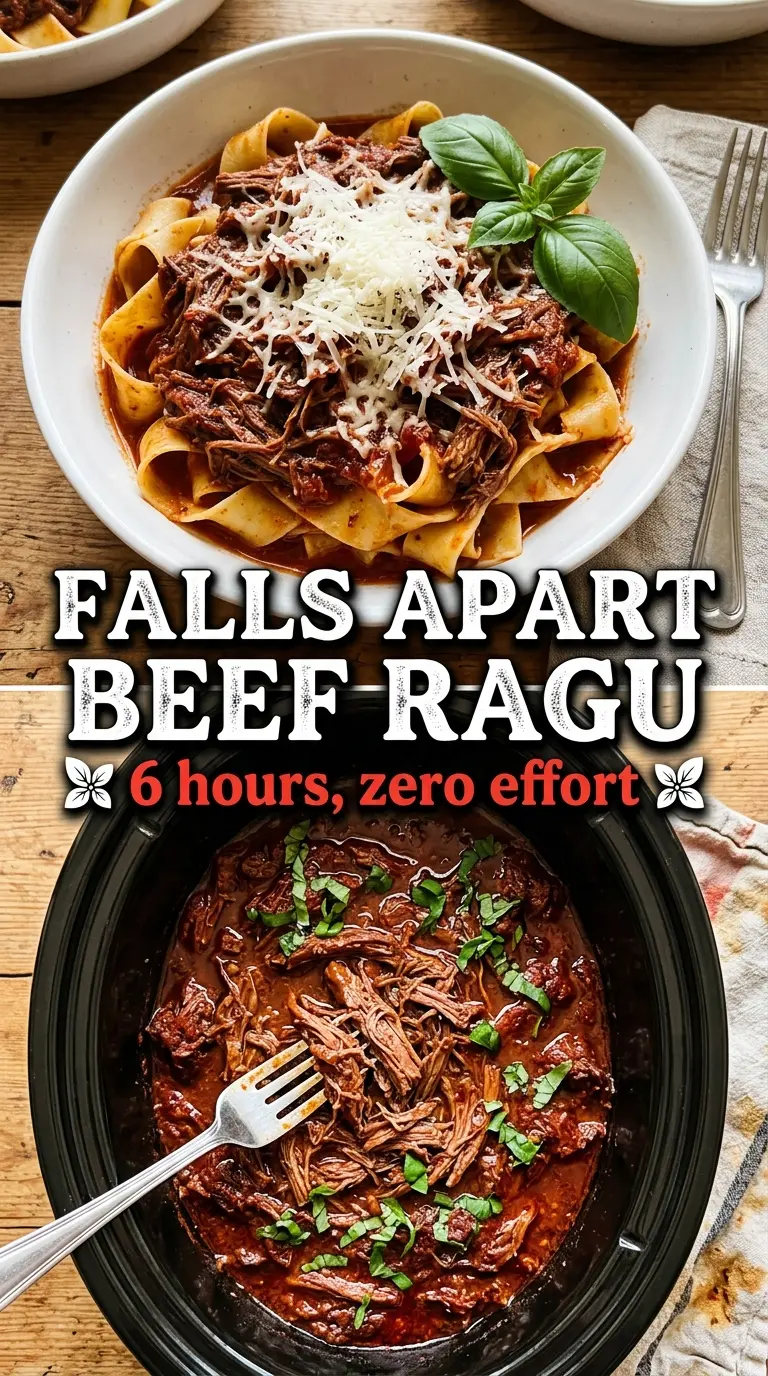
Slow cooker beef ragu turns a tough chuck roast into the kind of sauce that clings to pasta in thick, glossy ribbons. The beef cooks until it shreds with almost no effort, and the tomatoes, wine, and long-simmered aromatics settle into a deep, savory sauce that tastes like it spent all day on the stove — because it did, just in a more forgiving way.
What makes this version worth making is the balance. The red wine gives the sauce depth without making it sharp, the tomato paste adds body, and the carrots and onion melt down enough to soften the acidity of the tomatoes. I also like that the beef cooks right in the sauce, so every strand of meat picks up flavor instead of tasting separate from it.
Below, I’ve included the one detail that matters most for getting a rich ragu instead of a watery one, plus the swaps I’d actually use if you need to work with what’s in the pantry.
The beef was falling apart at the 8-hour mark and the sauce had the perfect thickness for pappardelle. I used Chianti and it gave the ragu such a deep, cozy flavor without tasting too winey.
Save this slow cooker beef ragu for a pasta night with fall-apart chuck roast and a rich red wine tomato sauce.
The Reason This Ragu Gets Rich Instead of Watery
The mistake that ruins a lot of slow cooker ragu is treating the crock as if it can reduce sauce the way a pot on the stove can. It can’t. If you load in too much liquid, you’ll end up with shredded beef swimming in tomato broth instead of a sauce that coats pasta.
This version leans on crushed tomatoes, tomato paste, and a modest amount of red wine, which gives you enough body without crossing into soup territory. The beef chuck also matters here because the connective tissue melts during the long cook and naturally thickens the sauce as it breaks down. If you use a lean cut, the meat dries out before the sauce gets that silky, slow-cooked feel.
- Beef chuck roast — This is the cut you want for long, gentle cooking. It turns tender and pulls apart in thick strands instead of falling into dry shreds. Brisket can work, but it brings a different texture and usually cooks a little fattier.
- Crushed San Marzano tomatoes — These give the sauce a softer, sweeter tomato base with less sharp acidity. Regular crushed tomatoes work too, but if they taste aggressive out of the can, the ragu will need more time to mellow.
- Dry red wine — Chianti or Cabernet adds depth and helps lift the tomato flavor. Use a wine you’d drink, because the flavor concentrates as it cooks. If you need a substitute, use beef stock plus 1 tablespoon red wine vinegar for brightness, but the sauce will lose some complexity.
- Tomato paste — This is the quiet workhorse. It deepens the color, thickens the sauce, and gives the ragu a cooked-down taste even though everything starts in the slow cooker.
What Each Ingredient Is Actually Doing in This Recipe
- Primary ingredient (the star) — Quality matters most. Choose the best you can find.
- Cooking medium (oil, butter, or broth) — This carries flavors and prevents dryness.
- Seasonings (salt, pepper, spices, herbs) — Layer flavors so nothing overpowers. Build depth gradually.
- Aromatics (garlic, onion, herbs) — Cook with fat to bloom flavors. Become the foundation.
- Supporting ingredients — Complement the main ingredient without overpowering it.
- Sauce or liquid (if applicable) — Brings flavors together. Balance richness with acid.
- Acid (lemon, vinegar, wine, or other) — Brightens and prevents flat-tasting results.
- Final finish (garnish, glaze, or sauce) — Prevents one-dimensional taste and adds visual appeal.
Building the Sauce Before the Beef Falls Apart
Layering the Base
Season the chuck roast well before it goes into the slow cooker. That salt has time to work through the meat while it cooks, which matters more than salting at the end. Whisk the tomatoes, wine, tomato paste, garlic, onion, celery, carrots, herbs, sugar, and seasonings together before pouring them over the beef so the tomato paste disperses instead of clumping in one spot.
Letting the Slow Cooker Do the Work
Cook on low for 8 to 10 hours until the beef gives up completely. You want fork-tender meat that collapses when lifted, not slices that still hold shape. If the roast seems dry on top, don’t panic; the lower part should be submerged and the steam inside the cooker will keep everything moving toward tenderness.
Shredding and Returning the Beef
Lift the beef out onto a cutting board and shred it into large pieces with two forks. Don’t mince it into fine strands; ragu should feel substantial on the plate. Pull out the bay leaves before you stir the meat back in, then mix everything so the beef soaks up the sauce it just spent hours cooking in.
How to Adapt This Ragu Without Losing the Soul of It
Gluten-Free Serving
The ragu itself is naturally gluten-free, so the only thing to watch is the pasta. Serve it over gluten-free pappardelle, rigatoni, or even polenta. Gluten-free pasta can go soft fast, so undercook it by a minute and toss it with the sauce right before serving.
No Wine Version
If you don’t want to use wine, replace it with beef stock plus 1 tablespoon red wine vinegar or balsamic vinegar. You’ll lose a little of the round, slow-cooked depth that wine brings, but the vinegar keeps the sauce from tasting flat.
Dairy-Free Finish
Skip the Parmesan or use a dairy-free topping you like. The ragu doesn’t depend on cheese for richness, so you won’t lose the structure of the dish. Fresh basil still gives the finished bowl the lift it needs.
Storage and Reheating
- Refrigerator: Store the ragu for up to 4 days. The flavor gets even deeper overnight, and the sauce usually thickens a bit as it chills.
- Freezer: It freezes well for up to 3 months. Cool it completely, portion it into freezer containers, and leave a little headspace so the sauce can expand.
- Reheating: Reheat gently on the stove over low heat, stirring now and then. If it seems too thick, add a splash of water or stock. Don’t blast it in a hot pan; that can tighten the beef and scorch the tomato base.
Answers to the Questions Worth Asking
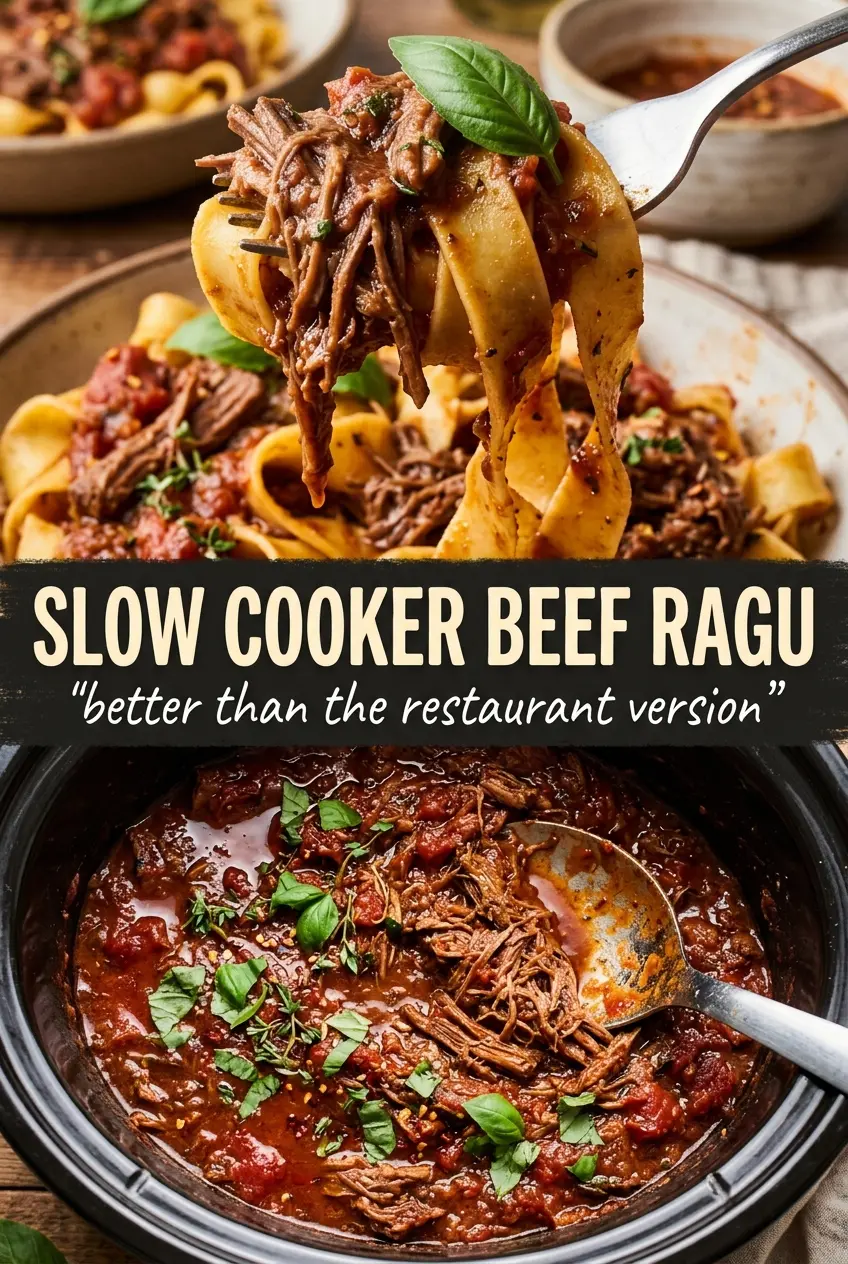
Slow Cooker Beef Ragu
Ingredients
Equipment
Method
- Season the beef chuck roast generously with salt and black pepper, then place it in the slow cooker. Ensure the surface is evenly coated so the seasoning penetrates as it braises.
- Whisk together the crushed San Marzano tomatoes, red wine, tomato paste, minced garlic, diced onion, diced celery, diced carrots, dried basil, oregano, thyme, sugar, and bay leaves. Mix until the tomato paste loosens and the mixture looks evenly combined.
- Pour the sauce mixture over the beef in the slow cooker. Arrange the bay leaves so they’re distributed throughout the sauce.
- Cook on low for 8–10 hours, until the beef is completely fall-apart tender. The ragù should look thick and bubbling around the edges with the beef shredding easily.
- Remove the beef and shred it into large pieces using two forks, then discard the bay leaves. The meat should pull apart into chunky strands without needing force.
- Return the shredded beef to the sauce and stir to combine. Let the mixture look glossy and cohesive as the beef is fully coated.
- Serve the ragù over pappardelle or rigatoni. Spoon sauce generously so it clings to the pasta.
- Garnish with fresh basil and freshly grated Parmesan. Finish with a few leaves and a light snowfall of cheese for a bright top note.