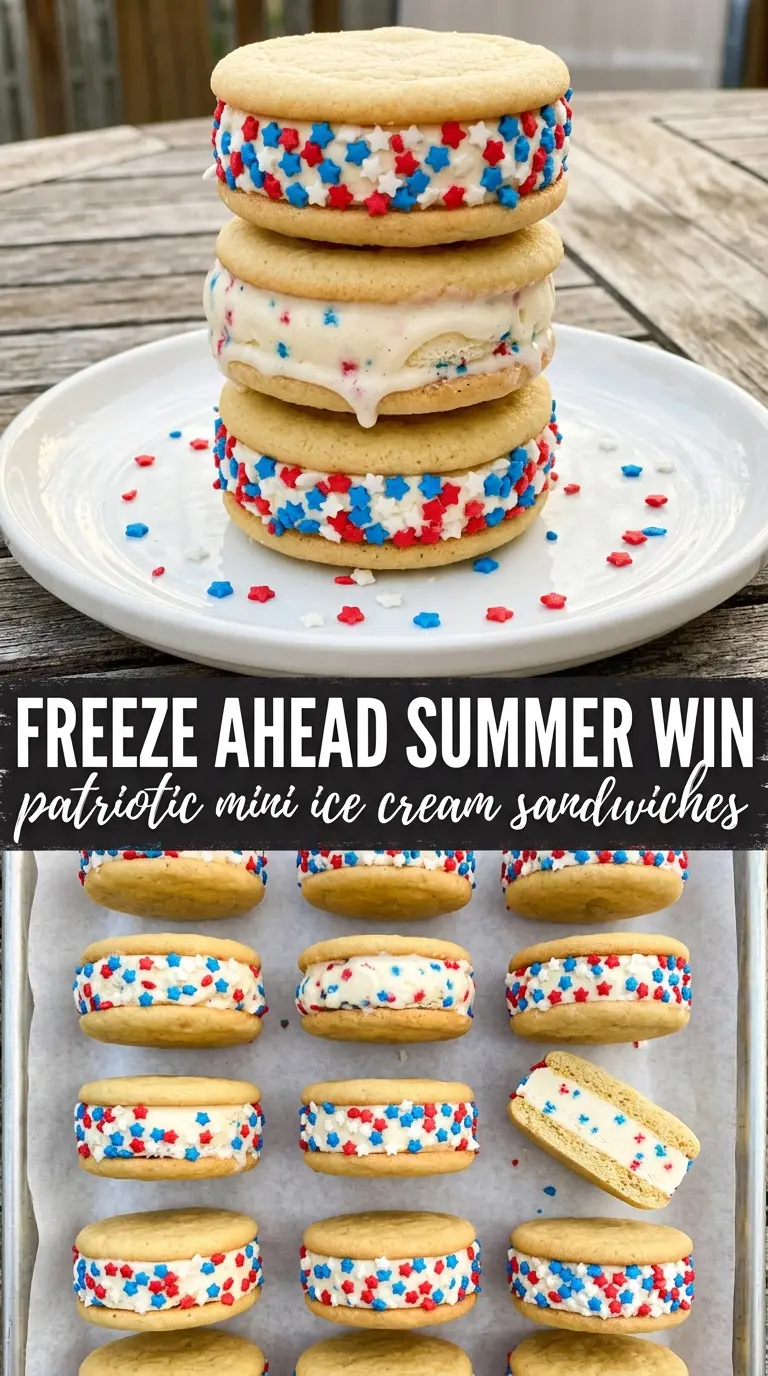
Patriotic mini ice cream sandwiches hit that sweet spot between playful and practical: a soft, brownie-like cookie, cold vanilla ice cream, and a sprinkle edge that makes every little sandwich look party-ready. They’re the kind of frozen dessert people reach for twice because one never feels like enough, and they hold together better than oversized store-bought versions.
The trick is starting with a cake mix dough that bakes up sturdy enough to sandwich but still stays tender after freezing. Slightly underbaking the cookies matters here; if they dry out in the oven, they turn brittle once frozen and the whole sandwich gets awkward to eat. A short freeze on the cookies before assembling helps the ice cream stay put while you work, and rolling the exposed edges in sprinkles adds the red-and-blue finish without needing any frosting.
Below, I’ll walk through the little details that keep the cookies soft, the ice cream centered, and the sandwiches neat enough to serve straight from the freezer. I’ve also included a few smart swaps and the storage notes that matter when you’re making them ahead for a crowd.
The cookies stayed soft even after freezing, and the sprinkle edges made them look like I bought them from a bakery. I used chocolate cake mix and they held together perfectly once the ice cream firmed up.
Save these patriotic mini ice cream sandwiches for a red, white, and blue dessert that freezes neatly and serves beautifully at summer gatherings.
The Part That Keeps These Mini Sandwiches from Becoming a Mess
The biggest mistake with homemade ice cream sandwiches is assembly speed. If the cookies are warm, the ice cream slips; if the ice cream is too soft, it squeezes out the sides; if both are warm, you end up with a sticky little disaster. This recipe works because each part gets a short chill at the right moment, which gives the sandwich structure before the final freeze.
Rolling the ice cream edge in sprinkles right after you press the cookies together does two jobs at once: it decorates the sandwich and seals the rim where melted ice cream likes to escape. The cookies need to be fully cool before freezing, or steam trapped in them turns into icy moisture later. That’s what makes frozen cookies turn tough instead of soft.
What Each Ingredient Is Actually Doing in These Ice Cream Sandwiches
- Red velvet or chocolate cake mix — This is the shortcut that gives you a soft, chewy cookie with almost no extra ingredients. Red velvet gives you that classic patriotic color, while chocolate makes the sandwiches taste deeper and less sweet. If you use chocolate cake mix, the method stays the same.
- Eggs and oil — These turn the dry mix into a dough that bakes up tender instead of cakey. Oil keeps the cookies softer after freezing than butter would here, which matters because these are meant to be eaten straight from the freezer after a short thaw.
- Vanilla ice cream — Use a good vanilla with enough body to scoop cleanly. Cheap ice cream that gets icy or airy melts faster and spreads out before you can finish assembling the sandwiches. Let it soften just until scoopable, not runny.
- Red and blue sprinkles — Jimmies work better than coarse sugar because they cling to the ice cream edge instead of bouncing off. You want a mix that gives coverage without crushing the sandwich when you roll it.
- Parchment paper — This keeps the cookies from sticking and helps them slide off the pan without breaking. Skip wax paper; it can warp in the oven and doesn’t give you the same clean release.
Building the Cookies, Filling Them Fast, and Freezing Before They Shift
Mixing the Dough Until It Holds Together
Stir the cake mix, eggs, and oil until the dough looks thick and uniform, almost like a soft play dough. It may seem dry at first, but keep mixing until there are no loose streaks of mix left. If the dough feels greasy or slack, the eggs were large and the mix is looser than expected; chill it for 10 minutes before scooping so the cookies don’t spread too much.
Baking for Soft Centers, Not Crisp Edges
Scoop tablespoon-sized portions and flatten them to even rounds so they bake at the same rate. Pull them from the oven when the tops look set and the edges have just barely firmed up; they should not look deeply browned. Overbaked cookies get dry in the freezer and crack when you press the ice cream between them.
Cooling and Chilling Before Assembly
Let the cookies cool all the way on a wire rack, then freeze them for 30 minutes. That extra chill gives them a little firmness, which makes assembly cleaner and keeps the ice cream from melting on contact. If you skip this, the first few sandwiches will be sloppy and the sprinkle coating won’t stick as well.
Filling, Rolling, and Locking Them in the Freezer
Work with one or two sandwiches at a time and keep the rest frozen until needed. Place a scoop of slightly softened vanilla ice cream on the flat side of one cookie, press the second cookie on top, and roll the edge in sprinkles right away. Wrap each sandwich in plastic wrap and freeze until solid, at least 2 hours, so the ice cream firms up and the cookies settle into one neat bite.
How to Adapt These for Different Crowds and Freezer Needs
Chocolate Cake Mix Version
Use chocolate cake mix instead of red velvet for a darker, richer cookie that tastes a little more like a brownie. The sandwiches still freeze the same way, but the chocolate base makes the vanilla ice cream pop more strongly. This is the better choice if you want the red and blue sprinkles to stand out visually.
Gluten-Free Swap
Use a gluten-free cake mix that’s meant to substitute cup-for-cup in baked goods. The texture may be a touch more fragile, so bake the cookies just until set and let them cool completely before moving them. A sturdier spatula helps here because gluten-free cookies can break if they’re handled while warm.
Different Ice Cream Fillings
Vanilla is classic, but strawberry or cookies-and-cream also work if you want a stronger color contrast or a little extra texture. Just keep the ice cream slightly softened and not melty, since softer fillings squeeze out faster when you press the cookies together. Avoid mix-ins with large chunks if you want the sandwiches to sit flat and stack neatly.
Storage and Reheating
- Refrigerator: Don’t store these in the fridge. The ice cream will soften too quickly and the cookies will turn sticky.
- Freezer: Freeze wrapped sandwiches for up to 2 weeks. After that, the cookies start picking up freezer flavor and the ice cream edge can get icy.
- Reheating: No reheating needed. Let the sandwiches sit at room temperature for 3 to 5 minutes before serving so the cookies soften just enough to bite cleanly without collapsing.
Questions I Get Asked About This Recipe

Patriotic Mini Ice Cream Sandwiches
Ingredients
Equipment
Method
- Preheat the oven to 350°F and line baking sheets with parchment paper. This helps the cookies release cleanly after baking.
- Mix the cake mix, eggs, and vegetable oil together until a thick dough forms. Stop when the dough is cohesive with no dry pockets.
- Scoop tablespoon-sized balls onto the prepared baking sheets and flatten to about 1/4-inch thick circles. Keep the size similar so the sandwiches freeze evenly.
- Bake for 8–10 minutes at 350°F until the cookies are set and just starting to look dry at the edges. Do not overbake so they stay tender enough to sandwich.
- Let cookies cool completely on a wire rack, then freeze for 30 minutes. This firms them up so the ice cream won’t melt out when assembling.
- Working quickly, place a scoop of slightly softened vanilla ice cream on the flat side of one cookie. Use a scoop large enough to reach near the edges.
- Press a second cookie on top to form a sandwich. Gently align the edges for a neat sprinkle border.
- Roll the exposed ice cream edge in red and blue sprinkles. Press lightly so the sprinkles stick and stay visible after freezing.
- Wrap each sandwich in plastic wrap and freeze for at least 2 hours until solid before serving. Freeze time is key for clean bites with minimal smearing.