Chicken thighs take on marinade better than lean cuts because they’ve got enough fat to stay juicy while the outside picks up real color. That means you get more than seasoned chicken here — you get tender meat with a deep, herby crust and bright lemon-garlic flavor all the way through. It’s the kind of marinade that works just as well on a grill as it does in a hot skillet, which is why it earns a permanent spot in my weeknight rotation.
The trick is balancing acid, oil, and a little sweetness so the chicken tastes bold without turning muddy or harsh. Lemon juice and Dijon help the marinade cling, honey encourages browning, and the dried herbs stay steady under heat instead of burning the way fresh herbs can. A short marinating time works, but a couple of hours gives the seasoning enough time to settle into the meat.
Below, I’m breaking down the one detail that keeps this marinade from tasting flat, plus the exact swaps I use when I want to adjust heat, sweetness, or cooking method.
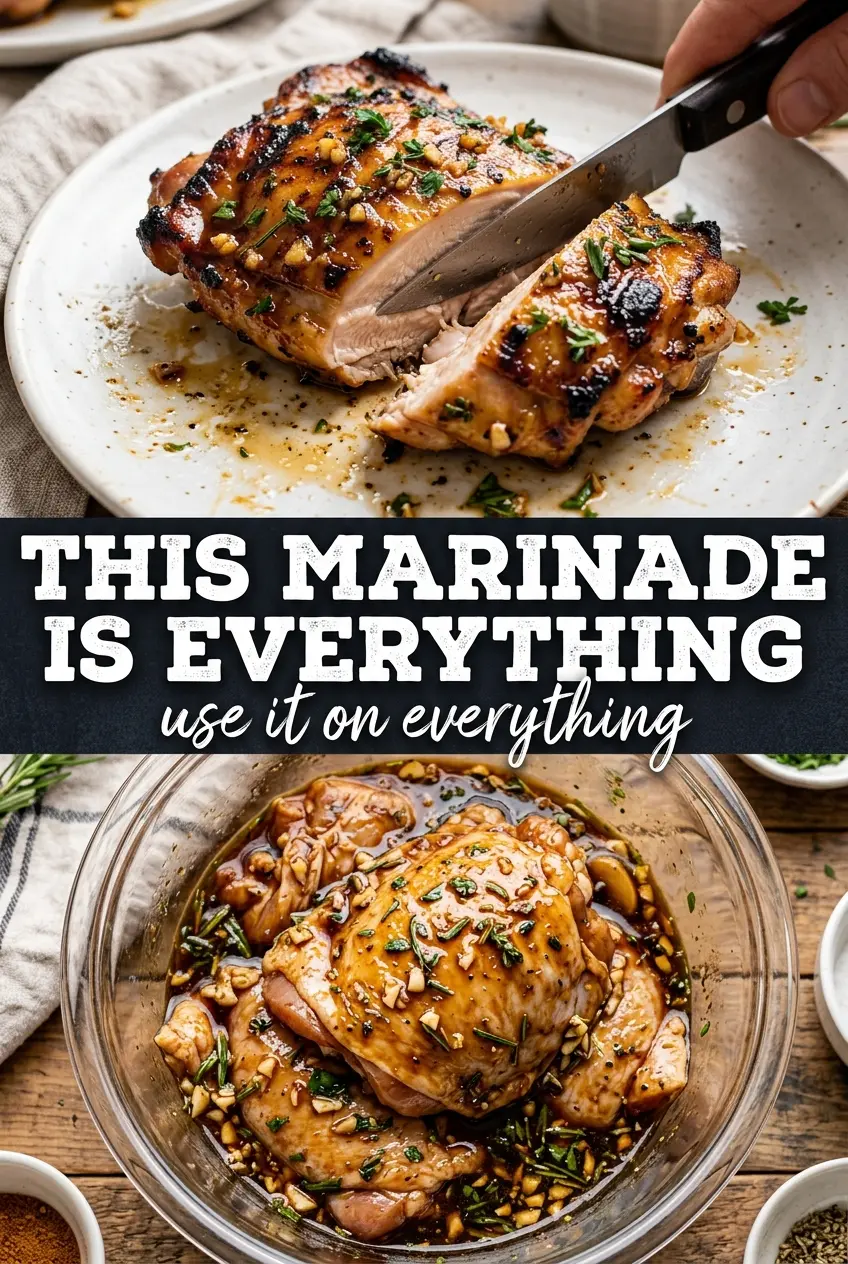
The marinade coated the chicken beautifully and the thighs came off the grill with those caramelized edges I never get from store-bought versions. Even after resting, they stayed juicy and the lemon garlic flavor came through without overpowering the herbs.
Love this lemon herb chicken thigh marinade? Save it to Pinterest for juicy grilled thighs with a caramelized, garlicky crust.
The Marinade Ratio That Keeps Chicken Thighs Juicy Instead of Muddy
Most chicken marinades fail in one of two ways: they lean too hard on acid and turn the surface chalky, or they’re so heavy on oil that nothing really penetrates. This one lands in the middle. Lemon juice gives brightness, Dijon helps the marinade emulsify, and olive oil carries the garlic and herbs across the meat so every bite tastes seasoned, not just the outside.
The other thing that matters is using thighs instead of breasts. Thighs stay tender after a long marinade and tolerate high heat better, which means you can push for a deeper crust without drying out the meat. If you’ve ever had chicken turn stringy after grilling, it usually means the cut was too lean or the heat was too aggressive for too long.
- Olive oil — This coats the chicken and helps the seasonings stick. A good everyday olive oil is fine here; save the fancy finishing oil for the table.
- Lemon juice and zest — Juice brings the acid, zest brings the lemon aroma without adding more sharpness. Skip the zest and the marinade tastes flatter.
- Dijon mustard — It helps the marinade emulsify so the oil and acid don’t separate, and it adds a subtle backbone that keeps the flavor from tasting thin.
- Honey — This is what helps the thighs pick up those caramelized edges. Don’t add much more or the surface can brown too fast before the chicken cooks through.
- Dried oregano and thyme — Dried herbs hold up better here than fresh herbs in the marinade. Use fresh herbs at the end for brightness, not as the main seasoning base.
What Each Ingredient Is Actually Doing in This Chicken Dish

- Chicken (pat dry for browning) — Room temperature cooks more evenly. Even pieces ensure uniform doneness.
- Oil or butter (the browning medium) — High-heat oil essential for proper searing. Creates pan flavor.
- Seasonings (salt, pepper, spices) — Apply generously. Chicken carries the entire flavor profile.
- Aromatics (garlic, ginger, herbs) — Cook with fat to bloom flavors. Become the foundation.
- Sauce or braising liquid (if using) — This keeps chicken moist. Balance richness with acid.
- Vegetables (if using) — Layer by cooking time so everything finishes together.
- Acid (vinegar, wine, lime, or pineapple) — This brightens and prevents one-dimensional flavor.
- Proper doneness (165°F internal temperature) — Use thermometer for accuracy. Overcooked is dry.
Whisking the Marinade So the Flavor Clings
Build the emulsion first
Whisk the olive oil, lemon juice, lemon zest, garlic, Dijon, honey, oregano, thyme, smoked paprika, salt, pepper, and red pepper flakes until the mixture looks unified and slightly thickened. You want the mustard to disappear into the liquid instead of floating in streaks. If the oil and lemon look separate, keep whisking for another 20 to 30 seconds; that first emulsified base is what helps the chicken get coated evenly.
Coat the thighs completely
Add the chicken thighs and turn them until every surface is slick with marinade. A bowl works better than a shallow dish because you can toss the chicken instead of just laying it in a puddle. If there’s a bare patch, that spot will cook up lighter and less seasoned than the rest.
Let time do the work
Refrigerate the chicken for at least 2 hours and up to 24 hours. Two hours gives you solid flavor on a weeknight; overnight makes the herbs and garlic feel more integrated. Don’t go much past 24 hours, especially with this much lemon juice, or the outside can start to get soft instead of pleasantly seasoned.
Cook hot, then rest
Grill over medium-high heat or sear in a hot oiled skillet for 5 to 6 minutes per side, until the chicken has deep char marks and reaches 165°F in the thickest part. If the marinade starts to blacken too fast, the heat is too high or the honey content is scorching before the meat finishes cooking. Pull the chicken to a plate and rest it for 5 minutes so the juices stay in the meat instead of running out the second you cut it.
How to Adapt This Chicken Thigh Marinade for Different Meals
Dairy-Free and Naturally Gluten-Free
This marinade already fits both needs as written, which is one reason I reach for it so often. Just double-check that your Dijon is gluten-free if that matters for your kitchen. Nothing else needs to change, and you still get the same bright, savory finish.
Make It Spicier
Add another 1/4 teaspoon of red pepper flakes or a pinch of cayenne if you want more heat. The goal is warmth in the background, not a marinade that burns before the chicken browns. Too much heat can crowd out the lemon and herbs, so increase it gradually.
Swap in Boneless Chicken Breasts
You can use breasts, but shorten the marinating time to about 30 minutes to 2 hours and watch the heat closely. Breasts dry out faster and don’t forgive overcooking the way thighs do, so pull them the moment they hit 165°F. You’ll still get the same marinade flavor, just with a leaner, less juicy result.
Turn It Into a Sheet Pan Dinner
Marinate the chicken, then roast it on a sheet pan with potatoes, onions, or broccoli. The marinade won’t caramelize quite the same way as on the grill, but you’ll still get browned edges and an easy all-in-one dinner. Use a hot oven so the vegetables roast instead of steaming.
Storage and Reheating
- Refrigerator: Cooked chicken keeps well for 3 to 4 days in a sealed container. The crust softens a little, but the flavor stays strong.
- Freezer: Freeze the cooked chicken for up to 2 months. Wrap it tightly and thaw it in the fridge overnight so it reheats evenly.
- Reheating: Warm it covered in a 300°F oven until heated through, or slice and reheat gently in a skillet with a splash of water. High heat dries out thighs fast once they’ve already been cooked.
Answers to the Questions Worth Asking
Chicken Thigh Marinade
Ingredients
Equipment
Method
- Whisk olive oil, lemon juice, lemon zest, minced garlic, Dijon mustard, and honey together until emulsified.
- Whisk in dried oregano, dried thyme, smoked paprika, salt, black pepper, and red pepper flakes until evenly combined.
- Add boneless skinless chicken thighs to the marinade and toss until completely coated.
- Cover and refrigerate for at least 2 hours or up to 24 hours.
- Grill over medium-high heat for 5-6 minutes per side, until deep caramelized char marks appear and the exterior looks golden.
- If pan-searing instead, heat a hot oiled skillet and cook for 5-6 minutes per side until caramelized char marks appear.
- Continue cooking if needed until the internal temperature reaches 165°F.
- Rest the chicken thighs for 5 minutes before serving.
- Garnish with fresh herbs for serving.