Slow Cooker Coconut Curry Chicken turns out with tender chicken, a silky sauce, and enough warmth from the curry paste to keep every bite interesting. The coconut milk softens the edges without muting the spices, and the peas and bell pepper give the finished bowl a little color and texture so it eats like a full meal, not just chicken in sauce.
What makes this version work is the order. The coconut milk, broth, curry paste, and seasonings go in together so the chicken braises gently instead of drying out, and the vegetables hold onto some shape instead of disappearing. The sauce also finishes with lime juice and a small hit of sweetness, which keeps the curry balanced after hours in the slow cooker.
Below you’ll find the one timing detail that matters most for the peas, plus a few smart swaps if you want to adjust the heat, make it dairy-free by default, or stretch it for leftovers without losing that creamy texture.
The chicken was fall-apart tender and the sauce thickened just enough by the end. I added the peas late like suggested, and they stayed bright instead of turning mushy.
Save this Slow Cooker Coconut Curry Chicken for an easy Thai-inspired dinner with tender chicken, creamy coconut sauce, and jasmine rice.
The Part That Keeps the Coconut Milk from Tasting Flat
The biggest mistake with slow cooker curry is dumping everything in and hoping time will do the work. Time does tenderize the chicken, but it doesn’t fix a thin, dull sauce. This version leans on red curry paste, fish sauce, ginger, and a little brown sugar to build depth before the heat has a chance to wash the flavors out.
The other thing that matters is the coconut milk. Full-fat coconut milk gives the sauce body and a softer finish, while light coconut milk can leave the curry tasting a little watery after six hours. If the sauce seems loose at the end, leave the lid off for the last 15 to 20 minutes so a little steam escapes and the flavor tightens back up.
What Each Ingredient Is Actually Doing in This Curry
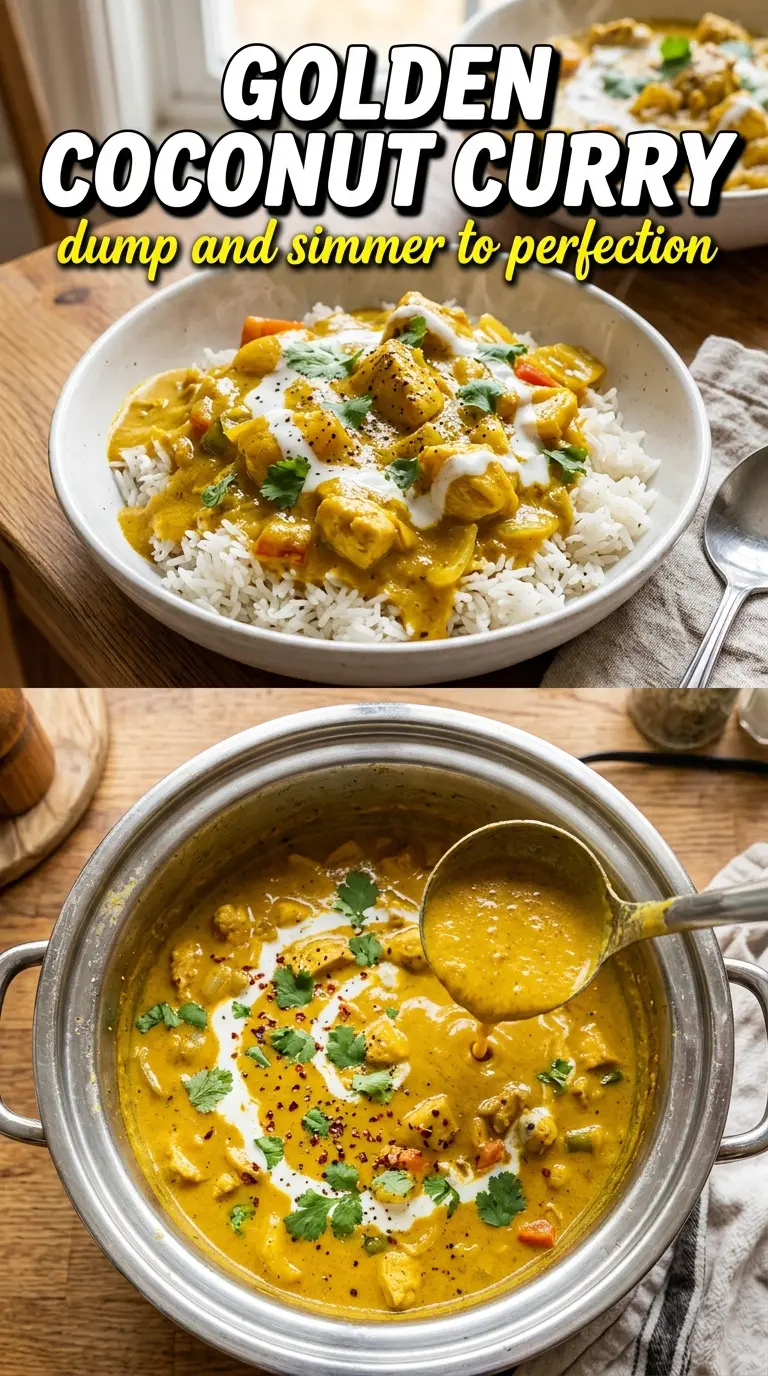
- Chicken thighs — Thighs stay juicy through a long cook, which is why they work better than chicken breast here. Breast can go stringy before the sauce develops enough flavor, especially in a slow cooker.
- Full-fat coconut milk — This is what gives the curry its silky body. Don’t swap in light coconut milk unless you’re fine with a thinner sauce; it saves calories but loses that lush texture.
- Red curry paste — This carries the heat, spice, and Thai-inspired backbone of the dish. Brands vary a lot, so if yours runs spicy, start with a little less and add more at the end if needed.
- Fish sauce — It adds salt and savory depth that plain salt can’t fully replace. If you need a substitute, use soy sauce, but expect a slightly different finish with less complexity.
- Lime juice and brown sugar — These balance each other at the end. The lime wakes up the coconut milk, and the sugar rounds out the curry paste so the sauce tastes finished, not sharp.
- Frozen peas and bell pepper — They add color and a fresh pop without asking for extra work. Peas should go in late or they’ll lose their bright flavor and turn soft.
Building the Curry So It Stays Rich, Not Watery
Whisk the Sauce Before It Hits the Crock
Mix the coconut milk, broth, curry paste, garlic, ginger, fish sauce, brown sugar, lime juice, and turmeric until the paste is fully dissolved. If the curry paste stays clumped, you’ll end up with pockets of heat instead of a smooth sauce. The sauce should look opaque and even before it goes over the chicken.
Let the Chicken Braise, Don’t Stir It Constantly
Once the chicken and vegetables are in the slow cooker, leave them alone. Repeated stirring breaks the pieces up early and can make the onion disappear into the sauce before it has time to flavor the broth. Cook on low for the full 6 to 7 hours if you can; that slower heat gives the thighs a softer, more spoonable texture.
Add the Peas at the End
Frozen peas only need the last 20 minutes. Any longer and they lose their color and turn mealy. Taste the curry after the chicken is tender, then adjust with more lime juice, fish sauce, or brown sugar until the sauce tastes balanced and bright.
How to Adapt This Curry When You Need a Different Finish
Make it gluten-free without changing the texture
This dish is naturally close to gluten-free as long as your curry paste and fish sauce are certified gluten-free. The sauce keeps the same silky texture, so you don’t need to add anything extra to compensate.
Use chicken breast when that’s what you have
Chicken breast works, but it needs less time. Check it around the 3-hour mark on low or as soon as it’s cooked through on high, then pull it before it dries out. The sauce will still be good, just a little less rich than with thighs.
Make it vegetarian with chickpeas and cauliflower
Swap the chicken for two cans of chickpeas and a few cups of cauliflower florets. You’ll lose the slow-cooked meat texture, but the curry paste and coconut milk still carry the dish, and the vegetables hold up well without getting mushy.
Storage and Reheating
- Refrigerator: Store leftovers for up to 4 days. The sauce thickens as it sits, and the flavors get a little deeper by the next day.
- Freezer: It freezes well for up to 2 months. Cool it completely, then freeze in airtight containers; the coconut sauce may look slightly separated after thawing, but it comes back together when reheated.
- Reheating: Warm it gently on the stove over low heat or in the microwave in short bursts. High heat can make the coconut milk look greasy and can turn the chicken tough, so reheat slowly and stir often.
Answers to the Questions Worth Asking
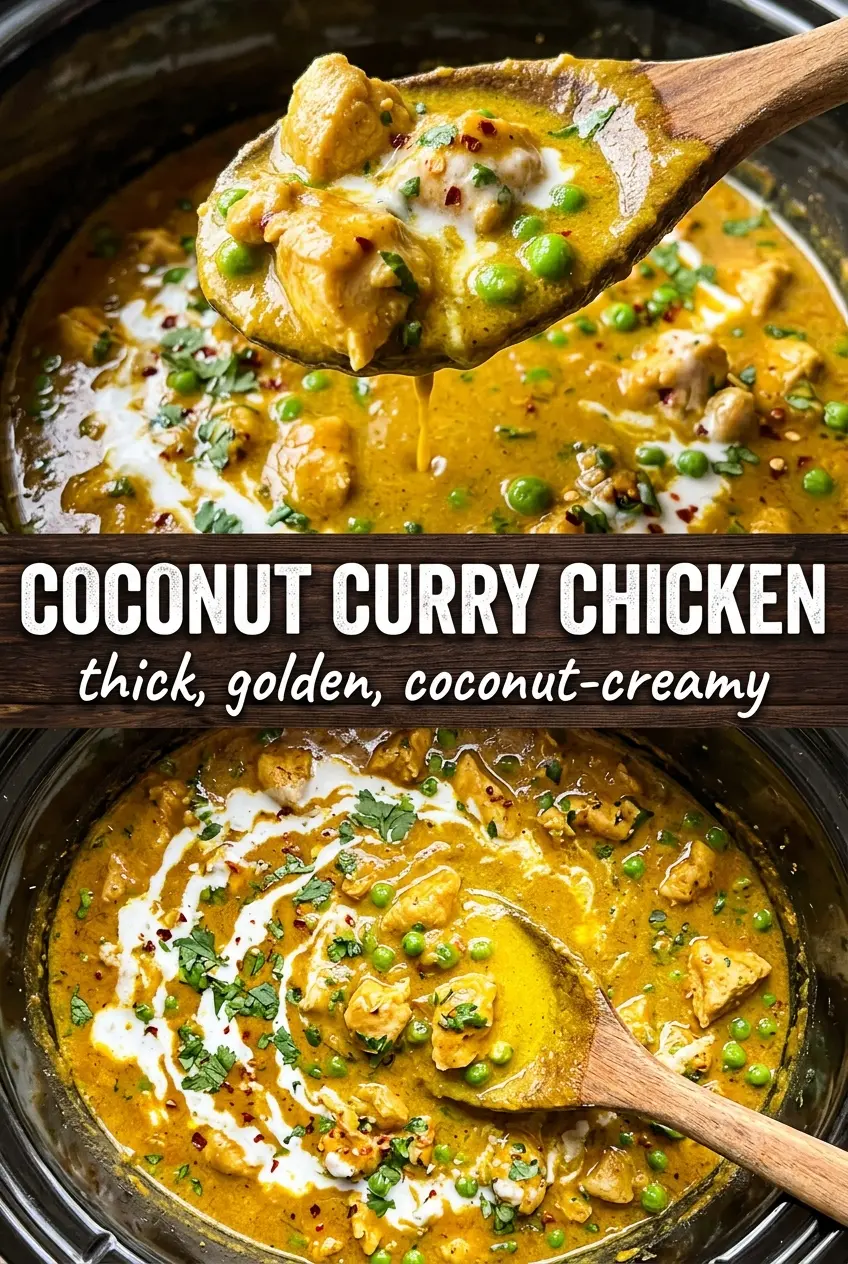
Slow Cooker Coconut Curry Chicken
Ingredients
Equipment
Method
- Place the chicken thighs in the slow cooker in an even layer (chunks should be mostly submerged by later sauce).
- Set up the cooker while you mix the sauce so the chicken starts cooking right away.
- Whisk together coconut milk, red curry paste, chicken broth, garlic, ginger, fish sauce, brown sugar, lime juice, and turmeric until smooth and evenly colored (look for no curry paste streaks).
- Pour the sauce over the chicken, then add the diced onion and sliced red bell pepper so the vegetables are distributed throughout.
- Cook on low for 6–7 hours until the chicken is very tender and easily breaks apart when pressed with a spoon (sauce should be visibly thick and golden).
- Alternatively, cook on high for 3 hours until chicken is very tender, with bubbling at the edges and a deep curry color.
- Stir in the frozen peas during the last 20 minutes of cooking until they turn bright green and are heated through.
- Taste the curry and adjust seasoning with additional fish sauce, lime juice, or brown sugar as needed for salt, brightness, and balance.
- Serve the coconut curry chicken over jasmine rice, topped with fresh Thai basil and lime wedges (sauce should coat the rice).