Slow cooker birria tacos give you everything people chase in a great quesabirria: tender beef that shreds with almost no effort, tortillas that crisp up in the rendered fat, and a consommé that tastes deep, smoky, and a little rich around the edges. The slow cooker does the heavy lifting, but the real payoff comes at the end when the tortillas hit the griddle and turn stained red, crunchy, and packed with melted cheese.
What makes this version work is the chile sauce. Guajillo and ancho bring color and warmth, while the chipotle adds a little heat without taking over. Blending the onions, garlic, tomatoes, and spices until completely smooth keeps the braise silky instead of gritty, and the long low cook time turns chuck roast into meat that pulls apart cleanly. Skimming the fat from the top gives you the best dipping fat for the tortillas and keeps the consommé balanced.
Below, I’ve included the little details that matter most: how to keep the tortillas from tearing, what to do if the sauce tastes flat, and the best way to reheat leftovers without losing that crisp edge.
The beef turned out shreddably tender and the tortillas crisped up beautifully after dipping in the fat. I used the consommé for dipping and my husband asked if we could make them again the next night.
Save these slow cooker birria tacos for the night you want smoky beef, a crisp cheese pull, and a dipping consommé that tastes like the best part of the whole pan.
The Reason the Beef Needs a Long, Quiet Cook
Birria goes sideways when the heat is too aggressive or the sauce is too thin. Chuck roast has enough fat and connective tissue to turn silky, but it needs time for that to happen. Eight hours on low gives the chile sauce time to work into the meat while the roast slowly relaxes into shreds instead of drying out at the edges.
The other trap is rushing the sauce. Toasting the chiles for just a few seconds wakes up their aroma, but any longer and they turn bitter. Soaking them after that softens them enough to blend into a smooth base, and that smooth base matters because it coats the meat evenly and makes the consommé look glossy instead of muddy.
- Chuck roast — This is the right cut for birria because it has the fat and structure that break down into juicy strands. Leaner beef will taste dry by the end of the cook.
- Guajillo and ancho chiles — Guajillo gives brightness and color, while ancho brings a deeper, almost raisin-like warmth. If you only have one of them, the flavor gets narrower, but the dish still works.
- Chipotle in adobo — This adds smoke and a little heat. Use the full pepper for a noticeable kick, or half if you want the chile flavor to stay in front.
- Fire-roasted tomatoes — They add body and a little sweetness that smooths out the chiles. Regular diced tomatoes work in a pinch, but the sauce won’t taste as rounded.
What Each Ingredient Is Actually Doing in This Recipe
- Primary ingredient (the star) — Quality matters most. Choose the best you can find.
- Cooking medium (oil, butter, or broth) — This carries flavors and prevents dryness.
- Seasonings (salt, pepper, spices, herbs) — Layer flavors so nothing overpowers. Build depth gradually.
- Aromatics (garlic, onion, herbs) — Cook with fat to bloom flavors. Become the foundation.
- Supporting ingredients — Complement the main ingredient without overpowering it.
- Sauce or liquid (if applicable) — Brings flavors together. Balance richness with acid.
- Acid (lemon, vinegar, wine, or other) — Brightens and prevents flat-tasting results.
- Final finish (garnish, glaze, or sauce) — Prevents one-dimensional taste and adds visual appeal.
Building the Braise Before the Tortillas Ever Hit the Pan
Waking Up the Chiles
Toast the dried chiles in a dry skillet for about 30 seconds per side, just until they smell warm and a little nutty. If they start to darken or smoke, pull them off immediately, because burnt chiles will make the whole sauce taste harsh. Soak them in hot water until soft, then drain well so the blender doesn’t have to fight excess liquid.
Blending the Sauce Until It’s Completely Smooth
Blend the softened chiles with the tomatoes, onion, garlic, broth, vinegar, cumin, oregano, paprika, and salt until the mixture looks silky. Stop and scrape the blender if you see flecks of chile skin still floating around; those bits don’t disappear during cooking. The sauce should pour like a thick puree, not like a chunky salsa.
Slow Cooking the Beef
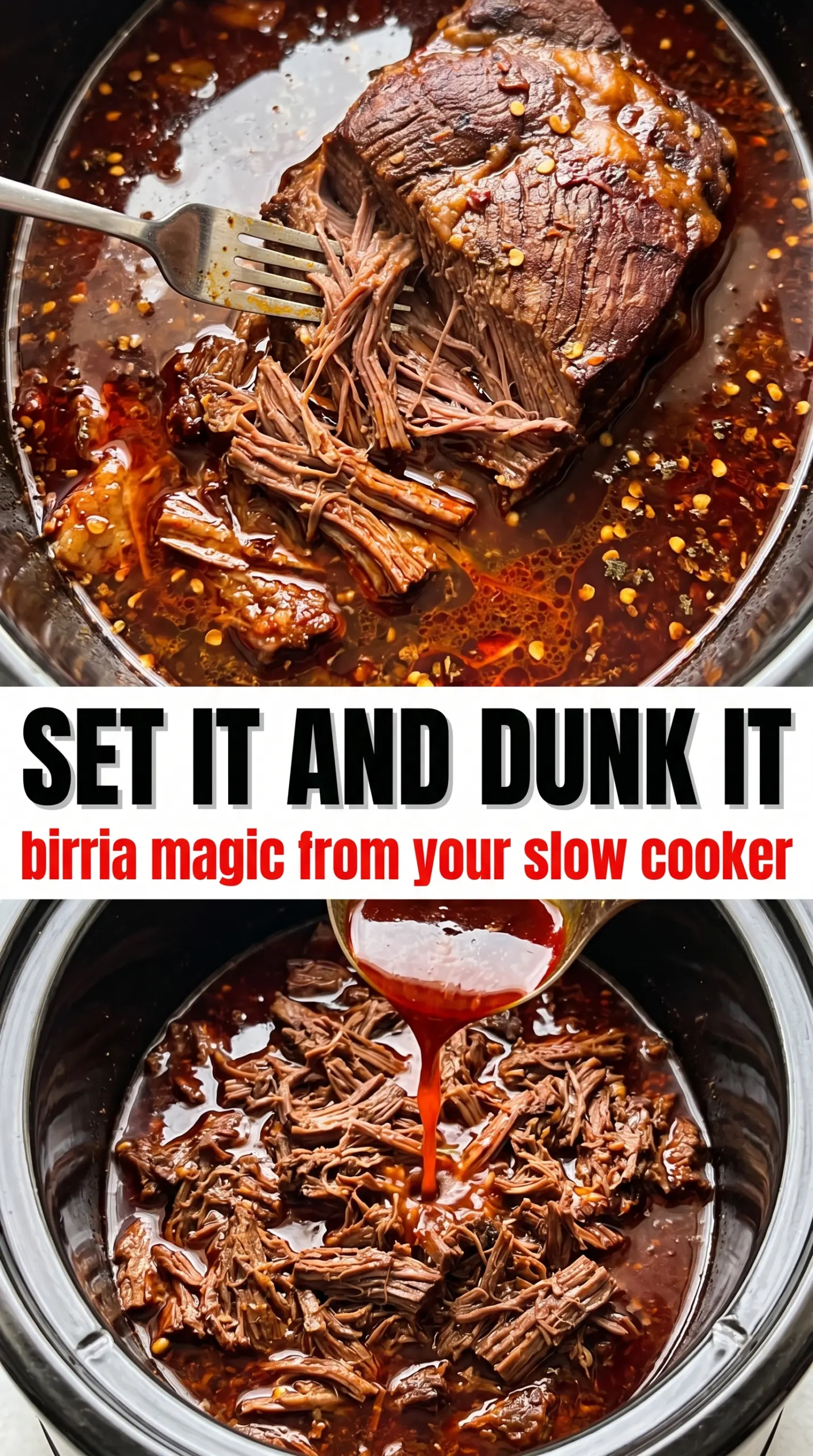
Set the beef in the slow cooker with the cinnamon stick and bay leaves, then pour the sauce over the top. Don’t stir it hard at the start; the sauce needs to settle around the meat and do its work slowly. When the roast is done, it should pull apart with two forks with almost no resistance. If it still fights you, it needs more time, not more heat.
Shredding and Skimming for the Finish
Lift the beef out first and shred it while it’s still hot enough to handle easily. Then skim the red fat from the top of the consommé and set it aside, because that fat is what gives the tortillas their signature color and crisp edge. If the liquid looks too thin, let it sit for a few minutes before skimming; the fat rises better once it stops moving.
Crisping the Tacos on the Griddle
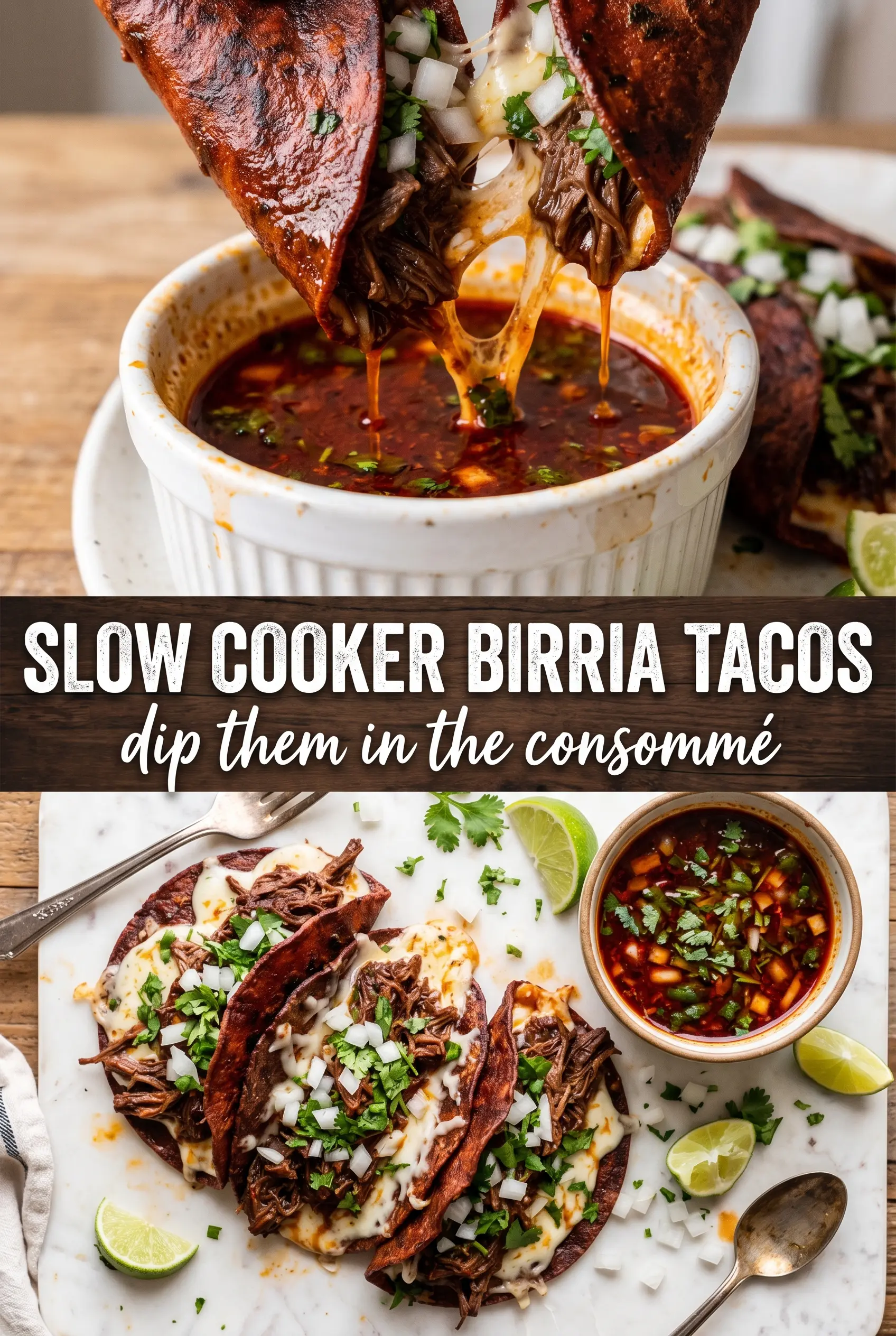
Dip each corn tortilla lightly into the reserved fat, then fill it with beef and cheese before folding it onto a hot griddle. The tortilla should sizzle as soon as it hits the pan. Cook until the outside is crisp and the cheese has melted enough to glue everything together; if the heat is too low, the taco turns soft instead of crunchy, and if it’s too high, the tortilla will brown before the cheese melts.
How to Tweak Birria Tacos Without Losing the Point
Make It Dairy-Free
Skip the cheese and turn these into straight birria tacos, or use a good melty dairy-free shreds if you want the quesabirria style. The tortillas will still crisp up nicely in the reserved fat, and the consommé carries enough richness on its own that you won’t miss the cheese as much as you expect.
Turn Down the Heat
Use half the chipotle pepper or leave it out completely if you want a milder birria. You’ll still get the smoky chile base from the guajillo and ancho, but the finish will lean warmer and less spicy.
Use Another Cut of Beef
Beef brisket works if that’s what you have, but it tends to slice and shred a little differently than chuck roast. It gives you a slightly firmer bite and can be a touch richer, but you’ll still need the same long cook time for it to turn tender enough for tacos.
Storage and Reheating
- Refrigerator: Store the beef and consommé separately for up to 4 days. The broth gets even more flavorful overnight, and the fat will solidify on top.
- Freezer: The shredded beef and consommé freeze well for up to 3 months. Cool them completely first, then freeze in separate containers so the tacos don’t get greasy or watery when reheated.
- Reheating: Reheat the beef gently in a skillet with a splash of consommé until hot. Warm the broth separately on the stove, and crisp the tacos fresh in a pan or griddle; microwaving the assembled tacos makes the tortillas soft and the cheese rubbery.
Answers to the Questions Worth Asking
Slow Cooker Birria Tacos
Ingredients
Equipment
Method
- Toast the guajillo and ancho chiles in a dry skillet for 30 seconds per side until fragrant, then transfer to a bowl of hot water for 15 minutes and drain.
- Blend the soaked chiles, chipotle pepper, fire-roasted tomatoes, onion, garlic, beef broth, apple cider vinegar, cumin, oregano, smoked paprika, and salt until completely smooth.
- Place the beef chuck roast in the slow cooker with the cinnamon stick and bay leaves, then pour the chile sauce over everything to coat.
- Cook on low for 8–10 hours until the beef is completely fall-apart tender.
- Remove the beef and shred with two forks; discard the cinnamon stick and bay leaves.
- Skim the red fat from the surface of the consommé and reserve in a bowl.
- Dip corn tortillas into the reserved red fat, fill with shredded beef and shredded cheese, fold, and cook on a hot griddle until crispy on both sides.
- Serve with warm consommé for dipping, along with diced white onion and fresh cilantro.