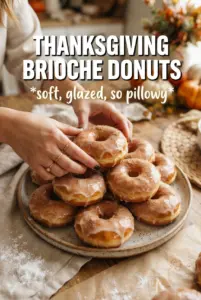
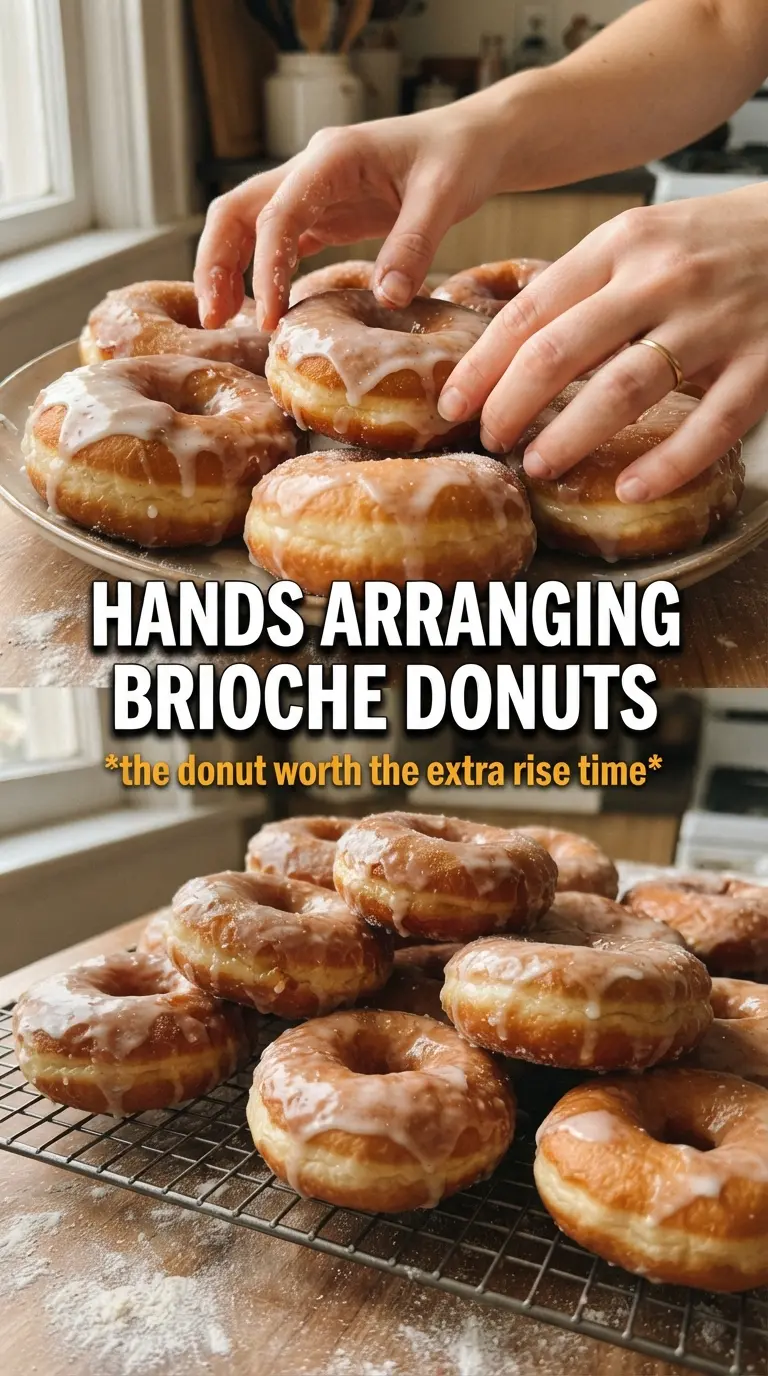
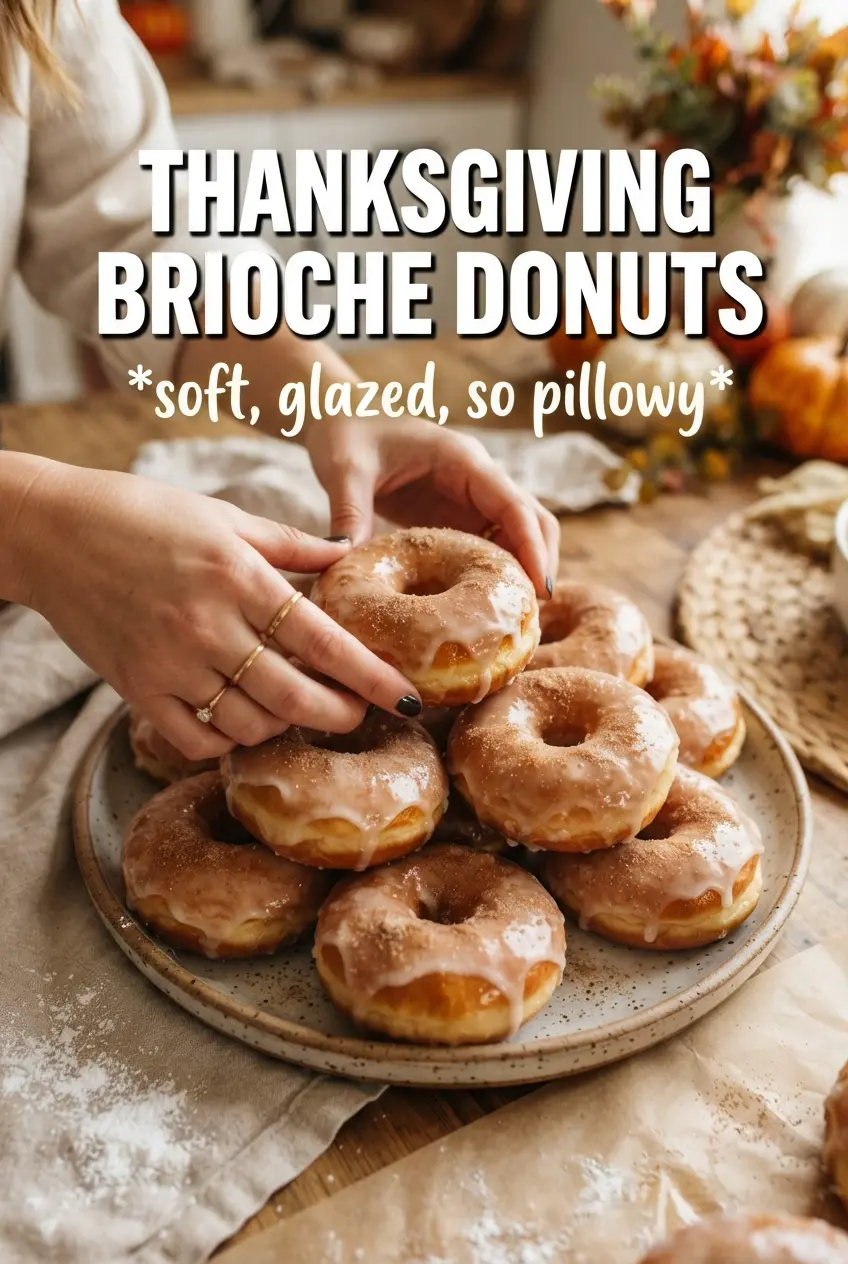
Thanksgiving brioche donuts come out pillowy, rich, and a little indulgent in the best possible way, with a tender crumb that still holds up to a glossy glaze. The dough fries into a deep golden shell that stays light inside, and the autumn toppings make each one taste like a small holiday dessert instead of a plain donut.
The key is the brioche-style dough. Butter goes in after the gluten has started to develop, which keeps the donuts soft instead of greasy or dense. Pumpkin pie spice works in the dough itself, then the glazes layer on more flavor with pumpkin puree, maple syrup, and cranberry sauce so every bite tastes distinct. Frying at the right temperature matters too; too cool and the donuts soak up oil, too hot and they brown before the centers cook.
Below, I’ve included the timing cues that matter most for the rise and fry, plus a few smart swaps if you want to change the glaze lineup or make the donuts ahead.
The dough was soft and easy to roll after the second rise, and the donuts fried up with that light brioche texture instead of feeling heavy. I loved how the maple glaze stayed shiny and the cranberry one cut through the sweetness.
Save these Thanksgiving brioche donuts for a holiday dessert board with pumpkin spice, maple, and cranberry glazes.
The Dough Needs Time to Develop Before the Butter Goes In
Brioche dough can turn heavy fast if the butter is added before the flour has a chance to hydrate and build structure. That first stage matters because the dough needs enough gluten to support the rich eggs and butter later. If you dump everything in at once, the dough usually smears around the bowl and never gets that smooth, elastic feel you want.
The dough should look shaggy at first, then come together into something soft and slightly tacky before the butter is added. After that, it needs a longer knead than a standard yeast dough because the butter has to fully absorb. When it’s ready, it will pull away from the bowl in stretchy strands and feel supple instead of sticky.
What the Dough, Glazes, and Decorations Are Actually Doing
- Bread flour — The higher protein content gives these donuts enough structure to puff without collapsing in the fryer. All-purpose flour works in a pinch, but the crumb will be a little less chewy and less sturdy under glaze.
- Eggs and butter — These are what make the dough taste like brioche instead of standard fried dough. Cold butter won’t incorporate cleanly, so let it soften until it bends easily when pressed.
- Pumpkin pie spice — This seasons the dough itself, which keeps the donuts from tasting plain once the glaze goes on. The spice note is subtle in the dough and stronger in the pumpkin glaze.
- Pumpkin puree, maple syrup, and cranberry sauce — Each glaze gets its own personality from these ingredients. The pumpkin glaze is thick and cozy, the maple glaze stays smooth and shiny, and the cranberry glaze brings a tart edge that keeps the whole tray from tasting one-note.
- Vegetable oil — Use a neutral oil with a high smoke point so the donuts fry cleanly. Olive oil or butter won’t give you the right result here.
Frying Them at the Right Moment, Not the Fastest Moment
Building the Enriched Dough
Start with warm milk, yeast, and sugar, then add the eggs before the flour goes in. The milk should feel warm, not hot; if it’s too hot, the yeast can weaken before the dough even starts. Once the flour, salt, and pumpkin pie spice are in, knead until the dough begins to look smoother and stronger before adding the butter. That early structure is what keeps the final donuts from turning greasy.
Working in the Butter
Add the softened butter gradually and keep kneading until the dough turns satiny and elastic. It will look messy for a few minutes, then slowly become cohesive. If the dough tears instead of stretching, it needs more kneading time. You’re aiming for a dough that’s soft enough to be rich but still strong enough to hold its shape after the rise.
Shaping and Proofing
Roll the dough to about 1/2-inch thick and cut clean 3-inch rounds. Let them rise until they look puffed and airy; if you rush this stage, the donuts will fry up dense with a tight crumb. During the second rise, the rounds should look noticeably thicker and feel light when you lift one gently. That’s the sign they’re ready for the oil.
Frying and Finishing
Keep the oil at 350°F and fry only a few donuts at a time so the temperature doesn’t drop. They need about 90 seconds per side, just until deep golden; if they get too dark too quickly, the oil is too hot. Drain them on paper towels, then glaze while they’re still warm so the toppings cling instead of sliding off. Sprinkle and decorate immediately before the glaze sets.
How to Change the Glazes Without Losing the Holiday Feel
Make them all pumpkin spice for a more classic finish
Use the pumpkin glaze on the whole batch and add extra spice or a pinch of salt to sharpen the flavor. This gives you the most even look and the most straightforward holiday dessert tray, with a softer, more familiar sweetness.
Swap in dairy-free milk and vegan butter
Use unsweetened non-dairy milk and a plant-based butter that holds its shape at room temperature. The dough will still rise and fry well, but the crumb will be a little less rich and the glaze may need a touch more milk to thin properly.
Bake instead of fry for a lighter texture
Bake the cut dough rounds until they’re pale golden, then brush them lightly with melted butter before glazing. You’ll lose the crackly fried edges, but the center stays soft and the finished donuts feel a little less rich.
Storage and Reheating
- Refrigerator: Store leftovers in a single layer for up to 2 days. The glaze will soften overnight and the fried exterior loses some crispness, but the donuts still taste best fresh the day they’re made.
- Freezer: Freeze the unglazed donuts after frying and cooling completely. Wrap them well, then thaw and glaze after reheating for the best texture.
- Reheating: Warm unglazed donuts in a 300°F oven for a few minutes until heated through. Don’t microwave glazed donuts if you want the coating to stay intact; it turns sticky and can make the dough rubbery.
Questions I Get Asked About This Recipe
Thanksgiving Brioche Donuts
Ingredients
Equipment
Method
- In a mixing bowl, combine warm whole milk and yeast, then add sugar and eggs. Let sit 5 minutes until foamy, then proceed (warm but not hot milk).
- Add bread flour, salt, and pumpkin pie spice, then knead until the dough comes together. Knead 6 minutes to build structure.
- Add the softened unsalted butter gradually and continue kneading. Knead 8 more minutes until smooth and slightly tacky.
- Place the dough in a lightly greased bowl and cover, letting it rise for 1 hour. Dough should puff and feel aerated.
- Turn out the dough and roll it to about 1/2-inch thickness, then cut 3-inch circles. Keep cuts close together for even donuts.
- Arrange donuts on a parchment-lined surface and let rise for 30-45 minutes. They should look puffy and feel airy when gently pressed.
- Heat vegetable oil in a Dutch oven to 350°F. Fry each donut for 90 seconds per side until deep golden, adjusting heat to keep bubbles steady.
- Drain donuts briefly on a rack or paper, then dip in glazes of choice while warm. Let excess drip before placing on a tray.
- While glazes are still wet, decorate with fall sprinkles and edible decorations. Serve soon for the best tender bite.